Byzantine Goldsmithing and Metalwork
Byzantine goldsmithing and metalwork evolved significantly over the centuries, mirroring the political, cultural, and religious changes within the empire. This craft, which included the manipulation of gold, silver, bronze, and other metals, was highly developed and became one of the most notable expressions of Byzantine artistic achievement. The techniques and aesthetic principles of Byzantine metalwork can be analyzed across three major phases: the early, middle, and late periods of Byzantine history.
Metallurgy in the Byzantine Empire.
Byzantine metalworkers primarily used gold, silver, bronze, lead, and iron. They often applied gold, silver, or tin leaf to other metals to imitate precious materials. Similar effects appeared on ceramics through glazes and glosses, while glass objects sometimes copied metal forms, eventually replacing domestic gold and silver plate.
Byzantine artisans sometimes counterfeited precious metals, so silversmiths tested purity with touchstones. Metals came from mines but were also widely recycled, especially coins. From at least the 4th century, the state transported metals as ingots and oversaw production of gold, silver, and bronze coins, gold medallions, largitio dishes, jewelry, weapons, and armor. Between the 4th and 8th centuries, some silver objects bore imperial stamps. Lead seals identified civil, military, and ecclesiastical officials of all ranks. Public and private workshops operated simultaneously: the Book of Eparch notes that independent goldsmiths clustered along the Mese, while coppersmiths worked near the Chalkoprateia church.
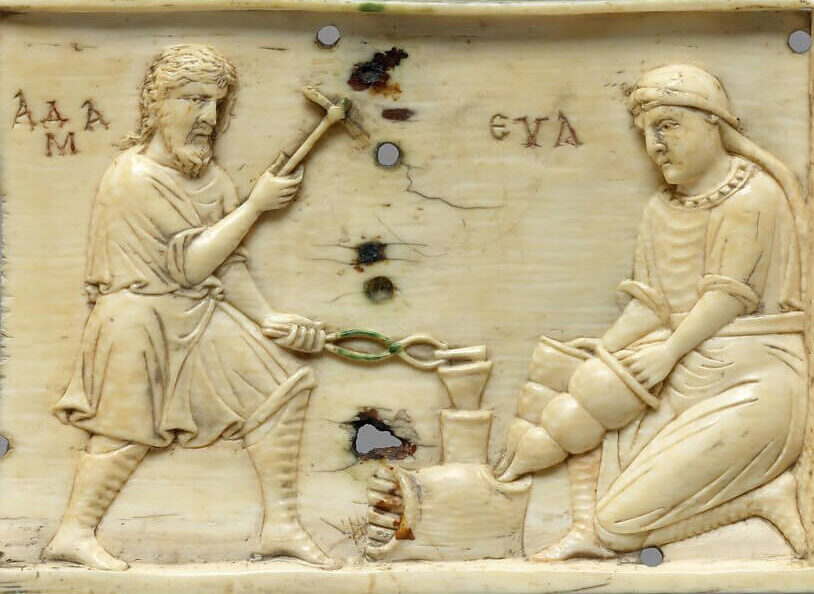
Medieval metalwork largely preserved Roman techniques, except for large-scale bronze statuary, which disappeared by the early 7th century. Craftsmen continued to apply hammered sheets of gold, silver, and bronze to furniture and architectural features, including doors.
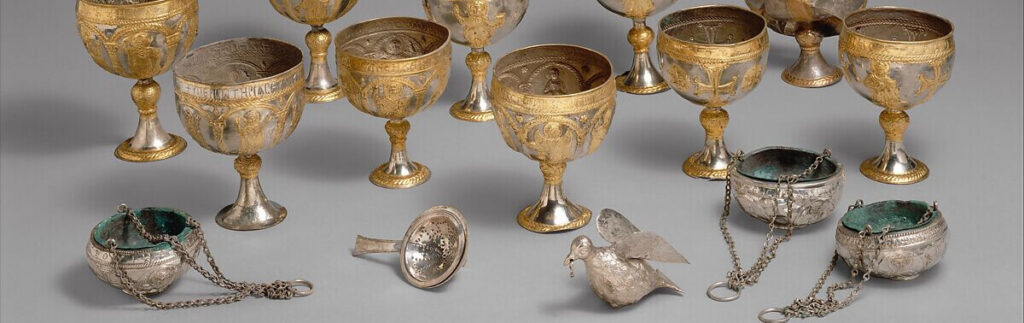
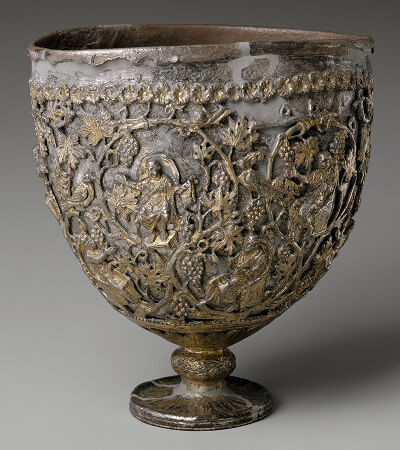
The survival of advanced techniques is suggested by the creation of automata. Smaller-scale metalwork included gold plates for enamels from the 8th century, domestic and liturgical silver and bronze vessels, household fittings, and forged iron tools. Artisans decorated gold and silver using repoussé (from the reverse), engraving and chasing (from the front), and openwork, as on the Antioch “Chalice.”
They embellished objects with gilding, niello inlay, gemstones, and enameled plaques. Jewelry likewise displayed a wide range of techniques.
Research has focused largely on 4th–7th century silver and bronze. Few studies have examined 9th-century and later metalwork. The De Ceremoniis, describing preparations for the Cretan campaign of 960–61, provides detailed information about weapons, implements, their quantities, and the costs of lead, copper, and tin. By this period, cast bronzes were smaller, and silver appeared mostly as thin sheets. By the 15th century, figures like Bessarion lamented that high-quality metalwork could no longer be expected in Byzantium.
Early Byzantine Metalwork (4th – 7th Century).
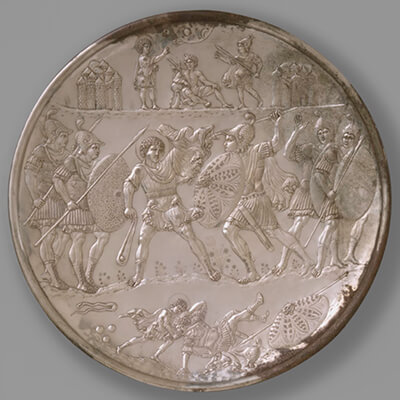
In the early Byzantine period, metalwork was heavily influenced by Roman traditions, but it gradually adapted to the needs of a Christianized empire. The focus shifted from secular and imperial themes to religious symbolism, marking the beginning of the integration of Christian iconography in metal objects. Goldsmiths employed techniques such as casting, forging, and repoussé, where metal was hammered into relief to create intricate designs.
Enamelwork began to be used more extensively during this period, with the cloisonné technique (the creation of cells within metal to fill with enamel) allowing for detailed and colorful decorations. Gold and silver were often used for their durability and association with divine power, aligning with the Christian emphasis on sacredness and eternity.
Middle Byzantine Luxury Metalwork (8th–12th Century).
The Middle Byzantine period was a transformative era for goldsmithing marked by both technical refinement and a renewed theological and political consciousness. This was a time shaped profoundly by the Iconoclast Controversy (8th – 9th century), during which the legitimacy of religious images was fiercely contested. Although the controversy primarily targeted figural representation in painting and mosaic, it also had a noticeable impact on metalwork, encouraging the development of more abstract, symbolic, and text-based decoration during its height. After the restoration of icons in 843, however, metalwork once again embraced figural imagery with new vigor, combining it with the elaborate ornamentation that had developed during iconoclasm.
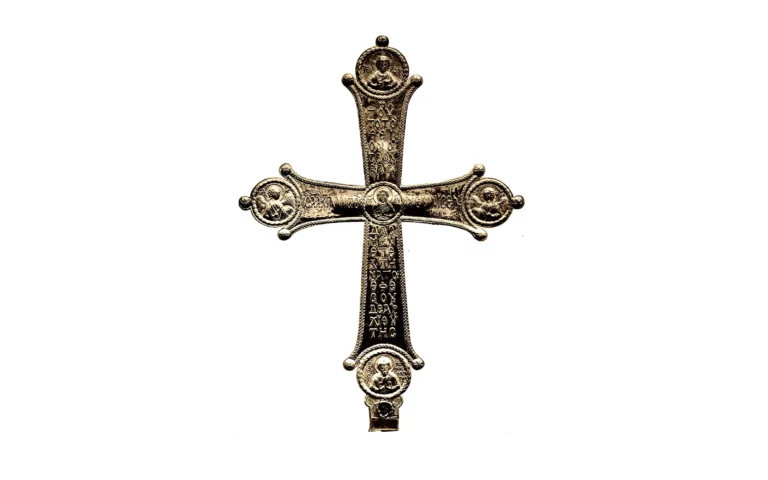
Goldsmiths and silversmiths (often working in imperial or monastic ateliers) achieved an extraordinary degree of sophistication. Techniques such as filigree, granulation, and cloisonné enamel became hallmarks of the period. In particular, cloisonné – thin gold strips soldered onto a metal surface to form compartments filled with enamel – reached a technical and artistic peak and became a defining feature of Byzantine luxury objects such as reliquaries, book covers, pectoral crosses (enkolpia), chalices, and liturgical vessels.
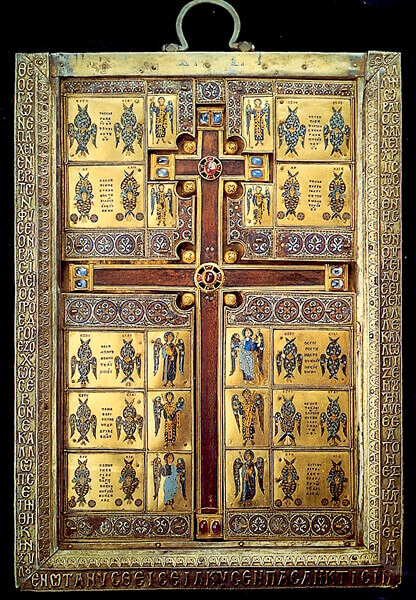
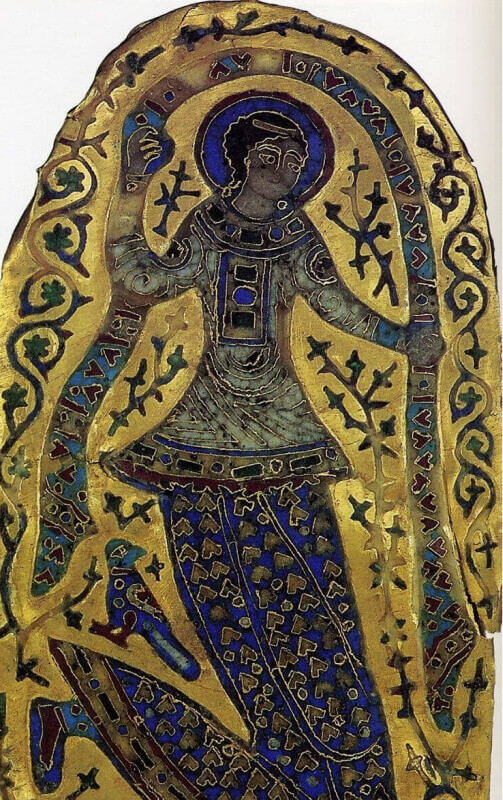
The aesthetic of the period reflects both innovation and continuity. There was an increased preference for geometric precision, interlace ornament, stylized vegetal forms, and complex symbolic programs that communicated theological meaning. Even when figural imagery returned after iconoclasm, these scenes were often framed by densely patterned borders and jewel-like enamel panels, creating a distinctive fusion of narrative and ornament.
Gilding also became increasingly prominent, both as a way to enhance the brilliance of liturgical objects and as a deliberate visual manifestation of divine light. The extensive use of gold leaf, gold foil, and mercury gilding transformed metal objects into luminous displays intended to evoke the heavenly realm—a key aim of Byzantine aesthetics.
By the 11th and 12th centuries, Middle Byzantine orfèvrerie had reached an artistic maturity marked by technical mastery, luxurious materials, and a fully developed iconographic language. The surviving objects from this period stand today as some of the most refined examples of medieval metalwork anywhere in the Mediterranean world.
Late Byzantine Goldsmithing (13th – 15th Century).
The late Byzantine period, particularly during the Palaiologan Renaissance, witnessed a resurgence of artistic innovation, including in the field of metalwork. This period was marked by a return to greater complexity and elaboration in design, as well as an increased use of precious stones in combination with metals, reflecting the empire’s wealth and devotion. The use of gemstones such as sapphires, pearls, and emeralds became more common in religious and ceremonial objects, adding an element of luxury and emphasizing the divine light and power that these objects represented.
In terms of techniques, chasing (the process of shaping and detailing metal with a hammer and punch) and repoussé were widely used to create intricate, high-relief patterns that often depicted Christian themes and symbols. There was also an increased emphasis on enamelwork, with Byzantine artisans achieving greater precision and vibrancy in their designs. The increasing sophistication of metalworking techniques during this period reflected the broader cultural flourishing of the empire, despite the political and military challenges it faced.
Discover some of the masterpieces of Byzantine metalwork craftsmanship.
Byzantine metalwork reached extraordinary heights of artistry, producing intricate objects that served both sacred and secular purposes – here are some of the finest surviving masterpieces that showcase this remarkable craftsmanship.
-
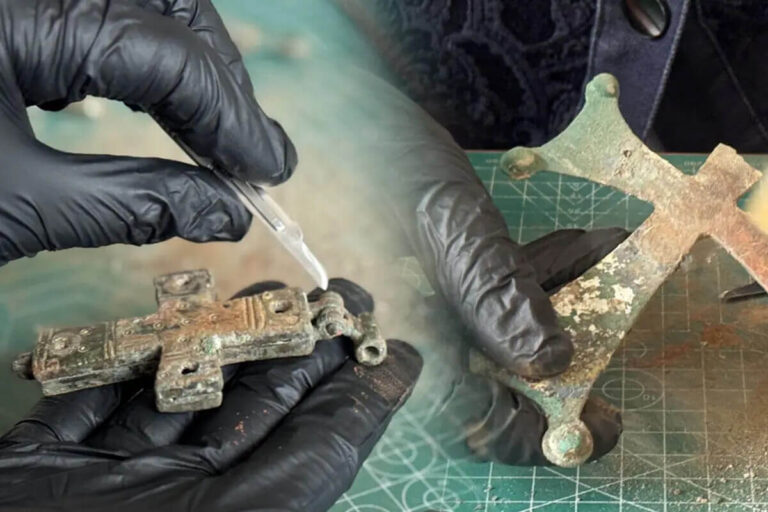
Intact Byzantine reliquary cross found in the ancient city of Lystra
Discover a rare 9th-11th century sealed bronze reliquary cross found in the ruins of Lystra.
-
Discovery of a Byzantine gold treasure in Hippos, Israel
A rare Byzantine gold treasure of 97 coins and jewelry was unearthed at Hippos in Israel, revealing new insights into the city’s final years.
-
Zaccaria Cross: Byzantine Treasure of the Genoa Cathedral
The Zaccaria Cross, a complex Byzantine reliquary from the 9th and 13th c., was originally part of the treasure of the cathedral of Ephesus before being brought to Genoa by the Zaccaria family.