Byzantine Icons: History, Types, and Legacy
Icons stand at the very heart of Byzantine art and spirituality. More than mere paintings, they were believed to be sacred windows into the divine, bridging heaven and earth. In churches, monasteries, and homes, icons shaped the rhythm of daily devotion, while in imperial processions they proclaimed the unity of faith and empire. Their power was not only religious but also cultural: to look at a Byzantine icon is to glimpse the theological debates, the artistic achievements, and the deep spirituality that defined an entire civilization.
From the earliest depictions of Christ and the Virgin Mary in the 4th century to the luminous masterpieces of the Palaiologan era, icons evolved in style yet remained faithful to their core purpose: to guide the faithful in prayer and contemplation. They survived theological controversies, most notably the Iconoclast crisis, and emerged stronger than ever, celebrated in the “Triumph of Orthodoxy” that reaffirmed their place in Christian worship.
Beyond Byzantium, icons spread across Orthodox lands—from Mount Athos to Russia—where they continued to inspire generations of artists and believers. Today, Byzantine icons are revered not only as religious objects but also as timeless works of art, embodying the quintessence of Byzantine culture.
What is a Byzantine icon?
A Byzantine icon is a sacred image of Christ, the Virgin Mary, the saints, or scenes from sacred history, produced in the Byzantine Empire and the wider Orthodox world. The word comes from the Greek eikōn, “image,” but an icon was never a mere picture: for the Byzantines it was a window to the divine — venerated (proskynesis), never worshipped (latreia), a distinction defined at the Second Council of Nicaea in 787.
The most familiar icons are painted wooden panels, but icons were also made as mosaics, frescoes, ivories, enamels, and metalwork. What defines an icon is not its material but its function and its fidelity to established iconographic types, repeated so faithfully that a Christ Pantocrator or a Virgin Hodegetria was instantly recognizable from Constantinople to Russia.
History and evolution of Byzantine Icons
Origins of the Icon (4th–7th centuries)
The origins of Byzantine icons lie in the formative centuries of Christianity, when the young religion sought visual forms capable of expressing its spiritual truths. Early Christians inherited both the Jewish suspicion of images and the Greco-Roman tradition of portraiture and religious art. This tension shaped the development of icons, which gradually emerged as a distinctive medium balancing reverence for the divine with the human need for visible representation.
By the 3rd and 4th centuries, symbolic motifs—such as the fish, the Good Shepherd, or the chi-rho—appeared in frescoes, mosaics, and sarcophagi. These were not yet “icons” in the strict sense, but they reveal the growing desire to make the invisible faith tangible through imagery. The legalization of Christianity under Constantine the Great (313) and the construction of monumental churches further encouraged the creation of sacred images, now placed in public worship spaces rather than private catacombs.
By the late 4th and 5th centuries, devotional portraits of Christ, the Virgin Mary, and the saints began to circulate widely. Many of these were believed to be acheiropoieta – “images not made by human hands” – miraculous prototypes that guaranteed the legitimacy of icons as vehicles of divine presence. Such traditions gave icons both spiritual authority and theological justification, distinguishing them from mere decoration.
From these early beginnings, icons became central to Byzantine religious life, serving not only as works of art but as instruments of prayer, protection, and teaching. Their dual nature – as both artistic creation and sacred object – defined their place in Byzantine culture and prepared the ground for the great controversies that would later erupt around them.
The Iconoclast Crisis (8th – 9th centuries)
By the 6th and 7th centuries, icons had become firmly established in Byzantine worship. This period saw the flourishing of remarkable examples, such as the encaustic panel icons of Christ Pantocrator, the Virgin, and saints preserved at Saint Catherine’s Monastery on Mount Sinai. Produced in Constantinople and other centers, these early masterpieces reveal both a continuation of classical naturalism and the emerging spiritual abstraction that would characterize Byzantine art. Icons were now placed on church walls, carried in processions, and treasured as objects of personal devotion. Their growing prominence made them inseparable from Byzantine religious and cultural identity.
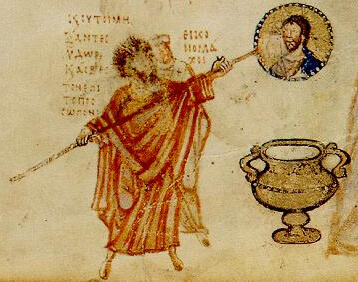
It was precisely this central role that led to the eruption of the Iconoclast Controversy in the 8th century. The Byzantine Empire at the time was in profound crisis: it had lost vast territories in the East and South to the Arabs, faced repeated invasions in the Balkans, and endured famines, plagues, and internal instability. Many wondered whether these disasters were signs of God’s wrath, and the legitimacy of existing religious practices came under scrutiny.
In this climate of insecurity, Emperor Leo III (r. 717–741) and his successors condemned the veneration of icons as idolatrous, provoking widespread destruction of images and violent debates across the Empire.
Iconoclasm was not merely a theological dispute; it reflected deeper political, social, and military tensions, as emperors sought to consolidate authority while confronting both internal dissent and the external challenge of Islam, a faith strictly opposed to figural imagery.
The controversy divided Byzantine society for over a century, until the final restoration of icons in 843 under Empress Theodora. This moment, celebrated as the Triumph of Orthodoxy, reaffirmed the theological legitimacy of icons: they were not worshiped as idols, but venerated as windows to the divine, mediating the presence of Christ and the saints. From then on, icons became even more deeply enshrined in Byzantine religious practice and artistic expression, their role sanctified by both theology and tradition.
The Triumph of Orthodoxy: Restoration and veneration of Icons
The defeat of iconoclasm did not happen overnight. After the initial wave of destruction under Leo III and his son Constantine V, the first attempt at restoration came with the Second Council of Nicaea in 787, convened by Empress Irene. This council declared that icons were not idols but could be legitimately venerated (proskynesis) as distinct from the worship (latreia) reserved for God alone. This crucial theological distinction laid the foundation for their lasting place in Orthodox belief and practice.

However, iconoclasm resurfaced in the early 9th century, particularly under Emperor Leo V (813–820). The struggle only ended definitively in 843, when Empress Theodora, acting as regent for her young son Michael III, reinstated the veneration of icons. The event was celebrated with a solemn procession in Constantinople and is commemorated annually in the Orthodox Church as the Triumph of Orthodoxy on the first Sunday of Lent.
From this moment onward, icons were not just tolerated — they were theologically affirmed as essential to Orthodox spirituality. The writings of Church Fathers such as John of Damascus and Theodore the Studite shaped the defense of icons, emphasizing their role as a means of making the invisible visible. Icons were regarded as “windows to heaven,” allowing the faithful to glimpse divine realities through earthly materials like wood and paint.
This theological foundation profoundly influenced Byzantine art and culture. Icons became omnipresent — on iconostases in churches, carried in imperial and religious processions, treasured in households, and even used as protective talismans in battle. The restored status of icons elevated their production to one of the highest forms of artistic creation in Byzantium, setting standards of style, symbolism, and theology that endured until the fall of the Empire and far beyond, into the Orthodox traditions of Russia, the Balkans, and the Eastern Mediterranean.
Middle and Late Byzantine Icons (10th–15th centuries)
From the 10th century onward, Byzantine icon painting reached new heights of technical sophistication and spiritual expression. Artists mastered the use of gold leaf, enhancing the divine radiance of their subjects, and developed increasingly complex symbolism to convey theological concepts. Narrative cycles depicting the lives of Christ, the Virgin, and the saints became more elaborate, guiding viewers through sacred stories and inviting contemplation.
While Constantinople remained the primary artistic hub, regional workshops in Thessaloniki, Mount Athos, Crete, and Ohrid cultivated their own styles. Constantinopolitan icons often prioritized formal elegance, idealized figures, and refined techniques, whereas provincial works could display greater emotional immediacy, local color, or narrative detail.
Several masterpieces from this period highlight the diversity and quality of Byzantine iconography. The Vladimir Virgin, originating from Constantinople but revered in Russia, exemplifies refined spiritual expressiveness. Icons from Ohrid reveal provincial adaptations of Constantinopolitan style, emphasizing vivid colors and approachable figures for local devotion.
Together, these works illustrate how Byzantine icons combined artistic innovation, spiritual purpose, and regional adaptation, ensuring their enduring influence throughout the Orthodox world and beyond.
 Icon of Vladimir, ca. 1150
 Icon of St. Clement, Perybleptos Monastery in Ohrid, end 14th century
The Post-Byzantine Legacy
Even after the fall of Constantinople in 1453, the artistic and spiritual tradition of Byzantine icons continued to flourish. The Orthodox Slavic lands—particularly Russia, Serbia, and Bulgaria—adopted and adapted Byzantine models, producing icons that preserved the theological depth, compositional schemes, and symbolic richness of their predecessors. Russian icon painting, for example, absorbed Byzantine techniques while developing distinctive local features, such as elongated figures and heightened emotional expressiveness.
Monastic centers, most notably those on Mount Athos, became guardians of the Byzantine icon tradition. Monks maintained workshops, copied classic prototypes, and continued to train artists in the time-honored techniques of egg tempera, gilding, and meticulous detailing. These monasteries ensured that both the artistic and devotional aspects of icons remained central to Orthodox spirituality.
In the modern era, Byzantine iconography remains deeply influential within Orthodox worship. Icons continue to serve as focal points for prayer, liturgical processions, and private devotion, linking contemporary believers to centuries of artistic and theological heritage. Their enduring presence underscores the lasting power of Byzantine visual culture, both as art and as an expression of faith.
Materials and techniques of Byzantine Icons
The creation of Byzantine icons was both a technical and spiritual act, guided by a strict set of traditions that aimed to express divine truth rather than mere artistic individuality. While painted panels are the best known, icons in Byzantium were made in a wide variety of materials and techniques—reflecting the empire’s rich artistic culture and its devotion to sacred imagery.
The most common type, the wooden panel icon, was prepared with layers of linen and gesso to form a smooth ground for painting. Artists used egg tempera, made from natural pigments and egg yolk, to achieve luminous, enduring colors. Precious minerals such as lapis lazuli, cinnabar, and malachite provided brilliant hues, while gold leaf symbolized the divine light that surrounded the holy figures. Earlier examples, such as those preserved at Saint Catherine’s Monastery on Mount Sinai, employed the ancient encaustic technique, where pigments were mixed with hot wax—a method inherited from Greco-Roman portraiture.
Beyond panel painting, icons also appeared as ivory reliefs, steatite carvings, embroideries, and repoussé metalworks adorning processional crosses, book covers, and reliquaries. The rarest icons of all were made of tesserae — see them in our guide to the most beautiful Byzantine mosaics. Regardless of medium, every icon followed a sacred rhythm of production, often accompanied by prayer and fasting. The goal was not to imitate nature but to reveal the transfigured reality of the divine.
Iconographic types and subjects of Byzantine Icons
Christ Icons
In Byzantine art, Christ occupies a central theological and liturgical role, and this is reflected in the rich tradition of Christ icons. Among the most significant types are the Pantocrator, Christ Emmanuel, and Christ the Teacher.
The Christ Pantocrator — meaning “Ruler of All” — typically depicts Christ with a solemn, frontal gaze, holding the Gospel in one hand and blessing with the other. This iconic representation embodies his divine authority and eternal presence, often placed in the domes of churches to dominate the sacred space. Christ Emmanuel, emphasizing his incarnation, presents the child Jesus in a full-length or half-length figure, sometimes in the arms of Mary, symbolizing both divinity and humanity. The Christ the Teacher type focuses on his role as the ultimate guide, often illustrated with an open book or gesture of instruction.
Beyond their artistic merit, these icons functioned as central liturgical tools, aiding worshippers in prayer, contemplation, and instruction in the core tenets of the faith. They exemplify the Byzantine fusion of symbolism, theology, and visual artistry, establishing a standard for Orthodox iconography that continues to influence Christian art to this day.
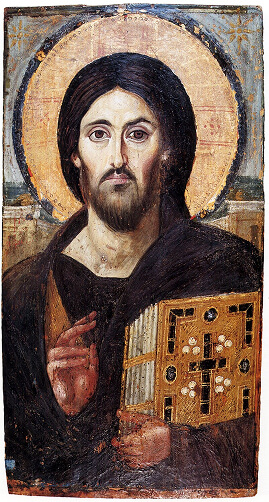 Byzantine icon of Christ Pantocrator, 6th and 13th century, Saint Catherine Monastery in Sinai
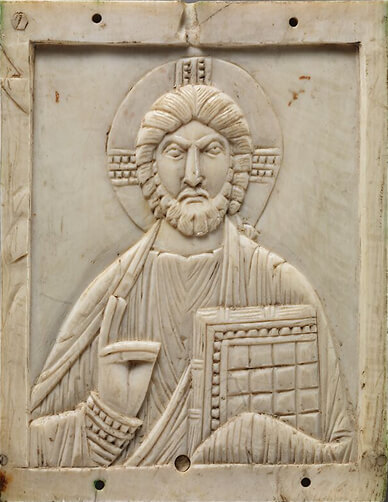 Byzantine icon of Christ Pantocrator, 11th-12th century, Metropolitan Museum
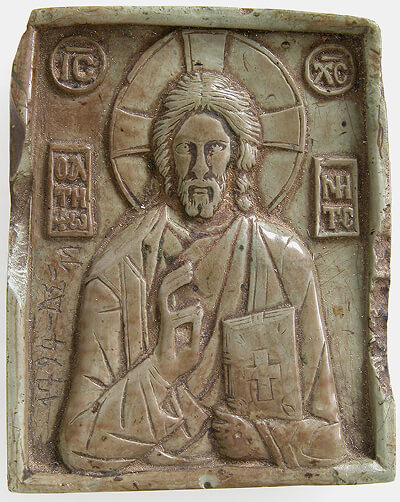 Late Byzantine icon of Christ Pantocrator, 14th century, Metropolitan Museum
Icons of the Virgin Mary (Theotokos)
No figure after Christ held greater prominence in Byzantine spirituality and art than the Virgin Mary, or Theotokos—literally, “God-bearer.” She was venerated as both the intercessor between humanity and Christ and as the protector of the Byzantine Empire, whose wellbeing was often entrusted to her care. Her image became a symbol of divine compassion and imperial legitimacy alike.
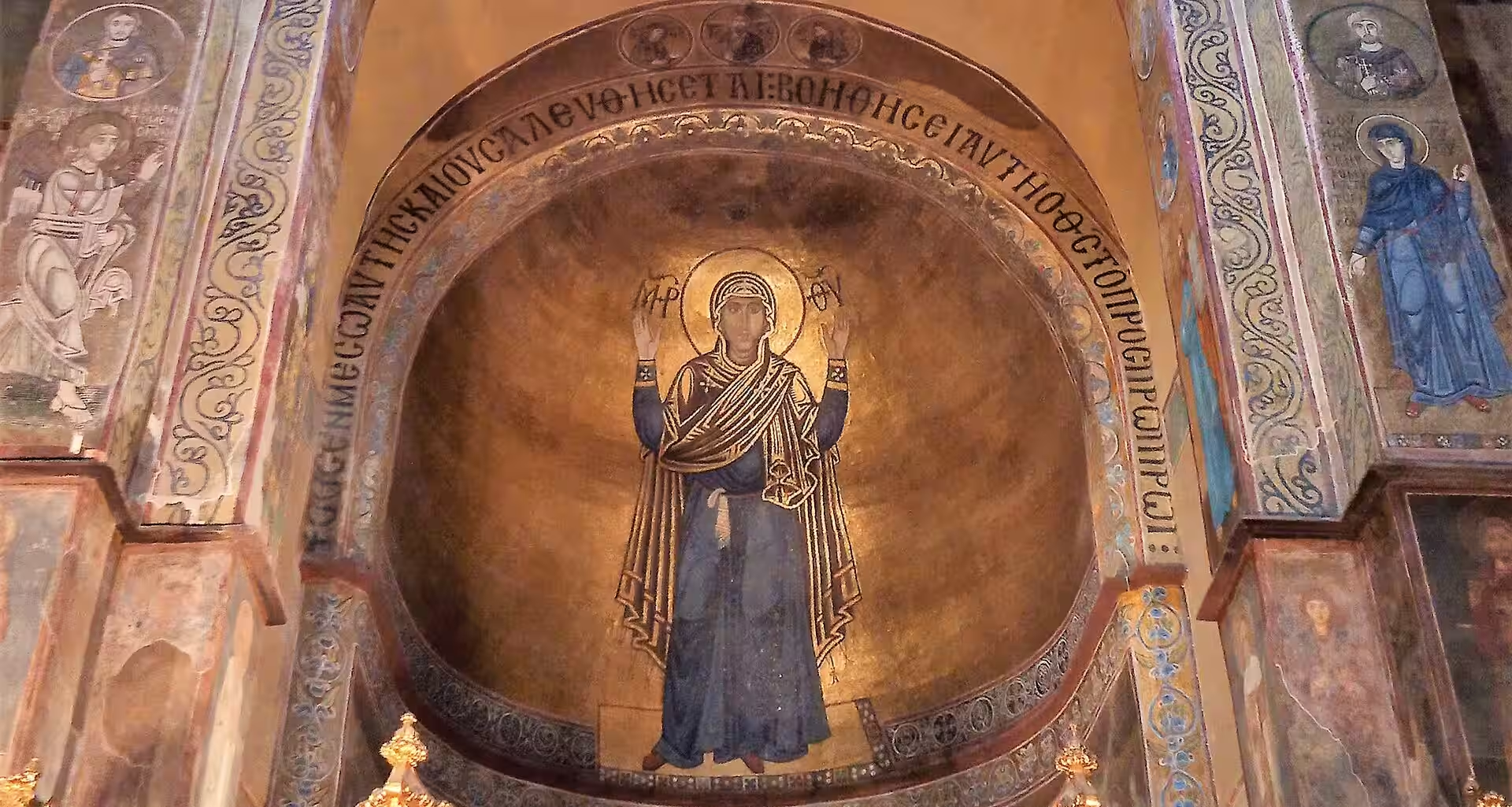
Byzantine artists developed several distinct iconographic types to express different facets of the Virgin’s nature. The Hodegetria (“She who shows the Way”) presents Mary pointing to Christ as the source of salvation; this type was associated with the famed Hodegetria icon of Constantinople, believed to have safeguarded the city. The Eleousa (“Tenderness”) depicts a deeply intimate relationship between mother and child—their cheeks touching—emphasizing the humanity and love of Christ. The Orans type shows Mary in prayer, her hands raised in intercession for the world, a powerful expression of her mediating role.
Each image functioned not merely as an object of devotion but as a theological statement on the Incarnation and the Virgin’s role in redemption. The veneration of Marian icons, such as the Vladimir Virgin or the Blachernitissa, reveals how profoundly these images shaped Byzantine piety and artistic tradition.
-
Virgin Orans: The Praying Mother of God in Byzantine Art
Discover the Virgin Orans, the Byzantine image of Mary in prayer — from the Blachernitissa of Constantinople to the Platytera of the apse and the Virgin of the Sign.
-
Virgin Eleousa: Compassionate Mother in Byzantine Iconography
Learn about the Virgin Eleousa, a Byzantine iconographic type showing Mary and Christ in a moment of tender compassion.
-
The Virgin Hagiosoritissa, of the holy reliquary
Explore the Virgin Hagiosoritissa, an iconic Byzantine depiction of Mary in prayer or entreaty, also known as Maria Advocata.
-
The Virgin Hodegetria, who shows the way
Explore the history, meaning, and influence of the Virgin Hodegetria in Byzantine art. Discover its origins, symbolism, and legacy in Christian iconography.


Saints and Martyrs
The veneration of saints and martyrs held a central place in Byzantine devotion, and their icons were regarded as tangible links between the earthly and the heavenly realms. These figures, once human, stood as models of faith and intercessors before God, embodying courage, asceticism, and divine protection.
Among the most revered were the warrior saints—such as George, Demetrius, and Theodore—whose icons adorned both churches and military camps. Depicted in armor and often mounted on horseback, they symbolized the triumph of Christian virtue over evil and the Empire’s enduring strength against its enemies. The popularity of these images reflected not only the Byzantines’ martial culture but also their belief that divine forces guided their armies in battle.
Other icons represented bishops, monks, and hermits, including figures like St. Nicholas, St. Basil the Great, and St. Antony the Great, whose serene visages expressed spiritual wisdom and inner peace. Such icons were often chosen as personal protectors, carried by travelers or placed in homes, offering comfort and intercession in times of need. Through these portraits, Byzantine artists conveyed both the individuality of sanctity and the universality of divine grace, creating an enduring visual language that still defines Orthodox spirituality today.
 Icon showing saint Peter, 7th Century, Saint Catherine monastery in Sinai
 13th century russian icon of the Novgorod school depicting saint John Climacus
- Icon of St. Clement, Perybleptos Monastery in Ohrid, end 14th century
Feast and narrative icons
Among the most vivid expressions of Byzantine spirituality are the Feast and Narrative Icons, which illustrate key events from the life of Christ, the Virgin Mary, and the major liturgical feasts of the Orthodox calendar. These icons served both didactic and liturgical functions, helping the faithful visualize sacred history and participate more deeply in the rhythm of the Church year.
The Twelve Great Feasts—including the Nativity, Baptism (Theophany), Transfiguration, Crucifixion, and Resurrection (Anastasis)—were commonly represented in cycles adorning iconostases or portable panels. Each composition was carefully structured to express theological truths through symbolic gestures, spatial hierarchies, and color. For instance, the Anastasis, depicting Christ’s descent into Hades and the liberation of Adam and Eve, conveyed the victory of life over death with striking dramatic force.
Beyond the feasts, narrative icons recounted episodes from the Gospels, the lives of saints, and even apocryphal stories, allowing worshippers to engage visually with the sacred text. In monastic settings, such icons became tools for contemplation, inviting meditation on divine mysteries rather than mere storytelling. Through their clarity, symbolism, and rhythm, these icons transformed theology into image, embodying the Byzantine ideal of “seeing through the visible to the invisible.”
From the Divine to the human hand: The makers of Icons
In Byzantium, certain icons were believed to be acheiropoietoi—“not made by human hands.” These miraculous images, such as the Mandylion of Edessa or the Keratiniotissa, were said to have appeared supernaturally, attesting to the divine nature of sacred representation. Yet behind the countless icons that adorned Byzantine churches and homes stood real men, working patiently with brush and pigment, transforming wood and wax into manifestations of faith.
These icon painters, or zographoi, did not see themselves as artists expressing individuality but as humble servants translating the invisible into visible form. Many were monks, particularly in major spiritual centers like Mount Athos, Sinai, or Studion, where painting was a form of prayer and ascetic practice. Others were lay artisans, trained in urban workshops or employed by imperial and ecclesiastical patrons. Whether anonymous craftsmen or renowned masters such as Michael and Eutychios Astrapas, Manuel Panselinos, or Theophanes the Greek, all worked within a sacred tradition that saw the creation of an icon as a liturgical act—an encounter between divine inspiration and human devotion.
-
Michael & Eutychios Astrapas, Byzantine painters of the Macedonian School
Michael and Eutychios Astrapas are masters of the Macedonian School and were active in the Balkans between 1294 and 1317.
Where to see Byzantine icons today
Byzantine icons survive in two very different settings: museum collections, where the great panel icons can be studied up close, and the churches and monasteries for which images of this kind were originally made. A short selection of the most rewarding places:
In museums. The Byzantine and Christian Museum in Athens holds one of the world’s richest icon collections, including the mosaic icon of the Virgin Episkepsis. The Museum of Byzantine Culture in Thessaloniki complements it with icons from Macedonia. In Moscow, the Tretyakov Gallery preserves the most famous of all Eleousa icons, the Virgin of Vladimir. The British Museum in London displays the Triumph of Orthodoxy icon illustrated above, and the Metropolitan Museum of Art in New York and Dumbarton Oaks in Washington hold important panels, ivories, and steatites.
In their original setting. Saint Catherine’s Monastery in Sinai preserves the oldest icons in existence, including the 6th-century encaustic Christ Pantocrator — the only major collection to escape iconoclasm untouched. The monasteries of Mount Athos guard hundreds of icons still in liturgical use, though access is restricted. And in Rome, two icons connected to the types discussed on this site can be seen in churches: the Salus Populi Romani, an early Hodegetria variant, in Santa Maria Maggiore, and the Madonna del Rosario, of the Advocata type, at the Monastero di Santa Maria del Rosario.
This list only scratches the surface — icons of Byzantine tradition survive in churches, monasteries, and museums across Greece, the Balkans, Italy, Russia, and beyond. For the full tour, see our guide to the great Byzantine collections around the world.
Icons truly embody the quintessence of Byzantine art: they are at once theological statements, devotional tools, and masterpieces of artistic expression. Born from the early Christian search for sacred imagery, tested by centuries of controversy, and refined through the artistic genius of generations, they reflect both the resilience and the creativity of Byzantine culture.
For the Byzantines, icons were not optional embellishments but essential mediators between the earthly and the divine, shaping the way believers saw the world and their place within it. Their influence extended far beyond the borders of the empire, becoming a cornerstone of Orthodox spirituality and leaving an enduring mark on European and global art.
Even today, standing before a Byzantine icon—whether in a church, a museum, or a private collection—one encounters the unique blend of faith and artistry that made Byzantium one of the greatest civilizations of the medieval world.
Frequently asked questions about Byzantine icons
What are the main types of Byzantine icons?
By subject, the main categories are icons of Christ (Pantocrator, Emmanuel), icons of the Virgin Mary (Hodegetria, Eleousa, Hagiosoritissa, Orans), icons of saints and martyrs, and feast or narrative icons depicting events such as the Nativity or the Anastasis. Each follows a fixed iconographic formula that made it recognizable throughout the Orthodox world.
How were Byzantine icons made?
A wooden panel was covered with linen and gesso, then painted in egg tempera — pigments bound with egg yolk — and finished with gold leaf symbolizing divine light. The earliest surviving icons instead used encaustic, pigments mixed with hot wax. Icons were also produced as mosaics, ivories, enamels, and embroideries, and their creation was treated as a devotional act, often accompanied by prayer and fasting.
Why were Byzantine icons destroyed?
During the Iconoclast Controversy (roughly 726–843), emperors beginning with Leo III condemned the veneration of icons as idolatry, and countless images were destroyed. The crisis reflected theological disputes as well as the political and military turmoil of the age. Icon veneration was definitively restored in 843 under Empress Theodora, an event still celebrated as the Triumph of Orthodoxy.
Who painted Byzantine icons?
Icon painters (zographoi) were mostly anonymous monks and lay artisans who saw themselves as servants of a sacred tradition rather than individual artists. A few names survive, such as Michael and Eutychios Astrapas and Theophanes the Greek. Certain revered icons were held to be acheiropoieta — “not made by human hands” — miraculous images of divine origin.
What is the oldest surviving Byzantine icon?
The oldest surviving panel icons are the 6th-century encaustic images preserved at Saint Catherine’s Monastery in Sinai, above all the famous Christ Pantocrator. They survived iconoclasm because the monastery lay outside the empire’s control after the Arab conquests.
Are icons still made today?
Yes. Byzantine iconography never died: Orthodox workshops from Greece to Russia continue to paint icons following the traditional types and techniques, and icons remain central to Orthodox worship, both in churches and in homes.
Sources and further reading
- Hans Belting, Likeness and Presence: A History of the Image before the Era of Art, University of Chicago Press, 1994.
- Robin Cormack, Icons, British Museum Press, 2007. Leslie Brubaker and John Haldon, Byzantium in the Iconoclast Era, c. 680–850: A History, Cambridge University Press, 2011.
- Kurt Weitzmann, The Monastery of Saint Catherine at Mount Sinai: The Icons, vol. I: From the Sixth to the Tenth Century, Princeton University Press, 1976.
- Helen C. Evans and William D. Wixom (eds.), The Glory of Byzantium: Art and Culture of the Middle Byzantine Era, A.D. 843–1261, The Metropolitan Museum of Art, 1997. Free on MetPublications
- Helen C. Evans (ed.), Byzantium: Faith and Power (1261–1557), The Metropolitan Museum of Art, 2004. Free on MetPublications
- John of Damascus, Three Treatises on the Divine Images, trans. Andrew Louth, St Vladimir’s Seminary Press, 2003.
- Alexander Kazhdan (ed.), The Oxford Dictionary of Byzantium, Oxford University Press, 1991 — entry “Icons.” Sarah Brooks, “Icons and Iconoclasm in Byzantium,” Heilbrunn Timeline of Art History, The Metropolitan Museum of Art.