
Byzantine Imperial Palaces in Constantinople and beyond
From the grandeur of Rome to the splendor of Constantinople, the palace remained the ultimate symbol of imperial authority. In Byzantium, this Roman institution evolved into a network of residences and ceremonial centers reflecting the empire’s changing politics and ideals of imperial power.
In the Early Byzantine period, the heart of imperial life was the Great Palace of Constantinople, adjoining Hagia Sophia and the Hippodrome. It served as both royal residence and administrative hub, where the emperor embodied divine and earthly authority. Yet the court also occupied secondary palaces around the city – such as Hebdomon and Daphne- used for ceremonies, military reviews, and retreat.
During the Middle Byzantine era, emperors maintained the practice of using secondary palaces in and around the city, but the Great Palace gradually declined in importance as they shifted their main residence to the Blachernae Palace near the city walls. This move reflected a more pragmatic, militarized court and a departure from the ceremonial grandeur of the early empire.
By the Late Byzantine period, imperial power had fragmented, and new courts emerged in Nicaea, Trebizond, Mistra, and Arta, where regional rulers upheld and reinterpreted the imperial ideal. Palaces across these centers became symbols of continuity and adaptation in a world of shifting authority.
Together, they trace how architecture mirrored the evolution – and endurance – of imperial power from Constantinople to its farthest frontiers. This article explores Byzantine palaces through three lenses: The palaces in Constantinople, the suburban and ceremonial residences around the capital, and the regional palaces of the wider Byzantine world, when multiple regional centers of power appear following the sack of Constantinople in 1204.
Imperial Palaces of Constantinople.
As the heart of the Byzantine Empire, Constantinople concentrated the full expression of imperial authority and ceremonial life. From the city’s foundation, its palaces embodied the power, prestige, and continuity of the Roman imperial tradition. The Great Palace served as the primary residence of the emperors during the Early and Middle Byzantine periods, forming a vast complex that combined administrative, residential, and ceremonial functions.
Over time, emperors expanded their presence across the capital, commissioning new residences and refurbishing older ones to reflect shifting needs and tastes. By the 11th century, the Blachernae Palace near the city walls had supplanted the Great Palace as the main imperial residence, symbolizing a more fortified and pragmatic court.
The Latin occupation of Constantinople (1204–1261) left many of the city’s palaces in ruin. Under the Palaiologan dynasty, only the Blachernae Palace remained in use, while no new imperial residences were built—marking both the endurance and the decline of Byzantine architectural splendor in the capital.
The Great Palace (Sacred Palace), epicenter of the empire (4th to 11th century).
Discover more information about the Great Palace in the dedicated article.
The Great Palace was the epicenter of Byzantine imperial power and grandeur for nearly a millennium. Located in the southeastern part of the peninsula that now forms the Fatih district of Istanbul, this sprawling complex served as the primary residence of the emperors and the administrative heart of the Byzantine Empire.
Constructed by Emperor Constantine the Great in the 4th century, the Great Palace was enlarged by his successors. Following the classical Roman model of palatial complexes, it included a variety of halls (often called palaces), gardens, porticoes, chapels, monumental gates, and administrative buildings. Among the main elements were the Palace of Daphne (which served as the principal imperial residence in the Early Byzantine period), the Chrysotriklinos (the main throne hall built by Justin II and expanded by Basil I), the Chalke Gate, and the Boukoleon Palace.
The Great Palace began to decline in the 11th century, as emperors increasingly favored the Blachernae Palace near the city walls. The final blow came during the Fourth Crusade in 1204, when the palace was plundered and largely destroyed. Today, only a few remnants testify to its past glory: the Museum of the Great Palace Mosaics, some foundations scattered around the area and the ruins of the Boukoleon.


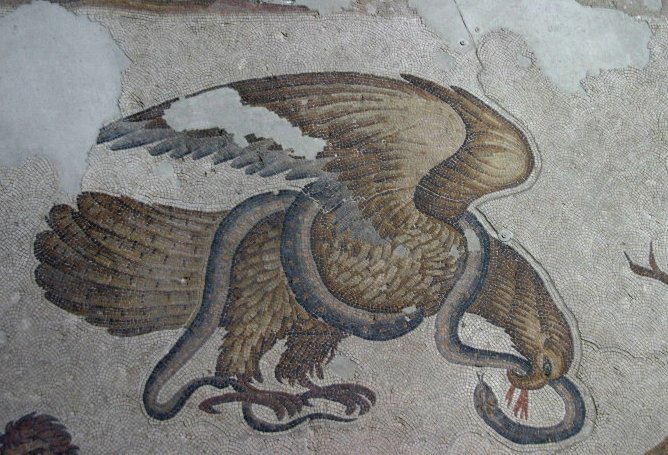
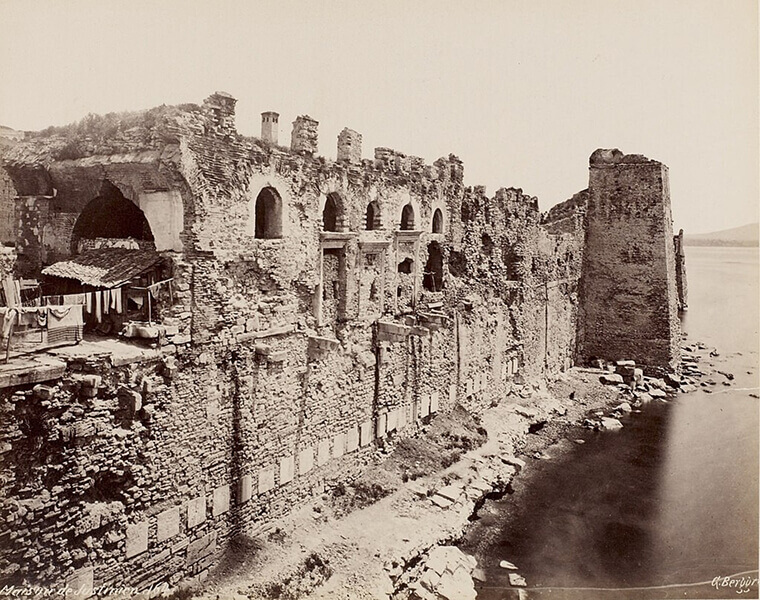
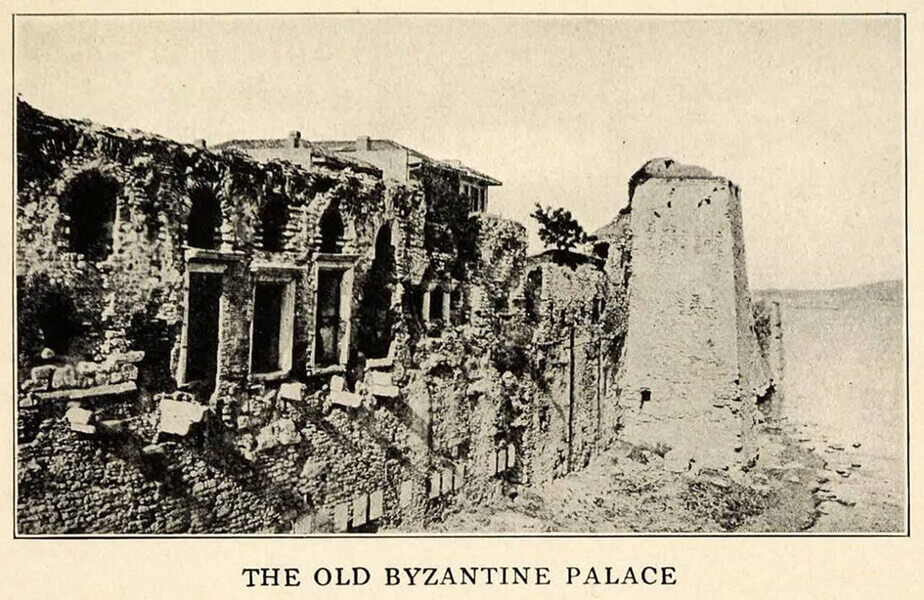
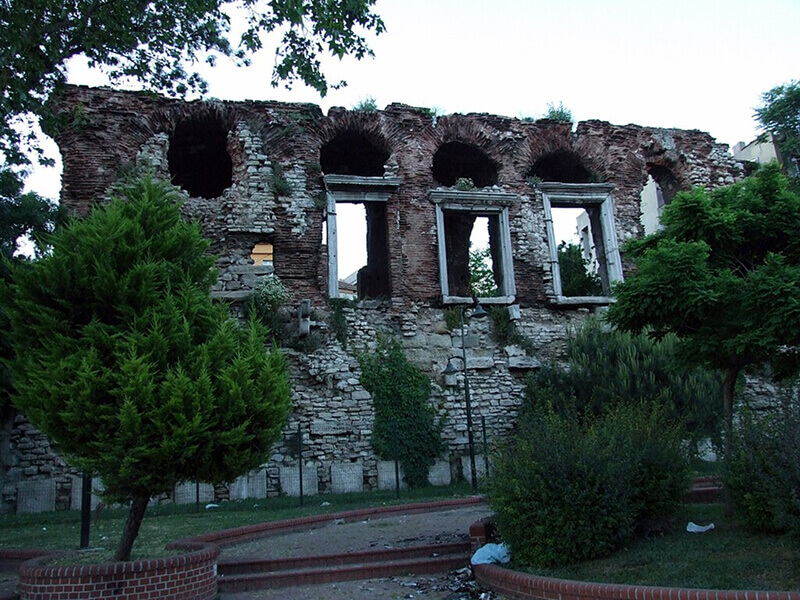
The Boukoleon Palace stands as one of the most significant and best-preserved remnants of the Great Palace complex. Strategically located along the southern shores of the Sea of Marmara, it was constructed during the reign of Emperor Theodosius II (r. 408–450) and later expanded by subsequent emperors, including Theophilos (r. 829–842) and Nikephoros II Phokas (r. 963–969).
The palace was situated to the south, near the Church of Sts. Sergius and Bacchus, and east of the Hippodrome. Its seafront location provided a majestic view of the sea and facilitated direct access via a private harbor, complete with a flight of marble steps leading to imperial vessels. Although somewhat isolated from the main buildings of the Great Palace complex, the Boukoleon was integrated architecturally through a series of porticos and courtyards. It served as an extension of the imperial residence, fulfilling both ceremonial and recreational purposes. Additionally, it had another major function: it housed the regalia of the Byzantine emperors, while its chapel contained numerous sacred relics.
Over time, the Boukoleon became a focal point for imperial diplomacy and religious gatherings. Emperor Manuel I Komnenos convened a church council there in 1166, and the palace hosted meetings with foreign dignitaries, such as the Sultan of Rum, Kilij Arslan II, in 1161, and the King of Jerusalem, Amalric, in 1171. Nonetheless, the Boukoleon, along with the entire Great Palace, began to decline in importance in the 11th century. The Fourth Crusade’s sack of Constantinople in 1204 further accelerated its decline. Although it continued to serve as an imperial residence under the Latin Empire, it fell into disrepair after the Byzantines reclaimed the city in 1261. By the time of the Ottoman conquest in 1453, the Boukoleon was largely abandoned.
Today, the Boukoleon Palace remains one of only two standing Byzantine palaces in Constantinople. Despite considerable damage in the early 20th century due to the construction of the railroad, it still offers a glimpse into the opulence and grandeur of the Byzantine imperial court and has been recently renovated and turned into an archaeological park.
The Myrelaion complex.
The Myrelaion complex, located in the heart of Constantinople is a lesser-known and short-lived residence of the Byzantine Empire. After his accession to the throne, Emperor Romanos I Lekapenos (920-944) used a house that he possessed near the forum of Theodosius as the core of a new imperial palace, intended to challenge the Great Palace, become a family shrine of the Lekapenos family and establish their legitimacy. It included a palace built on the top of a giant 5th century rotonda converted into a vaulted cistern, and a church meant to be used as a burial place for the new imperial family. Romanos’ wife Theodora was the first person to be buried there in 922, before his son Christopher in 931, interrupting the tradition of imperial burial in the Church of the Holy Apostles. After his deposition and death, Romanos was also buried there. The complex was not used by the later emperors, and the palace, probably reconverted in monastic buildings, diseappeared at some point, maybe in the fire of 1203. Nonetheless, the cistern, the church and its substructures still survive today.
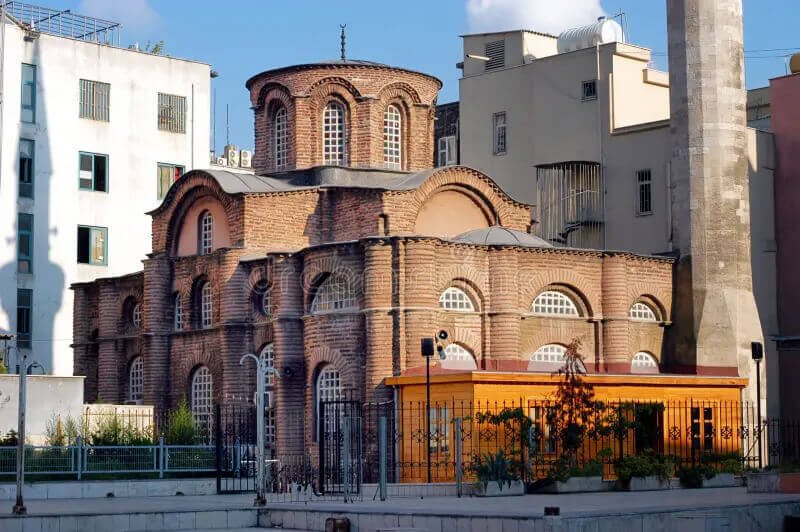 Church of the Myrelaion (modern Bodrum Camii), 10th century
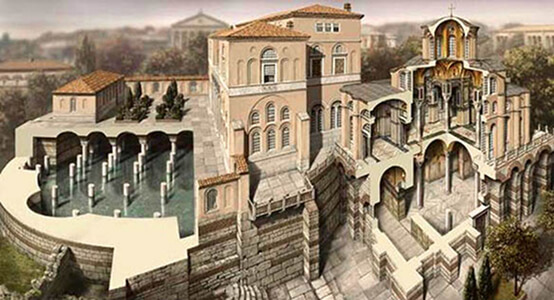 Hypothetical restitution of the complex of the Myrelaion, with the cistern, palace and church
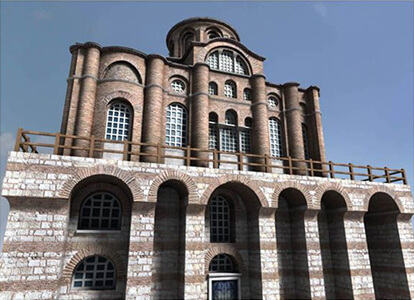 Restitution of the Myrelaion Church and its substructure
The Mangana Palace.
The Mangana Palace, located in the southeastern part of Constantinople, was one of the most splendid imperial residences of the Byzantine Empire. Built by Emperor Michael VII Doukas (1071-1078), the palace was named after the Mangana quarter. The palace was strategically located near the Sea of Marmara, offering stunning views and easy access to the city’s bustling harbor. The Mangana Palace was renowned for its luxurious decorations and elaborate gardens. The complex included a series of interconnected buildings, each serving a specific function, including the St. George chapel and vast gardens.
The Mangana Palace began to decline in the 12th century, as the Byzantine Empire faced increasing political and military challenges. The palace was gradually abandoned and fell into ruin, with many of its materials being repurposed for other buildings in the city. Today, there is nothing left from it.
The Blachernae Palace, new center of power in the Byzantine capital.
The Blachernae Palace, located in the northwestern part of Constantinople (modern-day Istanbul), was the most significant imperial residences from the end of the Middle Byzantine period to the fall of the empire in 1453. It was built in the 11th century and soon supplanted the Great Palace as the primary residence of the emperors, from the reign of Alexios I Komnenos (1081-1118).
Strategically located next to the city’s formidable land walls – later extended to enclose the palace area – the complex enjoyed both prestige and strong defenses. The palace became the political and cultural center of the Byzantine Empire under the Komnenoi and remained so under the Palaiologan until the fall of Constantinople in 1453. Built on several terraces at different levels, the complex comprised multiple buildings following the blockhouse architectural type that had replaced the classical peristyle layout of earlier Roman palaces. It also included vast gardens and several churches, most notably the Church of the Virgin of Blachernae, one of the oldest and most venerated sanctuaries of the Byzantine capital.
The website Byzantium 1200 proposes a hypothetical reconstruction of the palace.
Today, the main surviving structures of the Blachernae complex are the Palace of the Porphyrogenitus and the Aretas Tower, while scattered ruins appear throughout the surrounding area. No systematic archaeological excavations have yet been carried out on the site.
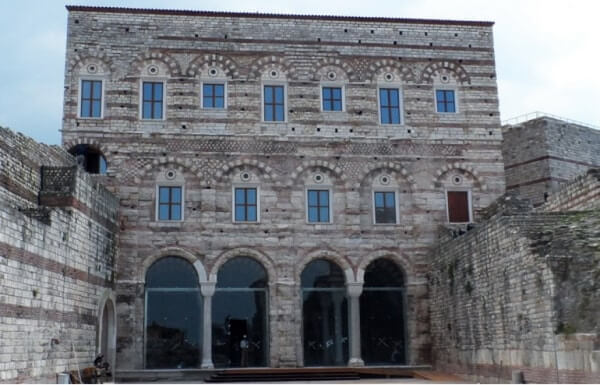 View of the Porphyrogenetos palace (Tekfur Sarayi) from the courtyard.
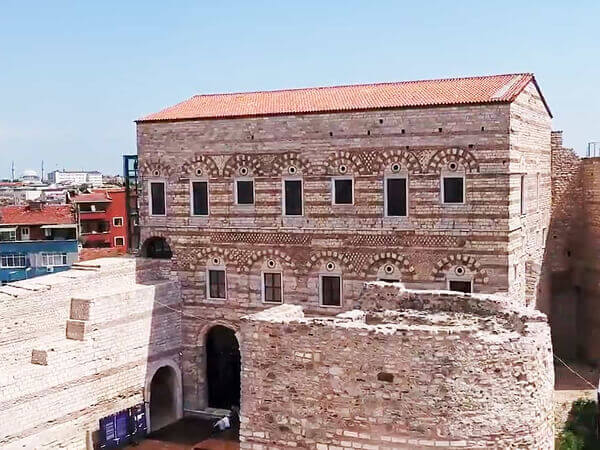 View of the Tekfur Sarayi after restoration.
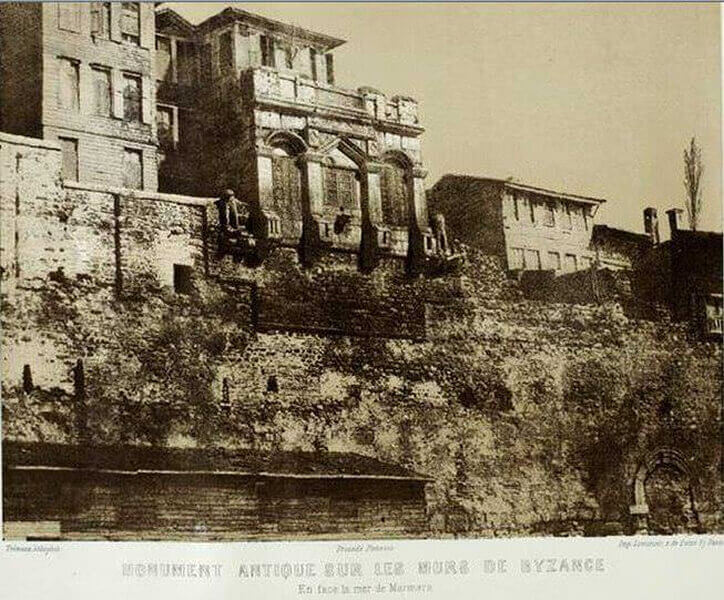
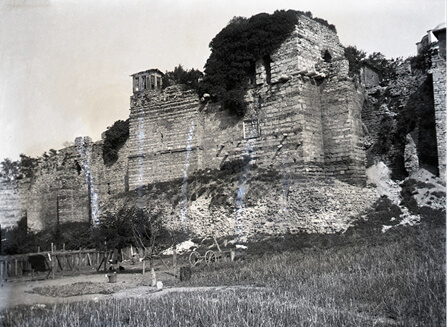 Old view of the so-called tower of Isaac and the prison of Anemas from outside the walls of Constantinople
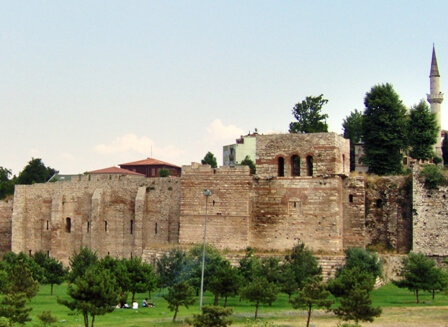 Same view of the prison of Anemas, from outside the city
Imperial palaces and residences around Constantinople.
The Hebdomon Palace.
Located about seven Roman miles west of Constantinople in the area of modern Bakırköy, the Hebdomon was a major suburban imperial complex from Late Antiquity through the Middle Byzantine period. From the 4th century, the site served as a military encampment on the expansive plain called the Kampos, modeled after Rome’s Campus Martius. Emperors would appear before the troops on a platform known as the Tribunal, where Valens was proclaimed emperor in 364; the platform later received a monumental elevation with niches housing statues of emperors. Several churches were also constructed in the area by Constantine and Theodosius I. A harbour was established at the end of the 4th century, facilitating imperial and ceremonial access by sea. It was restored by Justinian, along with some of the churches.
The palace infrastructure itself included the Magnaura Palace (bearing the same name than one part of the Great Palace), built under Marcian and used for formal ceremonies before the senate when the emperor returned from victorious campaigns, and the Ioukoundianai (Secundianai) Palace, constructed under Justinian, featuring a sea-facing belvedere. Additional civic amenities included forums, porticoes, and baths. The area was also fortified with two castles flanking the harbor: the eastern Kastellion Stroggulon (or Kuklobion) and the western Theodosianæ, which housed the elite Theodosian troops.
Hebdomon suffered during the Arab raids of 674–677, the siege of 717–718, and the Bulgarian campaigns under Khan Krum in 813. Major restorations occurred under Basil I (867-886). By the 10th century, as recorded in Constantine VII Porphyrogennetos’ De Ceremoniis, Hebdomon retained its ceremonial importance, particularly for welcoming emperors returning from campaigns.
Archaeological excavations led by Robert Demangel in 1921–1923 uncovered remains of the Tribunal, the façade with niches, the Church of Saint John the Baptist (later destroyed in 1965), architectural fragments including a granite column dedicated to Theodosius II, portions of underground galleries, and five Byzantine cisterns, two of which are still well-preserved. The Hebdomon complex thus combined military, ceremonial, religious, and residential functions, reflecting its significance as a suburban extension of imperial authority.
The Damastris Palace.
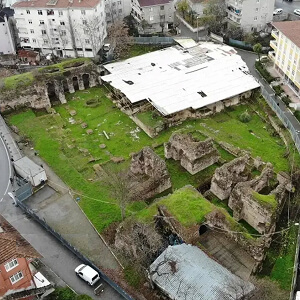
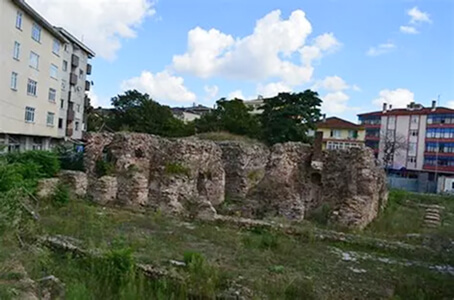
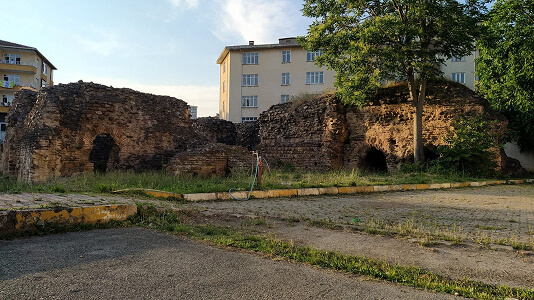
The palace is located in Samandira, in the Sancaktepe district, an Asian suburban part of Istanbul. It was built during the reigns of the Byzantine emperors Tiberius II (578–582) and Maurice (582–602). Its name derives from Demeter, the goddess of agriculture and fertility. During the Byzantine period, it served both as a hunting and resting residence and as a strategic gateway linking Istanbul to Anatolia.
Because it stood along the route of military campaigns to Anatolia, the palace became a key accommodation and assembly point for the Byzantine army. Emperors returning from Anatolia would traditionally spend their final nights here before entering the capital. While the emperor rested, messengers would ride ahead to Constantinople to announce the arrival and prepare the appropriate reception ceremonies. By the 12th and 13th centuries, the palace had largely fallen into disuse, although some emperors appear to have stayed there into the 14th century.
Today, its ruins still reveal a cross-shaped cistern, arches and vaults, indicating that the original complex once extended far beyond what remains visible. Due to its scale and architectural features, it is regarded as one of the most significant surviving Byzantine structures in the area. A small portion of the site containing the principal remains is now a protected archaeological zone.
The Bryas Palace of Emperor Theophilos.
The Palace of Bryas was built by Emperor Theophilos (r. 829–842) in Bithynia. According to historical sources, it was constructed in imitation of contemporary Islamic palaces and featured extensive gardens. The palace itself has not survived, and its precise location is still a subject of debate.
Based on known geographical indications, 20th-century scholars proposed that the ruins of a large structure at Küçükyalı, on the Asiatic side of modern Istanbul, might correspond to the Bryas Palace. However, more recent research and excavations have shown that these remains belong instead to the Monastery of Satyros, another significant monument from the same period. The exact location of the Bryas Palace therefore remains unidentified.
Other imperial and royal palaces of the wider Byzantine world.
The palace of Nymphaion, winter residence of the Emperors of Nicaea.
After the fall of Constantinople in 1204, the exiled Laskarid emperors of Nicaea established their court in western Asia Minor, choosing the Palace of Nymphaion, near modern İzmir, as their favored winter residence. Unlike the opulent palaces of Constantinople, Nymphaion reflected the restrained pragmatism of an empire in exile—its architecture combining dignity with austerity.
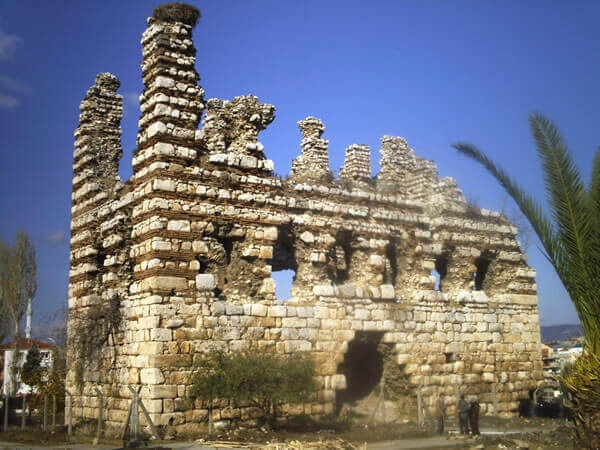
The palace consists of a rectangular, multi-storeyed block, originally four levels high, built in alternating courses of stone and brick. The lower floors employ massive ashlar masonry, while the upper levels display the characteristic red-and-white Byzantine patterning. Internally, cross and barrel vaults define the main chambers, and monumental exterior staircases once connected its upper stories. Ornamentation is minimal, emphasizing structural clarity and functional design rather than decorative excess.
Despite its simplicity, Nymphaion was the stage for significant historical events: emperors were proclaimed there, imperial councils convened, and in 1261 the crucial Treaty of Nymphaion with Genoa was signed, paving the way for the Byzantine reconquest of Constantinople.
Today, the surviving ruins remain one of the best-preserved examples of a secular Byzantine palace, offering rare insight into the political and architectural culture of the Laskarid dynasty.
Learn more about the history and architectural of the palace of Nymphaion in the dedicated article.
The ruins of the imperial palace of Trabzon in the fortress.
The Empire of Trebizond was founded in 1204 amid the Byzantine Empire’s internal turmoil by Alexios I Komnenos and his brother David, grandsons of Emperor Andronikos I Komnenos. Centered on Trebizond (modern Trabzon) along the southern Black Sea coast, the state claimed to continue the Byzantine imperial legacy while ruling the Pontic region. Despite its isolation, Trebizond flourished as a center of commerce, diplomacy, and art, preserving its independence until its Ottoman conquest in 1461.
The Imperial Palace of Trebizond once stood at the heart of the empire’s upper citadel, overlooking the Black Sea from the fortified heights of Ortahisar, the old upper town of modern Trabzon. It served as the principal residence of the Komnenos emperors, who ruled the Empire of Trebizond from 1204 to 1461. Within its walls, the emperors governed, received ambassadors, and upheld the ceremonial traditions of Byzantium in miniature, far from Constantinople yet deeply rooted in its legacy.
Little of the palace survives today. Centuries of decay, earthquakes, and later urban development have left only scattered remains within the old citadel – fragments of walls, foundations, and traces of courtyards that hint at the grandeur of the Komnenian court. Ongoing archaeological excavations have begun to uncover sections of the site, revealing masonry consistent with late Byzantine construction and confirming the palace’s location within the upper enclosure of the Trabzon fortress.
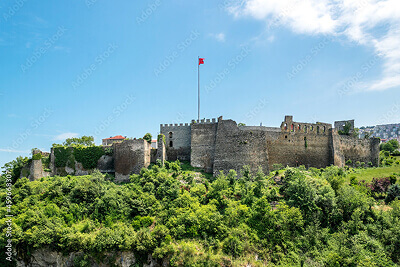 View of the fortress of Trabzon, where the imperial palace was located.
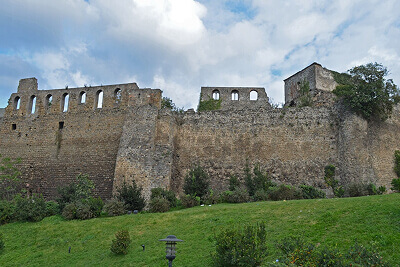 View of the ruins of the imperial palace.
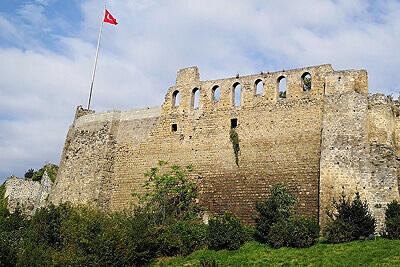 Ruins of the fortress walls and the imperial palace.
The palace of the Despots in Arta – a hypothesis
After the fall of Constantinople in 1204, the Despotate of Epirus emerged as one of the major Byzantine successor states. Michael I Komnenos Doukas established control over northwestern Greece and parts of Albania, setting up his court in Arta, which became the capital. The Despotate played a key role in regional politics, resisting both Latin and later Ottoman encroachments, and maintaining Byzantine culture, administration, and Orthodox Christianity.
The Castle of Arta crowns the city’s northeastern edge, resting on a low hill beside the river Arachthos and overlooking the fertile plain. Fortifications on the site draw upon older ancient walls of Ambracia; parts of the castle were built and expanded under the despot Michael II Komnenos Doukas in the 13th century. The castle has a trapezoidal shape, with eighteen-nineteen towers of varied types, and reached heights of around 10-11 meters at certain walls.
Inside the castle, ruins of a large Byzantine-era building survive. Some scholars believe this building may have been the multistory palace of the Despots of Epirus. Although the evidence is fragmentary, its size, location, and relationship to other structures (including a possible palace church) strengthen this hypothesis. Later constructions (including the “Xenia” hotel in the mid-20th century) have damaged much of the interior remains, limiting how much archaeological detail survives.
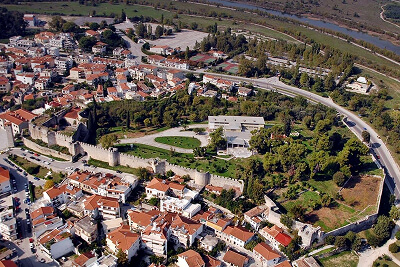 An aerial view of the castle of Arta and of the modern constructions inside.
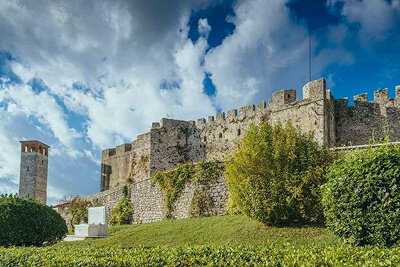 View of the walls of the castle.
The palace of the Despots in Mystras.
During the final centuries of the Byzantine Empire, the Despotate of the Morea, in the Peloponnese, emerged as one of its most important and enduring provinces. Established in the mid-14th century, it became a semi-autonomous appanage ruled by members of the imperial family and flourished economically and culturally.
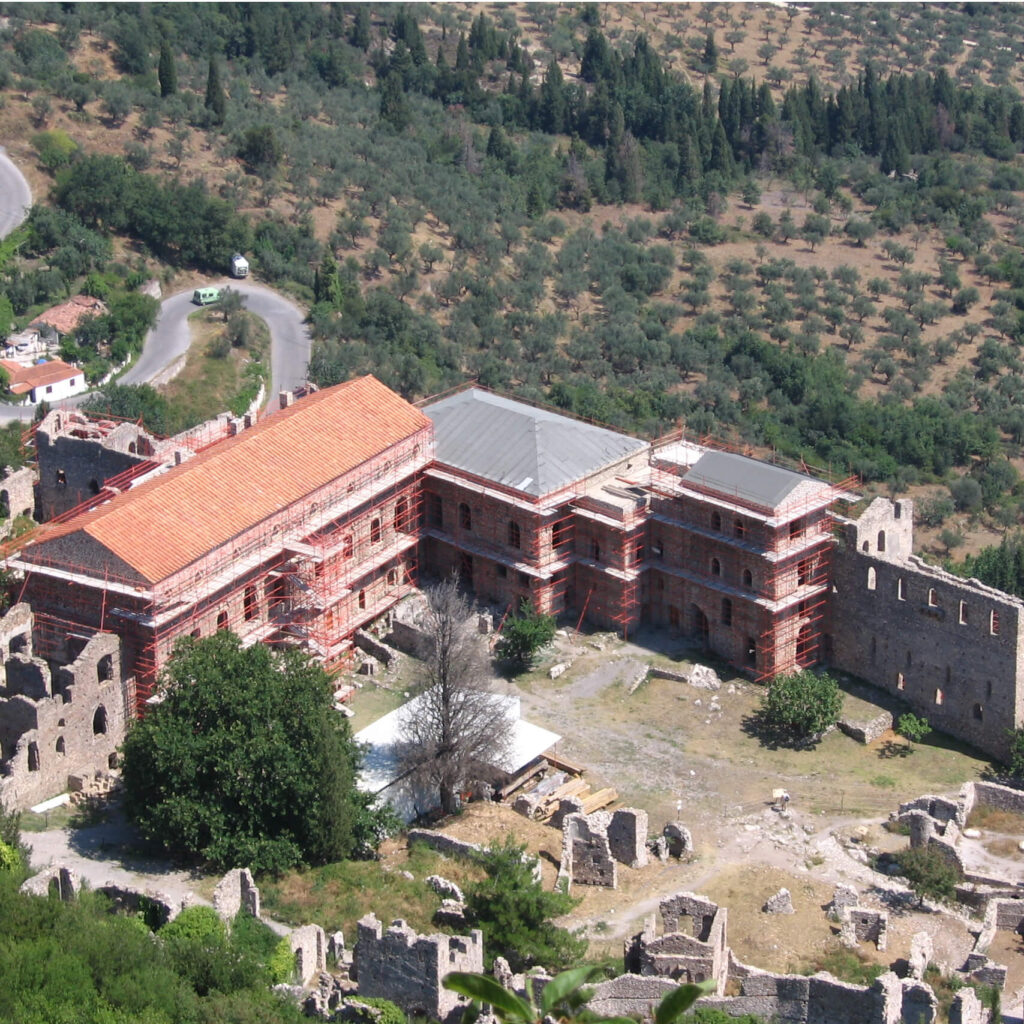
The despots, often sons or brothers of reigning emperors, governed the region from Mystras, a fortified city built on the slopes of Mount Taygetos by the Franks in the 13th century. Reclaimed by the Byzantines in 1262, Mystras soon became a thriving political, religious, and intellectual center. It was here that art, architecture, and scholarship experienced a remarkable revival, earning Mystras the reputation of being the “last Byzantine capital.”
At the heart of the city stands the Palace of the Despot, one of the most significant surviving examples of late Byzantine secular architecture. Overlooking the plain of the Eurotas, the complex consists of a series of interconnected buildings dating from the 13th to the 15th century. Its construction began under the rule of the Villehardouin princes and continued after the Byzantine reconquest, expanding to accommodate the administrative and ceremonial needs of the despots of the Morea.
The palace comprises multiple wings arranged around courtyards, combining Gothic and Byzantine architectural elements that reflect Mystras’s rich cultural heritage. The lower levels, with their vaulted halls and storerooms, were likely used for administrative purposes, while the upper floors housed the reception halls and the private apartments of the despot and his court. The palace has been recently restored and fitted with a new roof.
The Byzantine imperial palaces were far more than royal residences — they were the beating heart of an empire that saw itself as the earthly reflection of the heavenly order. From the Great Palace of Constantinople to the late palatial complexes of Thessaloniki, Nicaea, and Mystras, each structure embodied the political power, ceremonial grandeur, and spiritual vision of Byzantium. Their architecture, evolving from Roman foundations to distinctively Byzantine forms, mirrored the empire’s own transformation through the centuries. Though many have fallen into ruin, the legacy of these palaces endures — in their mosaics, their layout, and their enduring aura of imperial majesty.