
Byzantine Arta, jewel of the Despotate of Epirus
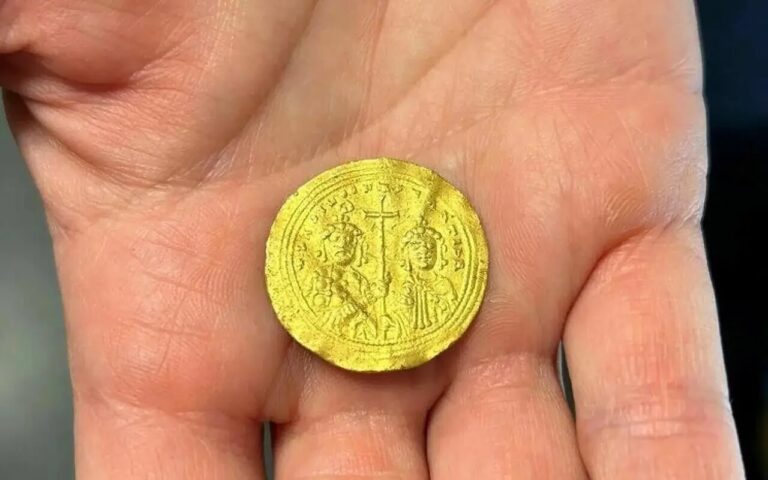
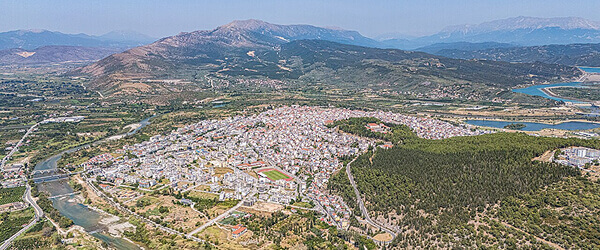
Byzantine Arta was one of the most important cities of medieval Epirus, in northwestern Greece. Located on the river Arachthos and successor to ancient Ambrakia, it was a significant ecclesiastical and economic center during the middle Byzantine period, and rose to political prominence after the fragmentation of the Byzantine Empire in 1204. A Byzantine nobleman established Arta as the capital of his newly founded state, which became known as the Despotate of Epirus.
For about a century and a half — from the founding of the Despotate around 1205 until the mid-14th century — Arta served as the principal seat of the despots, who fortified the city and built churches to enhance their prestige. As the state later fragmented, Ioannina increasingly assumed the role of capital. The weakening of the Despotate eventually allowed the Byzantines to recapture the city, though it later changed hands frequently before finally falling to the Ottomans. Despite these shifts, Arta preserved a significant legacy of Byzantine monuments, testifying to the distinctive culture and art of the Despotate of Epirus.
Byzantine Arta – in brief
Location:
Epirus, northwestern Greece, on the river Arachthos
Ancient predecessor:
Ambrakia — capital of Pyrrhus, King of Epirus (3rd c. BCE)
Medieval role:
Capital of the Despotate of Epirus
Capital period:
c. 1205 – mid-14th century
(later rivalled by Ioannina)
Founding ruler:
Michael I Komnenos Doukas
Ruling dynasties:
Komnenos Doukas · Orsini · Tocco
Key monuments:
Castle of Arta · Bridge of Arta · Panagia Paregoritissa · numerous Byzantine churches and monasteries
End of Byzantine rule:
Ottoman conquest, 1449
Today:
City in the regional unit of Arta, Epirus
Arta before 1205: A little-known provincial city
Arta already played an important political role in antiquity, serving as the capital of Pyrrhus, King of Epirus, in the 3rd century BCE. Known then as Ambrakia, the city’s political significance faded over time, and by the Roman period, it had become relatively insignificant.
Little is known about its history during the early Byzantine period, when Arta belonged to the province of Epirus Vetus (Old Epirus), whose capital was Nikopolis. No monuments from this period have survived or been excavated, though architectural elements – most notably the column capitals of the church of Saint Theodora, dating to the Justinianic period – were later incorporated into Byzantine structures. These elements likely originated from an important church of the time.
Some churches in the Arta area date back to the 9th or 10th century, though most were partially or entirely rebuilt under the Despotate of Epirus. Arta itself only begins to emerge from obscurity in historical sources at the end of the 11th century, when it is first referred to by its current name. The city is particularly mentioned from 1082 onward, when Emperor Alexios I Komnenos sought to expel the Normans from the western territories of the Byzantine Empire. Scholars suggest that during this period, Nikopolis, the capital of Old Epirus, gradually declined, and many of its inhabitants resettled in Arta, which offered greater security.
The city’s growing importance in the 12th century is evidenced by the presence of an archbishop, first mentioned in 1157, and the likely existence of an episkepsis (a type of ecclesiastical jurisdiction) within the Theme of Nikopolis. Additionally, Byzantine Arta was a significant trade center in the 12th century, frequented by Venetian merchants, and home to a small Jewish community, as recorded by Benjamin of Tudela in the 1160s.
 Vlacherna monastery in the outskirts of Arta, original church from the late 9th or early 10th century
 Saint Theodora church, former Saint George monastery, late 11th or 12th century.
Arta, capital of the Despotate of Epirus
With the fragmentation of the Byzantine Empire after the sack of Constantinople in 1204, Greek noble families seized power in various parts of the former empire. In Epirus, Michael I Komnenos Doukas established a new state centered on Arta. During this period, Arta’s population was also reinforced by refugees from Constantinople and from other regions affected by the Crusader conquests after 1204. Michael II (1230–1266/68) made Arta his capital, and the city became the largest and strongest administrative, political, and military center of his state. Important fortification works were carried out, and numerous religious buildings were restored or constructed, among which the Paregoritissa is perhaps the most remarkable. These developments transformed Arta into a major regional center of power and culture, fostering an original form of Byzantine art characterized by strong local particularities and influences from both the West and other Byzantine centers such as Thessaloniki and Constantinople.
The city’s economic importance, established at the end of the Middle Byzantine period, continued to flourish. The port of Kopraina served as a waterway for both trade and military purposes. Located at the mouth of the Arachthos—navigable up to Arta during the medieval period – in a wide, sandy, salt-producing zone, it functioned as the natural outlet of the Arta hinterland, facilitating the transport of agricultural, livestock, and fishery products (especially under the Orsini and Tocco dynasties) to the castle and city of Arta, as well as the export of the city’s goods. An organized market is attested in the sources of the 14th century, located along the access leading to the main gate of the castle.
Archaeological excavations suggest local ceramic production, while the Chronicle of the Tocco describes Arta as the heart of a fertile agricultural region rich in water buffalo, cattle, and horses. After 1204, following the political changes that occurred, the city became a crossroads of commercial routes to the Balkans, Italy, and the Adriatic. The Venetians, who were supposed to receive most of Epirus according to the agreement after the fall of Constantinople, sought to sign commercial treaties with the Despotate of Epirus to control trade on advantageous terms – such as freedom of navigation and free trade in the Ambracian Gulf. They established trading posts along the entire Albanian and mainland coast, with Arta at their center. In parallel, merchants from Ragusa (Dubrovnik) also secured privileges. When Carlo I Tocco (1405–1430) deprived the Venetians of their commercial privileges, competition arose between merchants from both cities for access to the Arta market, which supplied dried meat, lard, ham, furs, and indigo.
Medieval Arta’s political significance and prosperity made it a target for both the Empire of Nicaea and the restored Byzantine Empire, particularly as the Despotate of Epirus weakened. Nicaean forces briefly captured the city in 1259 but failed to retain it.
The Chronicle of Morea reports that in 1304, Charles II of Naples sent troops to seize the Despotate of Epirus for his son. The invaders entered the city, which had been abandoned by its inhabitants, who had taken refuge in the castle. Anna Palaiologina and her son, the young Thomas, had retreated to the castle of Ioannina. The strength of the fortress discouraged the attackers, who instead turned to besiege the nearby castle of Rogoi, another important stronghold in the area. There, they were confronted and defeated by Thomas’s forces, who had left Ioannina and were awaiting the outcome of the assault at the Monastery of Panagia Vlacherna near Arta. Having failed to capture any stronghold and running short on provisions, the enemy troops eventually withdrew.
The restored Byzantine Empire also pressed toward Arta: Andronikos II launched an unsuccessful attack, but Andronikos III finally seized it in 1338. After a rebellion led by Nikephoros Basilakes, the city surrendered to John VI Kantakouzenos. Subsequently, Arta changed hands repeatedly: it was conquered by Stefan Uroš IV Dušan, passed to the Albanians, and in 1416, fell to Carlo I Tocco. In 1449, it was finally captured by the Ottomans, a few years before the fall of Constantinople and the end of the Byzantine Empire.
Byzantine Monuments in and around Arta: Churches, Monasteries, and other Landmarks
Arta has retained several landmarks of its medieval past, though sometimes altered through its long history.
The castle
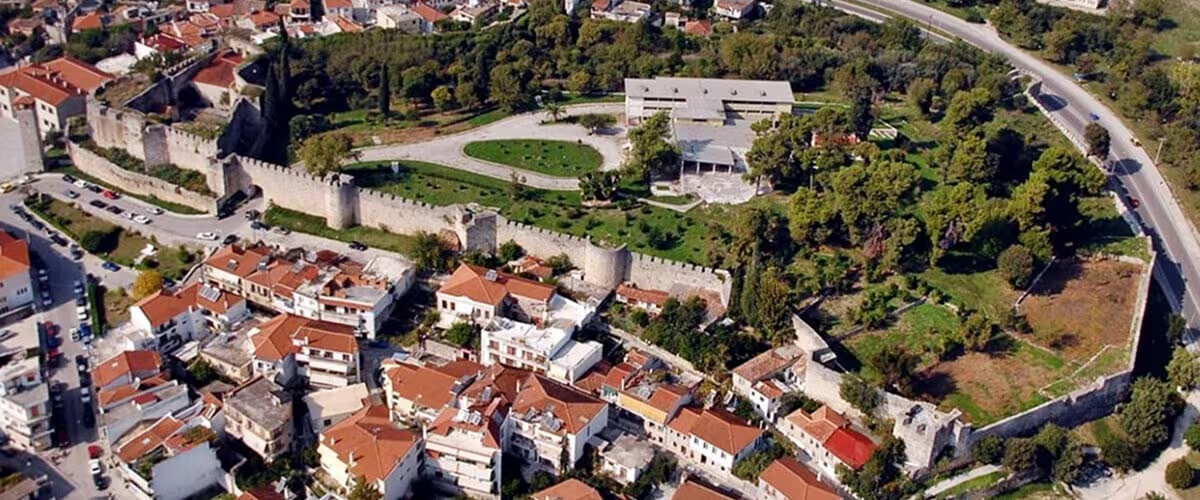
The Castle of Arta stands majestically on a low hill, about 11 meters above the surrounding plain, on the northeastern side of the city, near the river Arachthos. It occupies the site of the acropolis of ancient Ambrakia, but today it serves as a representative example of the town’s medieval character, albeit modified during the Ottoman period.
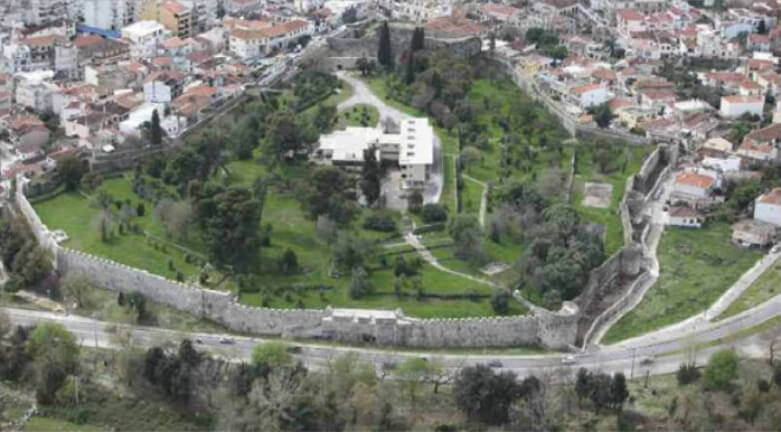 Aerial view of the fortress.
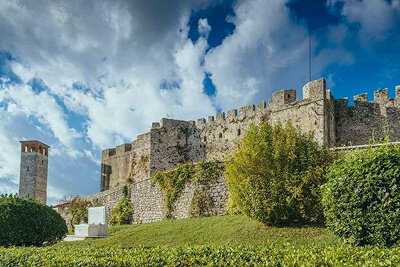 View of the walls and the clocktower.
Occupied since ancient times, the fortress displays constructions from different periods, beginning with remains of the walls of ancient Ambrakia. Traces of fortifications from the Middle Byzantine period are also preserved, although most of the medieval structures are thought to date from the time of the Despotate of Epirus, particularly during the rule of Michael II Komnenos Doukas.
The fortress held particular importance during the Despotate of Epirus as the seat of power of the ruling family. It likely housed the palace of the Despots. Parts of the original Byzantine walls and towers, as well as the remains of several Byzantine-era buildings and a number of inscriptions and sculptures, are still visible within the fortress today.
Repairs and additions were carried out during the remainder of the Byzantine era, while the Ottomans also made significant adaptations and modifications to the existing fortifications. This explains why certain parts of the structure appear predominantly post-Byzantine.
Dive more closely into the rich history of the castle of Arta.
-
Castle of Arta: Byzantine Fortress of the Despotate of Epirus
Step inside the Castle of Arta, a landmark of Byzantine Epirus, from its origins in ancient times to the Despotate of Epirus and Ottoman rule.
The bridge
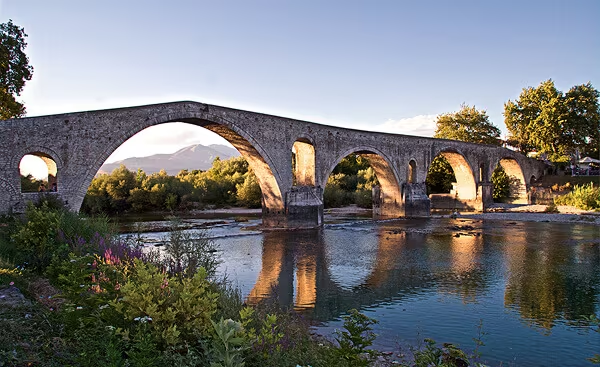
The Bridge of Arta is the most famous stone bridge in Greece, spanning the river Arachthos with four large, charmingly asymmetrical arches. Built up over successive Byzantine and Ottoman phases and reaching its present form in the early 17th century, it served as the vital land link between the city, its castle and the trade routes toward the coast. Above all, it is known across the Balkans through the haunting folk legend of the master builder who walled his own wife into the foundations to stop the bridge from endlessly collapsing.
-
The Bridge of Arta: History, Legend and Architecture
The Bridge of Arta is Greece’s most famous stone bridge — celebrated for its Byzantine and Ottoman architecture and the haunting legend of the master builder’s wife.
Byzantine churches and monasteries in and around Arta
The most remarkable monuments of Arta and its surroundings are its churches and monasteries. Some of these structures contain elements dating back to the 9th and 10th centuries, often taking the form of simple wooden-roofed basilicas, occasionally topped with domes on high cylindrical drums, as seen in Saint Demetrios tou Katsouris. Others, like Saint Basil tes Gephyras (early 9th century), follow a free-standing cross plan. However, the peak of construction activity in Arta occurred during its time as the capital of the Despotate of Epirus in the 13th century, when many of these older churches were also renovated.
The period of the Despotate of Epirus marked an intense artistic flourishing in Arta, where a distinctive Byzantine style of art and architecture developed. The strength of local traditions, combined with Western influences and connections to other Byzantine centers – including Constantinople – resulted in highly original architectural forms. Many 13th-century churches feature bands of brick and multicolored ceramic decoration, while some incorporate figural plaques and stone sculptures on column capitals and tombs – elements less common in traditional Byzantine art.
Discover some of the most remarkable religious monuments in and around Arta below.
-
Church of Panagia Paregoritissa, Byzantine masterpiece in Arta
Discover the Panagia Paregoritissa in Arta, a masterpiece of the Despotate of Epirus, with innovative architecture and striking mosaics.
-
Church of Saint Basil of the Market (Agios Vasileios Agoras) in Arta
Discover the Church of Saint Basil of the Market, one of the Byzantine churches in Arta, remarkable for its exterior decoration.
-
Church of Saint Basil of the Bridge (Agios Vasileios tis Gefyras) in Arta
Discover the oldest church of Arta: Saint Basil of the Bridge (Agios Vasileios tis Gefyras), from the 9th century.
-
Monastery of Panagia Vlacherna in Arta, legacy of the Despotate of Epirus
Discover the 13th-century Byzantine Monastery of Panagia Vlacherna in Arta, one of the best-preserved legacies of the Despotate of Epirus.
-
Byzantine Church of Saint Theodora in Arta
The Church of Saint Theodora is located in the center of Arta, which was also the heart of the Byzantine city. Dating back to the late 11th century or mid-12th century, it originally served as the main church of a monastery dedicated to Saint George. The monastery’s significance transformed in the 13th century due to…
-
Byzantine Monastery of Kato Panagia in Arta
Discover the 13th-century Byzantine monastery of Kato Panagia in Arta, whose main church stands as a fine legacy of the Despotate of Epirus.


Remarkable Byzantine artworks preserved in and around Arta
-
Byzantine frescoes of the monastery of Panagia Vlacherna in Arta
The 13th-century frescoes of Panagia Vlacherna in Arta stand as unique examples of the sophisticated art of Byzantine Epirus.
-
The Mosaics of the Church of the Panagia Paregoritissa in Arta
Explore the Byzantine mosaics of Panagia Paregoritissa in Arta: a grand yet unfinished artistic legacy of the Despotate of Epirus.


FAQ
What is Byzantine Arta famous for?
Arta was the capital of the Despotate of Epirus, one of the Greek states that emerged after the Fourth Crusade captured Constantinople in 1204. It is renowned for a remarkable concentration of 13th-century Byzantine churches and monasteries — above all the Panagia Paregoritissa — as well as its medieval castle and the legendary stone Bridge of Arta.
What was the Despotate of Epirus?
A Byzantine Greek state founded around 1205 by Michael I Komnenos Doukas after the fall of Constantinople to the Fourth Crusade. With Arta as its capital, it became a major regional power and the home of a distinctive school of Byzantine art and architecture in northwestern Greece.
When was Arta the capital of the Despotate of Epirus?
Arta was the principal seat of the despots from the founding of the Despotate around 1205 until the mid-14th century. After that, as the state fragmented, Ioannina increasingly took over the role of capital, and the Tocco dynasty later ruled from there before seizing Arta in 1416.
Why is the Bridge of Arta famous?
The stone Bridge of Arta over the Arachthos is one of Greece’s most celebrated bridges, known across the Balkans through the legend of its master builder, who is said to have immured his own wife to stop the bridge from repeatedly collapsing. It most likely reached its present form through successive Byzantine and Ottoman building phases.
What are the main Byzantine monuments to see in Arta?
The castle of Arta, the Bridge of Arta, and a cluster of Byzantine churches and monasteries — including the Panagia Paregoritissa, the monasteries of Kato Panagia and Panagia Vlacherna, the church of Saint Theodora, and the churches of Saint Basil of the Market and Saint Basil of the Bridge.
Sources and further reading
A. Ducellier, “Aux frontieres de la Romanie: Ana et Sainte-Maure a la fin du moyen age,” TM 8 (1981), pp. 113-24.
P. Vokotopoulos, “Arta,” in Alte Kirchen und Kloster Griechenlands, ed. E. Melas (Schauberg 1972), pp. 135-6.
Dorothea Papathanasiou, Konstantinos-Michael Photeinis, Aikaterini Schismenou, 10 Statements of Significance in ancient, byzantine, ottoman and modern Arta, Transnational Cooperation Programme Interreg Greece‐Albania 2014 ‐2020, 2021.