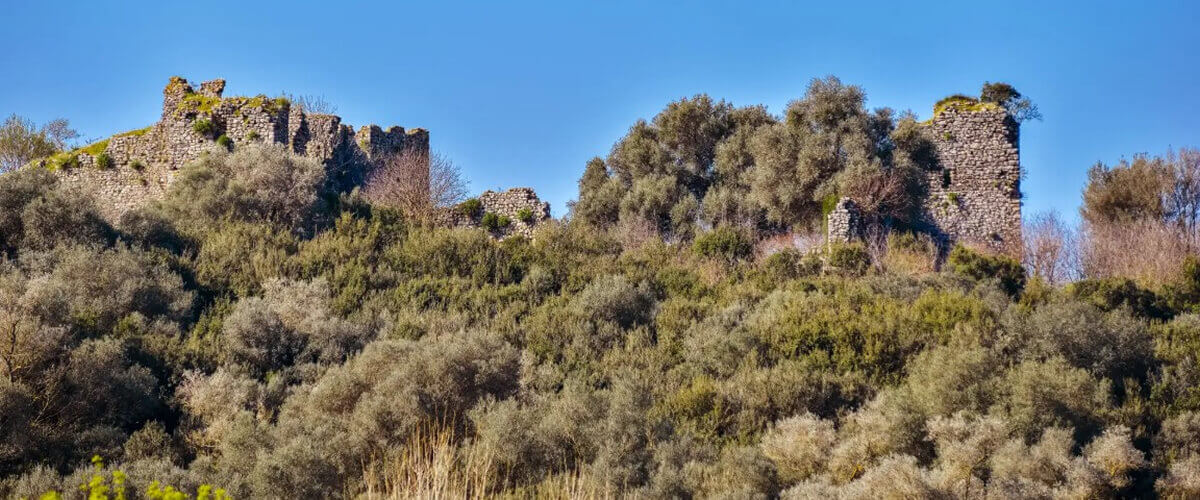
Byzantine Castle of Rogoi, stronghold of the Despotate of Epirus.
The Byzantine castle of Rogoi (also Rogon or Rogous) was an important stronghold of the Despotate of Epirus and a key element of its defense with the nearby castle of Arta, its capital. Its strategic importance lied in its location by the Louros river. This river was navigable in ancient and medieval times, connecting the area to the coast and the port of Salagora on its mouth. The castle was ideally positioned on a hill to control the river traffic. Its surrounding area, which was a swamp until the 1950s, further strenghtened its defensive position.
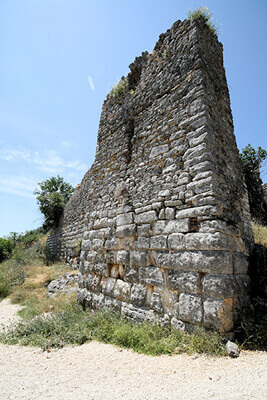
These advantages explain that the site has been occupied since ancient times. It was the location of the ancient city of Bouchetion, an Eleian colony, and was its acropolis. The first fortifications walls were built in the 5th century BC, and the boulders are evident in the present structure of the castle.
In the early and the beginning of the middle Byzantine period, it probably served as a refuge and provided shelter for coastal populations of the region fleeing the invasions of the Slavs and the Bulgars. That would have gave birth to its name Rogoi or Arogoi, “arogi” meaning “help” in greek.
However, the peak of importance of the castle was reached in medieval times, especially in the 13th and 14th century, when it was heavily fortified by the Despots of Epirus and became a key element of the defense of their state. It was besieged at least once, when Charles II of Naples invaded the region in 1303. After besieging unsuccessfully Arta, his troups turned to Rogoi. As they were starting to besiege the castle, the Epirote troups attacked them and inflicting them a small defeat, while the young despot Thomas was waiting for the result of the action in the monastery of the Panagia Vlacherna, near Arta. Finally, the invading troups moved back to try again their luck against Arta before, running out of supply, they withdrew from Epirus.
In 1339, it was seized by Alexios Kaballarios in a move against the emperor Andronikos III. Soon after, the garrison surrendered following the negociations le by the future Emperor John Kantakouzenos.
In 1374 the castle was seized by the Albanians, before falling to the Turks in 1449.
Also significant is the account of Kyriakos of Ancona, who visited the castle at the beginning of the 15th century and noted that the relics of the Evangelist Luke were kept in the metropolitan church within the castle.
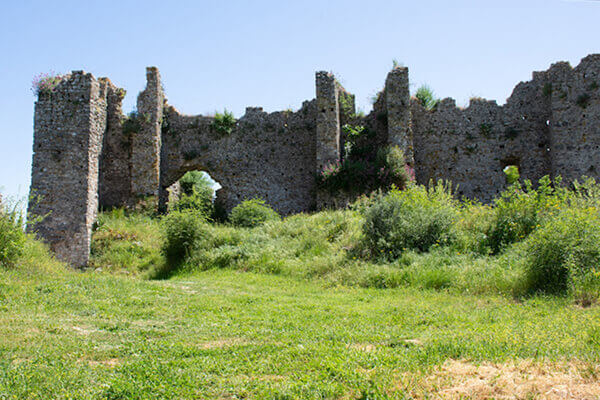
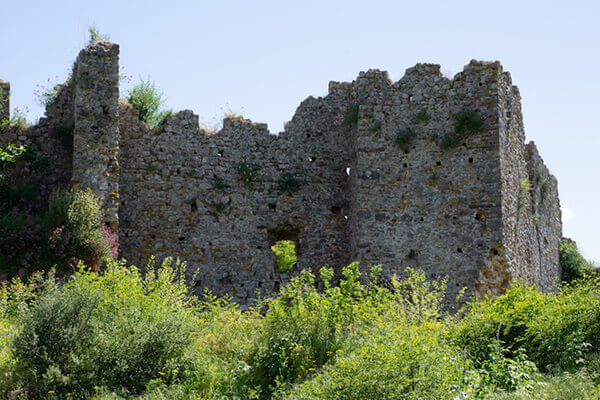
The castle walls form a perimeter of about 1,000 meters, enclosing a total area of 32,000 m², and they largely preserve the appearance they acquired during the Despotate. Inside the fortifications, on the northwestern side, stands a stone-built single-aisled basilica, a reminder of a late 17th-century monastery. The castle has recently undergone restoration to prevent further deterioration.
While the Byzantine Castle of Rogon may appear less imposing than other fortifications of Epirus, such as those of Arta or Ioannina, it remains the best-preserved Late Byzantine fortress in the region and a remarkable testament to the military architecture of the Despots of Epirus.