
Byzantine heritage of Genoa: Hidden treasures and history
The Republic of Genoa maintained a profound and often turbulent relationship with the Byzantine Empire. Through the 1261 Treaty of Nymphaeum, Genoa became the Empire’s primary maritime ally, securing exclusive trading rights and establishing the semi-autonomous colony of Galata in Constantinople. This strategic alliance allowed Genoese merchants to dominate Black Sea commerce and act as a vital link between the Byzantine East and the Latin West.
This centuries-long interaction resulted in a significant influx of Eastern Roman artifacts into the Ligurian capital. While the Cathedral of San Lorenzo, with its Byzantine paintings and its Treasure Museum, concentrate the largest portion of this legacy, some other important Byzantine works are distributed across other parts of the city. The Monastery of San Bartolomeo degli Armeni, for instance, preserves the Holy Face of Edessa (Mandylion), a 14th-century imperial icon. Additionally, the Museum of Sant’Agostino and various civic palazzos contain stone fragments, sculptures, and textiles that document the artistic and political exchange between the two powers.
Collectively, these objects offer a physical record of Genoa’s status as a medieval Mediterranean superpower and its deep-rooted connection to the Byzantine world.
The Mandylion of Genova.
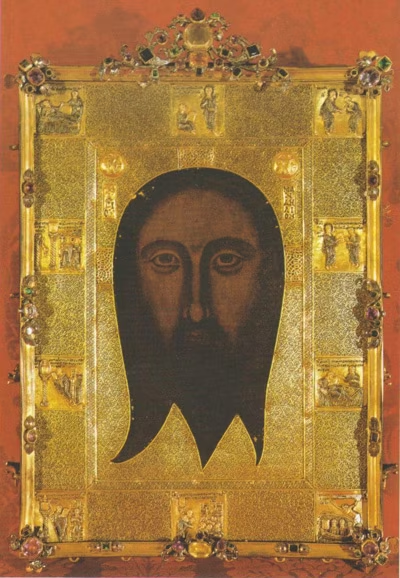
The Church of San Bartolomeo degli Armeni was founded in Genoa in 1308 by Basilian monks from Mount Karadağ in Minor Armenia, which had been invaded by the Turks.
The history of the church is closely linked to its most important relic of the “Holy Face of Edessa,” or Mandylion: a linen cloth painted in tempera depicting Christ. It was offered to the Doge of Genoa by the Byzantine Emperor and donated to the monks of San Bartolomeo in 1388.
The cloth is set in a precious gold and silver filigree frame, which is a masterpiece of Byzantine goldsmithing from the Palaiologan period. The authenticity of the linen is debated among scholars, but the relic was considered of utmost importance for centuries.
The Zaccharia Cross.
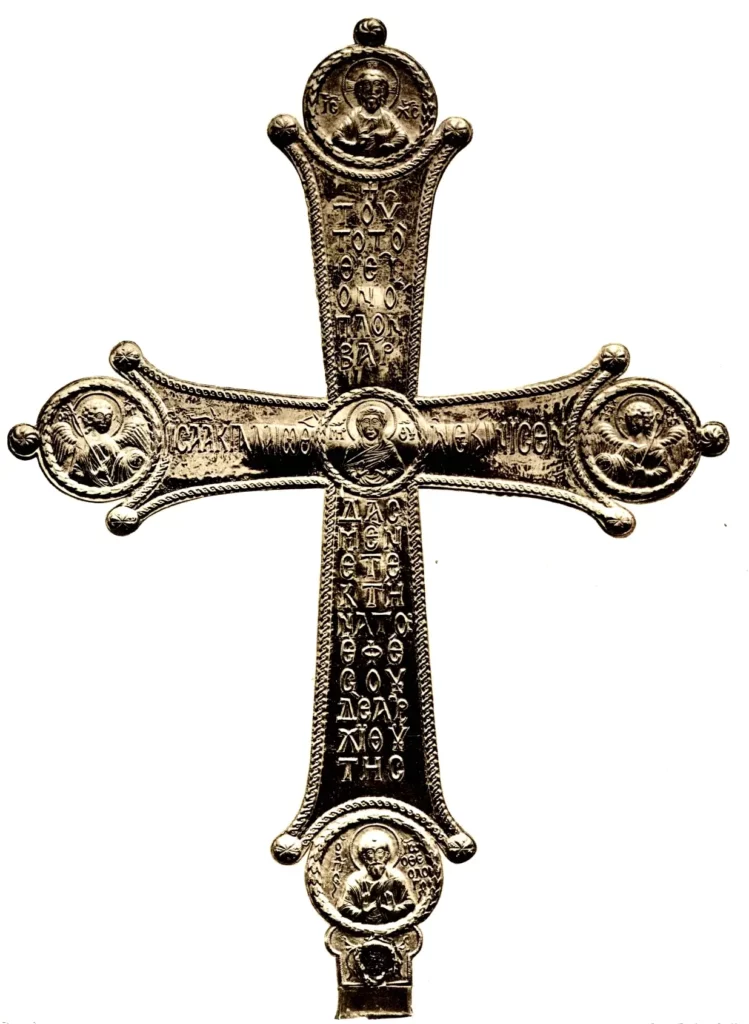
The Zaccaria Cross is a 9th-century Byzantine reliquary, highlight of the Genoa Cathedral treasure. Originally commissioned by Caesar Bardas (regent from 842 to 866), the cross was later gifted to the Church of Saint John in Ephesus. Between 1260 and 1288, Archbishop Isaac restored the artifact, adding a Greek inscription and likely giving the cross its current appearance.
The artifact arrived in Genoa through the Zaccaria family, who controlled Phocaea and Chios. In 1308, after the Seljuks plundered Ephesus, the loot was pawned in Phocaea for grain. Ticino Zaccaria seized the treasure, which included this reliquary. By 1466, the family had donated the cross to Genoa Cathedral. Used during centuries in processions, it remains one of the city’s most sacred treasure.
The 54-centimeter-high cross consists of gilded silver set with 300 pearls, 57 precious stones – including rubies, emeralds, sapphires, and amethysts – and a rock crystal center revealing fragments of the True Cross, while the reverse features five repoussé medallions depicting Christ, the Virgin, the archangels Michael and Gabriel, and Saint John the Evangelist.
The Byzantine Frescoes of the Cathedral of San Lorenzo.
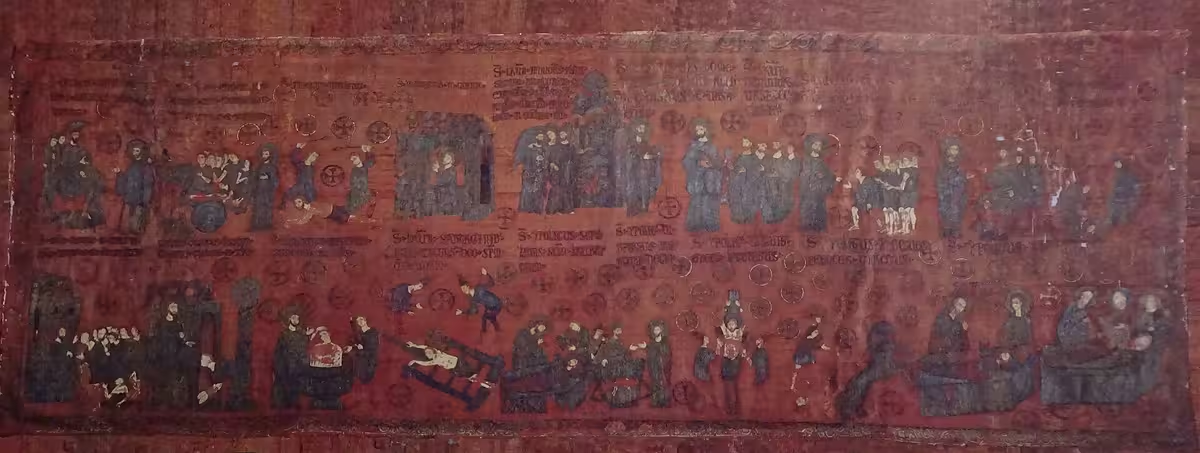
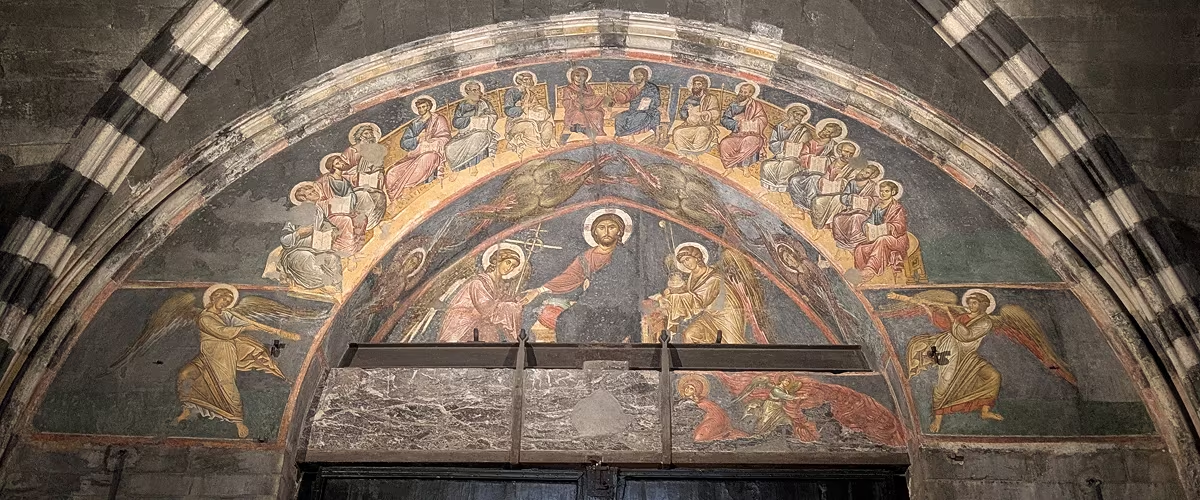
It may seem surprising to find Byzantine frescoes in a cathedral so far from the borders of the Byzantine Empire. Yet the remarkable frescoes located inside the cathedral San Lorenzo, above the central doorway, are attributed to a Byzantine painter. They date back to around 1310, a period of renovation at the cathedral following a fire in 1296, and are the work of an anonymous Byzantine painter.
This was not entirely coincidental. Genoa at the time maintained strong commercial and diplomatic ties with the Byzantine world, and Byzantine artists traveled widely during this period. The style of the frescoes compares favourably with the finest work of Constantinople, and their iconography is substantially Byzantine in detail. At the same time, the content depicting the Last Judgement as a whole is Italian, chiefly Tuscan, and derives from theological concerns of Western Christianity that were not shared with Byzantium, making it a characteristically Genoese hybrid.
The Pera Madonna.
This icon takes its name from Pera (modern-day Beyoğlu), the most important overseas colony of the Republic of Genoa. Located across the Golden Horn from Constantinople, this district served as a vital commercial hub for the Eastern Mediterranean and the Black Sea. Although Pera fell to the Ottoman Turks in 1453, it remained a crucial center for Western merchants despite the loss of Genoese political control.
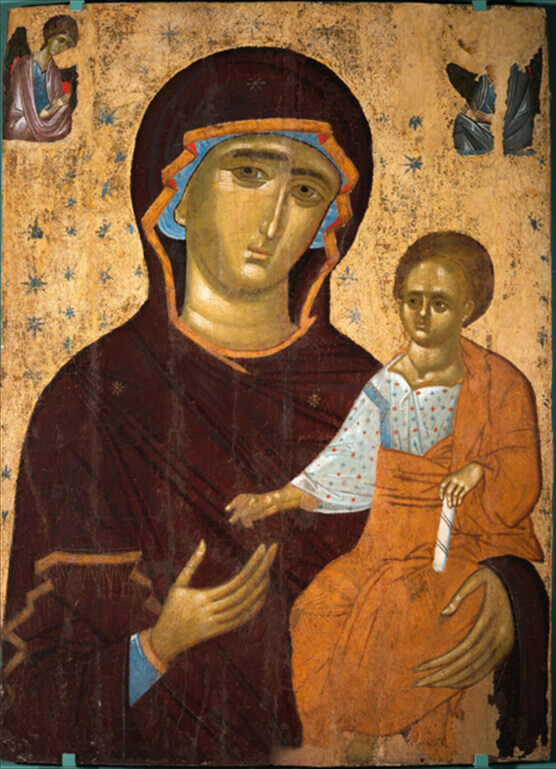
According to tradition, the painting arrived in Genoa from Pera in 1466. Prior to 1893, the church of Sant’Antonio di Prè housed the panel. There, the faithful venerated it as a relic, believing Saint Luke himself had painted it. After a period at the Palazzo Bianco Gallery, the icon is now on display at the Museo di Sant’Agostino.
An inscription at the top left identifies the work as the Madonna Eleusa (Madonna of Mercy), a common iconographic model in Byzantine art. The Madonna appears in a frontal, full-length bust. She wears a blue robe and a dark purple mantle adorned with a gold braid and three golden stars. The Madonna holds the Child on her left arm. Dressed in a light tunic and yellow mantle, the Child holds a scroll in his left hand while reaching for the Madonna’s right hand. Above, two seated angels lean forward with open, upward-turned palms. Stars of various sizes fill the background. Originally, small figures of the twelve apostles surrounded the central icon.
The work dates to 1301–1310. It consists of tempera on canvas applied to a chestnut wood panel. Conceived within the traditions of the early 14th-century Palaiologan Renaissance, the icon shares stylistic affinities with examples in the Byzantine and Christian Museum of Athens.