7th-century Byzantine synagogue unearthed in Side, Turkey
Archaeologists have discovered a 7th-century synagogue in Side, a prominent ancient port on Turkey’s Mediterranean coast. Located near the modern resort of Antalya, this find provides the first physical evidence of a Jewish community in the region. While historical records from the late Byzantine period hinted at a Jewish presence, no architectural remains had been identified until these recent excavations. The recent identification of the synagogue was made possible by a rigorous urban renewal project launched in 2014, which involved the systematic removal of illegal modern structures to reveal the ancient city layers preserved beneath them.
A father’s tribute: The Menorah plaque of the synagogue.
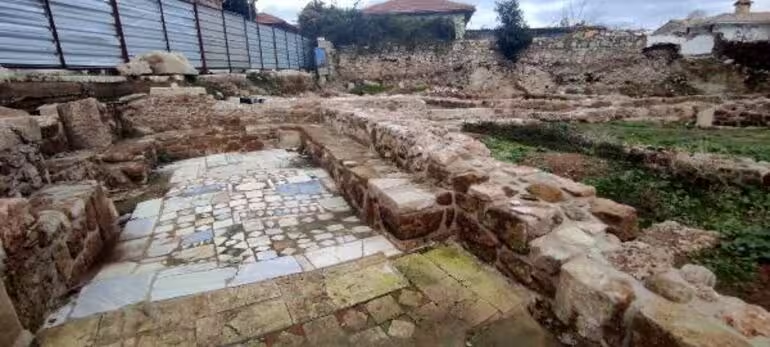
The synagogue preserves a remarkable floor, and the most significant find within the structure is a plaque featuring a carved menorah, a traditional Jewish symbol. The artifact includes an inscription written in both Hebrew and Greek, languages commonly used by Jewish communities in the Byzantine era.
The text on the plaque serves as a moving memorial: it records that a father named Joseph, originally from Korekesion (modern-day Alanya), dedicated the item in honor of his son, Daniel, who died at just 2.5 years old. This personal dedication concludes with the word “Shalom,” a Hebrew greeting meaning peace. The use of both languages highlights a unique cultural blend: Greek served as the administrative and daily language of the Byzantine Empire, showing the community’s integration into civic life, while Hebrew remained the sacred language, maintaining a deep religious connection to Jewish heritage.
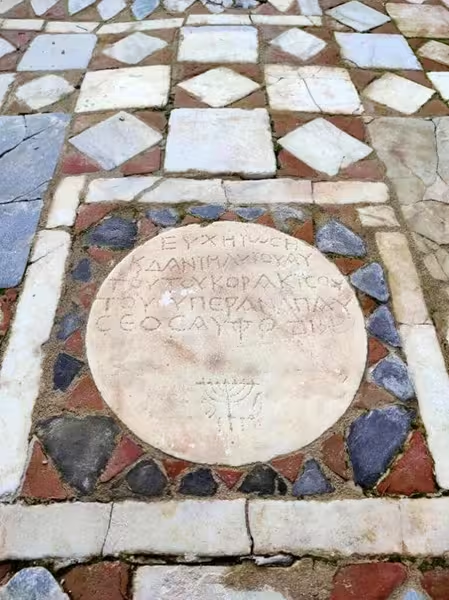 The menorah plaque in the synagogue of Side
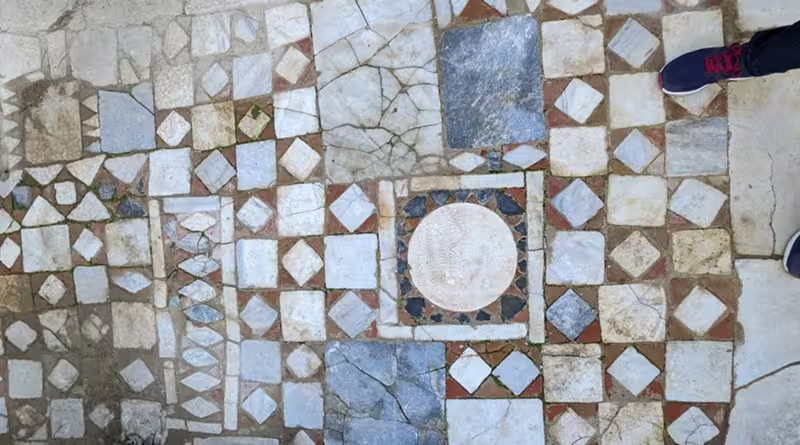 Floor of the synagogue of Side, Turkey
Side: A metropolis of the early Byzantine.
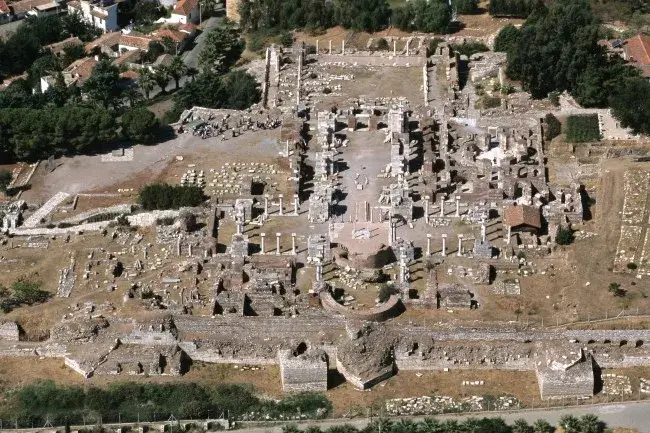
During the 5th and 6th centuries, Side reached the height of its urban development, serving as a bustling metropolis within the province of Pamphylia. Its layout was designed for both grandeur and functionality, dominated by a vast complex that included a cathedral and a bishop’s palace, alongside massive basilicas that stood sentinel near the harbor. The civic core of the city featured colonnaded streets connected to the main gate, a vibrant agora, and a massive theater. From the 4th to the 6th century, the city flourished as high-ranking municipal officials oversaw extensive restorations of public buildings.
However, this “Golden Age” eventually gave way to the instability, plagues, and invasions that disturbed the Byzantine world from the late 6th century onward. By the time the synagogue was built in the 7th century, Side had already begun to contract, with a new fortification wall enclosing only half of the urban area compared to a century prior. The city further declined in the following centuries and vanished before the end of the Middle Byzantine period; historical sources from the 11th century describe the site as completely abandoned.
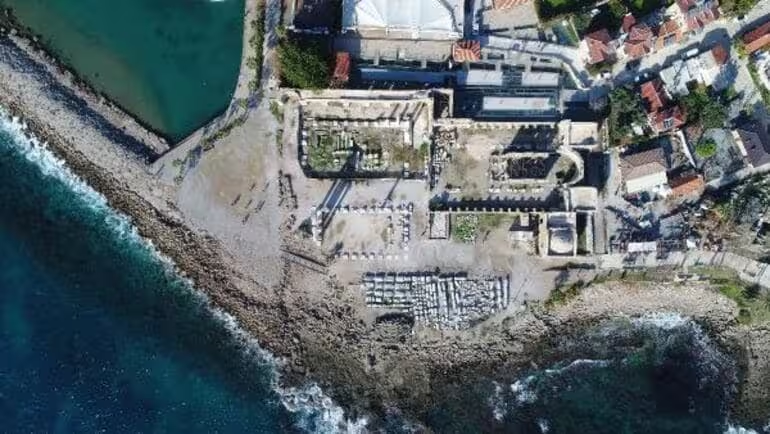
The discovery of the 7th-century synagogue in Side provides critical physical evidence for the study of the Jewish minority within the Byzantine Empire. It confirms the long-term presence of a Jewish community in a major Mediterranean port and illustrates their integration into the broader Greek-speaking society while maintaining distinct religious traditions. This find fills a significant gap in the archaeological record of the region and offers new data on the religious diversity of the late Byzantine period.