
The city of Kerasous, western bastion of the Empire of Trebizond
Kerasous, the modern city of Giresun, lies on the Black Sea coast of Turkey, west of Trabzon (Trebizond). Its history spans more than two millennia. First mentioned in Xenophon’s Anabasis, Kerasous was a busy port, a gateway to Koloneia and to the interior of Asia Minor. In late antiquity it became a Christian bishopric. In the Middle Byzantine period it remained a modest religious and commercial centre. After 1204, it ranked as the second city of the Empire of Trebizond and as its western bastion.
Despite this importance, the history of Byzantine Kerasous and of the Trebizondian city remains only partly understood. Few excavations have taken place in the city itself. This article follows Kerasous from its Pontic origins to the Ottoman conquest of 1461. It then describes what survives today: the castle, a few church remains and the nearby Giresun Island.
Ancient Origins.
Kerasous was founded around 180 BCE by Pharnaces I, King of Pontus, who sent Greek colonists from Kotyora (modern-day Ordu). Xenophon first mentions the city as “Kerasus” in his Anabasis.
Early and Middle Byzantine period until 1204.
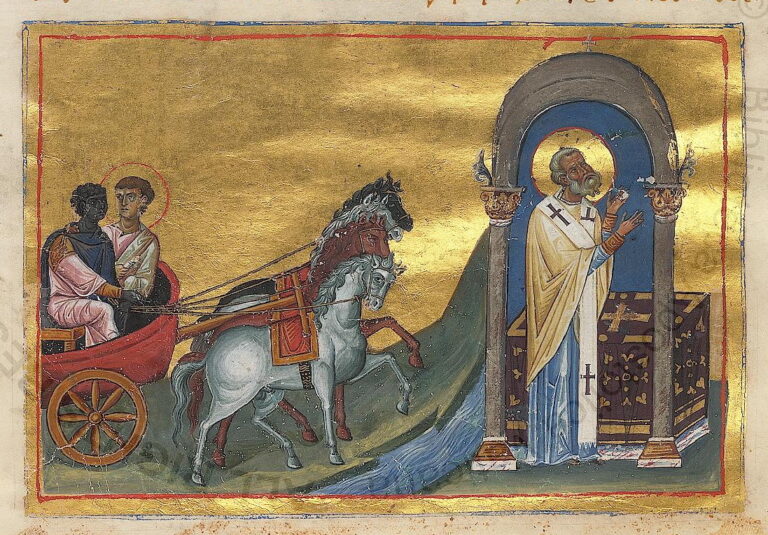
In late antiquity, Kerasous became a Christian bishopric. It belonged to the province of Pontus Polemoniacus, whose metropolis was Neokaisareia. In the Middle Byzantine period, the city lay in the theme of Armeniakon, next to the theme of Chaldia, whose capital was Trebizond. Several of its bishops are recorded in the acts of church councils:
- Gregorius at the Council of Ephesus (431)
- Gratianus at the Council of Chalcedon (451)
- Theophylactus at the Third Council of Constantinople (680)
- Narses at the Trullan Council (692)
- Ioannes at the Second Council of Nicaea (787)
- Simeon at the Photian Council of Constantinople (879)
An episcopal seal records a Leo in the 9th century. Michael was transferred from Kerasous to the see of Ancyra during the tenure of Patriarch Michael Cerularius (1049–1053).
Kerasous was initially a suffragan bishopric of Neokaisareia, first attested in 431. By 1079, it had become a metropolis with no suffragans. Its church maintained close ties with that of Alania.

Byzantine Kerasous was modest compared to other urban centres, yet it served as both a religious and a commercial hub. In the late 7th century, it became the seat of a kommerkiarios, an imperial official who levied the trade tax, overseeing trade in Lazika, Kerasous and Trebizond. By the 730s, it hosted the imperial kommerkia. This office confirms its role as a significant commercial centre on the eastern Black Sea coast.
It is possible that Kerasous housed a local scriptorium in the 11th century, which produced manuscripts such as the Kerasous Gospels. Scholars have noted that the illustrations in these works reflect Armenian influence. However, the exact location where these manuscripts were created remains a subject of debate.
The second city and stronhold of the Empire of Trebizond
Shortly before the Fourth Crusade and the fall of Constantinople in 1204, a Byzantine pretender from the Komnenian dynasty established a dissident state around Trebizond. In the chaos that ensued, this state became known as the Empire of Trebizond, which dominated the Black Sea coast for over 250 years. This small empire outlasted the Byzantine Empire itself, falling to the Turks in 1461. Kerasous was its most westerly possession and its second city.

The Seljuk Turks entered the region in 1244, followed by incursions from the Mongols. In September 1301, Emperor Alexios II Megas Komnenos achieved a significant victory over the Turkmen leader Koustoganes near Kerasous. Contemporaries and later historians regarded this triumph as a pivotal event, since it secured the western flank of the Empire of Trebizond for good. Around this time, Alexios II either built or expanded a fortress overlooking the sea to strengthen the defences of the area. In 1348, the Genoese launched a retaliatory raid on the city, ransacking and burning it, although the fortress itself may have remained intact.
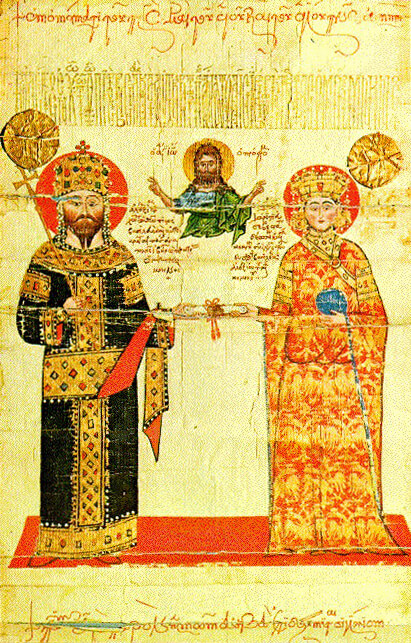
Alexios III Megas Komnenos (1349–1390), one of the most prominent emperors of the Empire of Trebizond, solidified his rule by quelling internal opposition. In 1354, he defeated the mega doux Niketas Scholares, who opposed him, and captured Kerasous, thereby strengthening imperial authority in the region.
Ottoman pirates attacked Kerasous in 1368. The Emirate of Hacıemiroğlu briefly occupied the city between 1398 and 1400. In 1404, Ruy González de Clavijo, a Spanish envoy to the court of Timur, described Kerasous during his journey along the Black Sea coast: “It stands on the shore, with its houses built all up a height that overlooks the sea. A strong city wall encircled the whole of this height, enclosing within its limit many orchards and fine fruit trees.”
In 1461, Sultan Mehmed II incorporated the entire coast into the Ottoman Empire. Local traditions claim Kerasous resisted for months after the fall of Trebizond, and that the city surrendered only after securing terms that allowed Christian inhabitants to stay, keep their arms, and maintain a boat for Turkish use. The island of Giresun is said to have withheld Ottoman rule for several more years.
The Orthodox see of Kerasous survived the conquest. It remained a metropolis until 1703, when the city was placed under the metropolitan of Trebizond. The Greek name Kerasous gradually became the Turkish Giresun.
Organisation and remains of the medieval times
The castle
The oldest parts of Kerasous are situated on the peninsula. The medieval town lay on the western slope below the castle, and the castle divided the harbour into a small eastern harbour and a main western one. A Byzantine fortress, built or rebuilt by Alexios II, dominates the site. This fortification, overlooking a small natural harbour, highlights the strategic significance of the city. Today, the ruined keep of Giresun Castle (Giresun Kalesi in Turkish) is the primary Byzantine landmark of the city.
Churches and monasteries
Next to the metropolitan church, of which no details are known and no remains survive, at least two other monasteries existed in or near Kerasous. One monastery, dedicated to St. Epiphanios, was located within the city. It is known solely from a typikon (charter) issued in 998 by Patriarch of Constantinople Sisinios II (996–998) to the metropolitan of Alania, with a memorandum added to the document in 1024.
Another monastery, dedicated to St. George, stood outside the city beneath the Gedik Kaya summits. By the 19th century, it lay in ruins. A chapel’s remains at Gedik Kaya Kalesi are likely associated with this monastery.
In the 14th century, literary sources mention a hermitage on the “heights” of Kerasous, inhabited by a certain Gerasimos. In 1964, the archaeologist David Winfield identified a small cave church on the eastern slopes below the castle, which may correspond to this hermitage.
Another monastery, dedicated to St. George, stood outside the city beneath the Gedik Kaya summits. By the 19th century, it lay in ruins. A chapel’s remains at Gedik Kaya Kalesi are likely associated with this monastery.
In the 14th century, literary sources mention an hermitage on the “heights” of Kerasous, inhabited by a certain Gerasimos. In 1964, archaeologist Winfield identified a small cave church on the eastern slopes below the castle, which may correspond to this hermitage.
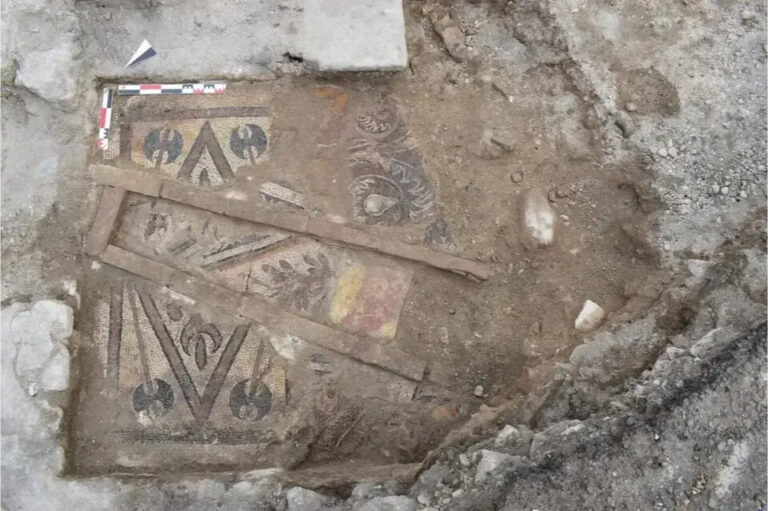
A mosaic floor from late antiquity
Excavations near the port uncovered a mosaic floor with Greek inscriptions. The lettering suggests it belonged to a church dating back to the 5th or 6th century. It is the earliest Christian structure known in the city.
Nearby, Giresun Island, known as Aretias in ancient times, adds to the historical significance of the region.
The Giresun island

Giresun Island lies about 4.2 km east-northeast of Kerasous. Recent excavation reports give a distance of 1.6 to 1.7 km from the coast. The island spans only 250 by 200 metres. Ancient authors call it Aretias, the island of Ares, and later sources use the name Khalkeritis.
According to Apollonius of Rhodes, this island was the site where the Argonauts encountered both the legendary Amazons and a menacing flock of birds. They also sacrificed there at a roofless temple of Ares.
Archaeological excavations have uncovered the ruins of a church and a monastery, believed to be dedicated to the Eleousa or St. Phokas of Sinope, which date back to the 9th–11th centuries. Over 100 Christian graves were discovered, with the skeletons traced to the 9th–12th centuries. A preliminary report on the 2011–2012 campaigns counts 172 individuals buried in the chapels of the main church. Coins of Isaac II were found with one of the burials. Excavations resumed in 2015 under the Giresun Museum. It is thought that the monastery was abandoned before 1644, a year when Cossack raiders reportedly used the island as a base for assaults on Kerasous.
A boundary wall encircles the island, and the remains of a rectangular tower, possibly constructed or renovated after 1362 under Emperor Alexios III Komnenos, are still visible. A newly found inscription sheds light on the importance of the island in the Trebizondian period. Dated to the reign of Alexios III, it states that Maria, wife of the pinkernes Kyriakos and daughter-in-law of the governor of Giresun, Roustam, commissioned the structures and walls of the island.
The Greeks of the island allegedly held out against the Ottomans for seven years after the fall of Trebizond in 1461.
 One of the historical remains on the island
 Remains of the excavated Byzantine monastery
Sources
- Anthony Bryer, David Winfield, The Byzantine Monuments and Topography of the Pontos, Dumbarton Oaks, 1985.
- Xenophon, Anabasis.
- The Princeton Encyclopedia of Classical Sites, entry “Pharnakeia Kerasous (Giresun)”.
- Sam Topalidis, “History of Kerasous (Giresun), Pontos”, Pontos World, 2024.
- E. M. Doksanaltı, I. Karaoğlan, L. Ufuk Erdoğan, “Preliminary report on Giresun (Aretias/Khalkeritis) island excavation”, Anodos 11, 2011.
- A. Temur, G. Iltar, “Giresun, the excavation of the island of Aretias/Khalkeritis”, in Black Sea Archaeological Studies: Recent Developments, 2018.