The most beautiful Byzantine Mosaics you can still see today: A visual journey from Ravenna to Constantinople
No art form says “Byzantium” like the gold-ground mosaic. For over a thousand years, from the late Roman world to the empire’s final century, Byzantine mosaicists turned millions of glass and stone cubes into visions of heaven — and what survives today is only a fraction of what once existed. The mosaics of Constantinople’s Great Palace, of the Holy Apostles, of hundreds of churches across Anatolia and the Balkans are gone. What remains is scattered across three countries and a dozen cities, from the Adriatic to the Aegean.
This guide gathers the sixteen most beautiful Byzantine mosaic programs you can still stand beneath today — with the story behind each, and how to see it. One scoping note: this list covers wall and vault mosaics, the golden visions Byzantium is famous for. Floor mosaics — the art’s older, earthier sibling, full of hunting scenes, animals and daily life — tell a different story and deserve a journey of their own. For the history and technique of the art form itself, see our full guide to Byzantine mosaics.
In a hurry? Jump straight to our top three.
How to read a Byzantine mosaic
Three things to look for, wherever you are.
The gold: the ground of gold tesserae is not decoration but theology — a space outside time where the sacred lives; mosaicists set each cube at a slight angle so the surface flickers as you move.
The light: these images were designed for candlelight and shifting sun, not electric floodlights; the best hours to visit are almost always when natural light rakes through the windows.
The gaze: the frontal figures are meant to look at you — a Byzantine mosaic is less a picture than an encounter.
Italy
A note on borders: Sicily was a Byzantine province for three centuries, and Venice began its history as a Byzantine duchy — but their mosaics in this section were created later, when neither answered to Constantinople. What binds them to Byzantium is not territory but workshop and tradition: the masters were Greek or Greek-trained, the models and the tradition came from the empire — proof of how far its art reached, even where its rule did not.
Basilica of San Vitale, Ravenna (consecrated 547 CE)
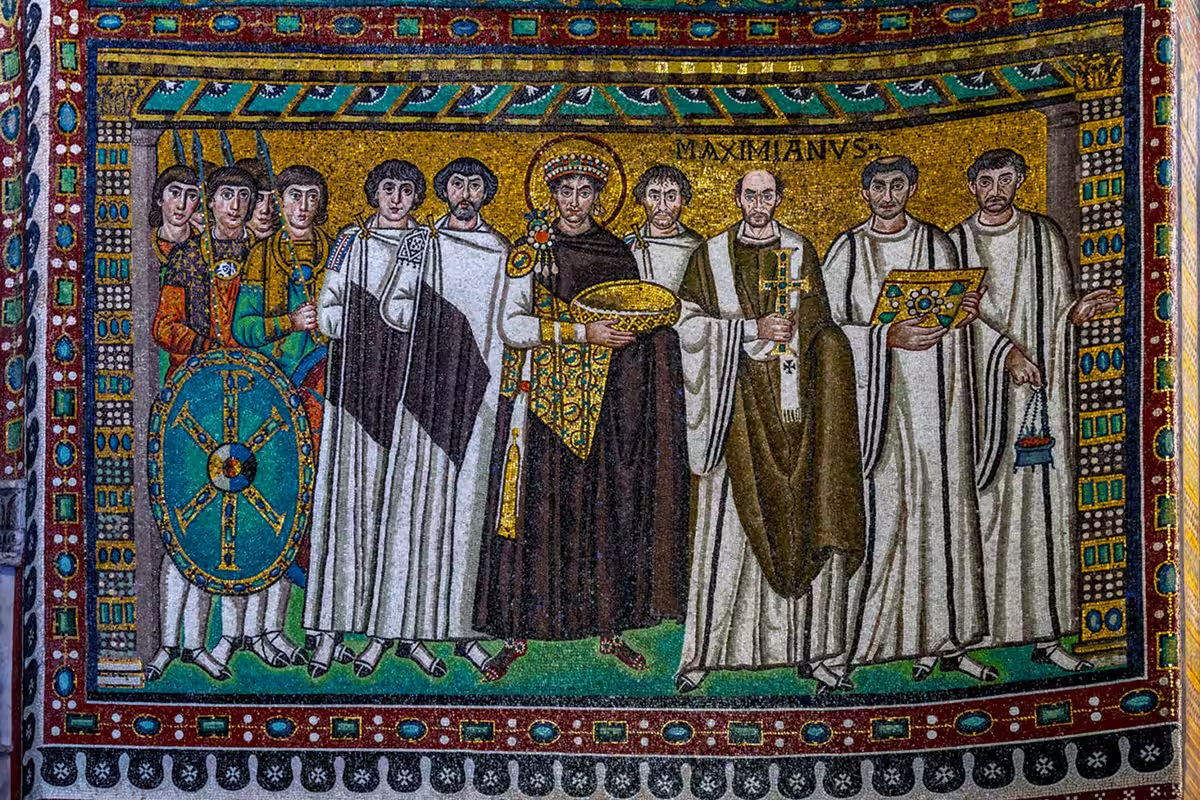
The most famous Byzantine mosaics in the world, and the paradox is that they stand in Italy. Completed while Justinian’s armies were reconquering the peninsula, San Vitale’s sanctuary holds the two imperial panels every art history student knows: Justinian with Bishop Maximian and his retinue on one wall, Theodora and her court ladies facing them on the other — the emperor and empress who never set foot in Ravenna, present forever at its altar. Around them rises a green-and-gold paradise of prophets, angels, and the young, beardless Christ enthroned on the globe of the world. Part of the “Early Christian Monuments of Ravenna,” inscribed by UNESCO in 1996.
Seeing it today: Ravenna’s combined ticket covers San Vitale and four other mosaic monuments — all walkable in a single day.
Mausoleum of Galla Placidia, Ravenna (c. 425–450 CE)
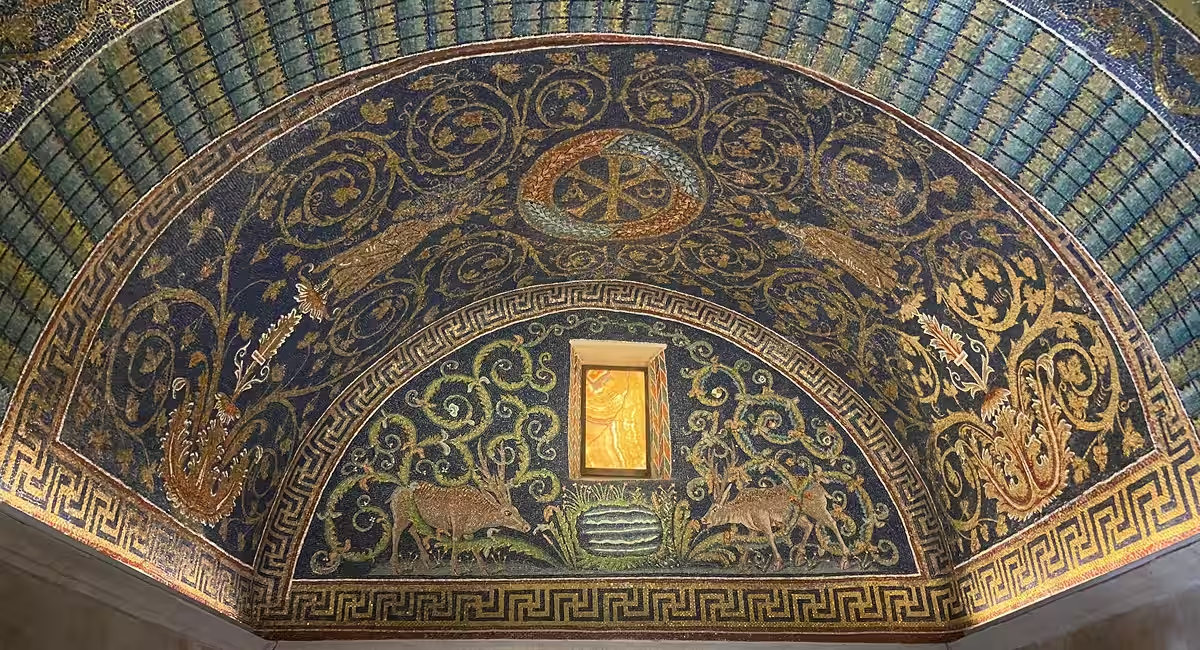
A tiny brick box beside San Vitale holds the oldest and, for many visitors, the most moving mosaics in Ravenna. Inside, a deep-blue vault scattered with golden stars has stopped travelers for fifteen centuries — Cole Porter is said to have been inspired to write “Night and Day” after seeing it (a story to enjoy with caution, but one Ravenna cherishes). Doves drink from fountains, deer approach the water of life, and the Good Shepherd sits among his flock in a lunette that still breathes the naturalism of late Roman painting.
Seeing it today: entry is timed in high season — book the slot when you buy the Ravenna combined ticket.
Sant’Apollinare Nuovo, Ravenna (early 6th century CE)
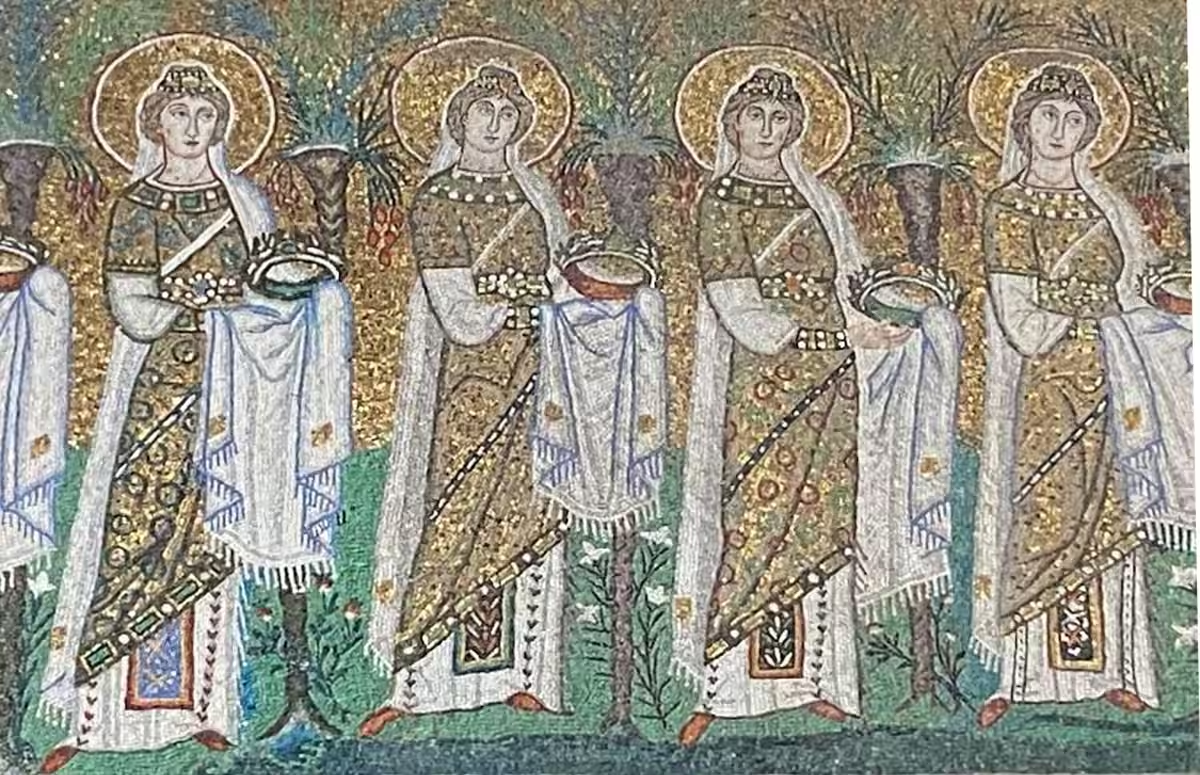
Built by Theodoric, the Ostrogothic king of Italy, as his palace chapel, and re-decorated after the Byzantine reconquest. Along the nave walls stretch two of the longest processions in ancient art: 26 virgin martyrs advancing toward the enthroned Virgin on one side, 26 male martyrs walking toward Christ on the other — white-robed, rhythmic, hypnotic. Look closely at the mosaic of Theodoric’s palace near the entrance: hands of erased courtiers still linger on the columns, ghosts of the political purge that followed the Byzantine takeover.
Seeing it today: on the same Ravenna combined ticket; the raking afternoon light is best for the processions.
Cefalù Cathedral, Sicily (1148 CE)
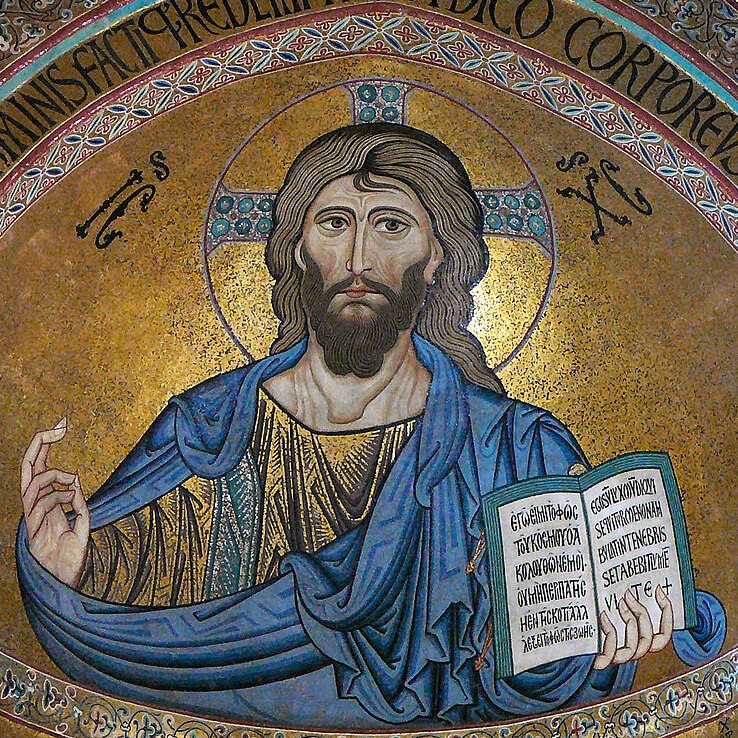
In the apse of a Norman cathedral on the Sicilian coast looms what many consider the greatest single figure in all Byzantine art: the Christ Pantokrator of Cefalù, dated by inscription to 1148. Created by Greek mosaicists brought to Sicily by King Roger II, this Christ is neither stern judge nor remote icon — the enormous eyes are grave and merciful at once, the hand raised in blessing seems addressed to you alone. If you can only ever see one Byzantine mosaic face to face, there is a strong case it should be this one.
Seeing it today: Cefalù is an hour by train from Palermo; the cathedral is part of the UNESCO Arab-Norman Palermo listing.
Cappella Palatina, Palermo (1132–1140s CE)
Roger II’s palace chapel is the jewel box of Norman Sicily: Byzantine mosaics above, an Islamic painted wooden ceiling overhead, Latin architecture holding it together — three civilizations in one room, made by craftsmen who worked side by side.
The mosaics, begun after the chapel’s consecration in 1140 and completed under Roger’s successors, include a dome Pantokrator surrounded by angels and some of the most vivid Old Testament narrative cycles in medieval art.
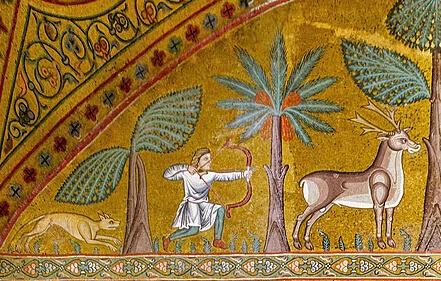
Detail of the mosaics of the Norman Palace in Palermo, image: Holger Uwe Schmitt, CC by SA 4.3
Seeing it today: inside the Norman Palace, Palermo; expect queues — go at opening time.
Monreale Cathedral, Sicily (1180s CE)
The largest surviving Byzantine-style mosaic cycle in the world: over 6,500 square metres of gold covering every wall of King William II’s colossal cathedral above Palermo. The entire Bible unfolds along the nave — Creation, Noah, Abraham, the life of Christ — beneath another vast apse Pantokrator, grander though perhaps less tender than Cefalù’s. Walking through Monreale is the closest a modern visitor can come to the overwhelming total-mosaic interiors that Constantinople itself once had.
Seeing it today: 40 minutes by bus from central Palermo; the cloister with its carved columns deserves the extra ticket.
St Mark’s Basilica, Venice (11th–13th centuries CE)
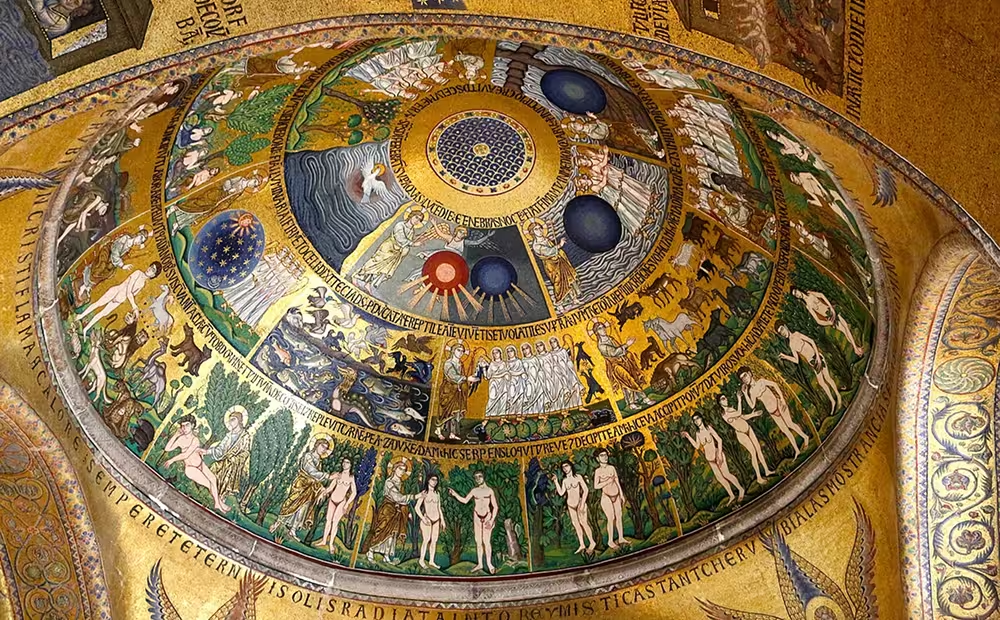
Venice wanted to be Constantinople, and in San Marco it built the proof: a five-domed Byzantine church glowing with roughly 8,000 square metres of gold mosaic, begun in the 11th century and continued for generations — partly by Greek masters, partly by Venetians they trained. After 1204, the basilica also became a reliquary of plundered Byzantium: the Pala d’Oro’s enamels and the porphyry Tetrarchs embedded in its corner arrived with the Fourth Crusade’s loot. Byzantine art, and Byzantine tragedy, in one building.
Seeing it today: go early or book the skip-the-line slot online; the mosaics are illuminated fully at set times — check the schedule.
Turkey (Constantinople)
Hagia Sophia, Istanbul (6th–14th centuries CE)
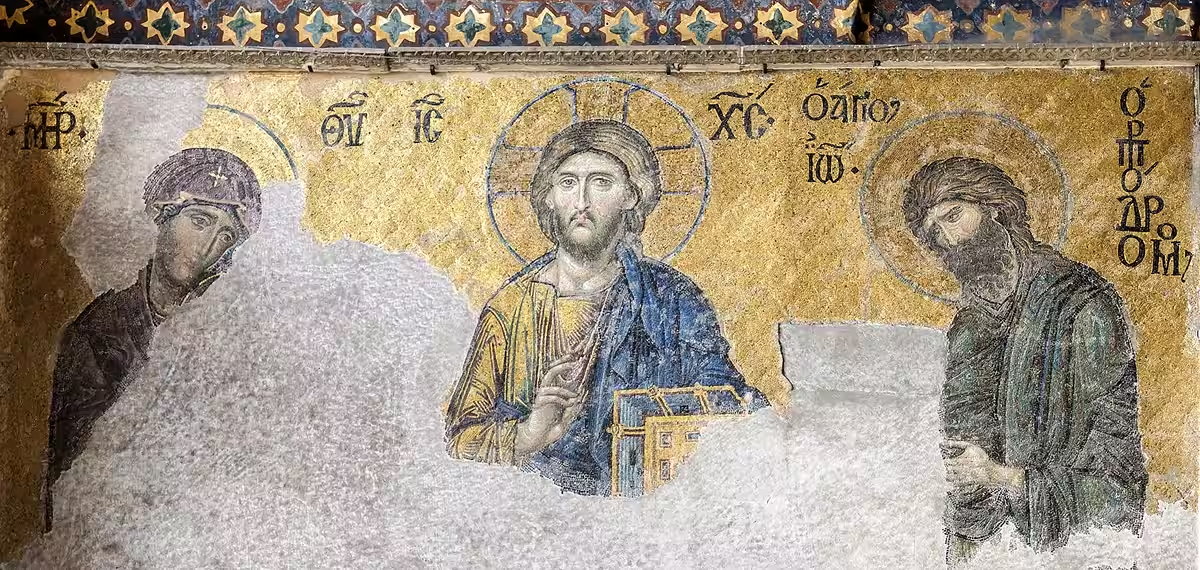
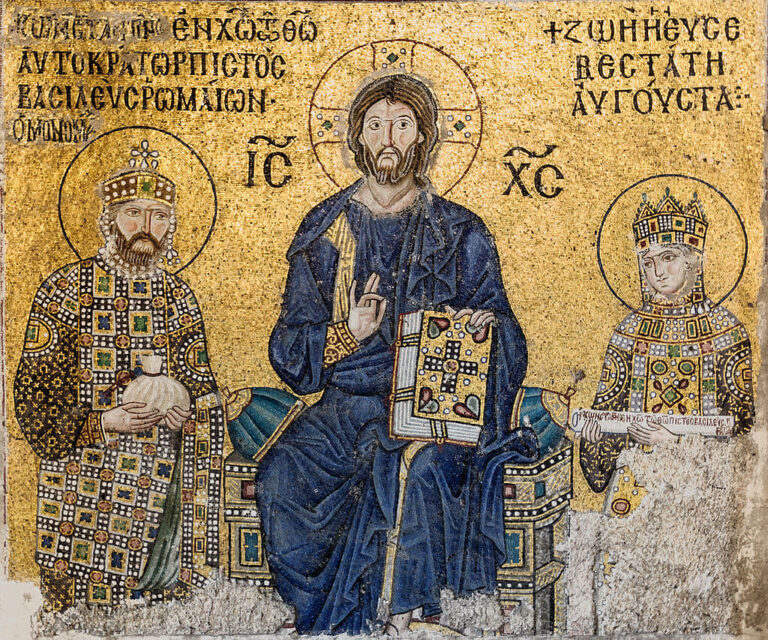
No single building tells the whole story of Byzantine mosaics like the Great Church — nine hundred years of the art under one dome. Vast stretches of Justinian’s original 6th-century decoration still cover the vaults: fields of shimmering gold, crosses and ornament from the age before figural images returned. The apse Virgin of 867 CE announced Iconoclasm’s end; the gallery panels of Empress Zoe and the Komnenos family chronicle the middle centuries; the Deesis — Christ between the Virgin and the Baptist, probably 13th century — reaches a tenderness European painting would not match for two hundred years. And the story runs to the very end: after the earthquake collapse of 1346, mosaics of the Virgin, John the Baptist and Emperor John V Palaiologos were set on the rebuilt eastern arch — the Virgin and Baptist uncovered only in 1989. From Justinian to the last Palaiologans: the complete history of the art, in one room.
Seeing it today: the gallery ticket (€25) includes the mosaics — full practical details in our complete Hagia Sophia guide.
-
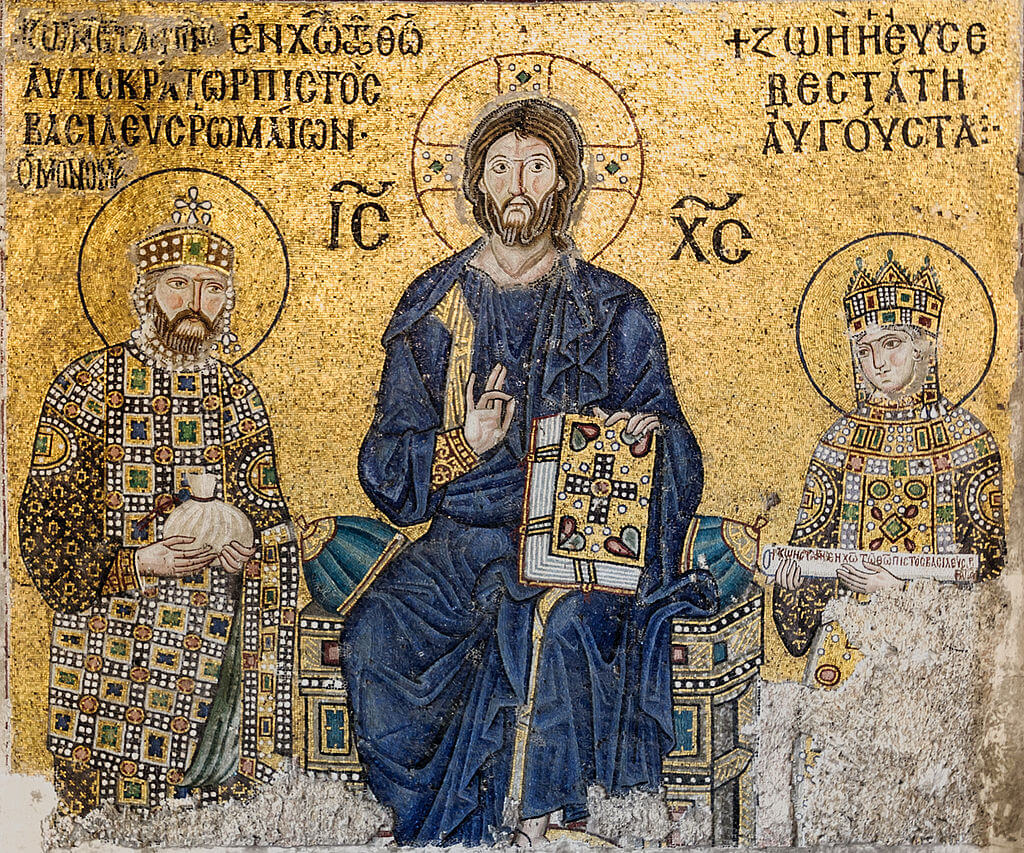
The mosaic of Zoe Porphyrogenita and her husbands with Christ in Hagia Sophia
Discover the mosaic of Zoe Porphyrogenita and her husbands with Christ in Hagia Sophia, a testament to the end of the Macedonian dynasty.
-
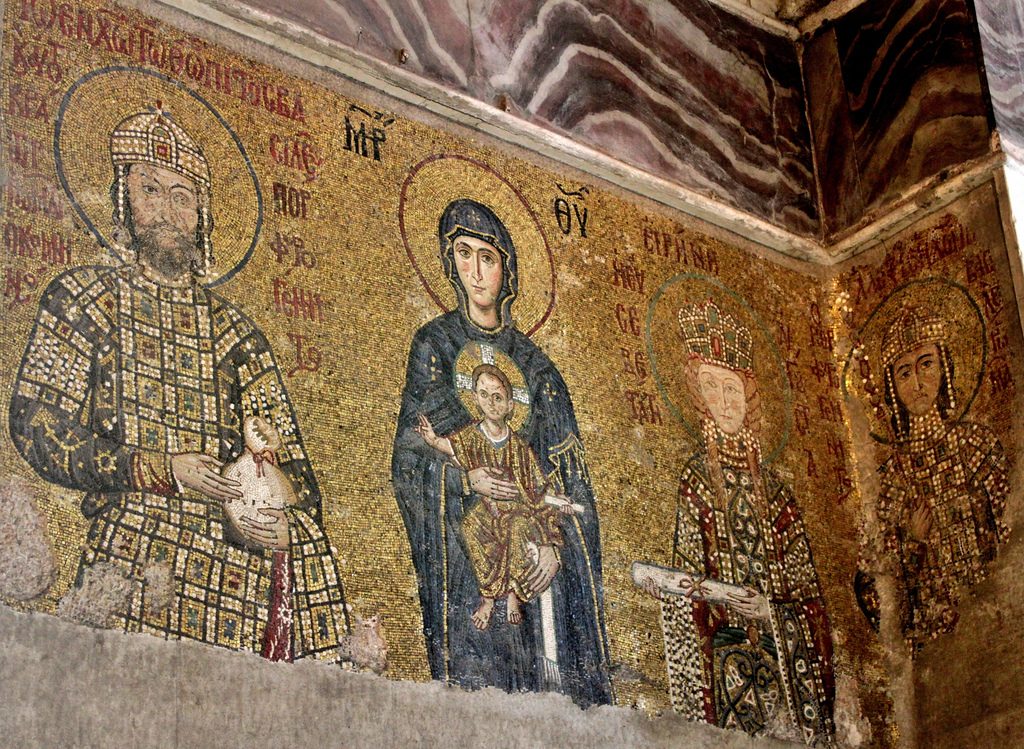
The Komnenos mosaic in Hagia Sophia : John II, Irene, Alexios, the Theotokos and Child
The Komnenos mosaic in Hagia Sophia is the only 12th-c. mosaic surviving in Istanbul, and shows prominent members of the dynasty with the Theotokos.
Chora Church (Kariye), Istanbul (c. 1315–1321 CE)

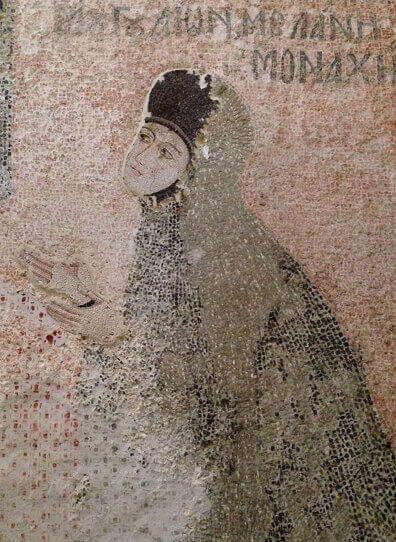
The supreme achievement of late Byzantine art. The statesman and scholar Theodore Metochites rebuilt the Chora monastery and covered its two narthexes with mosaics of the lives of Christ and the Virgin — narrative art of astonishing elegance, movement and humanity, created by an empire in political collapse. The scenes seem to breathe: figures turn, garments swirl, architecture bends around the story. Together with its frescoed side chapel, Chora is the final, defiant masterpiece of Byzantine monumental art.
Seeing it today: a working mosque since 2020 — check access conditions; details in our Byzantine Istanbul guide.
Pammakaristos Church (Fethiye Mosque), Istanbul (c. 1310s CE)
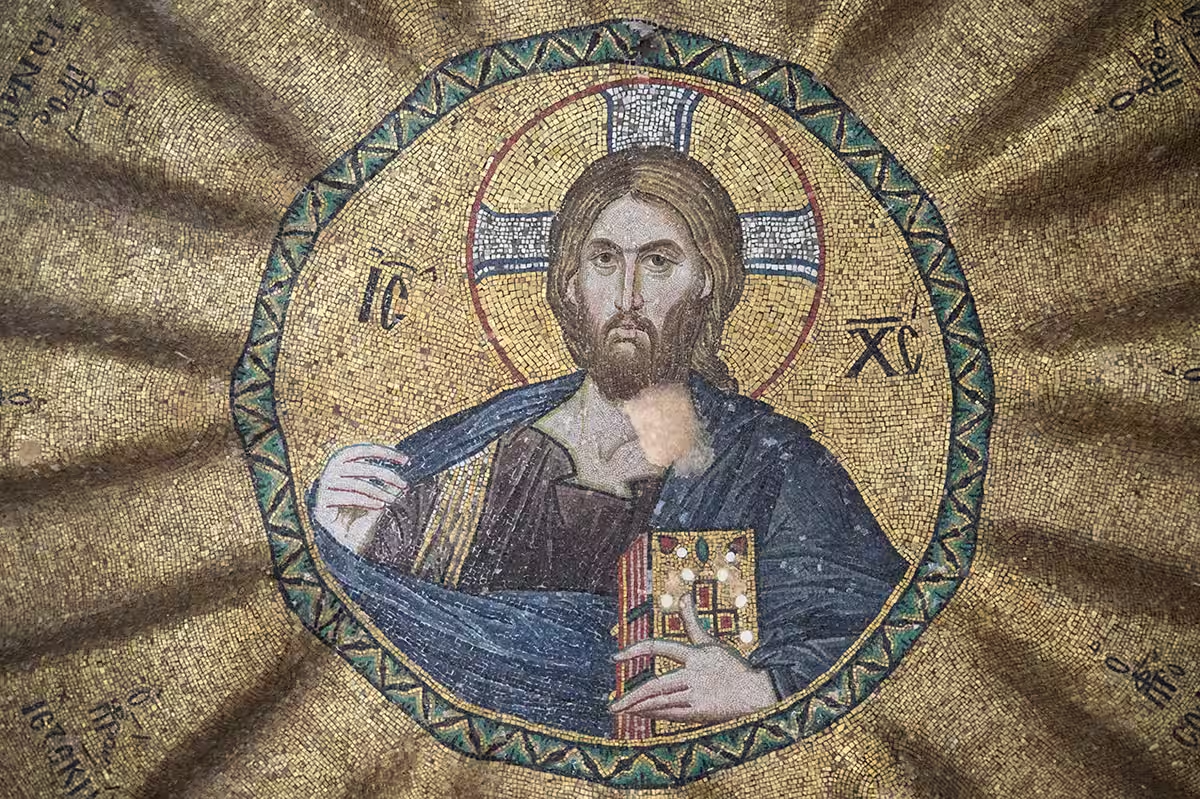
Constantinople’s overlooked treasure: the funerary chapel of the Pammakaristos monastery preserves the city’s third great Palaiologan mosaic ensemble, crowned by a dome Pantokrator encircled by twelve prophets, intimate where Chora is theatrical. Built by the widow Maria for her husband, the general Michael Glabas, the chapel is a love letter in gold. Its recent reopening after restoration makes it the easiest of the three to enjoy in relative quiet.
Seeing it today: in Fatih, an easy add-on to the Chora — full story in our dedicated article.
Greece
The Rotunda, Thessaloniki (c. 400 CE)
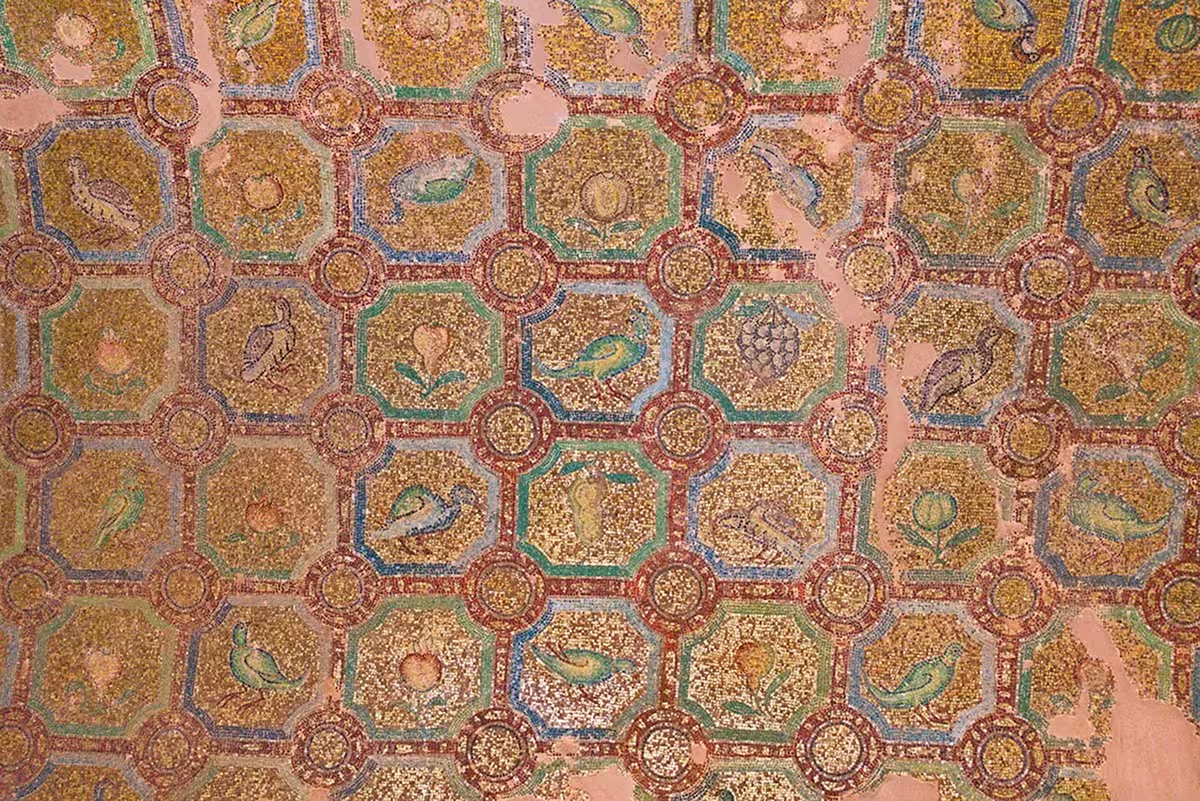
The oldest entry on this list, and one of the most astonishing. High in the dome of a Roman rotunda converted into a church, fifteen martyrs stand in prayer before golden palaces of heaven — two-storey fantasy architecture studded with pearls and jewels, unlike anything else surviving from the ancient world. Above them, the charcoal sketch of a lost Christ in glory is still visible on the bare brick. These are among the earliest wall mosaics of the Christian world, made by a local workshop when the art was being invented.
Seeing it today: €10 entry; bring a zoom lens — the martyrs are 30 metres up. Full story in our Rotunda article.
Osios David, Thessaloniki (late 5th century CE)
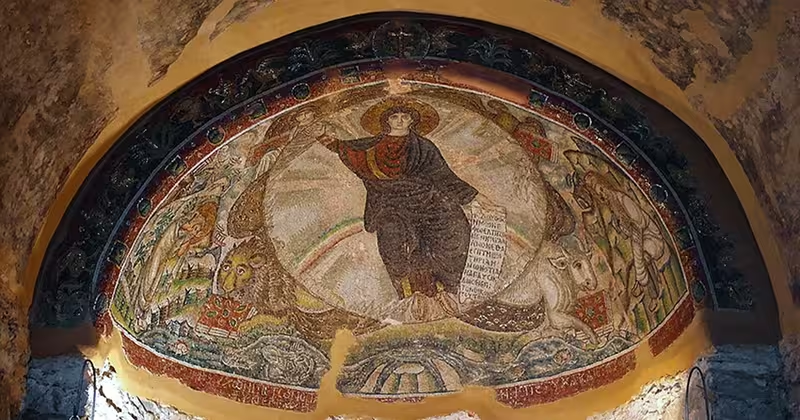
Hidden in the lanes of the upper town, a chapel the size of a living room holds a vision: a young, beardless Christ seated on the rainbow within a luminous mandorla, flanked by the prophets Ezekiel and Habakkuk — one awestruck, one pensive. Plastered over during the Ottoman era and rediscovered only in 1921, this theophany survives as one of the freshest, strangest and best-preserved images of early Christianity. Almost no tourists find it; those who do rarely forget it.
Seeing it today: free, in Ano Poli — included in our Byzantine Thessaloniki guide.
Basilica of Saint Demetrios, Thessaloniki (5th–7th centuries CE)
The mosaics that survived the great fire of 1917 are unlike anything else on this list: not a grand program but votive panels — private thank-offerings to the city’s patron saint. Demetrios stands with his arms on the shoulders of the bishop and prefect who rebuilt his church; elsewhere he protects two children brought to him by their parents. Quiet, personal, and among the earliest surviving Byzantine mosaics anywhere, they show the art serving not emperors but ordinary gratitude.
Seeing it today: free entry; don’t miss the crypt and dress modestly.
-
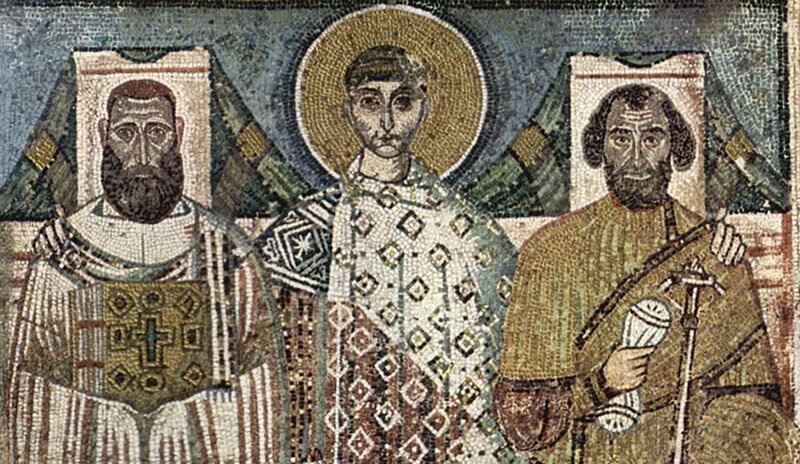
The mosaics of the church of Hagios Demetrios in Thessaloniki
Discover the mosaics of the church of Saint Demetrios in Thessaloniki. Dating back to the 6th and 7th c, they were nearly destroyed in 1917.
Hosios Loukas, near Delphi (early 11th century CE)
The finest surviving mosaic ensemble of the Macedonian golden age. The katholikon of this monastery — a UNESCO site with Daphni and Nea Moni — preserves its full program: a stern Pantokrator lineage, the Washing of the Feet, the Anastasis, and ranks of saints against gold, executed in the austere, monumental style of the early 11th century.
Set on a mountainside near Delphi, it is also the most atmospheric monastery visit in mainland Greece.
Seeing it today: combine with Delphi (30 minutes away); modest entry fee, monastic dress code.
Daphni Monastery, Athens (c. 1080–1100 CE)
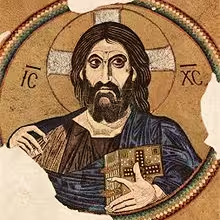
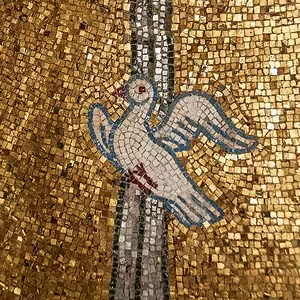
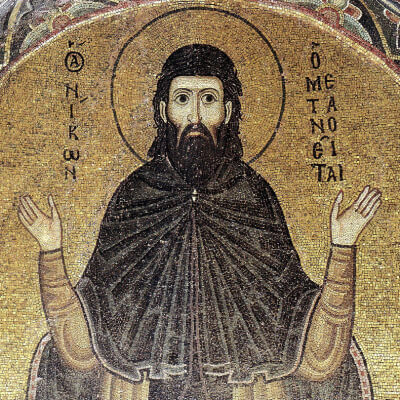
In the dome of a monastery on the edge of Athens gazes the most psychologically overwhelming Pantokrator in Byzantine art — dark, severe, magnificent, his fingers curled around the Gospel like a judge’s gavel. Around him the feast scenes reach a classical elegance and balance that made Daphni the textbook example of the “second golden age” and reminds the prosperity of Athens in the middle Byzantine era. Damaged by earthquakes and restored over decades, the mosaics are now visible again in their full power.
Seeing it today: 30 minutes from central Athens by bus; check current opening days before travelling.
Nea Moni of Chios (1042–1055 CE)
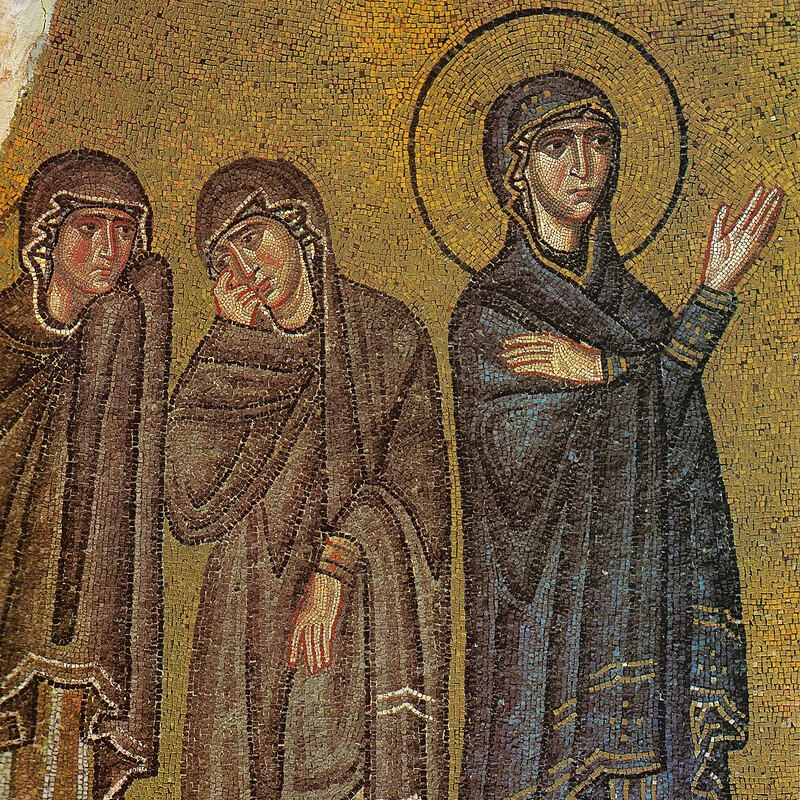
An emperor’s thank-you note, delivered on an Aegean island. Constantine IX Monomachos founded the “New Monastery” of Chios to honor a prophecy of his rise to the throne, and sent craftsmen and gold from Constantinople to decorate it. The surviving mosaics of the katholikon — an Anastasis of concentrated intensity, austere feast scenes, saints with the severe elegance of the capital’s finest workshops — are imperial art transplanted whole to the provinces. Of the three great monasteries in the UNESCO group with Daphni and Hosios Loukas, Nea Moni is the least visited and the most rewarding to reach: the crowds of the mainland never make it here.
Seeing it today: on Chios, a short drive from Chios town — full story in our [→ link: Nea Moni article] dedicated article.
Beyond the usual routes
Seven more programs deserve their pilgrimage. Saint Sophia of Kyiv (1040s CE, UNESCO-listed) was decorated by Constantinopolitan masters for the newly Christian Rus — its Orans Virgin, the “Indestructible Wall,” is among the supreme Byzantine images anywhere, and the finest proof of how the empire’s art conquered lands its armies never reached. The Church of the Holy Apostles in Thessaloniki (c. 1310s–1329 CE) holds the last mosaics of the Byzantine world, their gold stripped but their grace intact. In Arta, the dome of the Panagia Paregoritissa (late 13th century CE) carries a brooding Pantokrator made when the Despotate of Epirus kept Byzantine art alive outside Constantinople’s rule. In Istanbul, Hagia Irene preserves something rarer than gold figures: a plain mosaic cross in the apse — the unique surviving statement of Iconoclast art, from the century when images themselves were forbidden. On Mount Athos, the Vatopedi Monastery preserves the Holy Mountain’s only ancient mosaics: an 11th-century CE Annunciation on the columns of the katholikon and a Deesis in the entrance — imperial-quality work in the most restricted monastic enclave on earth. On Cyprus, the little church of Panagia Angeloktisti at Kiti preserves a 6th-century CE apse Virgin of astonishing quality. The Euphrasian Basilica in Poreč, Croatia (6th century CE, UNESCO-listed) keeps a complete early Byzantine apse with a rare pregnant Virgin of the Visitation. And at Saint Catherine’s Monastery, Sinai (c. 565 CE), Justinian’s own mosaicists left a Transfiguration that still shines above the world’s oldest continuously operating monastery.
The mosaics underfoot
The wall mosaic had an older, earthier sibling: the floor. Long before gold climbed the walls, mosaic was the Roman art of the ground, and Byzantium never abandoned it. The finest surviving example is the Great Palace Mosaic Museum in Istanbul, which preserves a vast 6th-century CE pavement from the imperial palace of Constantinople — hunting scenes, children at play, animals real and mythological, rendered with a liveliness the solemn walls above never allowed. Across the former empire, from the Madaba Map of the Holy Land to the monastery floors still emerging from excavations in Israel and Egypt, the art of the ground tells the story the golden vaults leave out: daily life. We’ll explore it in a dedicated article.
-
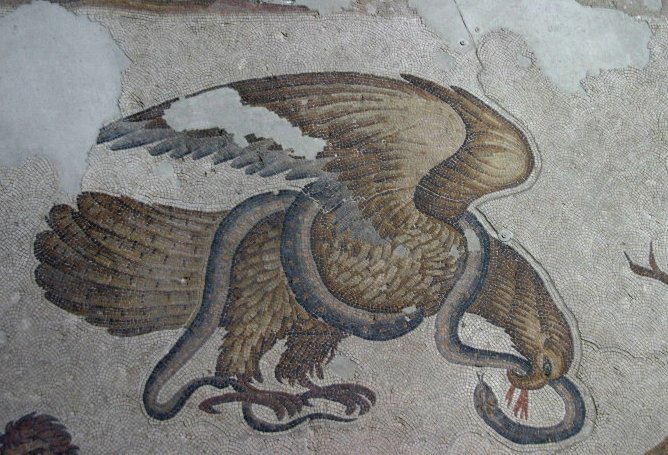
The Great Palace of Constantinople: Splendor and ruin of the heart of the Byzantine Empire
Explore the Great Palace of Constantinople, heart of Byzantine power and ceremony for centuries, and its ruins in modern Istanbul.
The mosaics you can hold
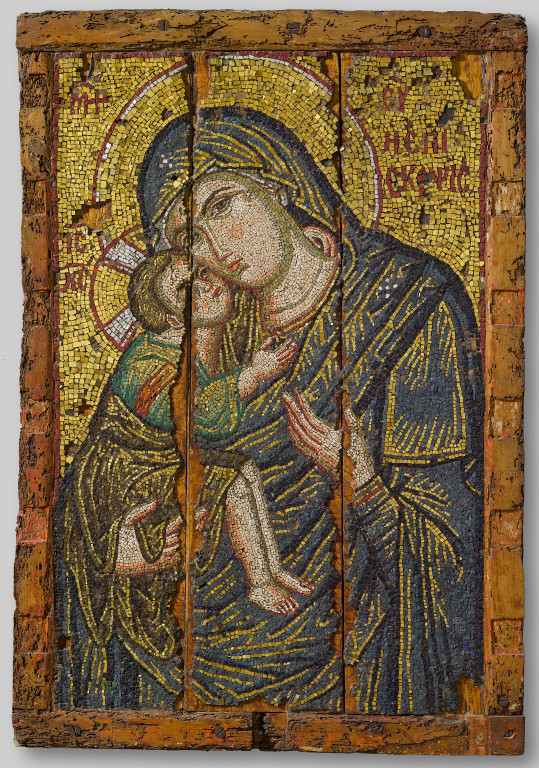
From the ground to the palm of the hand: from the 12th century CE onward, Byzantine artists reinvented the monumental art in miniature, creating portable mosaic icons — tesserae of gold, glass and stone sometimes smaller than a grain of rice, set in wax on small wooden panels.
Exceedingly rare and staggeringly labor-intensive, they were among the most precious objects the empire produced. The celebrated late-13th-century mosaic icon of the Virgin Episkepsis in the Byzantine and Christian Museum in Athens shows the art at panel scale; the Bode Museum in Berlin holds superb examples among its Byzantine collection; and the 14th-century miniature of the Forty Martyrs of Sebasteia at Dumbarton Oaks in Washington compresses an entire frozen lake of suffering saints into a panel you could carry in two hands.
For the wider world of Byzantine icons in all their forms, see our guide to Byzantine icons — and for where to find these treasures, our guide to the world’s great Byzantine collections.
The lost and the hidden
Every mosaic in this guide is a survivor — and behind each stands a crowd of the vanished. The Church of the Holy Apostles in Constantinople, burial place of emperors and model for St Mark’s in Venice, was demolished with its mosaics after 1453. Most of Saint Demetrios’ golden nave burned in the fire of 1917, surviving only in watercolors. The mosaics of Cyprus’ Panagia Kanakaria were hacked from their apse by looters in the 1970s — some later recovered through the courts. And an unknown quantity still waits in hiding: beneath the great calligraphic roundel in Hagia Sophia’s dome almost certainly lies a colossal image no one has seen for centuries, and churches like Istanbul’s Vefa Kilise Mosque still hold unrestored mosaics in their narthex domes. The full story of Byzantium’s lost and hidden mosaics deserves — and will get — its own article.
Our top three
Sixteen entries is a survey; a verdict is a confession. Pressed to choose:
3. Ravenna — taken together: San Vitale, Galla Placidia and Sant’Apollinare form the most complete early Byzantine ensemble on earth, a whole imperial world preserved in one small city.
2. The Chora, Constantinople — the art’s final flowering and its most human: narrative mosaic at a level of elegance no one reached again.
1. Hagia Sophia — not for any single panel, but because nowhere else can you follow the entire history of Byzantine mosaics, from Justinian’s gold to the last Palaiologan emperors, beneath one dome.
Disagree? That’s what the comments are for.
Frequently asked questions
Where are the best Byzantine mosaics in the world?
The three greatest concentrations are Ravenna in Italy (the earliest imperial ensembles), Istanbul (Hagia Sophia, Chora, Pammakaristos), and Thessaloniki in Greece (the Rotunda, Osios David, Saint Demetrios). Norman Sicily — Cefalù, Palermo, Monreale — holds the largest cycles, made by Greek masters for Norman kings.
What is the oldest surviving Byzantine mosaic?
Among wall mosaics, the Rotunda of Thessaloniki (c. 400 CE) and the Mausoleum of Galla Placidia in Ravenna (c. 425–450 CE) are the oldest major ensembles. The votive panels of Saint Demetrios and the apse of Osios David, both in Thessaloniki, belong to the same early era.
Can you still see the mosaics in Hagia Sophia?
Yes — the major surviving mosaics (the Deesis, the imperial panels, the apse Virgin) are in the upper galleries, open to tourists with the €25 gallery ticket, and remain uncovered during visiting hours.
Why did the Byzantines use gold backgrounds?
Gold was theology, not luxury: it dissolved the wall into a timeless, placeless radiance representing divine light. Mosaicists set the gold tesserae at slight angles so the surface glitters and shifts as the viewer — or the candlelight — moves.
How were Byzantine mosaics made?
Artists pressed tesserae — small cubes of colored glass, stone, and glass sandwiched with gold leaf — into fresh plaster, following a painted underdrawing. A single square metre could require ten thousand tesserae; a dome like Monreale’s consumed tonnes of glass and gold.
Sources and further reading
- UNESCO World Heritage Centre: Early Christian Monuments of Ravenna; Monasteries of Daphni, Hosios Loukas and Nea Moni of Chios; Paleochristian and Byzantine Monuments of Thessalonika.
- Ravenna Turismo — Basilica of San Vitale and related monument pages.
- Khan Academy — The Justinian Mosaic, San Vitale; Smarthistory — The Cappella Palatina.
- L. James, Mosaics in the Medieval World: From Late Antiquity to the Fifteenth Century, Cambridge University Press, 2017.
- Ch. Bakirtzis (ed.), Mosaics of Thessaloniki, 4th–14th Century, Kapon Editions, 2012.
- B. Kiilerich & H. Torp, The Rotunda in Thessaloniki and its Mosaics, Kapon Editions, 2017.
- O. Demus, The Mosaics of Norman Sicily, Routledge & Kegan Paul, 1949 (the classic study).
- R. Cormack, Byzantine Art, Oxford University Press, 2nd ed. 2018.



One Comment