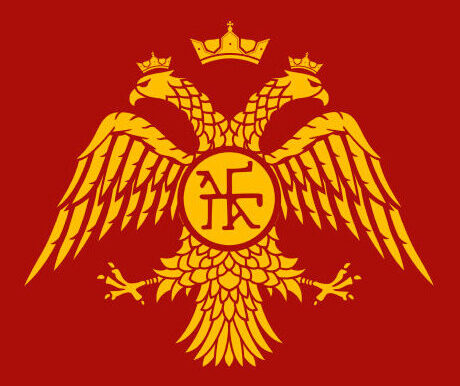
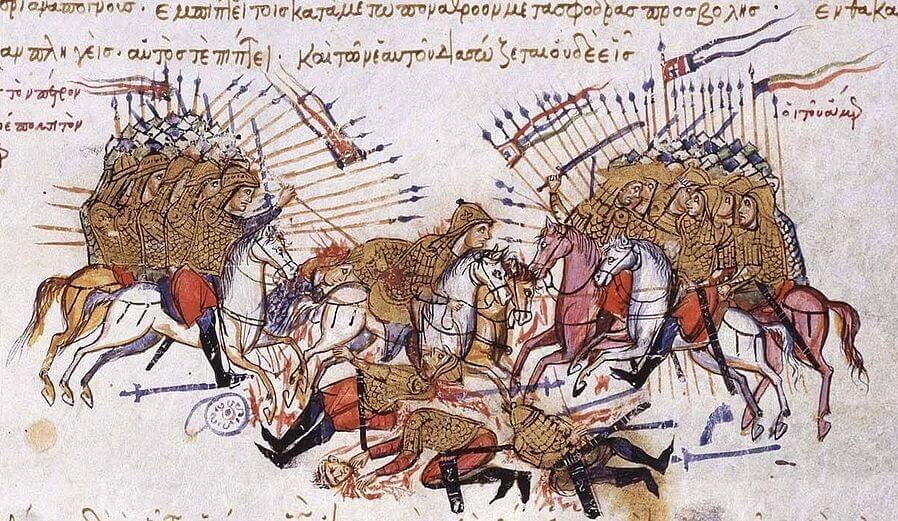
History of the Byzantine Empire: A Complete Timeline (330–1453)
For more than eleven centuries — from the founding of Constantinople in 330 to its fall in 1453 — the Byzantine Empire stood as the living continuation of the Roman Empire in the East. Its people never called themselves “Byzantines”: they were Rhomaioi, Romans, who spoke Greek, worshipped as Orthodox Christians, and ruled from the greatest city of the medieval world. This is the story of that empire from beginning to end — an arc of brilliance, catastrophe, and astonishing resilience.
This page is your guided overview. Each era links to a full, in-depth article, and the key turning points link to dedicated stories. Follow it start to finish, or jump to the period that interests you.
In a hurry?
The Byzantine Empire began when Constantine made Constantinople his capital (330), endured for over a thousand years through wars, religious upheavals, and the loss and recovery of its own capital, and ended when the Ottomans took the city on 29 May 1453.
New to the subject?
Start with What was the Byzantine Empire?
The Byzantine timeline at a glance
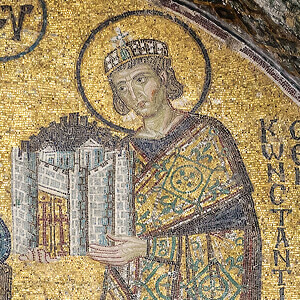
330 — Constantine dedicates Constantinople as the “New Rome.” 
395 — The Roman Empire is permanently divided; the East endures. 
476 — The Western Roman Empire falls; Constantinople becomes Rome’s sole heir. 527–565 — Justinian I: reconquest of the West, the law code, and Hagia Sophia. 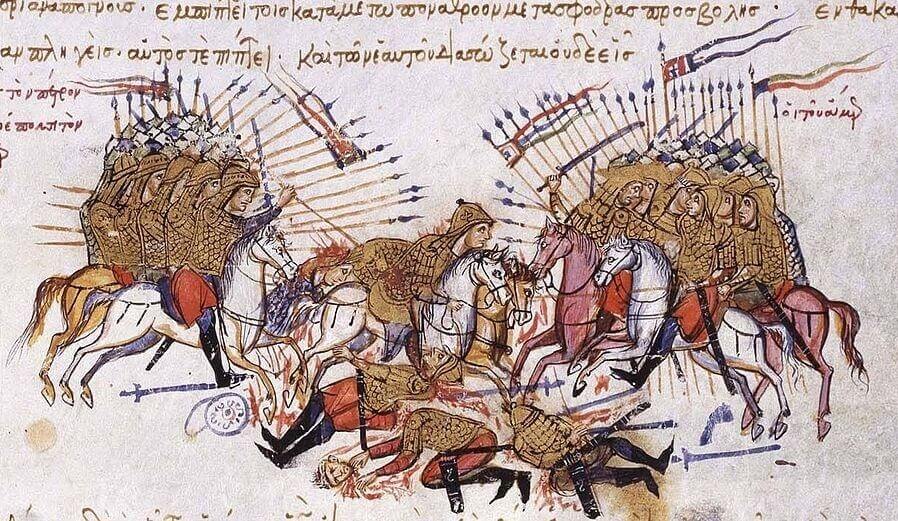
610–641 — Heraclius: the empire turns Greek and faces the Arab conquests. 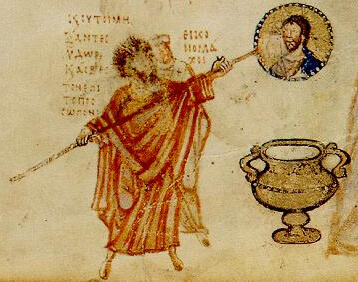
726–843 — Iconoclasm: a century of conflict over religious images. 
867–1025 — The Macedonian “golden age,” ending with Basil II. 
1054 — The Great Schism splits the Orthodox East from the Catholic West. 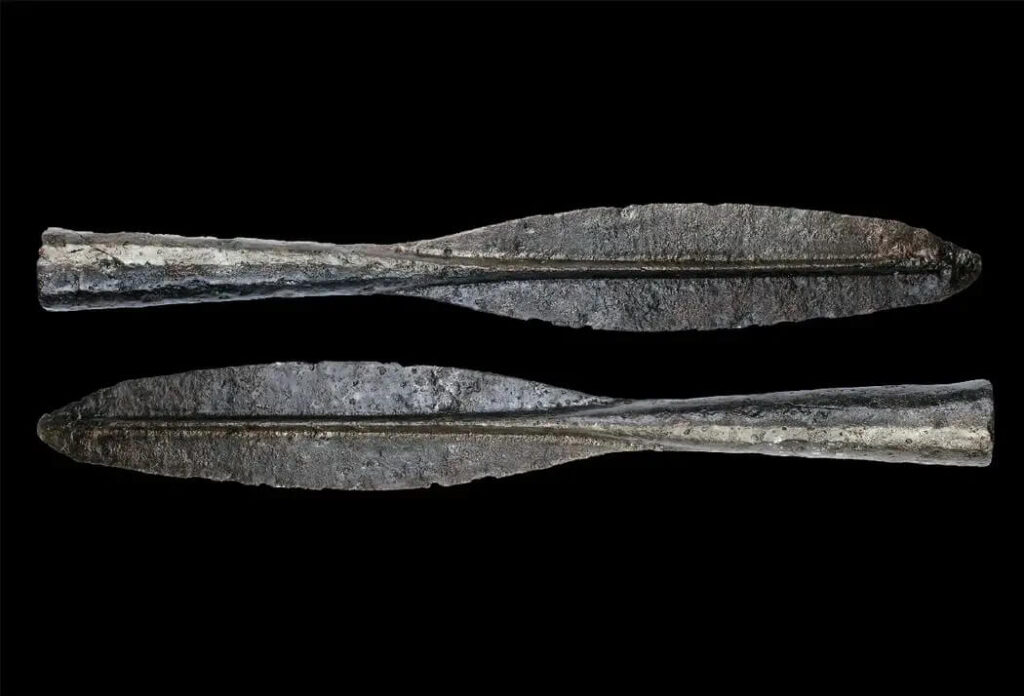
1071 — Defeat at Manzikert opens Anatolia to the Seljuk Turks. 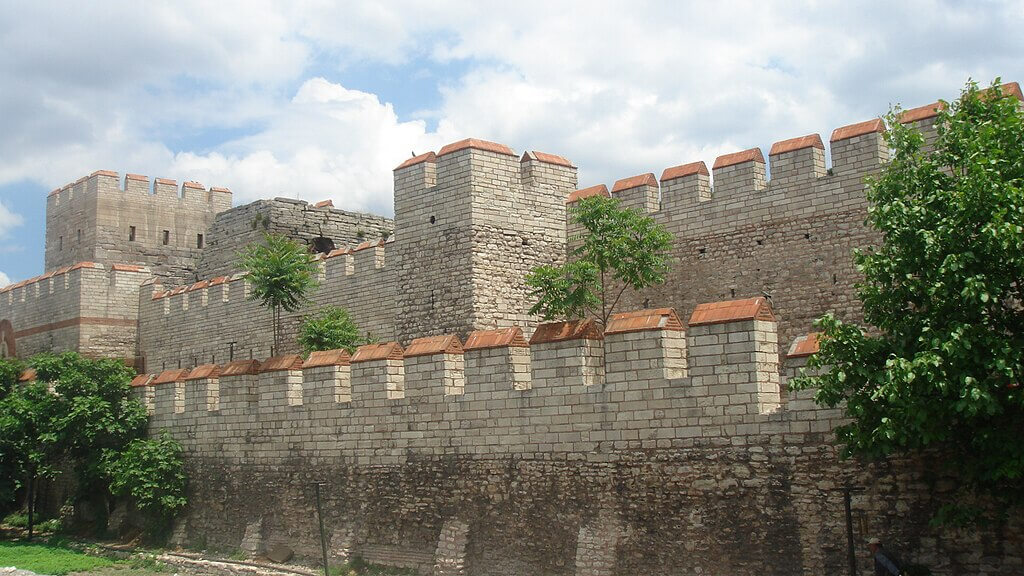
1204 — The Fourth Crusade sacks Constantinople; the empire fragments. 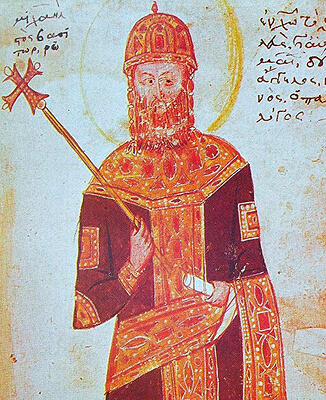
1261 — The Byzantines retake their capital under Michael VIII Palaiologos. 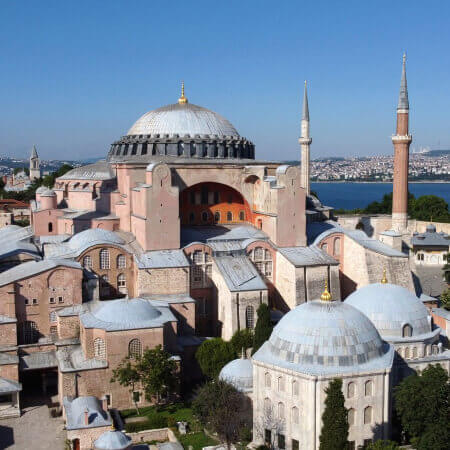
1453 — Constantinople falls to Mehmed II; the empire ends.
The three ages of Byzantium
The thousand-year story divides naturally into three great periods. Here is each in brief, with a link to the full account.
Early Byzantine era (324–717): the dawn of an empire
The empire was born out of the late Roman world. When Constantine refounded the Greek city of Byzantium as Constantinople in 330, he created a Christian capital in the East that would outlive Rome itself. Through the fifth century, while the West collapsed, the East survived — protected by the great Theodosian land walls, fed by the grain of Egypt, and bound together by Roman law and the Orthodox faith.
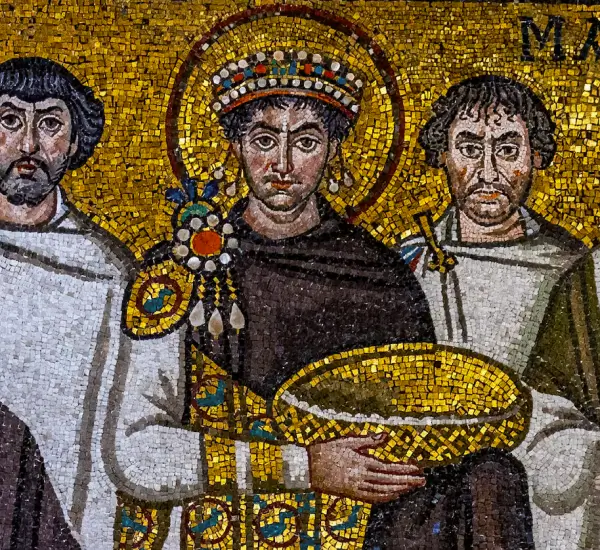
The era reached its peak under Justinian I (527–565), who reconquered Italy, North Africa, and part of Spain, codified Roman law in the Corpus Juris Civilis, and raised Hagia Sophia, the largest church in the world for nearly a thousand years. But his reign also revealed the empire’s fragility: the Nika riots gutted the capital in 532, and the plague of 541 killed a vast share of its people.
The seventh century brought existential crisis. Under Heraclius (610–641) the empire fought off Persia only to face the lightning Arab conquests that stripped away Syria, Palestine, and Egypt. Constantinople itself withstood great Arab sieges. The empire that emerged was smaller, poorer, more Greek, and more religious — no longer the Mediterranean superpower of Justinian, but a hardened state fighting for survival.
→ Read the full story: The Early Byzantine period: the dawn of Byzantium
Middle Byzantine era (717–1204): survival, golden age, and the great rupture
The middle period opened with a century-long struggle over religious images — Iconoclasm — that convulsed the empire until the “Triumph of Orthodoxy” restored the icons in 843. With internal peace came revival. Under the Macedonian dynasty (867–1056), Byzantium entered a golden age: it pushed back its frontiers, converted the Slavs and the Rus to Orthodox Christianity, gave them the Cyrillic alphabet, and reached a cultural and military peak under Basil II (976–1025), the “Bulgar-Slayer.”
This was also the age of two ruptures that would shape the rest of history. In 1054, long-simmering tensions between Constantinople and Rome hardened into the Great Schism, the lasting split between the Orthodox and Catholic churches. Then in 1071, the catastrophic defeat at Manzikert opened the Anatolian heartland — the empire’s recruiting ground and breadbasket — to the Seljuk Turks.
The Komnenian emperors (Alexios I, John II, and Manuel I) engineered a brilliant recovery, restoring the empire’s wealth and prestige and making Constantinople once more the marvel of the medieval world. But the recovery rested on fragile foundations. In 1204, the diverted Fourth Crusade turned on Constantinople, stormed and sacked the city, and shattered the empire into rival fragments — a blow from which it never fully recovered.
→ Read the full story: The Middle Byzantine period
Late Byzantine era (1204–1453): twilight and fall
For over half a century after 1204, there was no Byzantine Empire — only Greek successor states (Nicaea, Epirus, and Trebizond) competing to restore it, while a Latin emperor ruled in Constantinople. In 1261, the empire of Nicaea under Michael VIII Palaiologos recovered the capital and re-founded the empire under the Palaiologos dynasty, the longest-ruling and last imperial house of Byzantium.
The restored empire was a shadow of its former self — impoverished, territorially shrunken, and increasingly dependent on Italian fleets and foreign goodwill. Yet these straitened decades produced one of the most brilliant cultural flowerings in Byzantine history, the Palaiologan Renaissance, whose luminous art survives above all in the mosaics and frescoes of the Chora Monastery in Constantinople.
The decline was relentless. Ruinous civil wars tore the state apart in the fourteenth century, the Black Death struck in 1347, and the rising Ottoman Empire swallowed the Byzantine lands one by one until little remained but the capital itself. On 29 May 1453, after a fifty-day siege, the army of Mehmed II breached the Theodosian walls. The last emperor, Constantine XI, died in the fighting, and the eleven-century history of the imperial city came to an end.
→ Read the full story: The Late Byzantine period and The Fall of Constantinople in 1453
The moments that changed everything
The founding of Constantinople (330).
Constantine’s choice of the Bosphorus for his “New Rome” gave the empire the most defensible and strategically placed capital in the medieval world — the single decision that made a thousand years of survival possible.
→ When did the Byzantine Empire begin?
→ Discover Constantinople
Justinian and Hagia Sophia (527–565).
The last great age of Roman reconquest, the codification of Roman law, and the building of the most influential church in Christendom.
→ Justinian, the emperor who tried to restore Rome
→ Hagia Sophia, the Great Church of Constantinople
The Great Schism (1054).
The permanent split between the Orthodox and Catholic churches — a religious rupture whose consequences are still with us today.
→ Byzantine religion
The Battle of Manzikert (1071).
A single day’s defeat that lost the empire Anatolia and set in motion centuries of slow decline.
→ Mantzikert, the battle that cost Byzantium Anatolia
→ Archaeologists uncover evidences of the Battle of Mantzikert
The Fourth Crusade (1204).
The Christian army that sacked the greatest Christian city — the wound from which Byzantium never recovered.
→ The Sack of Constantinople
The Fall of Constantinople (1453).
The fifty-day siege, the Ottoman guns, and the death of the last emperor — the end of the Roman Empire after more than two thousand years.
→ The Fall of Constantinople in 1453
Who were the Byzantines — and why do they still matter?
The Byzantines saw themselves not as a separate civilisation but as the unbroken continuation of Rome. The name “Byzantine” was invented by scholars centuries after the empire fell.
→ Roman, Greek, or both? Who were the Byzantines?
Their legacy is vast and still living. Byzantium preserved the literature and learning of classical antiquity through the Middle Ages and helped spark the Renaissance in the West. It converted the Slavic world to Orthodox Christianity and gave it the Cyrillic alphabet still used from Russia to Bulgaria. Its art and architecture shaped sacred building from Venice to Moscow.
→ Beyond Byzantium: political, religious and cultural influence
At the centre of it all stood the emperor, God’s vicegerent on earth, and the city that embodied the empire’s grandeur.
→ Imperial power in Byzantium
Explore the empire through maps
The borders of Byzantium were never still — expanding under Justinian and Basil II, collapsing after Manzikert and 1204. The clearest way to grasp eleven centuries of change is to watch it on the map.
→ The Byzantine Empire in maps: a turbulent history
Frequently asked questions
When did the Byzantine Empire begin?
There is no single agreed date. Many historians date it to 330, when Constantine founded Constantinople; others to 395, when the Roman Empire was permanently divided, or to 476, when the Western Empire fell and the East became Rome’s sole heir. The Byzantines themselves never recognised a “beginning” — they simply considered themselves Romans throughout.
When and how did the Byzantine Empire fall?
It fell on 29 May 1453, when the Ottoman sultan Mehmed II captured Constantinople after a fifty-day siege. The last emperor, Constantine XI Palaiologos, died defending the city.
What was the capital of the Byzantine Empire?
Constantinople (modern Istanbul), founded by Constantine in 330 and the empire’s heart for its entire existence, apart from the period of exile between 1204 and 1261.
Why did the Byzantine Empire fall?
There was no single cause but a long decline: the loss of Anatolia after Manzikert (1071), the devastating sack of the capital in the Fourth Crusade (1204), repeated civil wars, the Black Death, and the steady rise of the Ottoman Empire, which finally overwhelmed a tiny, impoverished state in 1453.
Were the Byzantines Roman or Greek?
Both, in a sense. They called themselves Romans (Rhomaioi) and saw their state as the Roman Empire, but they spoke Greek and followed the Orthodox Christian faith. “Byzantine” is a later label coined by historians.
How long did the Byzantine Empire last?
Counting from the founding of Constantinople in 330 to its fall in 1453, about 1,123 years — making it one of the longest-lasting empires in history.