Byzantine Athens: A complete visitor’s guide to the city’s medieval heritage
Most visitors come to Athens for the Acropolis and leave without realizing they walked past a thousand years of Byzantine history on the way there. The Parthenon itself spent longer as a Christian cathedral than most European cathedrals have existed at all. A handful of small, marble-clad churches survive tucked between shopping streets and modern squares, easy to miss and remarkable up close. And on Vassilissis Sofias Avenue sits one of the finest single collections of Byzantine art anywhere in the world, visited by a fraction of the tourists who queue for the Acropolis Museum next door.
This guide is built for seeing Athens’s Byzantine heritage in person — what to visit, where it is, and how much time to give it. For the full story of how Byzantine Athens rose from a center of philosophy to a modest provincial city and back to prosperity in the 11th century, see our complete history of Byzantine Athens.
Quick facts
Central Athens churches:
eight principal survivors, all within easy walking distance of Syntagma Square — Little Metropolis, Kapnikarea, the Church of the Holy Apostles (in the Ancient Agora), the Church of Sts. Theodore, Petraki Monastery, Panagia Lykodemou, Panagia Pantanassa (the church that gave Monastiraki its name), and Agios Nikolaos Rangavas in Plaka, plus the Hephaisteion, a converted ancient temple
Key museums:
the Byzantine and Christian Museum, Vassilissis Sofias Avenue, near Evangelismos metro station (Line 3) — over 30,000 artefacts spanning the 3rd to 20th centuries; and the Benaki Museum, a short walk away on the same avenue, whose ground and first floors cover Byzantine manuscripts, icons, jewelry, and mosaics within a wider sweep of Greek culture; and the smaller Kanellopoulos Museum in Plaka, which preserves a genuine section of the Byzantine-era fortification wall in situ
Day trips:
Kaisariani Monastery (Mount Hymettus, ~5 km from the center) and Daphni Monastery (~10 km, UNESCO-listed for its famous mosaics)
Off the beaten path: the rock-cut Byzantine chapels of Mount Pentele and the frescoed 12th–13th century Omorfokklisia at Galatsi
Best time to visit: spring or autumn for comfortable walking between sites; central churches are outdoors-adjacent and best appreciated without summer crowds and heat
Time needed:
a half-day covers the central churches and a focused museum visit; a full day allows one of the two day trips as well
Getting around central Athens:
all central churches and both museums are walkable or a short metro ride apart — no car needed for the city-center portion of this guide
The Acropolis in the medieval period
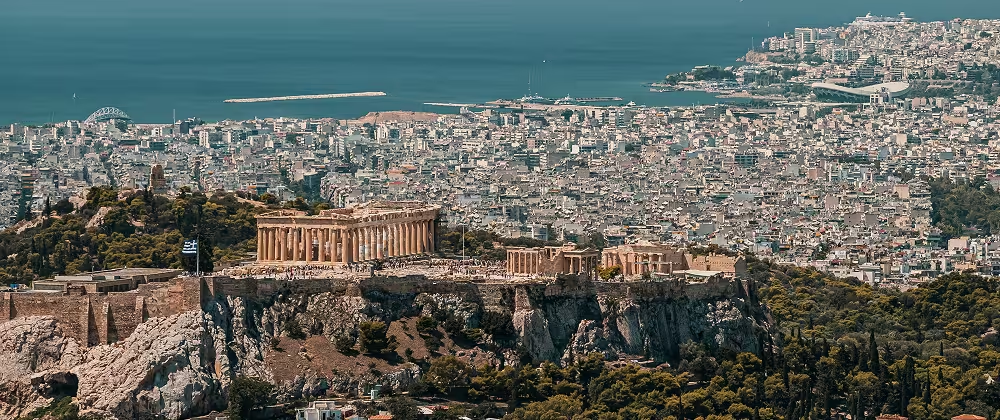
For close to a thousand years, the Parthenon was not a ruin but a working church — first dedicated to the Virgin as the cathedral of Athens, later serving briefly under Latin and then Ottoman rule before its slow transformation into the monument seen today. The Erechtheion and the Propylaia had their own medieval lives too, the latter serving at various points as an episcopal residence. Very little of this medieval layer survives visibly on site: 19th-century restoration work, aimed at recovering the classical monument, removed most physical traces of its centuries as a cathedral. What you’ll see today on the Acropolis is overwhelmingly its ancient form — the Byzantine story here is one you largely have to know rather than see. One exception is worth looking for close up: Byzantine, and later Frankish, funerary inscriptions were carved directly into several Parthenon columns, commemorating the dead of the medieval city, and a number of these are still visible today for anyone who looks carefully rather than simply photographing the façade. Our history of Byzantine Athens covers this transformation, and the 1018 visit of Emperor Basil II to give thanks in the Parthenon-cathedral, in full.
The churches of central Athens
Athens’s surviving Byzantine churches are small, scattered through the modern city center, and easy to combine into a single walking route from Syntagma Square.
Little Metropolis (Panagia Gorgoepikoos)
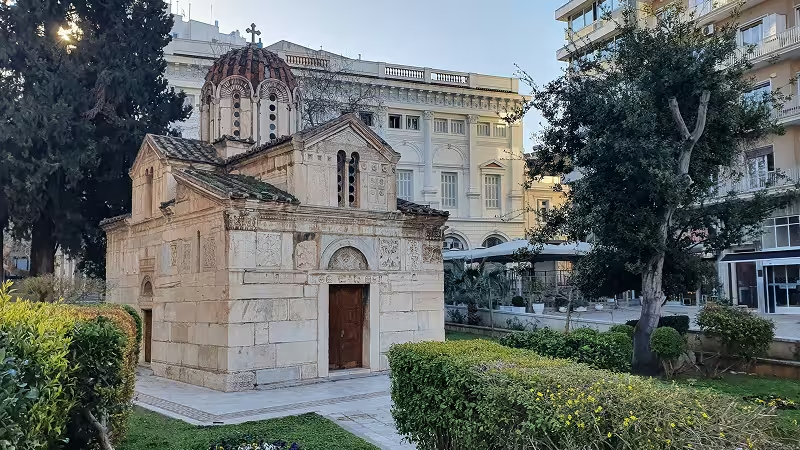
The most visually distinctive of the churches here. A small marble church — formally dedicated to the Panagia Gorgoepikoos (“Quick to Hear”) — built almost entirely from reused ancient and Byzantine carved fragments, over ninety sculpted panels spanning a millennium and a half, including a pagan calendar frieze left largely intact save for crosses added directly onto the stone. The date is genuinely disputed: Manolis Chatzidakis long favored around 1200, tying the church to Metropolitan Michael Choniates, but Bente Kiilerich’s 2005 research argues for construction after 1436, based on an inscription the antiquarian Cyriacus of Ancona recorded on a 1436 visit — worth knowing this isn’t a settled date before you visit. It stands immediately beside the much larger modern Metropolitan Cathedral of Athens on Mitropoleos Square, making the size contrast between old and new part of the visit itself.
Kapnikarea
A cross-in-square church, its main body dating to shortly after the mid-11th century, standing, almost improbably, in the middle of Ermou Street — central Athens’s main pedestrian shopping street. Shoppers pass within a few meters of it constantly, making it likely the most-seen and least-noticed Byzantine building in the city. It was very possibly the katholikon of a monastery, built over an earlier pagan temple of uncertain dedication, and its dome still rests on four 5th-century reused columns. Its name is disputed too — most likely tied to a Byzantine “smoke tax,” though rival theories exist — and it survived two separate 19th-century demolition threats, the first defeated only by the personal intervention of King Ludwig I of Bavaria, Otto’s own father, in 1834. Today it belongs to the University of Athens, and its interior frescoes are largely the work of the painter Fotis Kontoglou, begun in 1942, using a faux-marble technique adapted from ancient Macedonian art.
Church of the Holy Apostles
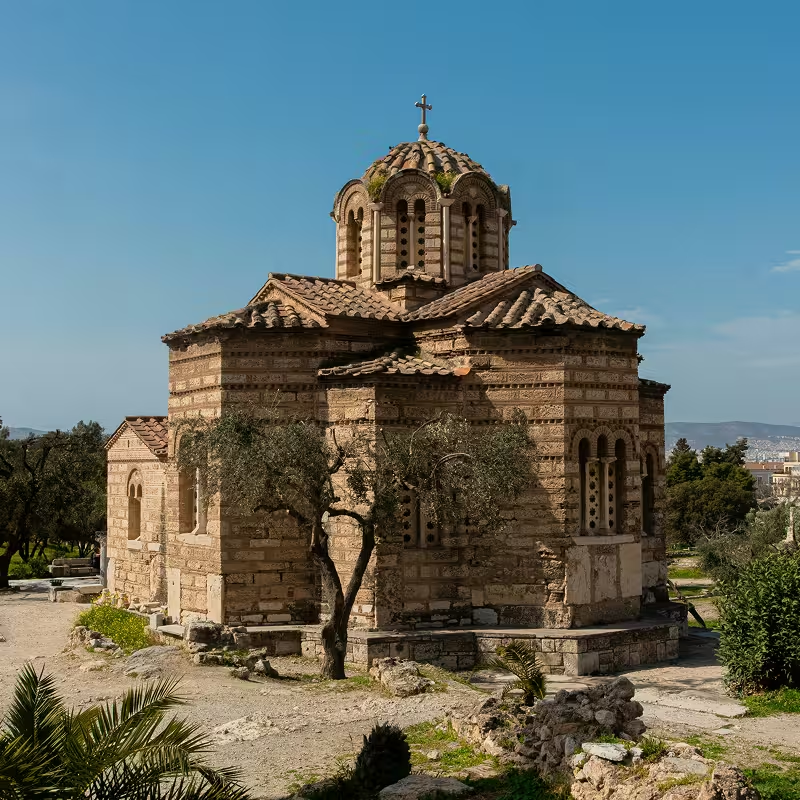
Standing inside the Ancient Agora, this 10th-century church was restored to its original Byzantine appearance during the American School of Classical Studies’ 1950s excavations, which stripped away later Ottoman-era additions. Built over a 2nd-century nymphaeum (fountain house), it features a classic four-columned cross-in-square floor plan, intricate kufic-inspired brick exterior decorations, and surviving 11th- and 17th-century frescoes salvaged from nearby demolished chapels.
Because it sits within the ticketed archaeological site, combine it directly with your Ancient Agora tour rather than planning a separate stop.
Church of Sts. Theodore
A cross-in-square church on Klafthmonos Square, less visited than the other central churches and a good stop for anyone who wants a quieter look at Middle Byzantine brickwork without the foot traffic of Ermou Street or Mitropoleos Square. An inscription above the west entrance names its founder — the Byzantine official Nikolaos Kalomalos, holder of the court title spatharokandidatos — and gives a construction date read by scholars as either 1049 or 1065, the two readings still debated. The church was built over an earlier one on the same site; local tradition holds that this predecessor was one of twelve churches supposedly founded across Athens by Empress Eudokia, though this attribution should be treated as tradition rather than documented fact. Excavations in the 1960s confirmed that the site had been built over a Roman-era structure long before any Byzantine church stood here. The exterior brickwork includes decorative bands with Kufic-influenced motifs, a decorative borrowing from Islamic art not uncommon in Middle Byzantine Athens. Following Greek independence, the church was damaged and then restored with financial support from King Otto and Queen Amalia.
Petraki Monastery
Tucked into the Kolonaki district behind the Evangelismos hospital, the katholikon of Petraki Monastery is a genuine 10th-century cross-in-square church of the Constantinopolitan type — one of the oldest surviving church buildings in Athens, though it sits somewhat off the standard tourist route. Worth being precise about what’s medieval and what isn’t here: while the building itself dates to the 10th century, the monastic institution as such is only securely documented from Ottoman times onward, and takes its present name from a 17th-century monk, Parthenios Petrakis, who rebuilt it. Today it serves as the seat of the Holy Synod of the Church of Greece, so it remains a genuinely active religious site rather than a museum piece.
The Hephaisteion: a temple turned church
Better known as an ancient monument than a Byzantine one, but its Byzantine chapter is a real part of why it survives so well today. The Temple of Hephaestus, overlooking the Ancient Agora, was converted into the Christian church of Agios Georgios Akamates in the 7th century and remained in continuous use as a church until 1833 — longer than most European cathedrals have existed at all.
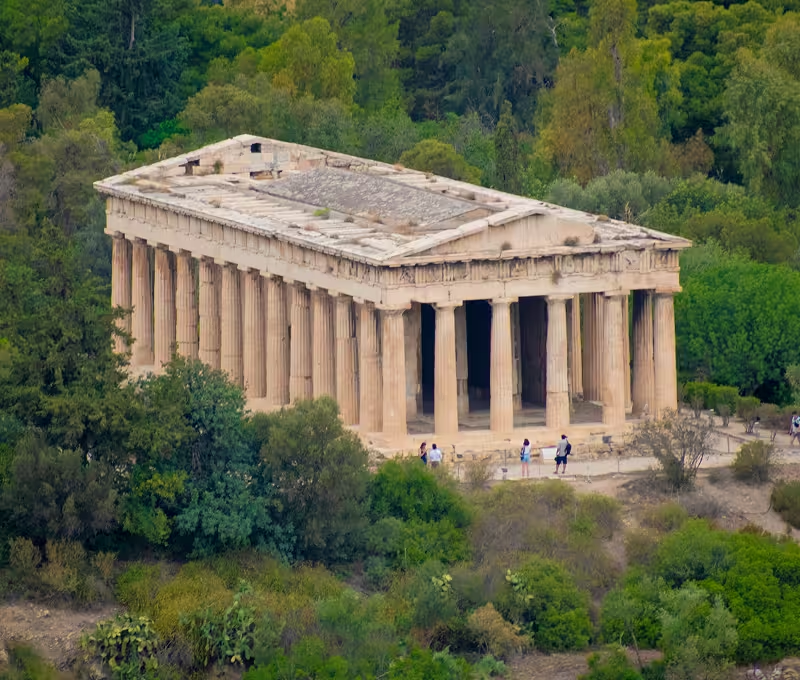
That centuries-long life as a working church is precisely why it escaped the dismantling and quarrying that destroyed so many other ancient structures nearby. Physical traces of its Byzantine life do survive: sculpted fragments from a bema arch added during its conversion, and a substantial number of funerary inscriptions, dated from the 9th to the 12th centuries, carved directly into the building by families burying their dead there. The original wall paintings are a different story — largely lost, known today mainly through earlier scholarly documentation rather than visible on site, so it’s worth not expecting to see them in person.
Panagia Lykodemou (the Russian Church)
The largest surviving medieval building in Athens, tucked between Filellinon Street and Queen Amalia Avenue near Syntagma Square. Built in the first half of the 11th century as the katholikon of a convent, it’s an octagonal-plan church with genuine Byzantine cloisonné brickwork and — a distinctive detail worth looking for — decorative bands imitating Kufic Arabic calligraphy along its exterior walls. Left in ruins after the Greek War of Independence, it was acquired in 1847 by Tsar Nicholas I and rebuilt for Athens’s Russian community, a role it still serves today. Its original Byzantine frescoes did not survive this period and were repainted by the Bavarian artist Ludwig Thiersch — who, in one fresco of St. Paul, gave the saint the actual face of King Otto of Greece, a small, easy-to-miss joke worth pointing out to visitors who walk past it too quickly.
Church of the Virgin Mary Pantanassa
Worth visiting for what it explains about the city as much as for the building itself: this church is the reason the entire Monastiraki neighborhood has that name. “Monastiraki” means “little monastery,” a diminutive that stuck once the once-substantial monastery here — recorded as the “Great Monastery” in a 1678 patriarchal document — had shrunk to just this single surviving katholikon. Dating is genuinely disputed: estimates for the original structure range from the 7th to the 10th century, though what stands today reflects substantial later rebuilding, and some archaeologists and Byzantinists classify the present fabric as a post-Byzantine monument rather than a purely Middle Byzantine one — worth presenting to visitors as an open question rather than a settled date.

The church, a barrel-vaulted basilica, sits roughly a third below the current ground level, a visible reminder of how much the surrounding square has been built up over the centuries. Tradition connects it to two major Orthodox saints: Nektarios of Pentapolis, who served here as a deacon in the 1880s, and the 10th-century monk Loukas of Steiris. Standing in the middle of one of the busiest squares in Athens, directly opposite the Monastiraki metro exit, it’s easy to walk past without noticing — worth deliberately looking for rather than expecting it to announce itself.
Agios Nikolaos Rangavas
Tucked into a quiet alleyway in Plaka, on the boundary with the whitewashed Anafiotika district at the foot of the Acropolis rock, this small four-columned cross-in-square church with its octagonal dome is generally dated to the 11th century, though sources differ on whether that means the first or second half. It takes its name from the Rangavas family, possibly connected to the short-lived 9th-century Emperor Michael I Rangabe, and a column found in its dome names an early patron, Leon Rangavas. Cannon fire during the Venetian siege of the Acropolis in 1687 damaged the building, and only its northern side and dome are genuinely Byzantine fabric today — a 1979-80 restoration stripped later plaster and lead sheeting from the dome to reveal the original cloisonné brickwork beneath. Its most memorable detail has nothing to do with architecture: this was the first church in Athens to ring a bell after the end of Ottoman rule, and the same bell rang out again on 12 October 1944 to mark the city’s liberation from German occupation.
Other churches
Other religious structures and archaeological remains are notable. Some are very small, while many have underwent damages or subsequent interventions that have altered their Byzantine features, they are still worth a glance.
Hagioi Asomatoi (Panagia at Goudi) preserves only a small part of its original Byzantine structure.
The subterranean martyrion of Hagios Leonides is attached to the north aisle of the large Early Christian Ilissos basilica that was excavated by Georgios Sotiriou in 1919.
Hagios Ioannes o Theologos in Plaka, small church dedicated to St John the Theologian was the focus in 1975 and 1976 of a very positive intervention to conserve and upgrade the monument, and many important publications followed, especially about the painting of the church.
Hagios Ioannes on Vouliagmenis Street, once a metochion of the monastery of St John Kynegos, was confirmed to be partly Middle-Byzantine after the demolition of modern outbuildings. The aboveground sections of the sidewalls and barrel vault were part of the monuments’s post-Byzantine phase, but the apses of the bema and arabemata, the blind arch inside the south side probably preserve elements from the original church. An unsigthly plasterwork cover teh monument’s exterior, preventing further observations of its maconnery.
The small, cave-like church of Hagia Marina carved into the live rock of the Hill of the Nymphs was long thought to be Post-Byzantine. But a clear reference in an historical source asserts that the monument existend in the Middle Byzantine period, and the discovery of wall paintings from the 13th century confirmed this fact.
Metamorphosis tou Soteros in Plaka. Located on the northern foot of the Acropolis, it is a Middle Byzantine church dedicated to the Transfiguration dating back to around 1100 or the 12th century. It preserves today only a section of its original construction because it underwent extension on both its west and east sides in order to increase the interior space.
The Homologetai church was the katholikon of a monastery about which we have several indirect references in the correspondence of Michael Choniates. Nothing survives of the monastery buildings, and only a part of the building dates back to the Byzantine times.
Sotera of Kottakis, dedicated to the Metamorphosis/Transfiguration of the Savior, is located on Kydathenaion Street. It is a domed, cross-in-square church but underwent the deep alterations in 1834, 1856 and 1908 to enlarge it. The naos and the sanctuary, the west end and parts of the side walls were demolished. Today, the east facade and the dome are the most notable survivors of the original Byzantine structure.
The church of Hagia Thekla at Stavros was moved in 2001-2002 to widen the Mesogeion Avenue, one of the main arteries of Athens. By removing the outer plasters and excavating the church interior, the original dating of the monument to the Post-Byzantine times was revised. It is now considered as a Late Byzantine monument, which originally had a cross-in-square plan, with a dome and a semicircular bema apse on the exterior
The ruinous church of Hagios Nikolaos, or Hagios Serapheim, at the foot of the Acropolis was reinvestigated and partially restored in 1999–2000. It is a cross-in-square, domed church without a narthex. It was alreadwy in ruins in the 18th century and was converted to a tower integrated in the Ottoman defenses of Athens. Considered an Ottoman creation, the cloisonné masonry and marble door frame with a molding, and corner bays, points to a Middle Byzantine construction that had fallen in ruins and was largely rebuilt reusing the original walls and older material. Next ot it, ruins of buildings and a cistern makes it likely that it was the katholikon of a small monastery.
According to Travlos, the well-known Panagia stin Petra (‘Virgin on the Rock’) church 31 –formerly the temple of Artemis Agrotera at Agrai – was Post-Byzantine. But the existence of a complex of much older graves constitutes a serious indication that the church was consecrated already from the Early Christian period. The three-sided exterior apse of the sanctuary belongs more likely to the Byzantine rather than the Post-Byzantine period. Orlandos 33 also believed that the original temple had been converted into a single-aisled, Early Christian basilica.
The small church of Hagia Eirene in Plaka, originally a three-aisled basilica from the Middle Byzantine period, was transformed into a single-aisled church in the Ottoman period.
Athens’s Byzantine museums
The Greek capital is home to some of the world’s most important collections of Byzantine art and history.
The Byzantine and Christian Museum
If you have time for only one stop beyond the churches themselves, make it this one. Founded in 1914 and housed since 1930 in the Villa Ilissia, a 19th-century mansion on Vassilissis Sofias Avenue, the Byzantine and Christian Museum holds more than 30,000 artefacts spanning the 3rd to the 20th centuries — among them some 3,000 icons, 2,000 marble sculptures, and 1,000 pieces of ecclesiastical textile, alongside frescoes and mosaics. It is generally considered the most comprehensive single collection of Byzantine art in the world, and it sees a fraction of the visitors that the Acropolis Museum a short distance away does. Several of the fresco fragments removed for preservation from the Mount Pentele cave chapels (see below) are held here.
The museum is a short walk from Evangelismos metro station (Line 3, the blue line), around 15 minutes on foot from Syntagma Square. Standard admission is of €8 (reduced €4). See the opening schedule here. Plan on 60–90 minutes for a focused visit, longer if you want to see everything.
The Benaki Museum
Roughly ten minutes’ walk from the Byzantine and Christian Museum, on the same Vassilissis Sofias Avenue corridor, the Benaki Museum is a genuinely different kind of institution and easy to combine with the Byzantine Museum rather than treat as a substitute for it. Founded by the collector Antonis Benakis and opened to the public around 1930 in the family’s neoclassical Kolonaki mansion, the Benaki tells the story of Greek culture chronologically across four floors, from the Neolithic to the 20th century — Byzantium is one major chapter within that broader sweep rather than the whole subject.
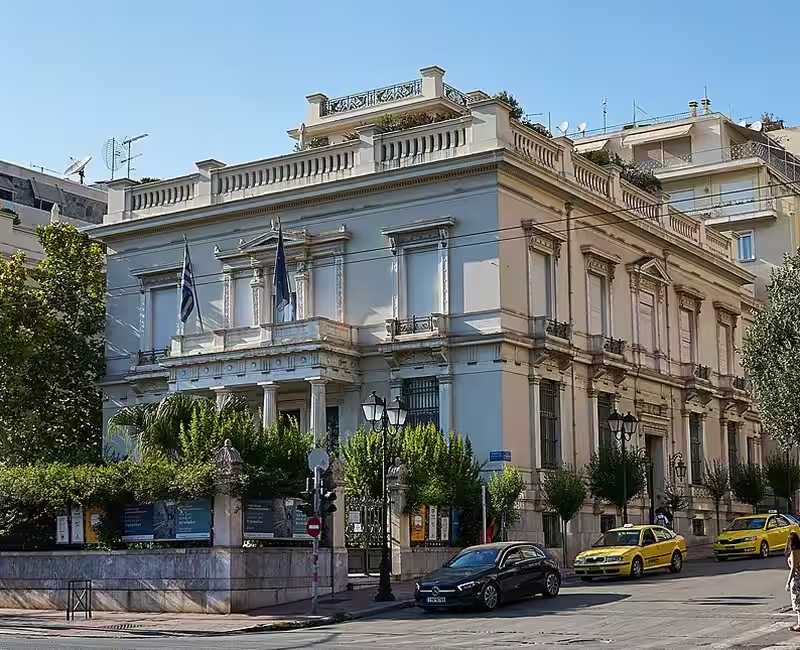
Its ground floor (and, in some arrangements of the collection, part of the first floor) covers the Byzantine and post-Byzantine periods specifically: manuscripts, jewelry, and mosaics from the 7th and 8th centuries, and icons, crosses, and ecclesiastical silverware from the 13th through 15th centuries.
Standard summer admission is of €12. See the opening schedule here.
The Kanellopoulos Museum
The smallest and least-visited of the three, and worth it for exactly that reason — a genuine hidden gem in the Plaka district, at the foot of the Acropolis’s north slope. Housed in a neoclassical mansion built in 1894, the museum holds the private collection of Paul and Alexandra Kanellopoulos, donated to the Greek state in 1972 and opened to the public in 1976: over 6,500 items ranging from prehistory through to the 19th century, with a dedicated Byzantine and post-Byzantine section of icons, jewelry, and ecclesiastical objects. What sets this museum apart from the other two is a 2007 extension built specifically to preserve something found during construction: a genuine six-meter stretch of the Rizokastro, the 13th-century Frankish-era fortification wall that once encircled the base of the Acropolis, displayed in situ alongside the remains of a Late Byzantine house. Where the Byzantine and Christian Museum and the Benaki hold portable Byzantine art, this is the rare chance to see an actual piece of Athens’s medieval defensive architecture standing where it was built.
As of August 2026, the museum is closed for renovations.
Day trips: Kaisariani and Daphni
Two of Athens’s most important Byzantine monuments sit outside the city center and require a short trip out — both well worth the detour if you have a full day rather than an afternoon.
Daphni Monastery, around 10 km from the center on the ancient Sacred Way toward Eleusis, is a UNESCO World Heritage Site renowned for its 11th-century mosaics, among the most meaningful in Greece, including a celebrated dome Pantocrator.
→ Discover Daphni and its mosaics, jewels of the Byzantine art
Kaisariani Monastery, on the slopes of Mount Hymettus roughly 5 km from the center, is an 11th-century foundation built beside a spring that had been considered sacred since antiquity. It’s reachable by taxi or car in well under half an hour; public transit options are limited, so this is one to plan transport for in advance rather than assume you’ll find a convenient bus.
→ Learn more about Kaisariani and its Byzantine roots
Higher up the same Hymettus ridge, with sweeping views back over Athens, sits the Monastery of Kynegos ton Philosophon (“of the Hunter-Philosophers”), also known as Agios Ioannis Kynigos. Founded in the early 12th century by a monk who had come from a like-named monastery in Gortynia, in the Peloponnese, it was renovated in the early 13th century and continued operating right through Ottoman rule, only dissolved in 1833 under a decree of King Otto’s regency government. Its cross-in-square katholikon, topped with an octagonal dome, reuses ancient and early Christian architectural fragments in its walls, and while most of the visible frescoes date to the 17th–19th centuries, a few genuine fragments of 13th–14th century Byzantine painting survive in the main church and sanctuary, alongside a marble iconostasis of similar date. It functions today as a women’s convent, generally quieter and less visited than Kaisariani nearby, making it a natural pairing for the same trip out to Hymettus.
Hosios Loukas, situated in Boeotia roughly 2.5 hours by car from Athens, is one of Greece’s most important Middle Byzantine monuments. Famous for its breathtaking 11th-century mosaics and architecture, this UNESCO World Heritage Site is the most popular Byzantine day trip from the capital.
Off the beaten path: Mount Pentele and Galatsi
Two further sites reward visitors willing to go well beyond the standard route — genuinely off the beaten path rather than simply “less central.”
On the southwest slope of Mount Pentele, northeast of the city, a cave once sacred to Pan in antiquity — known today as the Davelis Cave, or historically as the Cave of the Amomon — sheltered Byzantine ascetics and holds two small rock-cut chapels at its entrance, dedicated to Saints Spyridon and Nicholas. The Nicholas chapel preserves frescoes painted in 1233/34, in a Late Komnenian style, including a striking haloed portrait of Michael Choniates, the last Greek archbishop of Athens before the Frankish conquest — painted only a little over a decade after his death, and clear evidence of how quickly local memory treated him as a saint.
The site has suffered real damage — from military work in the cave in the late 1970s and 1980s, and again from wildfires in August 2024 — and current physical access is not guaranted. Some of the fresco fragments were removed for preservation to the Byzantine and Christian Museum.
In the northeastern suburb of Galatsi, the small church known as Omorfokklisia (“the beautiful church”), dedicated to St. George, was built in the second half of the 12th century over an earlier Christian site, itself built over an ancient one. Its wall paintings, added in the last quarter of the 13th century, are considered stylistically sophisticated for their date — clearly the work of a well-trained workshop connected to the wider artistic currents developing in Macedonia at the time, rather than a purely local production. It’s a genuine art-historical destination for visitors specifically interested in 13th-century Byzantine painting, if less immediately rewarding for a casual visit than the central churches.
Practical tips
Getting around the center. Little Metropolis, Kapnikarea, the Church of the Holy Apostles, the Church of Sts. Theodore, and Panagia Pantanassa are all within comfortable walking distance of Syntagma Square and of each other. No car is needed for this portion of the guide.
Combining with other Athens sightseeing. The Church of the Holy Apostles sits inside the Ancient Agora’s ticketed area, so pair it with that visit directly. The Byzantine and Christian Museum sits near several other major museums on and around Vassilissis Sofias Avenue, making it easy to build into a museum-focused day.
Day trips need their own transport plan. Unlike the central churches, Kaisariani and Daphni are not casual add-ons — budget transport time and, ideally, confirm current access and opening status for each before setting out.
Suggested itinerary. A half-day covers the four central churches plus a focused museum visit. A full day allows you to add one of the two day trips. Two full days would let you take in both Kaisariani and Daphni without rushing either.
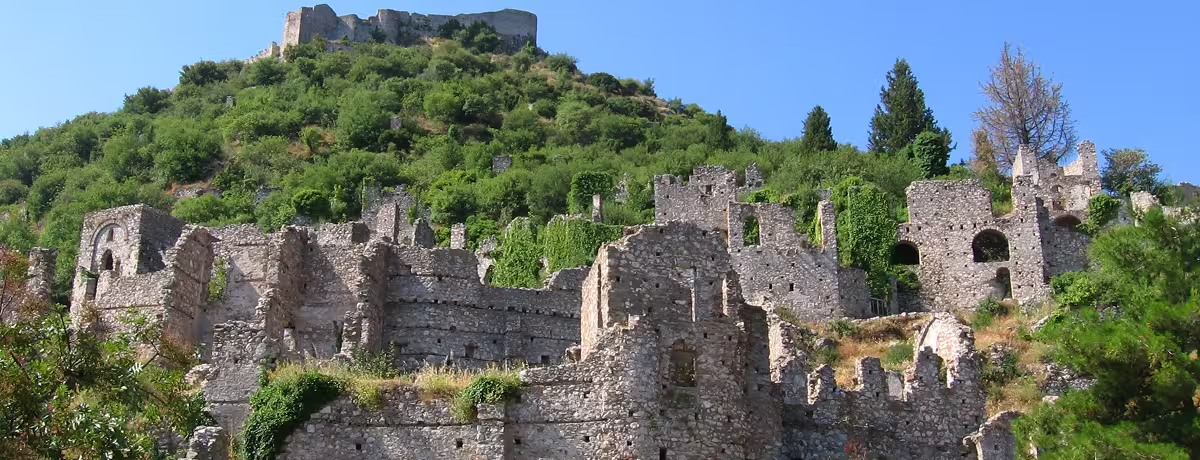
Next in Greece. Beyond Athens, other major Byzantine sites are within reach: the islands of Aegina and Naxos, the ghost city of Mystras, Hosios Loukas or Thessaloniki further north.
Frequently Asked Questions
What Byzantine churches can I visit in central Athens?
Height principal survivors, plus one converted ancient temple: Little Metropolis (Panagia Gorgoepikoos) near Mitropoleos Square, Kapnikarea on Ermou Street, the Church of the Holy Apostles inside the Ancient Agora, the Church of Sts. Theodore on Klafthmonos Square, Agios Nikolaos Rangavas in Plaka, Petraki Monastery in Kolonaki, Panagia Lykodemou (the Russian Church) near Syntagma Square, and Panagia Pantanassa in Monastiraki Square, the church that gave the whole neighborhood its name. The Hephaisteion, an ancient temple converted into a church in the 7th century, also preserves genuine Byzantine features. All are within walking distance of Syntagma Square, with Petraki being the furthest afield.
Is the Parthenon a Byzantine building?
The Parthenon is not a Byzantine building; it was originally constructed in the 5th century BCE as a Classical Greek temple dedicated to the goddess Athena. However, during the early Byzantine period, it was converted into a Christian church dedicated to the Panagia (Virgin Mary) and served as a major Byzantine worship space for centuries.
What is the best museum for Byzantine art in Athens?
The Byzantine and Christian Museum on Vassilissis Sofias Avenue is the deepest specialist collection, with over 30,000 artefacts including icons, sculpture, textiles, frescoes, and mosaics spanning the 3rd to 20th centuries. The nearby Benaki Museum holds a smaller but still significant Byzantine collection within its broader chronological sweep of Greek culture, and pairs well with a Byzantine and Christian Museum visit on the same day.
Are Kaisariani and Daphni worth visiting from Athens?
Yes, if you have a full day to spare. Kaisariani, on Mount Hymettus, is a straightforward taxi or car trip of under half an hour. Daphni, on the ancient Sacred Way, holds a celebrated UNESCO-listed mosaic cycle, though its opening status has varied due to earthquake-damage restoration — worth checking current access before planning around it.
How much time do I need to discover Byzantine Athens?
A half-day is enough for the four central churches and a focused visit to the Byzantine and Christian Museum. A full day lets you add one day trip; two days allow both Kaisariani and Daphni without rushing.
What’s the difference between the Byzantine and Christian Museum and the Benaki Museum?
The Byzantine and Christian Museum specializes exclusively in Byzantine and post-Byzantine religious art, with over 30,000 artefacts. The Benaki Museum covers the whole sweep of Greek culture from prehistory to the 20th century, with Byzantine material — manuscripts, icons, jewelry, mosaics — forming one substantial chapter within that broader collection. They’re about ten minutes’ walk apart and complement rather than duplicate each other.
Sources
- Byzantine and Christian Museum, official site
- Charalabos Bouras, Byzantine Athens 10th – 12th Centuries
- Hellenic Ministry of Culture and Sports — museum visitor information
- Benaki Museum, official site
- Helen Saradi (ed.), Byzantine Athens, conference proceedings, Byzantine and Christian Museum, Athens — for the Hephaisteion’s Byzantine-period history and inscriptions, and the Mount Pentele cave chapels
- Museum of Pavlos and Alexandra Kanellopoulou, official site



2 Comments