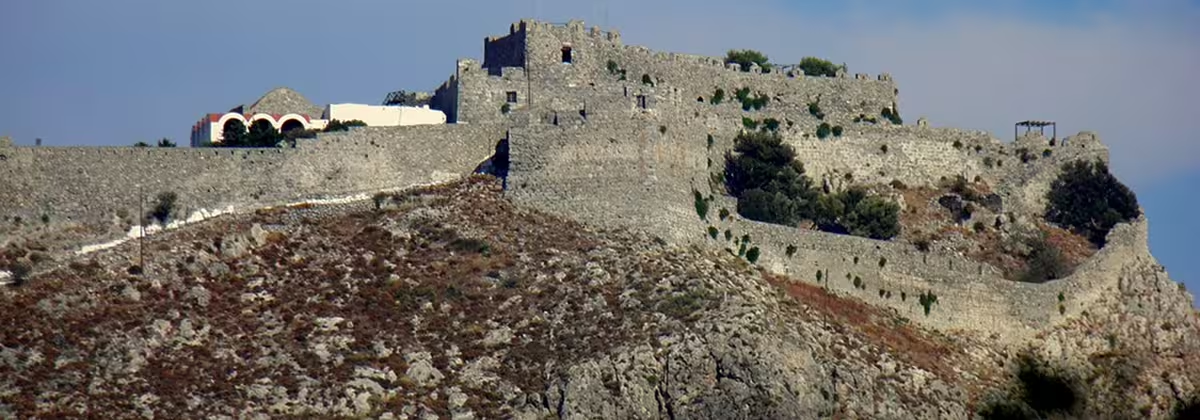
Leros, Dodecanese: Byzantine churches and the Castle of Panteli
Leros does not have Naxos’s density of surviving churches, and it would be a mistake to pretend otherwise. What it has instead is a single, exceptionally well-documented fortress, a network of churches literally built from one another’s stone, and a direct, dated paper trail connecting the island to one of the most famous monastic foundations in the Byzantine world — the Monastery of St. John the Theologian on nearby Patmos.
The island’s Byzantine history is genuinely legible today: an 1082 cathedral inscription naming a bishop by name, an 1087/88 imperial chrysobull naming an emperor by name, a 1343 funerary portrait naming a local aristocratic family by name. Few small Aegean islands offer this level of epigraphic precision.
Quick Facts about Leros
Location:
Dodecanese, Aegean Sea, between Kalymnos and Patmos
Byzantine administrative unit:
part of the Theme of the Aegean Sea / later the Cibyrrhaeot theme’s sphere
Main monuments:
Castle of Panteli (or Panagia) and Agios Ioannis Theologos Church
End of Byzantine rule:
1204, Fourth Crusade fallout — Leros passed to Genoese, then Venetian control, before the Knights of Rhodes took the Dodecanese from 1309
Today:
part of Greece since 1948; the castle overlooks the island’s capital, Agia Marina
Early Byzantine Leros: bishopric, and the Patmos donation
Leros entered the Byzantine period as part of the empire’s maritime territorial organization in the Aegean, a status shared with most of the Dodecanese and Cyclades in the 5th and 6th centuries. Traces of this earliest phase survive physically: several of the island’s later Byzantine churches, including Agios Ioannis Theologos at Lakki and the basilica at Alinda, were built directly on top of, or reused material from, Palaeochristian predecessors of the 5th–6th centuries.
By the 10th and 11th centuries, Leros functioned as an active bishopric within the Byzantine provincial church structure — meaning it had its own resident episcopal authority rather than being governed remotely. This is not a matter of inference: a marble lintel inscription at Agios Ioannis Theologos names Bishop Nikolaos directly, dated to February 1082 in the modern calendar — recording the rebuilding of the cathedral-basilica under his authority.
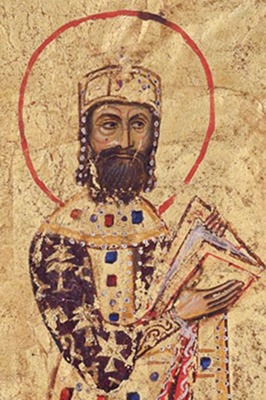
The defining event of the island’s middle Byzantine history came a few years later. In 1087–88, Emperor Alexios I Komnenos issued an imperial chrysobull granting the Castle of Panteli, along with estates on the island including a landholding known as “Agros ton Kourounon”, to Christodoulos, the monk who had just founded the Monastery of St. John the Theologian on nearby Patmos. This tied Leros directly, administratively and economically, into the support network of one of the most important monastic foundations of the entire Byzantine world.
The toponym Agros ton Kourounon is not merely a name in a donation charter: it resurfaces in the 14th century in a funerary inscription at Gournes (below), evidence that the family associated with this land endured on the island for centuries after the original grant.
Leros in the sphere of the Empire of Nicaea
The Fourth Crusade’s sack of Constantinople in 1204 fractured Byzantine authority across the Aegean, and Leros, like the rest of the Dodecanese, passed into an unsettled period of competing claims. Through the 13th century the island fell within the political and cultural sphere of the Empire of Nicaea — the Byzantine successor state based across the water in Asia Minor, which worked over these decades to recover Aegean territory lost to Latin and Genoese opportunists. This is more than an administrative footnote: it is directly visible in the island’s art. The early 13th-century fresco cycle added to Agios Ioannis Theologos at Lakki — depicting scenes devoted to St. Christodoulos and a Communion of St. Mary the Egyptian — is stylistically tied by art historians to painting produced under Nicaea, making this one of the clearest physical traces of Nicaean-period artistic patronage surviving on any Dodecanese island.
The end of Byzantine rule: the Knights Hospitaller
Byzantine rule over Leros ended with the arrival of the Knights Hospitaller of Rhodes, who acquired sovereignty over the Dodecanese, Leros included, in the early 14th century as part of their wider conquest of the island chain from 1309. Unlike Naxos, where the Venetians built an entirely new fortified town, the Hospitallers on Leros built directly onto the existing Byzantine fortress: the Castle of Panteli became a Hospitaller military command post and preceptory, its two Byzantine defensive circuits retained and reinforced with a third, outer circuit of Hospitaller construction.
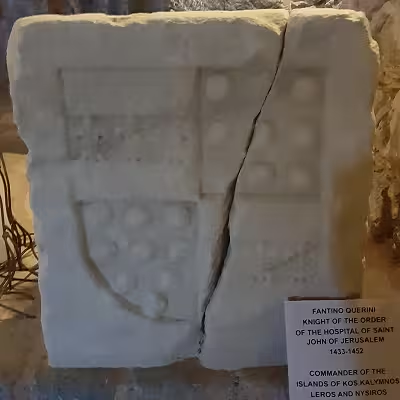
Governance was entrusted to high-ranking Hospitaller commanders, among them Fantino Querini, who served as preceptor of Leros and admiral of the Hospitaller fleet from 1437 to 1452, and whose coat of arms survives on the castle. Despite this Latin military domination, local Greek landowning families did not disappear — the clearest evidence is a funerary arcosolium of 1343/1344 at the church of Taxiarches in Gournes, commemorating Nikolaos Kourouniotes, son of Georgios Kourouniotes, a family whose name derives from the very Agros ton Kourounon land named in the 1087/88 Komnenian donation charter.
Byzantine institutional rule on Leros had ended more than a century earlier, but the Greek aristocratic families it had once endowed were still visibly present, wealthy, and commissioning art under Hospitaller rule. The Hospitallers themselves held the Dodecanese until 1522, when the fall of Rhodes to the Ottomans ended their rule across the island chain.
Byzantine and medieval monuments of Leros
Leros’s Byzantine heritage is unusually interconnected: several of its churches are built, in whole or in part, from one another’s carved stone, and following that trail of reused material tells its own story about the island’s history.
The Castle of Panteli
The island’s principal medieval monument, standing on a defensible hill above the modern town of Agia Marina. Two of its three concentric defensive circuits are genuinely Byzantine, documented in the 1087/88 chrysobull of Alexios I Komnenos; the outer, third circuit was added later by the Knights Hospitaller.
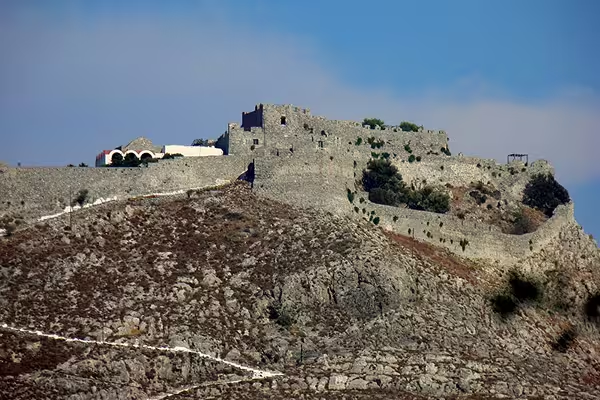
© EffiDK, CC by-SA 4.0 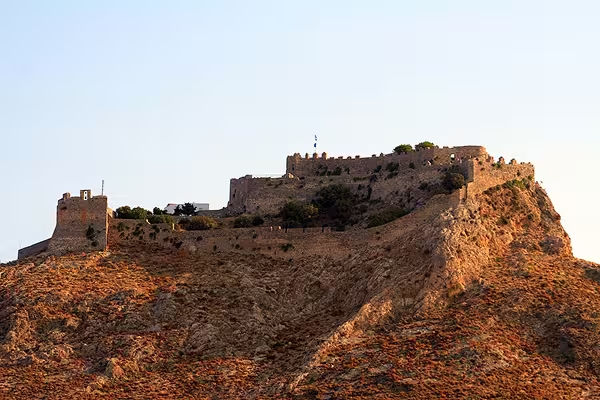
© Vassilis Terzopoulos, CC by-SA 4.0
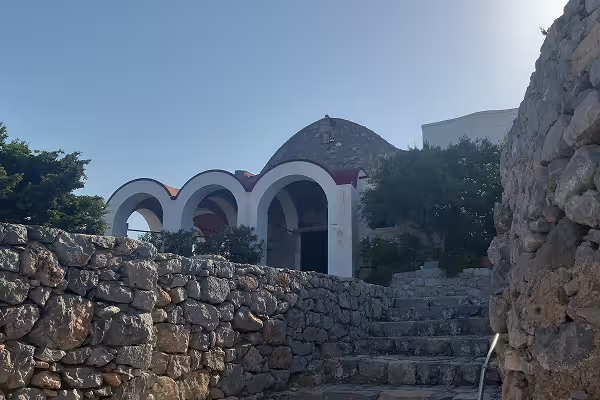
Within its walls stand two churches that, while not themselves Byzantine constructions, are essential to understanding the island’s Byzantine sculptural heritage:
Panagia tou Kastrou stands in its present form from shortly before 1651, or possibly the late 15th century — squarely a Hospitaller-period building, not a Byzantine one. Its importance lies in its contents: a set of three despotic icons on the templon — Christ Pantokrator, the Virgin Glykophilousa, and St. John the Theologian — now dated to around 1450 and attributed to a painter trained in Constantinople, working in the Palaiologan Renaissance style, remarkable evidence that Constantinopolitan artistic tradition was still being actively produced for Leros nearly two centuries after Byzantine rule over the island had ended. Fantino Querini, the Hospitaller preceptor named above, is a possible sponsor. The building also incorporates a reused carved epistyle fragment originally from Agios Ioannis Theologos.
© Byzantine World. 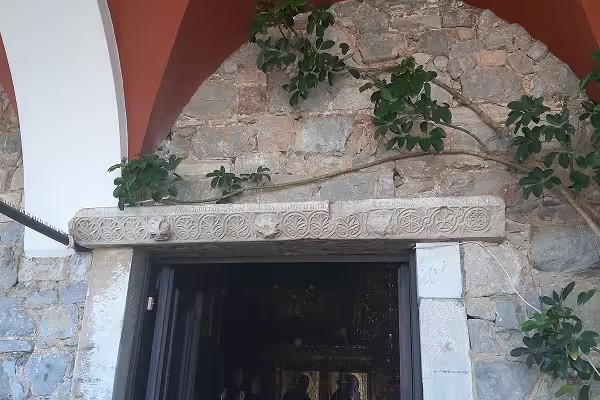
© Byzantine World.
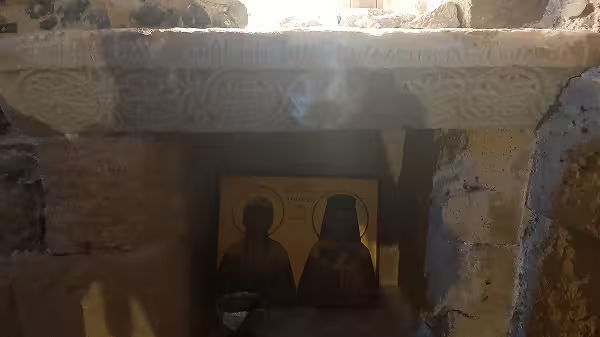
Agios Georgios / Frangokklisia, in the castle’s second enclosure, is a Latin-rite chapel rather than a Byzantine one, but holds two significant pieces of reused Byzantine spolia: an 11th–12th century chancel-screen fragment carved with a Greek cross, and a marble epistyle fragment inscribed to St. Paul. That inscribed fragment forms a matched set with a companion piece built into Panagia tou Kastrou — together, scholars now attribute both to the original church of Saints Peter and Paul at Drymonas (see Agios Petros, below), meaning these two castle chapels preserve, in fragments, a church that otherwise survives only partially at its original site.
© Byzantine World. 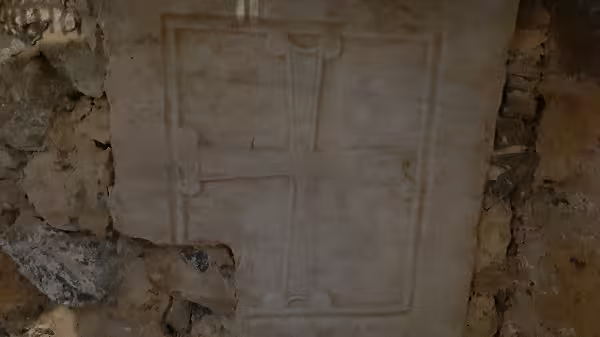
© Byzantine World.
Agios Ioannis Theologos, Lakki
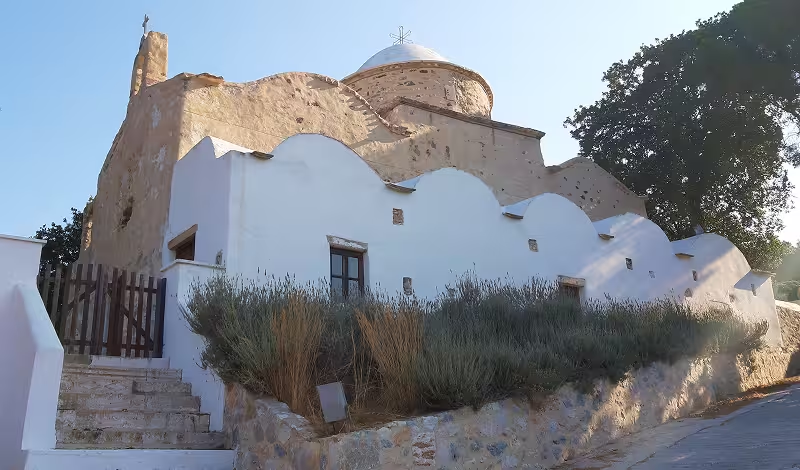
The single most important religious medieval monument on Leros, and one of the most significant in the Dodecanese.
The church appears today as a three-aisled, domed basilica with four identifiable building phases:
- a 5th–6th century Palaeochristian basilica, evidenced by a surviving synthronon and abundant spolia
- a 1082 rebuilding as a timber-roofed cathedral-basilica, recorded in a dated dedicatory inscription naming Bishop Nikolaos
- an early 13th-century transformation, likely prompted by an earthquake, adding a dome on a cylindrical drum, groin vaults, and closed wall surfaces for fresco decoration, in a style linked to painting under the Empire of Nicaea
- a 19th-century restoration of the west façade in 1880. Several carved architectural fragments survive in situ, including a four-leaf-rosette templon pilaster and two epistyle fragments dated to the late 10th–11th centuries.
Panagia Gourlomata, Drymonas
A small, single-nave, barrel-vaulted church near the coast at Drymonas, built substantially from ancient spolia. An apse inscription dates its construction or renovation to the Byzantine year 6888 — 1380 — and names its patrons: a certain frè Elias, his wife Eirene, and their children. The title frè, derived from “frère”/”frater,” suggests connections to Latin religious orders or to the Hospitaller administration, making this a rare dated example of a church built under mixed Greek–Latin patronage in the early Hospitaller period.
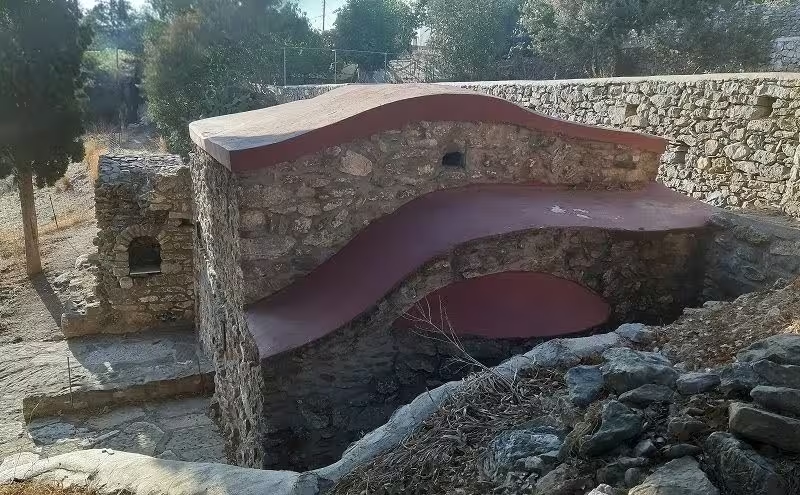
View of the church. © Byzantine World 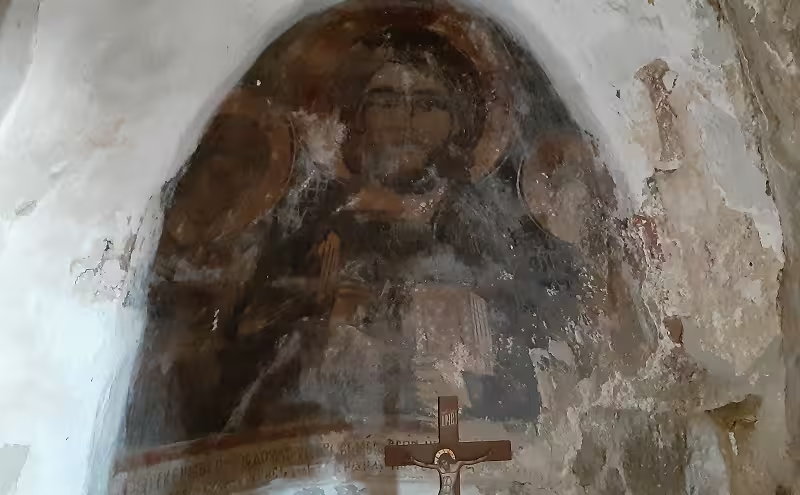
14th-century fresco of the Deesis in the apse. © Byzantine World
Agios Petros, Drymonas
A square-plan church with an inscribed sanctuary, standing adjacent to the ruins of a Palaeochristian basilica it likely served as baptistery for. Originally dedicated to Saints Peter and Paul, its sanctuary dimensions match the reconstructed inscribed epistyle now split between the two churches inside the Castle of Panteli — physical proof that stone from this church was carried up to the fortress and reused there.
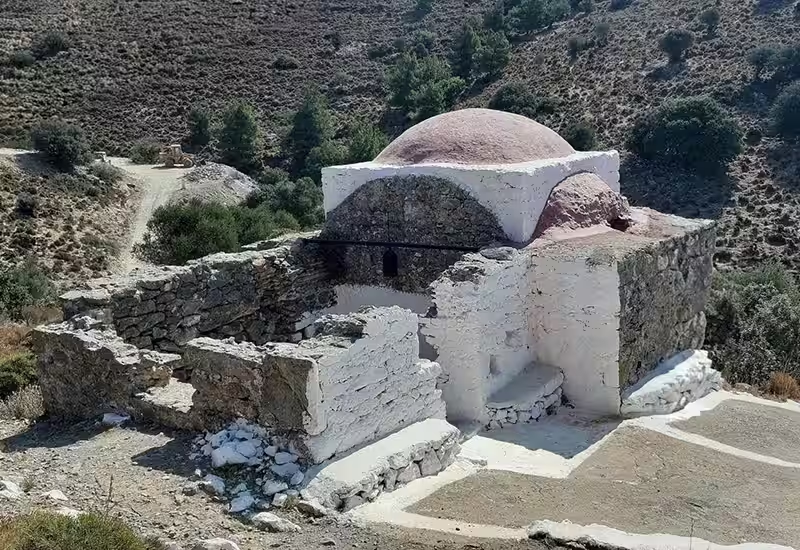
The Palaeochristian Basilica of Alinda
At the Panagies site near Alinda, a Palaeochristian basilica was remodeled during the middle Byzantine period, in the 11th century. Two fragments of an exceptionally fine templon epistyle survive from this phase, carved with silk-wheel motifs (rotae sericae), rosettes, and interlaced lozenges — described in the technical literature as the highest-quality sculptural work identified anywhere on the island for the 11th century. One fragment is preserved in the Archaeological Museum of Leros; the other was reused in the later church of Stavros at Platanos.
Taxiarches (Archangel Michael), Gournes
A small, single-nave, flat-roofed church — an architecturally rare form for the Dodecanese. A painted funerary arcosolium, uncovered in the north wall in 2010, holds a monumental image of the Archangel Michael in imperial loros dress, accompanying a kneeling deceased figure. The funerary inscription names Nikolaos Kourouniotes, son of Georgios Kourouniotes, who died in the Byzantine year 6852 — 1343/1344. The surname Kourouniotes derives from the toponym Agros ton Kourounon, the very estate named in Alexios I Komnenos’s 1087/88 donation to the Monastery of Patmos — direct evidence that the Greek landed family associated with that land endured on Leros for over two and a half centuries, into the Hospitaller period.
The Archaeological Museum of Leros
Housed in Agia Marina, the island’s Archaeological Museum holds finds spanning Leros’s history from antiquity through the Byzantine period, including one of the two surviving fragments of the finely carved 11th-century templon epistyle from the Alinda basilica (its companion piece remains reused in the church of Stavros at Platanos).
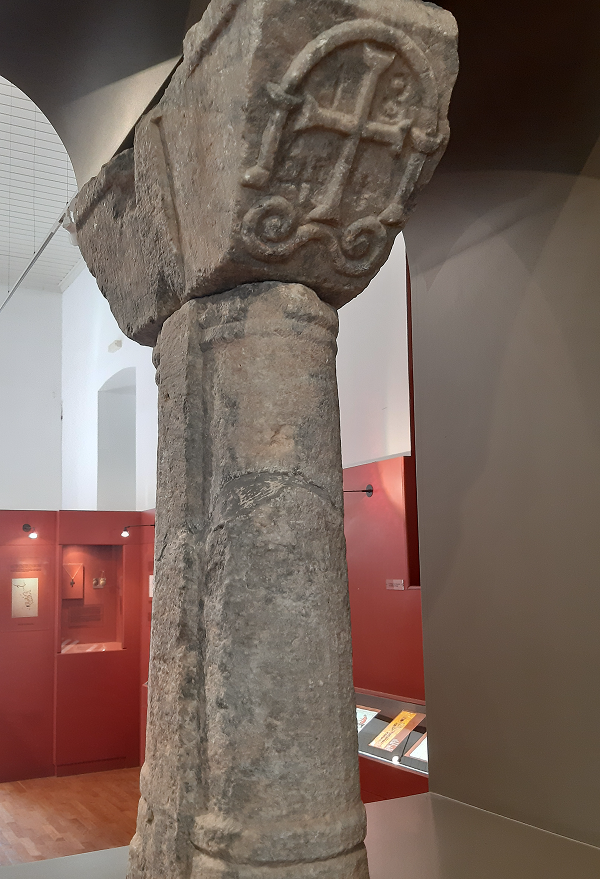
Column with carved capital. © Byzantine World 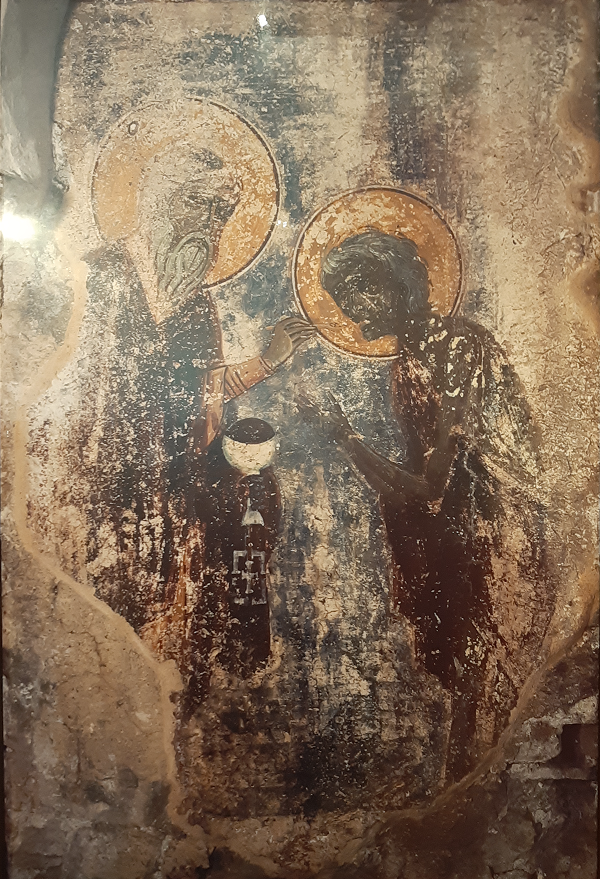
Copy of a fresco of the Church of Agios Ioannis Theologos. © Byzantine World 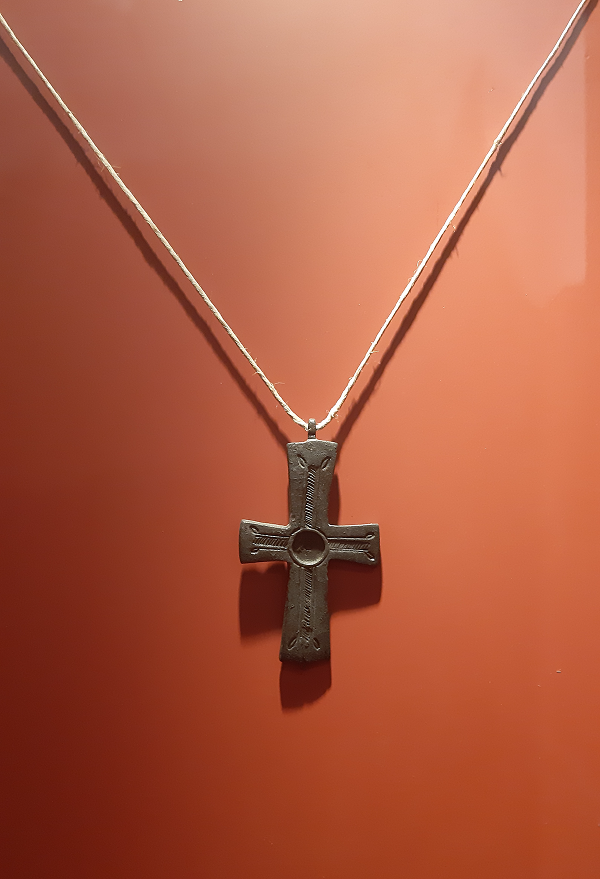
Pectoral cross (10th to 12th century) from the Panagia Gourlomata © Byzantine World
Frequently Asked Questions
What is the most important Byzantine monument on Leros?
The Castle of Panteli, granted by Emperor Alexios I Komnenos to the Monastery of Patmos in 1087/88, and the nearby church of Agios Ioannis Theologos at Lakki, rebuilt in 1082 under Bishop Nikolaos, are the two most significant — the castle for its imperial documentation, the church for its architectural phases and frescoes.
What is the connection between Leros and Patmos?
In 1087–88, Byzantine Emperor Alexios I Komnenos granted the Castle of Panteli and estates on Leros to Christodoulos, the monk who had just founded the Monastery of St. John the Theologian on Patmos, tying the two islands administratively and economically together.
When did Byzantine rule over Leros end?
Byzantine institutional authority effectively ended in the early 14th century, when the Knights Hospitaller of Rhodes took control of Leros as part of their conquest of the Dodecanese beginning in 1309. Local Greek landowning families, however, are documented persisting on the island well into the Hospitaller period.
Is the Castle of Panteli Byzantine or built by the Knights of Rhodes?
Both. Two of its three defensive circuits are Byzantine, documented by 1087/88. The Knights Hospitaller added a third, outer circuit after taking control of the island in the 14th century, and built or rebuilt several structures within the walls, including the church of Panagia tou Kastrou.
Sources
- Chrysobull of Alexios I Komnenos to Christodoulos of Patmos, 1087/88 (as referenced in scholarship on the Monastery of St. John the Theologian, Patmos)
- Dedicatory inscription of Bishop Nikolaos, Agios Ioannis Theologos, Lakki, dated 1082
- Funerary inscription of Nikolaos Kourouniotes, Taxiarches church, Gournes, dated 1343/1344
- Apse inscription, Panagia Gourlomata, Drymonas, dated 1380
- Peter Sommer Travels, “Castle of Panteli on Leros,” accessed July 2026
- Ephorate of Antiquities-adjacent municipal and regional sources