
Vienna Dioscurides: The splendid manuscript of a Byzantine Princess
The manuscript known as the Vienna Dioscurides was created around 512 AD in Constantinople. It is one of the few surviving examples from the early Byzantine period and, in many ways, a unique masterpiece of ancient science and art. The codex was created as a gift for Byzantine princess Anicia Juliana (c. 462–527 AD), protector of art and letters of her time. It carries the legacy of the Roman physician Pedanius Dioscorides (c. 40–90 AD), combined with the talent of Byzantine illustrators who depicted plants, animals, and other subjects with striking clarity. The result is a synthesis of classical medical knowledge and Byzantine visual artistry — a singular creation of its era, preserved in Vienna since the 16th century, and inscribed on the list of the UNESCO for its exceptional value.
Anicia Juliana: A Byzantine Princess and Patron of Knowledge
The Vienna Dioscurides was commissioned for Anicia Juliana (c. 462–527 AD), one of the most distinguished women of the early Byzantine world. She was the daughter of the Western Roman Emperor Olybrius and the Eastern princess Placidia, granddaughter of Emperor Valentinian III, and a descendant of both the Theodosian and Valentinian imperial dynasties. Through birth and marriage, Anicia stood at the intersection of Roman and Byzantine power and culture.
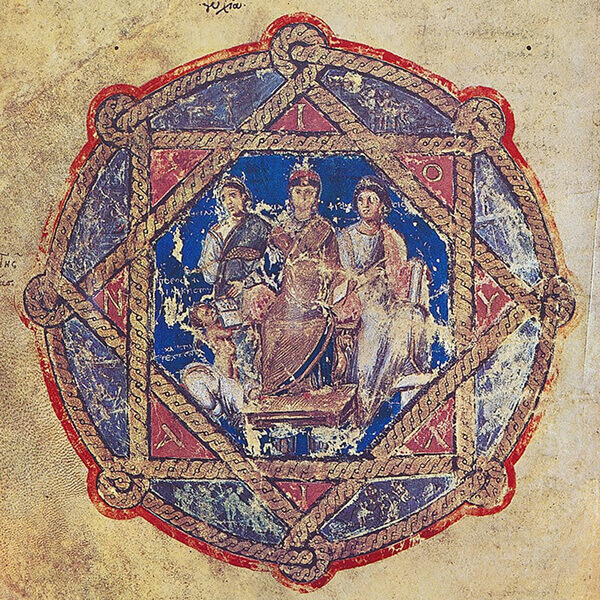
By the early sixth century, she lived in Constantinople, the thriving capital of the Byzantine Empire, where she was renowned for her education, wealth, and artistic patronage. In a period when imperial women often expressed influence through religious and cultural endowments, Juliana distinguished herself as a protector of learning and the arts.
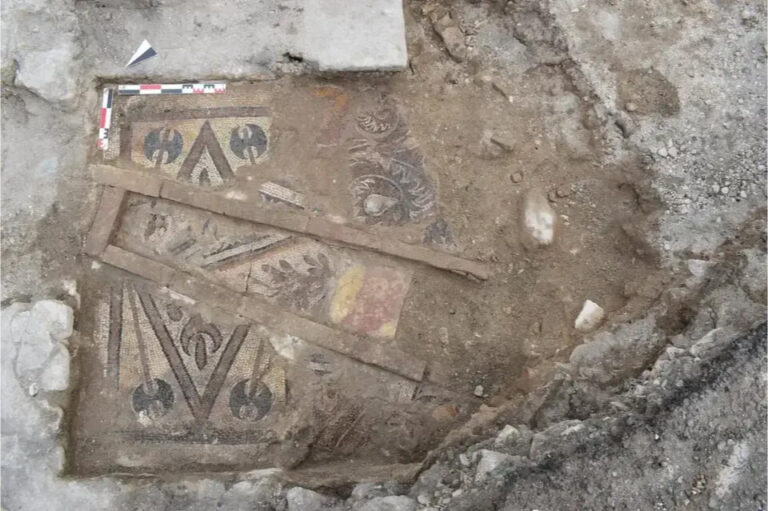
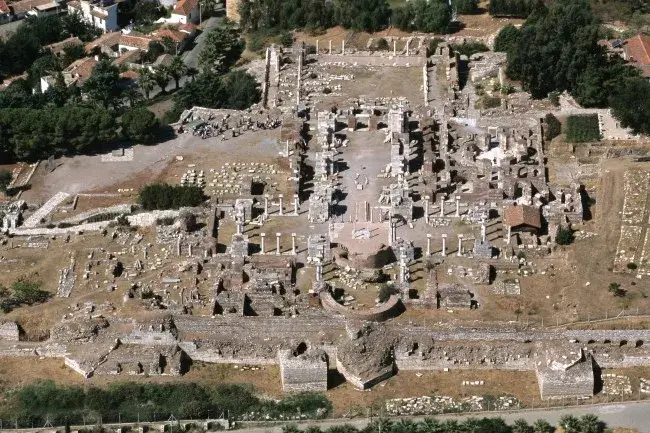
She financed the construction of several churches in the city, most notably the Church of St. Polyeuktos, one of Constantinople’s grandest monuments before Hagia Sophia, known from archaeological remains and inscriptions praising her as a woman “surpassing all in birth, wisdom, and beauty.”
The Vienna Dioscurides was prepared and compiled around 512 AD as a gift to Anicia Juliana, possibly to commemorate her benefactions. The manuscript’s dedication miniature celebrates her role as a learned and virtuous patron who united classical wisdom and Christian virtue.
The Manuscript of Dioscorides’ De Materia Medica and its illustration.
The codex itself is a luxury copy of Dioscorides’ De Materia Medica (On Medical Matters). Written around 65 AD, it was the principal work of Pedanius Dioscorides, a Greek physician and pharmacologist. Probably originating from the city of Anazarbus in Asia Minor (modern-day Turkey), he is believed to have served as a medical officer in the Roman legions. His writings include observations drawn from personal experience during his travels, as well as knowledge transmitted through oral tradition and earlier medical texts.
The treatise contains botanical descriptions of plants, animal products, and minerals, emphasizing their medicinal uses. The original version was not illustrated and provided medical information on about 600 plants, 35 animal products, and 90 minerals. It was historically acclaimed as one of the most famous works in pharmacology, and numerous copies—often expanded with illustrations—were later produced. The Vienna Dioscurides is the oldest surviving example. Unlike the original division of De Materia Medica into five books by Dioscorides, this version was reorganized in alphabetical order.
The physical grandeur of the codex – measuring about 37 × 30 cm, with 491 vellum folios and over 400 illustrations – reflects both Anicia Juliana’s prestige and her dedication to the preservation of classical knowledge. It still includes around 383 full-page plant illustrations out of the originally approximately 435. The illustrations are remarkable in their naturalism, depicting plants in a way that allows readers to identify them accurately, supporting the codex’s use as a practical medical manual.
The codex also contains another work: a paraphrase of the treatise on birds by Dionysius, in three books. The first two books include illustrations of birds inserted into the text columns, without frames or backgrounds. The third book depicts 24 birds, arranged in a grid on a full-page miniature. The depictions are faithful to nature and of high artistic quality; most of the birds are easily identifiable. This makes the manuscript the oldest surviving illustrated treatise on birds.
In addition, the manuscript contains two author portraits and other frontispieces depicting key medical figures such as Galen and Dioscorides, as well as elaborate decorative frames reflecting classical tendencies, including putti and allegorical figures.
 Author portrait on folio 4
 Author portrait on folio 5. Dioscurides is depicted on the left, painting an illustration of the mandrake root, looking at the plant held by the personnification of Epinoia (power of thought).
Another manuscript, the Naples Dioscorides, covers part of the same topic and also contains rich illustrations. However, it is about a century older, and its illustrations are less refined and contain errors.
Transmission and modern significance of the Vienna Dioscoridus.
After its production the manuscript enjoyed a long and complex history. Originally in Constantinople for about a thousand years, it became a model for copies. In 1406 the Byzantine notary John Chortasmenos restored and rebound the manuscript. Following the fall of the city to the Turks in 1453, the manuscript passed through several hands. It was acquired by the Flemish diplomat Ogier Ghiselin de Busbecq for the Habsburg emperor in the 16th century and ultimately entered the holdings of the Austrian National Library in Vienna, where it resides today.
In 1997 UNESCO inscribed the Vienna Dioscurides on its Memory of the World Register, recognising its global significance.
Today scholars of botany, medicine, art history and Byzantine culture still regard the manuscript as a critical source. Its plant illustrations inform historical understandings of herbal medicine; its art helps chart the survival of classical traditions in the Byzantine era; its manuscript history illustrates the transmission of knowledge across centuries and cultures.
The Vienna Dioscurides stands at the intersection of science, art and history. Created in the early sixth century, it preserved the knowledge of ancient medicine in lavish form. Its illustrations, patronage, and transmission across the ages make it a rare and rich artifact. By studying it we not only see the workings of early botanical-medical science, but also the cultural ambitions of Byzantium and the enduring power of the book as a vehicle of knowledge. The manuscript remains as relevant today for scholars and admirers alike as it was for the physicians and aristocrats of its own time.