Forgotten Wonders of Byzantine Textiles and the Silk Industry

Textile production was one of the most prized and closely controlled crafts of the Byzantine Empire. Among these luxury goods, silk held a special place as a symbol of imperial wealth and divine authority. The cultivation of silkworms, introduced under Emperor Justinian in the 6th century after their secret transfer from Asia, transformed Byzantium into the leading producer of silk until the end of the Middle Byzantine period. This mastery of silk production contributed to the remarkable tradition of Byzantine textiles, celebrated throughout the medieval world and employed in imperial diplomacy.
Silk weaving took place in imperial workshops concentrated in Constantinople, especially within the Great Palace and nearby manufacturing quarters. Weavers, purple dyers, and brocade makers worked under strict supervision to preserve production secrets. Purple-dyed silk, associated with imperial dignity, was a state monopoly. Only the emperor and his court could wear garments made from this precious fabric, while other colors were used for diplomatic gifts and ecclesiastical vestments.
The silk monopoly also shaped the organization of labor. In Justinian’s time, workshops relied on enslaved workers under tight control. Under Heraclius (7th century) and later Leo VI (9th century), conditions improved: imperial slaves were freed, and by the 10th century, many textile artisans were likely paid specialists. Women often managed the early stages of production—spinning and weaving—while men handled dyeing, tailoring, and brocade work. These craftsmen were true artists, admired for their technical skill and inventive use of color.
By the 10th and 11th centuries, the strict monopoly began to ease. A novella of Leo VI authorized limited trade in small pieces of purple silk, while the Book of the Eparch (912) regulated private workshops in Constantinople. Production was no longer confined to the capital: silk weaving also thrived in regional centers, particularly in Thebes and the Peloponnese, spreading Byzantine textile expertise beyond Constantinople. However, large ceremonial fabrics and high-priced garments remained restricted until the 12th century.
The Byzantine silk industry faced significant disruptions. In the 12th century, Norman invasions targeted key silk-producing centers, and many skilled artisans were relocated to southern Italy, temporarily weakening local production. The capture of Constantinople in 1204 by the Fourth Crusade marked a more dramatic turning point: many workshops were destroyed or further relocated to the West, accelerating the decline of the Byzantine silk industry. Yet the empire’s influence endured, as its techniques, motifs, and colors continued to inspire textile production across Europe and the Mediterranean. Production of prestigious textiles also continued in the empire during the Palaiologan period, though on a smaller scale than in earlier centuries.
Discover the surviving masterpieces of Byzantine textile craftsmanship.
Byzantine silk was prized across the medieval world for its rich colors, intricate patterns, and technical sophistication. These textiles not only adorned emperors, churches, and nobles but also served as important symbols of wealth, power, and artistic achievement. Explore the surviving masterpieces that reveal the extraordinary skill of Byzantine weavers and the enduring beauty of their craft.
-
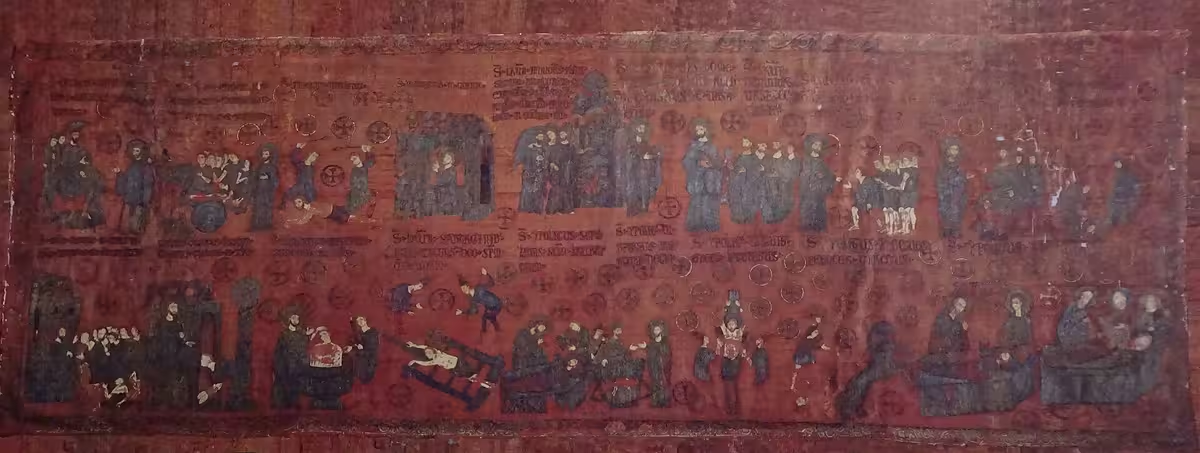
The Pallio di San Lorenzo: A Byzantine gift to Genoa
Discover the Pallio di San Lorenzo, a Byzantine masterpiece gifted to Genoa in 1261, marking the alliance between the Empire and the Republic.
-
Sakkos of Metropolitan Photius: Byzantine Textile Masterpiece
The Large Sakkos of Metropolitan Photius: A 15th-century Byzantine tunic with biblical scenes and portraits of Russian and Byzantine rulers.
-
The Silk of Thebes: Boeotia’s Role in the Byzantine Textile Industry
In 12th-century Boeotia, Thebes flourished as a hub of Byzantine silk, driving a thriving industry and international commerce.
-
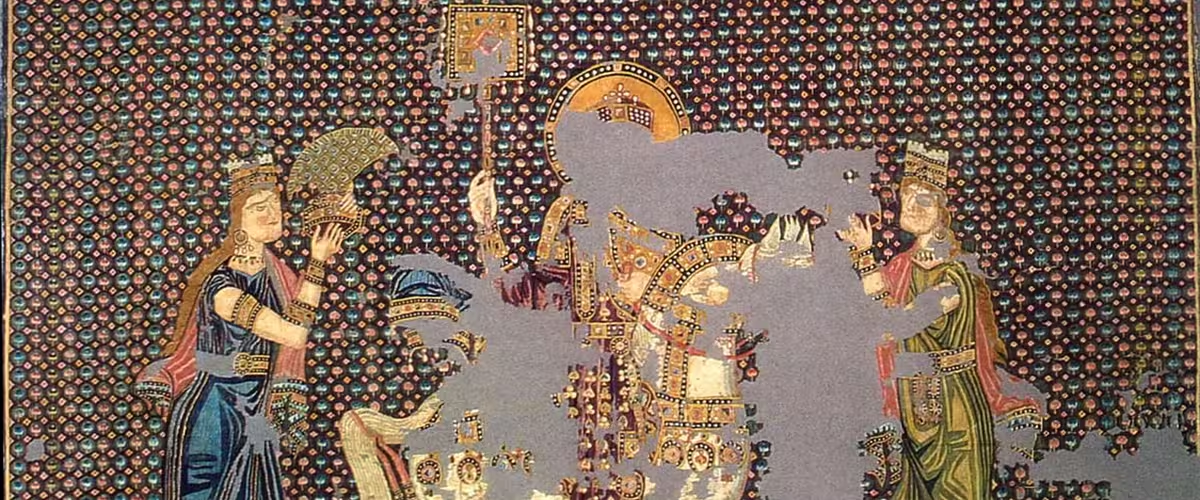
The Gunther’s Shroud: A Masterpiece of 10th-Century Byzantine Silk Tapestry
Discover the fascinating story of the Gunther’s Shroud, a 10th-century Byzantine silk tapestry showing the triumphal return of an emperor
-
The so-called Dalmatic of Charlemagne in the Vatican
The dalmatic of Charlemagne in the Vatican is likely an imperial garment from Constantinople, dated to the 11th or 14th century.
-
Byzantine silk fabric fragment with pomegranate trees in Halberstadt
Discover the 10th century silk fabric fragment held in the Cathedral Treasure of Halberstadt in Germany, featuring pomegranate trees, eagles, and snakes.