The Pallio di San Lorenzo: A Byzantine gift to Genoa
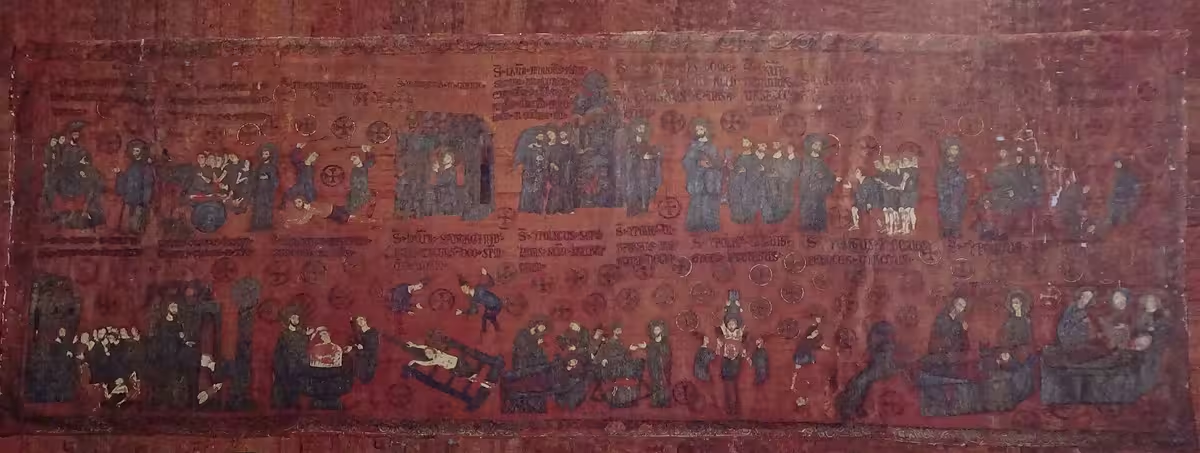
The Pallio di San Lorenzo is a monumental medieval silk cloth, dating back to 1261. The Byzantine Emperor Michael VIII Palaiologos donated this masterpiece to the Republic of Genoa as a reward for its military support during the reconquest of Constantinople. Measuring 377 cm long by 132 cm high, it stands as one of the largest and best-preserved medieval textiles in existence.
The Treaty of Nymphaeum and the Byzantine reconquest of Constantinople.
In 1204, the Fourth Crusade led to the sack of Constantinople, turning the city into a strategic trade hub for the Republic of Venice. To reclaim his throne, Emperor Michael VIII Palaiologos signed the Treaty of Nymphaeum with Genoa on March 13, 1261.
This agreement granted the Genoese exclusive control over Black Sea trade routes in exchange for their naval assistance. Following the successful recovery of the capital, the Emperor presented the Pallio to Genoa as a diplomatic seal of gratitude.
From the Cathedral to Modern Restoration.
The textile was first displayed in the Cathedral of San Lorenzo on Christmas Day, 1261. It remained in the cathedral until 1663, before moving to the Palazzo dei Padri del Comune. After that building’s demolition in 1842 to expand Piazza Caricamento, the Pallio moved between Palazzo Tursi and Palazzo Bianco.
In 2010, the Opificio delle Pietre Dure in Florence began a meticulous restoration process. Once completed, the work will be permanently exhibited at the Museo di Sant’Agostino in Genoa.
Iconography and Byzantine Craftsmanship.
This red silk samite features intricate embroidery using silk and metallic threads. The design depicts twenty scenes from the lives and martyrdoms of Saints Sixtus, Lawrence (Lorenzo), and Hippolytus, organized across two levels. Each scene includes a descriptive caption in Latin with Gothic lettering.
At the center of the upper tier, Michael VIII Palaiologos is shown entering the Cathedral of Genoa. The narrative follows a specific sequence: starting to the right of the central scene, moving through the lower level, then returning to the upper left before concluding with the remaining bottom scenes.
postcrosser, CC-by-SA 4.0.
The Pallio di San Lorenzo is more than a religious artifact; it is a diplomatic gift and a political symbol of the Mediterranean’s shifting powers in the 13th century. Its survival allows us to visualize the direct link between the Byzantine court and the Genoese merchants who shaped the history of the Levant.