Pammakaristos Church (Fethiye Mosque): Istanbul’s Overlooked Byzantine Masterpiece
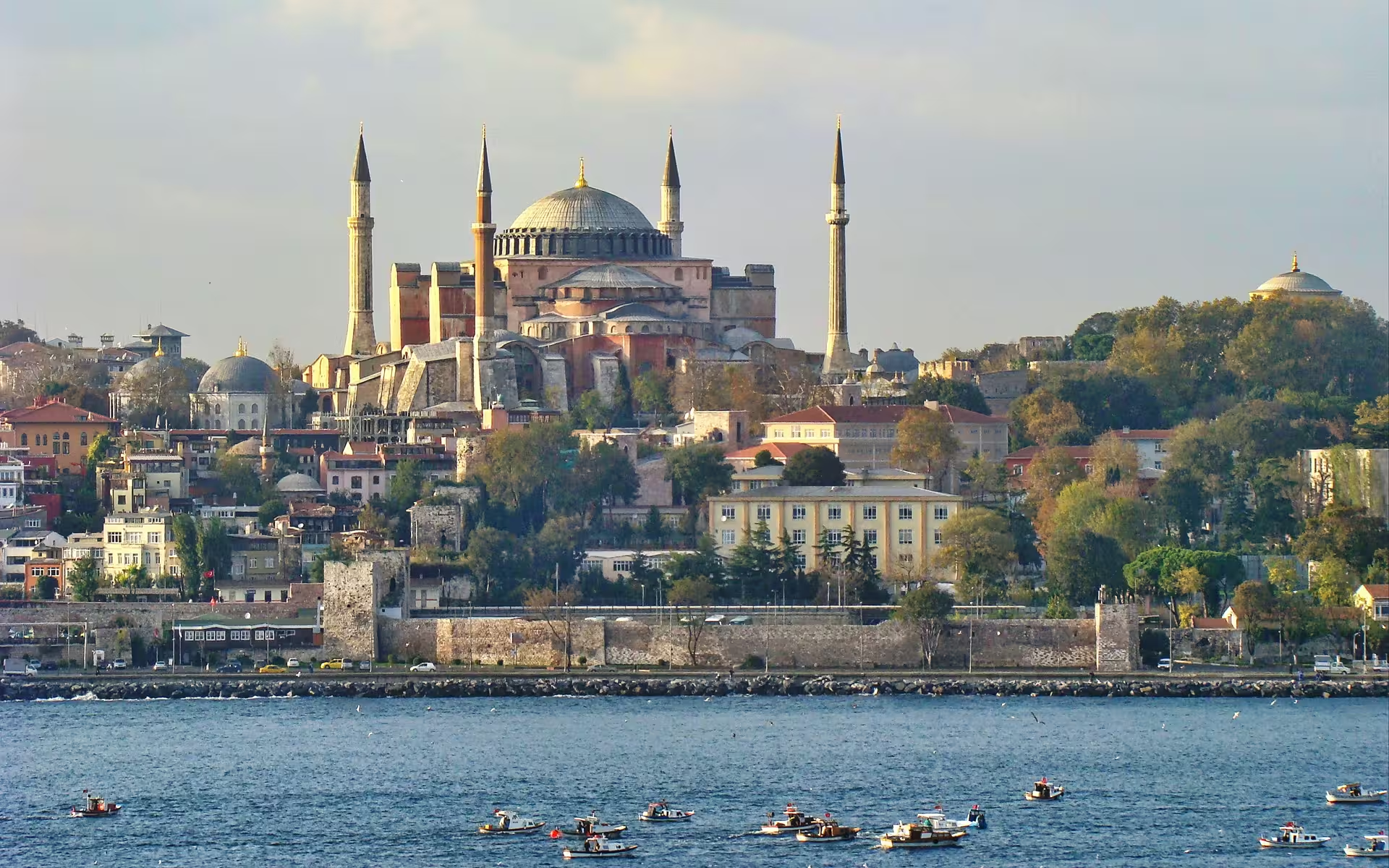
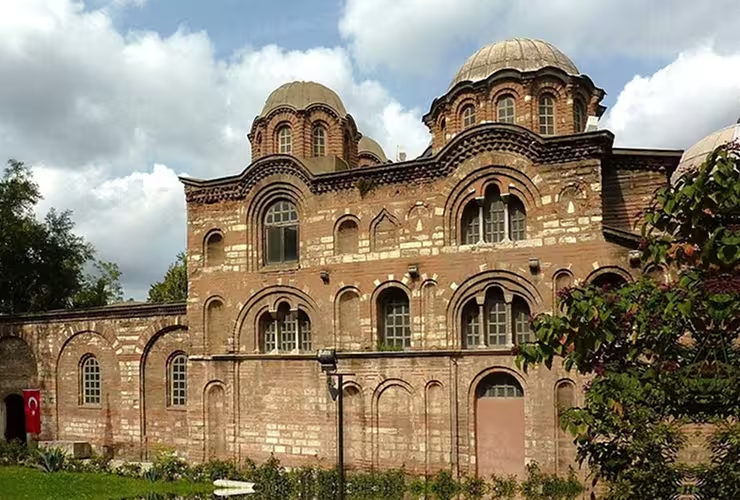
The Church of Theotokos Pammakaristos, today the Fethiye Mosque, sits in the quiet Çarşamba district of Istanbul. Its 14th-century side chapel holds the most important collection of late Byzantine mosaics in the city after the Chora and earned a place among the most beautiful Byzantine mosaics visible today. The main building works as a mosque; the chapel with the mosaics, the Fethiye Museum, has been closed for restoration since 2020 and has no confirmed reopening date as of 2026.
Quick facts
Name means “All-Blessed Mother of God” (Theotokos Pammakaristos)
Located in Çarşamba, Fatih district, overlooking the Golden Horn
Main church dates to the 11th–12th century
Side chapel (parekklesion) added c. 1310 by Martha Glabas for her husband, general Michael Glabas Tarchaneiotes
Served as seat of the Greek Orthodox Ecumenical Patriarchate from 1456–1587 — the last pre-Ottoman building to hold that role
Converted to a mosque (Fethiye Camii) in 1591 by Murad III
Holds the largest collection of Byzantine mosaics in Istanbul after Hagia Sophia and Chora
Restored in 1949 by the Byzantine Institute of America/Dumbarton Oaks
Today: main building is a working mosque; the parekklesion is a museum
A church with two names and a thousand years of history
“Pammakaristos” means “All-Blessed,” one of the many titles given to the Virgin Mary. The church was probably built in the late 11th or 12th century, during the Komnenian era, though its earliest history is debated. What is certain is its second life under the Palaiologan dynasty.
After the Byzantines retook Constantinople from the Crusaders in 1261, the church passed to the protostrator Michael Doukas Glabas Tarchaneiotes, a leading general of Emperor Andronikos II. He restored it on a grand scale. When he died around 1305, his widow Maria, who became a nun under the name Martha, gave the building its lasting glory: shortly after 1310 she added a small funerary chapel, the parekklesion, in his memory, dedicated to Christ the Word.
That chapel is the reason the Pammakaristos matters.
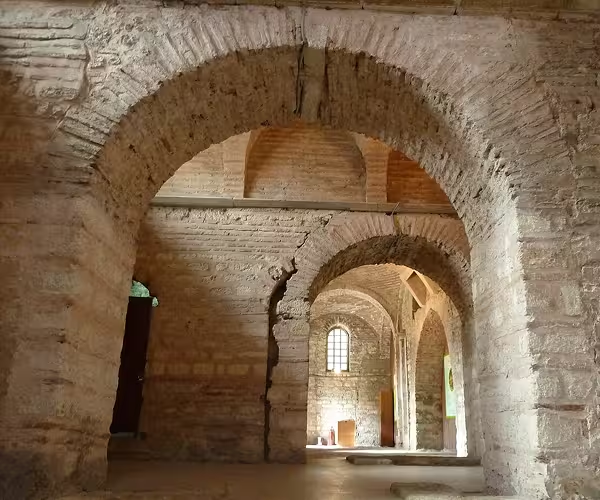
From patriarchal cathedral to victory mosque
The Pammakaristos played a role most Istanbul monuments did not. After the Ottoman conquest of 1453, it became the seat of the Greek Orthodox Ecumenical Patriarchate from about 1456, under Patriarch Gennadios II Scholarios, until 1587. For more than a century, this was the administrative centre of Orthodox Christianity under Ottoman rule.
In 1591, Sultan Murad III converted the church into a mosque to commemorate his conquests in Georgia and Azerbaijan. He named it Fethiye Camii, the “Mosque of the Conquest.” The main church was reshaped for prayer and its mosaics were hidden under plaster, which is exactly why they survived.
The Fethiye Museum today
Is it worth visiting?
For a first-time visitor with one day in Istanbul, no, prioritise Hagia Sophia and the Chora. For anyone with a real interest in Byzantine art, or a second or third visit to the city, the Pammakaristos is one of the most rewarding quiet corners in Istanbul: world-class mosaics, a patriarchal past, and barely another traveller in sight. Just check first whether the chapel has reopened.
Current status
Here is what most travel pages get wrong. After the 1949 restoration, the parekklesion was split off from the working mosque and opened as the Fethiye Museum, while the main building continued as the Fethiye Mosque.
As of 2026, the museum (the mosaic chapel) is closed for restoration and has been since 2020, with no officially announced reopening date. The main mosque remains an active place of worship and can usually be seen outside of prayer times, but the mosaics themselves are not currently accessible. Before planning a trip specifically for the mosaics, confirm the museum’s status directly.
Before the closure, the museum was generally open during daytime hours with a modest entrance fee (around 3 euros), and the Istanbul Museum Pass was accepted. Treat any prices or hours you find online as provisional until the museum reopens.
How to visit
Where it is. The complex stands in the Çarşamba neighbourhood of the Fatih district, in the old city but well away from the Sultanahmet crowds. It sits on the Fifth Hill, not far from the Chora and the Theodosian Walls.
Getting there. It is a steep but rewarding walk uphill from the Golden Horn (Fener or Balat ferry stops and the Ayvansaray area). Many visitors combine it with the Chora and a walk along the Land Walls, since all three sit in the same northwest corner of the historic peninsula.
What to expect. This is a residential, conservative quarter, not a tourist zone. There are no souvenir stalls or queues. Dress modestly, as you would for any working mosque, and women should carry a headscarf for the mosque interior.
When the museum reopens, the mosaics take only twenty minutes to see, but pair beautifully with Chora for a half-day of Palaiologan art.
The mosaics: what makes this chapel one of Istanbul’s treasures, and how to see them
The parekklesion was decorated with some of the finest mosaics of the Palaiologan Renaissance, the late, refined flowering of Byzantine art. They survive because they were plastered over for centuries, then uncovered in a 1949 campaign by the Byzantine Institute of America and Dumbarton Oaks.
The mosaic program is theological and funerary, designed to intercede for the souls of the chapel’s patrons, Michael Glabas and his widow Martha. Unlike the Chora, which tells the story of Christ and the Virgin through extensive narrative cycles, Pammakaristos focuses on salvation and mercy, with a more intimate, almost meditative scale.
The dome: Christ Pantokrator and Prophets
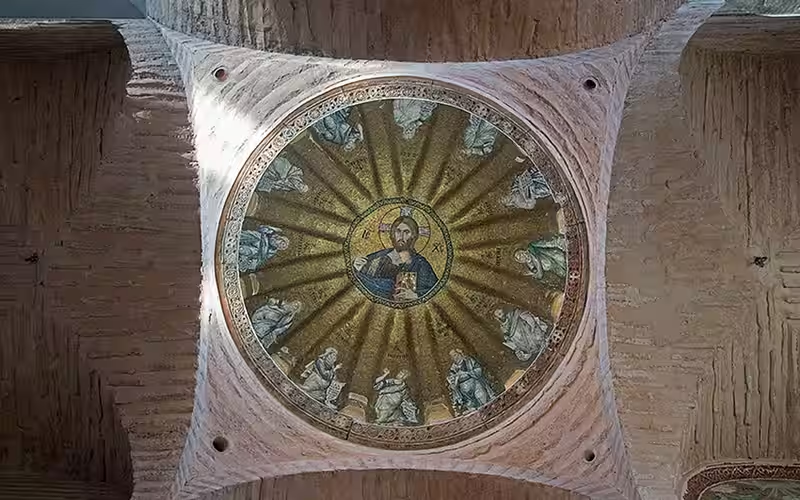
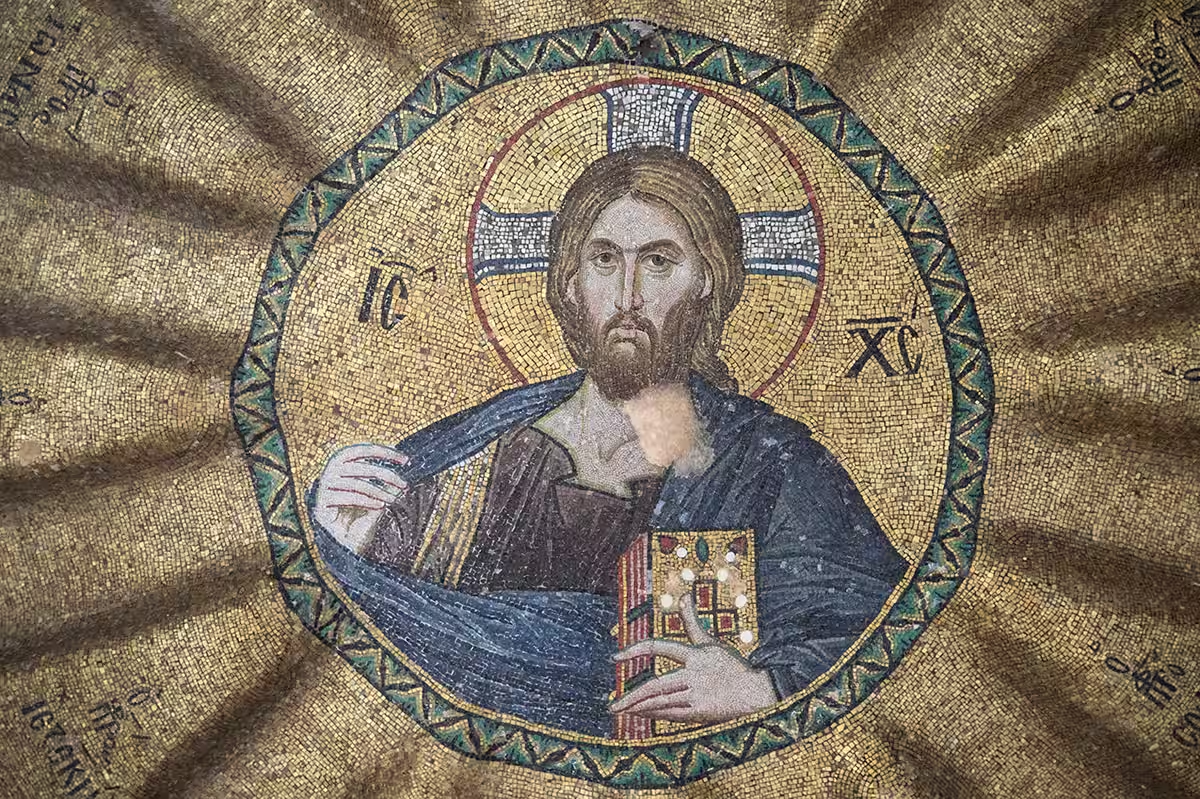
At the centre of the small dome, a medallion shows Christ “Pantokrator” (Ruler of All), ringed by twelve full-length Old Testament prophets between the windows.
It is a compact, intense version of the standard Byzantine dome program, emphasizing Christ’s cosmic authority.
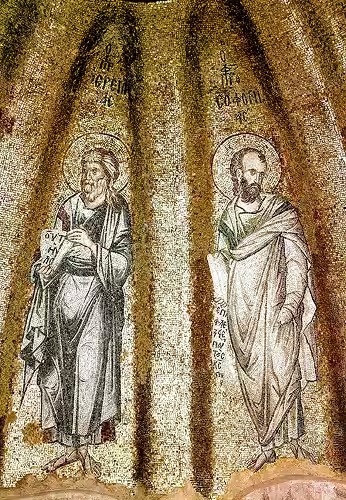
Two of the prophets in th the dome. 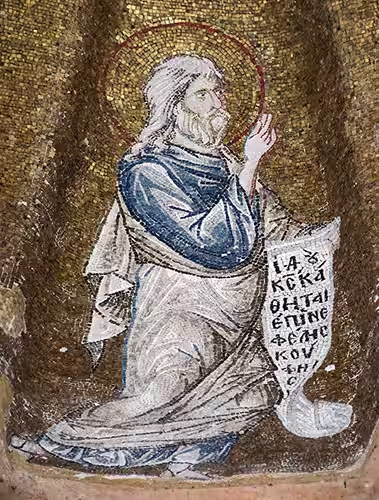
Prophet Isaiah.
The apse: the Deesis
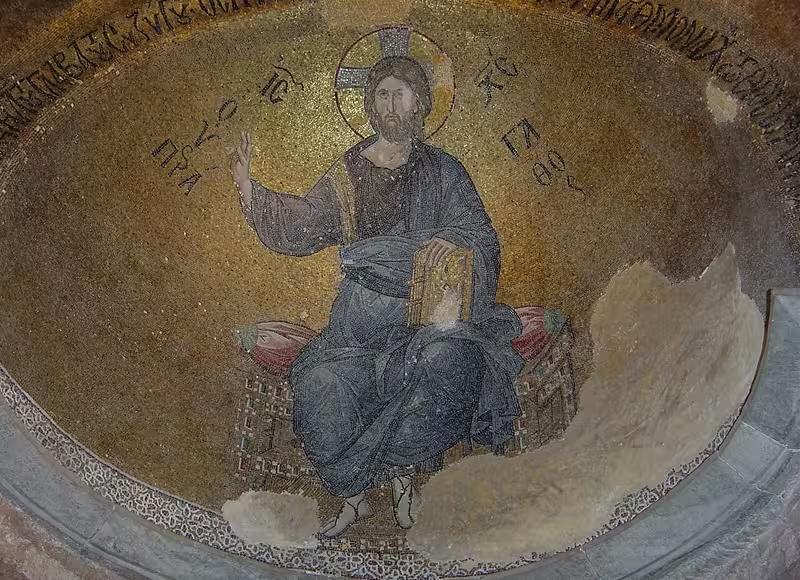
The eastern apse carries a Deesis, Christ enthroned, flanked by the Virgin Mary and John the Baptist, who turn toward him in intercession for humanity. This is the theological heart of a funerary chapel: a visual plea for mercy on behalf of the dead, a theme reinforced by the chapel’s purpose as a memorial for Michael Glabas.
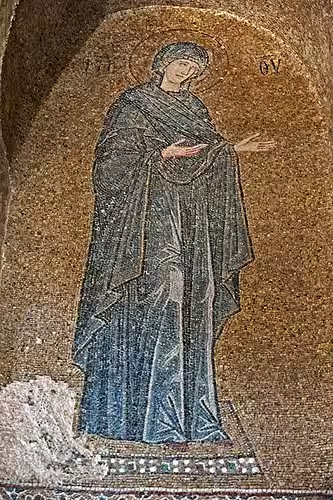
Deesis, the Theotokos (Virgin Mary). Deesis, Christ enthroned. © G.dallorto, CC-by-SA 2.5 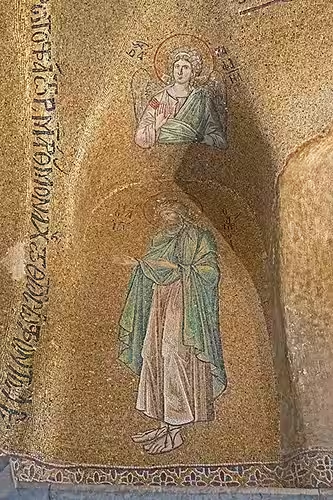
Deesis, John the Baptist below an Archangel.
The Koimesis and other scenes
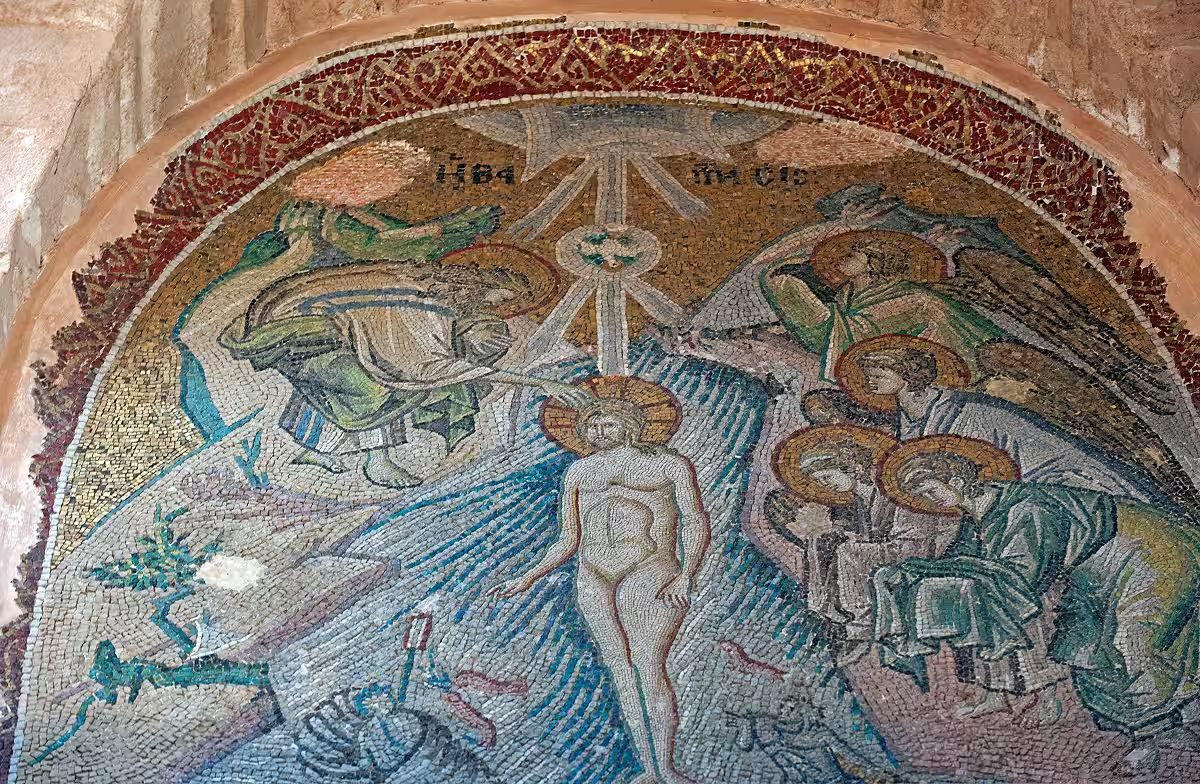
The chapel also preserves fragments of narrative scenes, including the Koimesis (Dormition of the Virgin), a rare and poignant depiction of the Virgin’s death and assumption into heaven, and the Baptism of Christ. These scenes, though less prominent than the dome and apse, underscore the chapel’s focus on intercession and the afterlife.
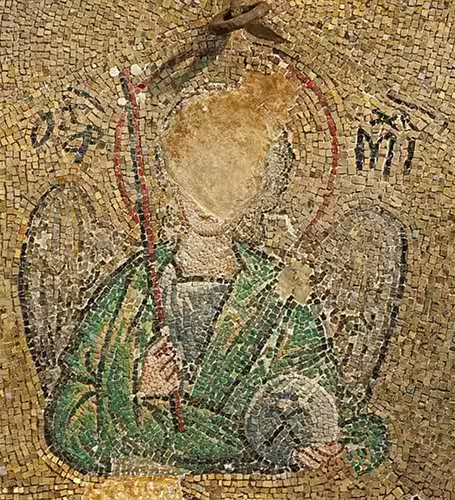
The archangels and the inscription
The vault of the bema shows four archangels—Michael, Gabriel, Raphael, and Uriel—each rendered with the elongated, graceful figures typical of the Palaiologan style.
Running along the chapel inside and out is an elegant dedicatory poem by Manuel Philes, the leading court poet of the age. Written in the voice of Martha mourning her husband, it is one of the most complete surviving examples of Byzantine monumental verse, tying the chapel to its patrons and to the emotional and spiritual intentions behind its decoration.
The other mosaics of various saints
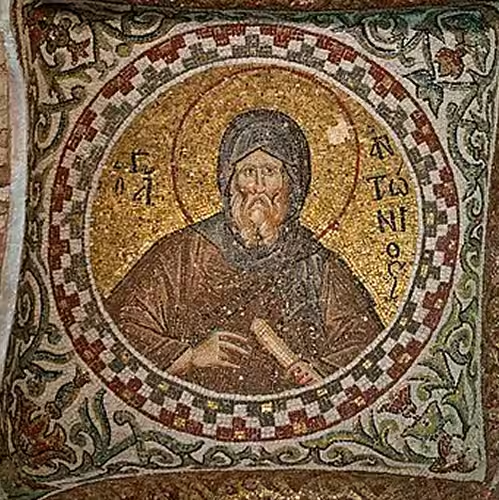
Saint Anthony the Great. 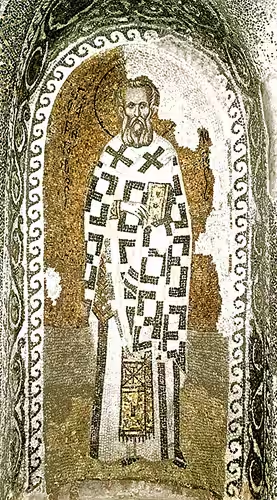
Apse conch mosaic depicting Saint Euthymius. 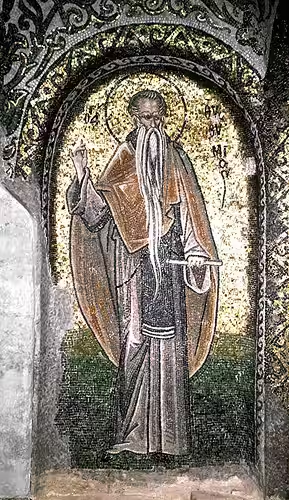
Saint Euthymius. 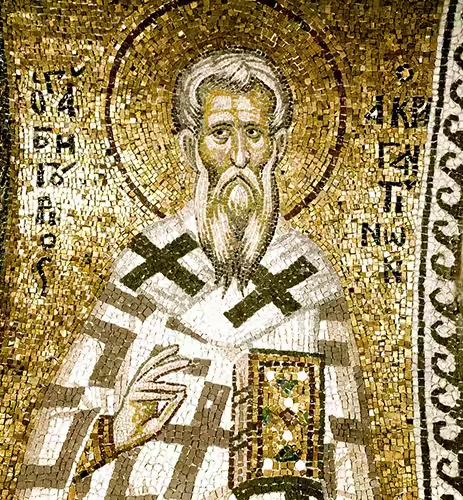
Detail of a mosaic showing Saint Gregory of Agrigentum. 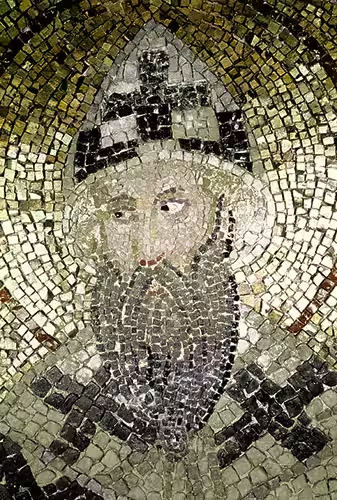
Detail of a mosaic depicting Saint Cyril of Alexandria. 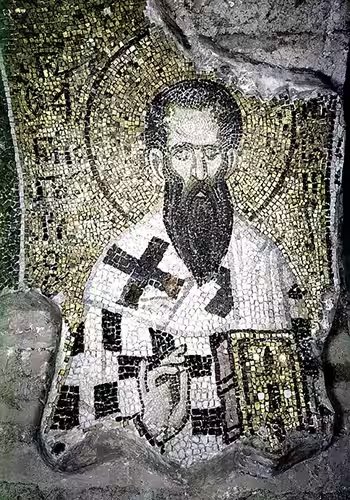
South arch mosaic featuring Saint Gregory. 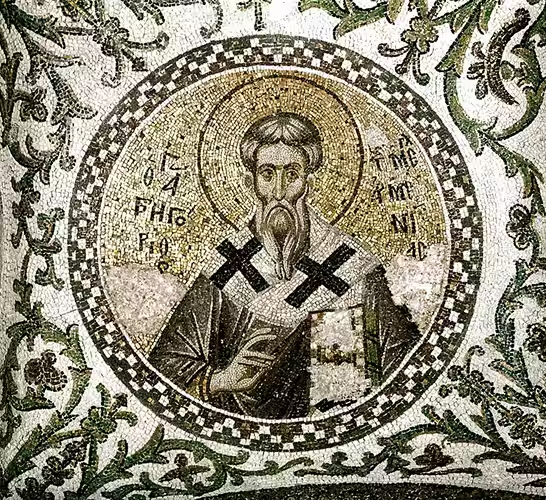
South east bay mosaic depicting Saint Gregory Illuminator.
The quality, refinement, and intact program put these mosaics in the same conversation as the Chora, with two key differences: Pammakaristos is more intimate and funerary in focus, and almost no one is here to see them.
Going deeper: the Palaiologan context
This section is for readers who want the art-historical detail behind the monument. If you came for the practical essentials, you already have them above.
Why the parekklesion matters in the history of Byzantine art
The chapel was built around 1310, in the middle of the Palaiologan Renaissance, the cultural revival that followed the Byzantine recovery of Constantinople from the Latins in 1261. Under Andronikos II, art turned toward greater naturalism, slender and animated figures, deeper architectural backgrounds, and richer narrative cycles, partly in dialogue with the classical past.
Only two great monuments of this movement survive in the capital with their decoration largely intact: the Chora, refounded by Theodore Metochites about 1315 to 1321, and the Pammakaristos parekklesion, built a few years earlier. Both were private foundations by powerful court officials, and both functioned as funerary chapels. The standard scholarly assessment, going back to the Dumbarton Oaks monograph, is blunt: after the Chora, this is the most important series of Palaiologan mosaics left in Istanbul. Studying the two together is the closest thing we have to reading the artistic language of the early 14th-century capital.
The architecture
The parekklesion is a compact cross-in-square chapel on the south side of the main church. What draws specialists is its exterior: elaborate Palaiologan brickwork, recessed niches, blind arcading, and decorative patterning that rank among the finest late Byzantine façade treatments in the city. Where the Komnenian-era main church is comparatively plain, the Palaiologan chapel is a deliberate display of refinement, the architecture itself signalling the status of its patron.
The mosaic program, read closely
The surviving mosaics concentrate in the chapel’s east end and dome. The dome carries Christ Pantokrator in a central medallion, encircled by Old Testament prophets set between the windows, a miniature of the cosmic hierarchy that crowns most Byzantine domes. The apse holds the Deesis: Christ enthroned between the Virgin and John the Baptist, both inclined toward him in intercession. In a chapel built to hold the dead, the Deesis is not decoration but argument, a visual prayer for mercy at the Last Judgment. The vault of the bema adds four archangels, Michael, Gabriel, Raphael and Uriel. Doula Mouriki’s iconographic study and Hans Belting’s stylistic analysis in the 1978 monograph remain the standard close readings.
The Manuel Philes inscription
One feature sets the Pammakaristos apart even from the Chora. A long dedicatory epigram by Manuel Philes, the foremost court poet of the period, runs along the chapel, on the cornice within and around the exterior of the apse. Written in the voice of the widow Martha mourning Michael Glabas, it is one of the most substantial monumental verse inscriptions to survive from Byzantium, and it is preserved both on the building and in Philes’s manuscript corpus, a rare double witness. For historians it ties the chapel firmly to its patrons and to a precise moment around 1310, anchoring the dating that the architecture and style independently suggest.
What we know, and what we don’t
The chapel is securely dated by the inscription and by the death of Michael Glabas around 1305. The main church is far murkier: an 11th or 12th-century Komnenian foundation is the consensus, but the exact patron and date remain debated, since the building was heavily reworked in the Palaiologan period and again after the Ottoman conversion. Anyone writing confidently about the “founding” of the Pammakaristos is overstating the evidence; the honest position is that the chapel is well understood and the original church is not.
FAQ
Is the Pammakaristos Church / Fethiye Museum open to visitors?
The main building functions as a mosque and can usually be visited outside prayer times. The Fethiye Museum, the side chapel holding the Byzantine mosaics, has been closed for restoration since 2020 and, as of 2026, has no announced reopening date.
Where is the Pammakaristos Church located?
In the Çarşamba neighbourhood of the Fatih district, in the northwest of Istanbul’s historic peninsula, near the Chora Church and the Theodosian Walls. It is roughly an uphill walk from the Fener and Balat areas on the Golden Horn.
Why is it called the Fethiye Mosque?
Sultan Murad III converted the church into a mosque in 1591 and named it Fethiye Camii (“Mosque of the Conquest”) to mark his military victories in Georgia and Azerbaijan.
What are the Pammakaristos mosaics?
A set of early-14th-century Palaiologan mosaics in the funerary chapel: a dome with Christ Pantokrator surrounded by prophets, an apse Deesis with Christ, the Virgin and John the Baptist, and four archangels in the bema vault. They are considered the finest in Istanbul after the Chora.
Was it ever the seat of the Patriarchate?
Yes. From about 1456 to 1587 it served as the seat of the Greek Orthodox Ecumenical Patriarchate under Ottoman rule.
Sources and further reading
- Hans Belting, Cyril Mango and Doula Mouriki, The Mosaics and Frescoes of St. Mary Pammakaristos (Fethiye Camii) at Istanbul, Dumbarton Oaks Studies 15 (Washington, D.C.: Dumbarton Oaks, 1978). The standard scholarly monograph.
- Alexander Kazhdan (ed.), The Oxford Dictionary of Byzantium (Oxford University Press, 1991), entries on Pammakaristos, Michael Glabas Tarchaneiotes, and Manuel Philes.
- Cyril Mango, Byzantine Architecture (for the architectural context of the Palaiologan period).
- Dumbarton Oaks publication record: https://www.doaks.org/resources/publications/books/the-mosaics-and-frescoes-of-st-mary-pammakaristos-fethiye-camii-at-istanbul