Agios Georgios Diasoritis Church in Naxos: History and Byzantine frescoes
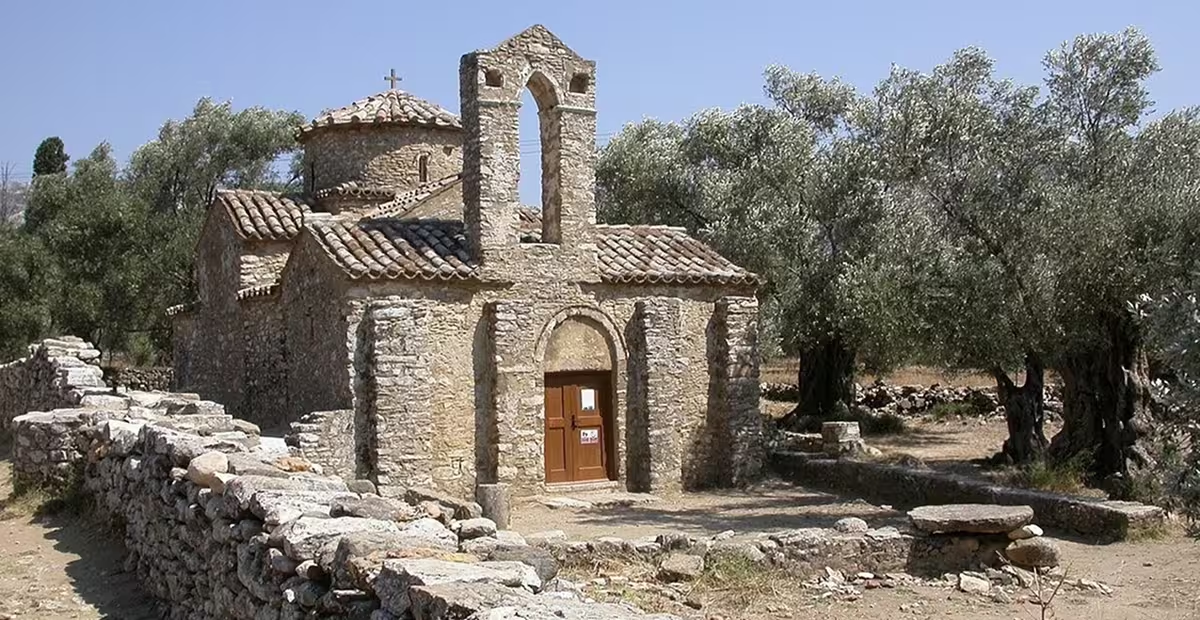
The Tragea valley forms the green heart of Naxos island, hiding a dense concentration of early medieval monuments. Tucked away within an ancient olive grove near Chalki village and its church of Panagia Protothronos, the Church of Agios Georgios Diasoritis stands out as a prime example of Byzantine provincial art. This stone sanctuary combines a humble exterior design with highly sophisticated interior layouts.
The medieval timeline of a rural sanctuary.
Archaeological excavations indicate that the current church was constructed during the 11th century, a period when the Byzantine Empire reasserted its administrative dominance over the Aegean Sea. Scholars believe the builders erected the structure over the remains of an older Christian monument or a classical pagan shrine. A narthex was added to the western facade during the 12th century.
The site retained its political and spiritual prominence for centuries. It survived the geopolitical shift of 1207 when Venetian crusaders, following the Sack of Constantinople in 1204, seized the island to establish the Duchy of Naxos. Local communities continued utilizing the building throughout the Ottoman era, which helped preserve its structural integrity until systematic restoration efforts began in the late 20th century.
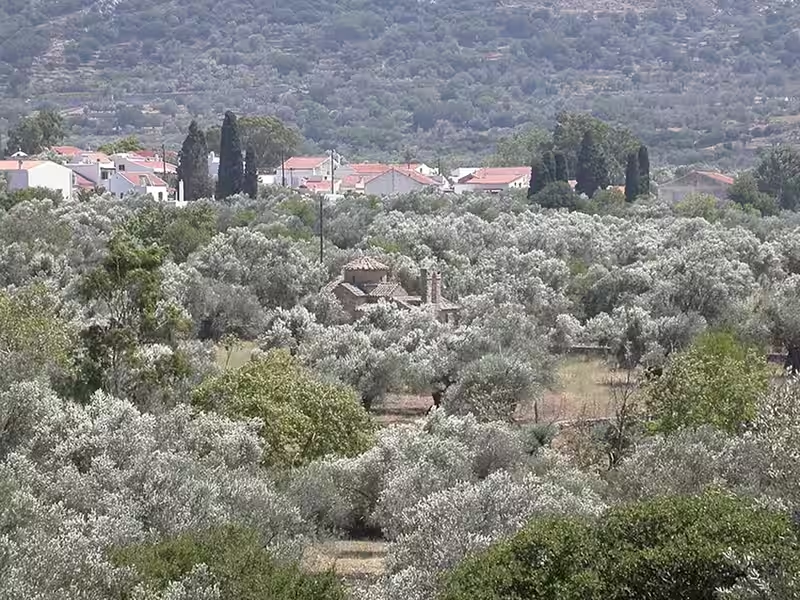
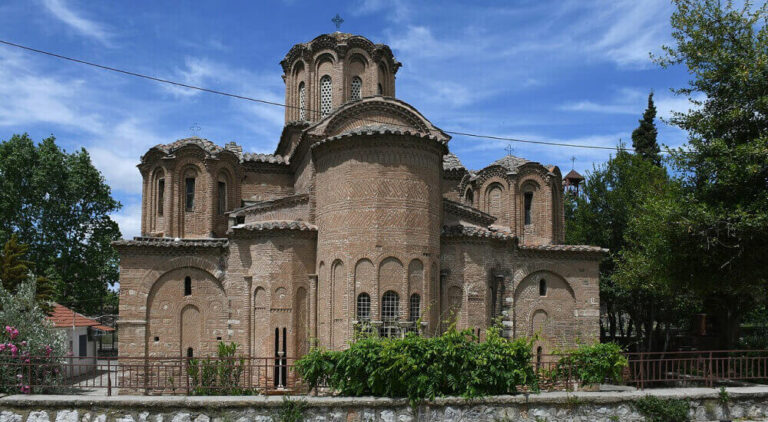
View of the church of Saint George Diasoritis in the olive groves of central Naxos island. © Stepanps, CC by-SA 4.0 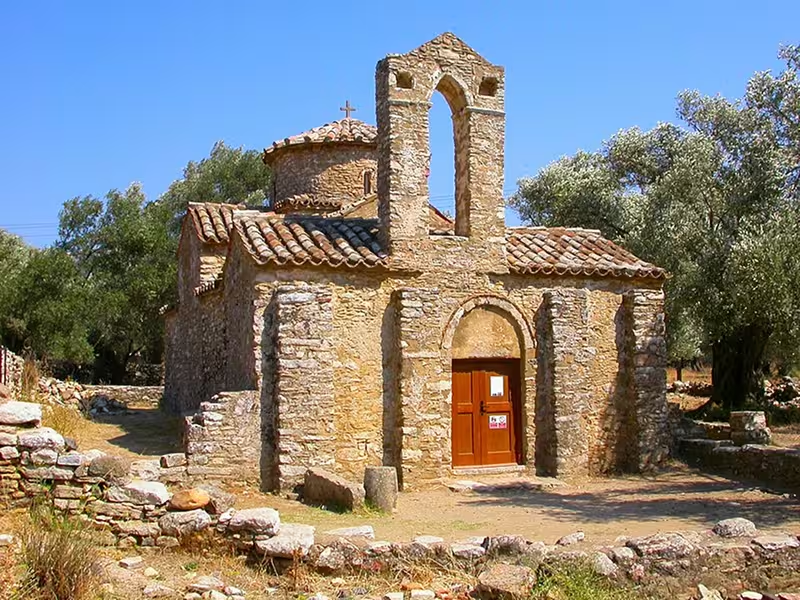
The facade of the church with its bell tower, added to the monument during Venitian times. © Stepanps, CC by-SA 4.0
Decoding the identity of George Diasoritis.
The name “George Diasoritis” does not refer to a historical resident or a local ruler from Naxos. Instead, it honors Saint George the Great Martyr, a Roman soldier executed in the early 4th century. The word “Diasoritis” serves as a specific religious epithet. Historians trace this title back to a famous toponym, most likely referring to the ancient locality of Soros in Cappadocia or a prominent Byzantine monastery on the nearby island of Amorgos. In the local iconographic tradition, this specific epithet dictates a precise visual presentation: Saint George appears facing forward, holding a spear in his right hand and a round shield in his left. This military saint served as a vital protector for the agricultural populations of the Tragea valley.
Architectural transition from East to West.
The structure follows a classic cross-in-square architectural plan topped by a central dome. While imperial Byzantine churches typically relied on marble columns, the local builders utilized four massive stone masonry pillars to support the heavy dome due to island resource limitations. A barrel-vaulted narthex was added to the western facade during the late Byzantine period to serve as a funerary space, featuring two distinct tomb recesses (arcosolia). Following the Venetian conquest, Catholic administrators introduced minor structural modifications to the building, including a Western-style pointed arch bell tower that still breaks the traditional Byzantine silhouette.
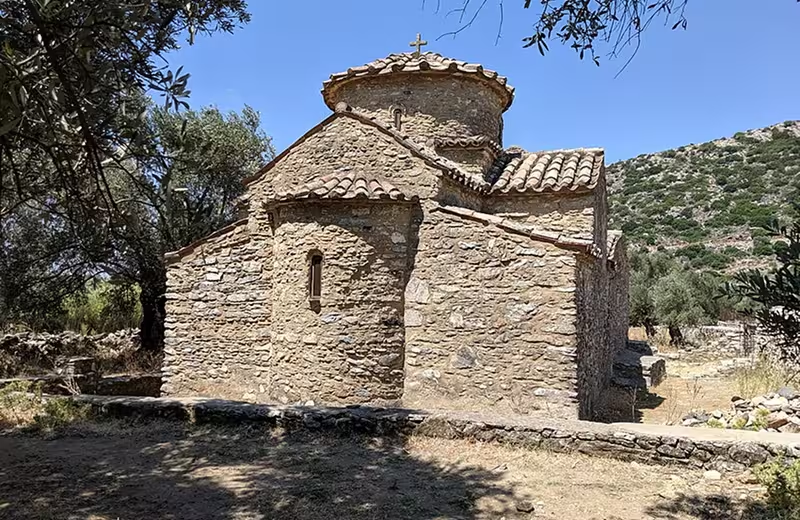
The apse of the church. © Magnus Manske, CC by-SA 4.0 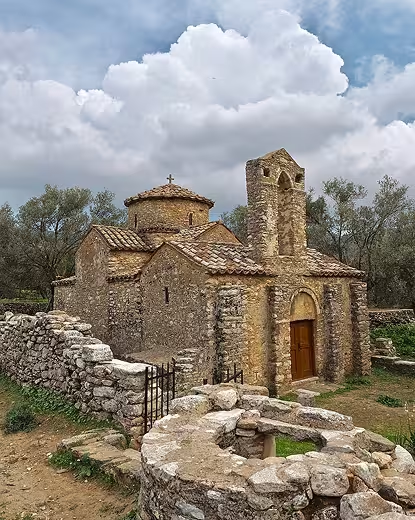
Facade with the narthex. © Kategiam, CC by-SA 3.0 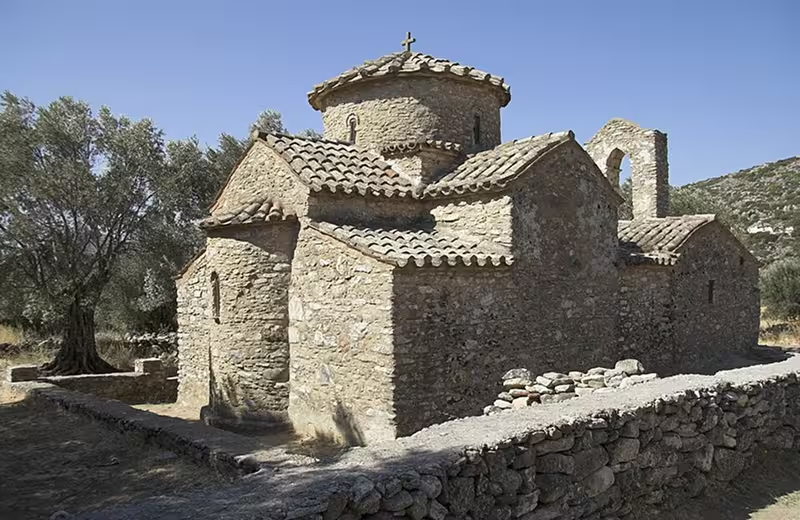
View of the naos. © Zde, CC by-SA 4.0
An exceptional cycle of provincial frescoes.
The interior of Saint George Diasoritis features an extensive fresco layout that directly reflects the building’s historical evolution. The wall paintings inside the naos date to the second half of the 11th century, displaying flat, highly expressive figures with large eyes, which is characteristic of the middle Byzantine provincial style. Conversely, the frescoes inside the narthex date to the 12th century and were likely executed in two distinct layers. Throughout these building phases, the preserved inscriptions and donor compositions reveal intimate details about the individuals connected to the church.
The frescoes of the naos.
In particular, a major composition on the west wall of the naos yields considerable historical information regarding the possible reasons for erecting the monument. At the center of this now badly damaged scene, Christ sits enthroned holding a Gospel book. The Virgin Mary stands to the left, while a little girl steps away from her to move toward Christ. Saint George watches the scene in prayer from the right edge. This scene serves as a clear funerary representation occasioned by the death of the young girl, who was in all probability the daughter of the main donor.
The iconography strongly suggests that this primary donor was a military official. The exceptionally frequent depiction of Saint George combines with a markedly military character throughout the iconographic program. A key scene illustrating this theme is the Appearance of the Archangel Michael to Joshua son of Nun before the capture of Jericho. Adjacent to this biblical episode, a superb portrait of a military official features highly realistic traits, which likely reveals the true identity and likeness of the donor who funded the 11th-century wall paintings.
The paintings in the narthex.
The early 12th-century narthex of the church served a clear mortuary purpose and contains vital clues about the island’s high-status Byzantine elite. On the east wall’s south blind arch, a damaged fresco depicts the patron saint alongside a praying donor whose opulent, high-collared costume and mantle identify him as a secular state dignitary who likely funded the narthex. Nearby, a prominent Middle Byzantine inscription records the prayer of a high-ranking official named Ioannes protospatharios. This text is framed by the “Vision of Saint Eustace,” a military-themed iconographic subject of eastern provenance often linked to donors from Asia Minor, Cappadocia, or Georgia. By selecting this theme, Ioannes projected both his high office and eastern roots, echoing historical ties to the Byzantine military administration also evidenced by inscriptions at the Virgin Protothronos and the major 7th-century fortification of Kastro Apalirou. This defensive castle controlled vital local agricultural and maritime trade routes, underscoring Naxos’s strategic role as a major fleet station reinforced by imperial authorities through dedicated military officials.
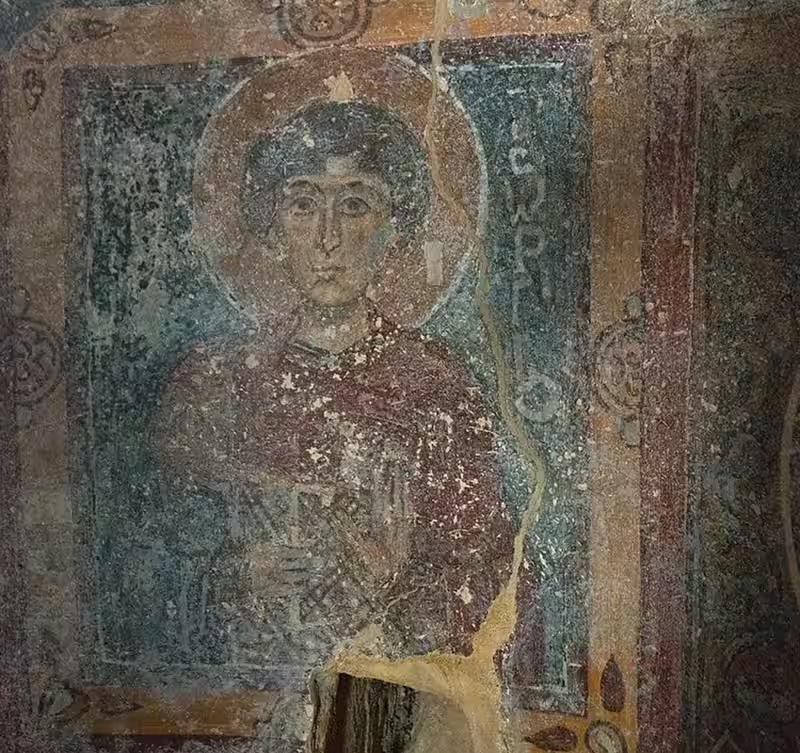
Fresco depicting Saint George, represented in his traditional Byzantine youthful, curly-haired appearance, before the later Venetian-era stylistic adjustments on the island. © Zde, CC by-SA 4.0 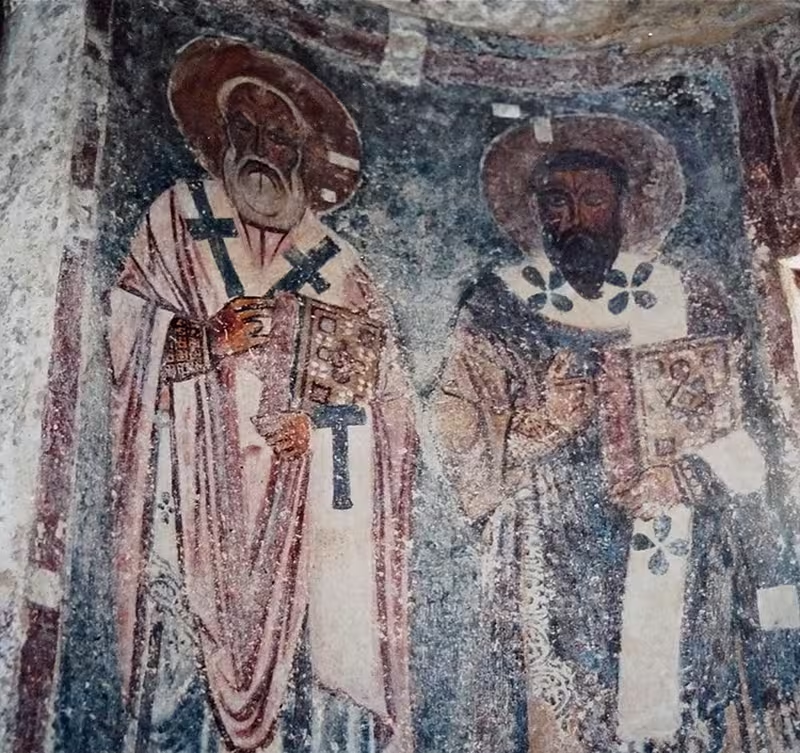
Fresco depicting St. Gregory the Theologian, represented as an older man with a prominent high forehead and a long, flowing white beard and St. Basil the Great, with darker hair and a long, pointed dark beard. ©Astrid Scharlau, CC by-SA 4.0
Sources.
- Ephorate of Antiquities of Cyclades – Official Ministry Listing
- Agios Georgios Diassoritis – Naxos.gr
- Stavrakos, C. (Ed.). (2016). Identity and Patronage in Byzantium: Epigraphic Evidence and Donor Portraits of Naxos. Proceedings of the International Symposium on Inscriptions in Byzantine and Post-Byzantine History and History of Art, Wiesbaden, 53-78. Link here.
- Foundation of the Hellenic World (FHW) – Middle Byzantine Period Cultural Registry