Byzantine News — Q3 2026: The quarter’s Key Discoveries, Research and Exhibitions
The quarter in review
Welcome to the Q3 2026 edition of Byzantine News, your quarterly round-up of the latest academic developments, archaeological discoveries, and major cultural events across the field of Byzantine studies.
25th International Congress of Byzantine Studies opens in Vienna
From August 24 to 29, 2026, the University of Vienna hosts the 25th International Congress of Byzantine Studies (ICBS). Placed under the honorary patronage of Federal President Dr. Alexander Van der Bellen, this milestone gathering centers on the theme “Byzantium Beyond Byzantium”.
Organized every five years since its inaugural meeting in Bucharest in 1924, the ICBS is the world’s premier academic convention dedicated to Eastern Roman history, art, and culture. Up to 1,500 scholars from over 50 countries gather in Vienna to present hundreds of papers exploring trade networks, manuscript transmission, cross-cultural diplomacy, and material culture.
Key Highlights of the 2026 Congress:
- Academic panels: Hundreds of presentations addressing microstructures, mobility, and the global legacy of the Byzantine Empire.
- Exhibitions & Cultural links: Collaborations with the Austrian National Library and municipal museums to showcase Austrian-Byzantine heritage to a broader audience.
- Networking events: Receptions and thematic roundtables facilitating international exchange among researchers.
Read more: ICBS 2026 – Byzantium Beyond Byzantium
“Spurensuche Byzanz” exhibition unveiled in Vienna.
To coincide with the global gathering of Byzantinists, the Papyrusmuseum of the Austrian National Library presents the special exhibition “In Search of Byzantium: Fragments of the Greek Middle Ages” – (“Spurensuche Byzanz: Fragmente des Griechischen Mittelalters”). Curated by Dr. Krystina Kubina and Dr. Giulia Rossetto, the display showcases rare papyrological fragments, liturgical texts, and secular documents from the Greek Middle Ages, illustrating daily life and scholarly transmission across the empire.
Read more: Exhibition “Spurensuche Byzanz Fragmente des Griechischen Mittelalters“
Record Byzantine gold treasure recovered off the Mljet Coast
Archaeologists from the Croatian Conservation Institute and Stanford University have concluded an 11-year underwater excavation campaign off the coast of Mljet, Croatia, revealing a major 7th- to 8th-century CE shipwreck.
The expedition yielded an unprecedented hoard of luxury imperial goods and coinage submerged in the Adriatic Sea: ceremonial gold belt components set with pearls, rubies, and emeralds; excellent-grade solidi struck under the Heraclian dynasty; amphorae and ceramic tableware providing context for Adriatic maritime routes.
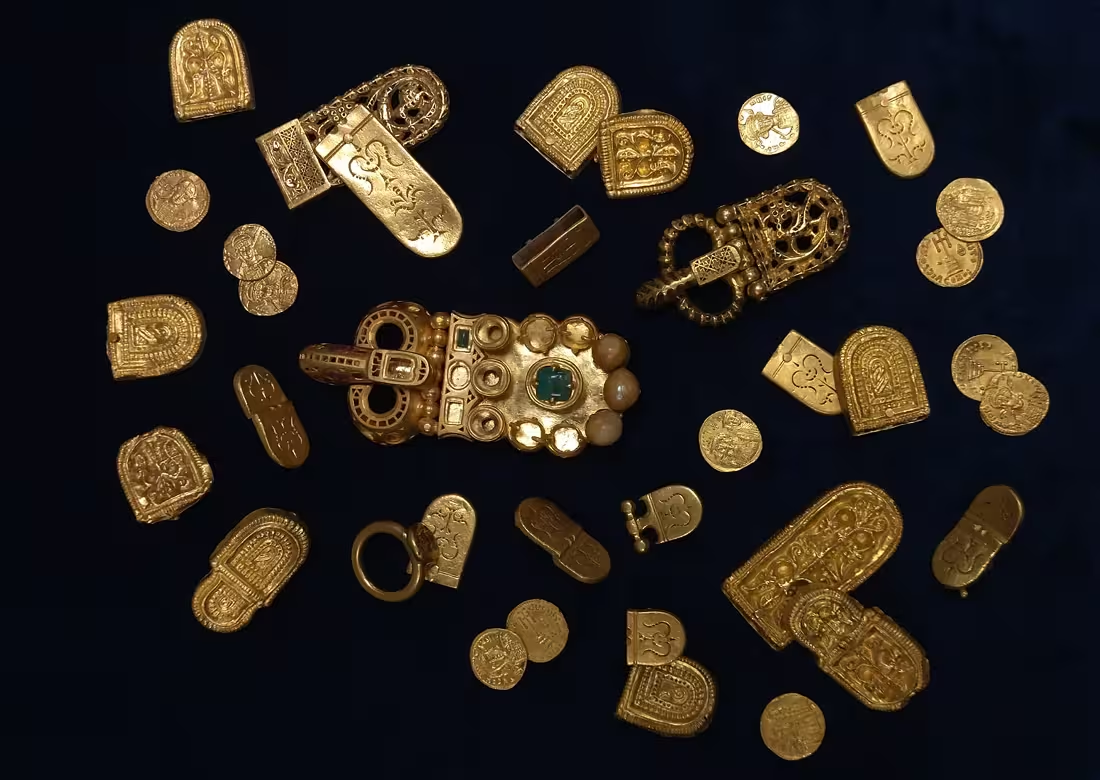
Researchers suggest the presence of high-status personal regalia indicates the ship carried a senior Byzantine envoy or imperial magistrate traveling through the region.
Read the full article: Record Byzantine gold treasure discovered off Mljet Coast
Mudbrick Byzantine settlement discovered in Egypt’s Western Desert
Archaeologists excavating in Egypt’s western desert oases have uncovered a well-preserved mudbrick city dating to the mid-Byzantine period. The site features residential quarters, civic infrastructure, and early Christian liturgical spaces.
The discovery offers fresh evidence regarding the administrative reach and economic vitality of Byzantine Egypt during Late Antiquity, highlighting the diverse cultural interactions within the southern frontier oases.
For continuous updates and upcoming academic conferences, visit the Byzantine World Homepage.
Sources