Byzantine Architecture: Churches, palaces and beyond
Byzantine architecture evolved over centuries from the architecture of late antiquity. Architects of the Eastern Roman Empire gradually developed their distinct style. They incorporated elements such as domes, pendentives, and elaborated new layouts to meet the needs of their era. These innovations reached their pinnacle in monumental structures, especially at the beginning of the Byzantine era, while resources were often more stretched in the following centuries. Nonetheless, our perception of Byzantine architecture is widely influenced by the monuments that have survived to this day.
Byzantine architecture at a glance
Era:
c. 4th–15th century (Early, Middle and Late Byzantine periods), evolving from late-antique Roman architecture
Signature features:
domes raised on pendentives or squinches; the cross-in-square church plan; brick-and-mortar construction; interiors clad in marble, mosaic and gold
Defining monument:
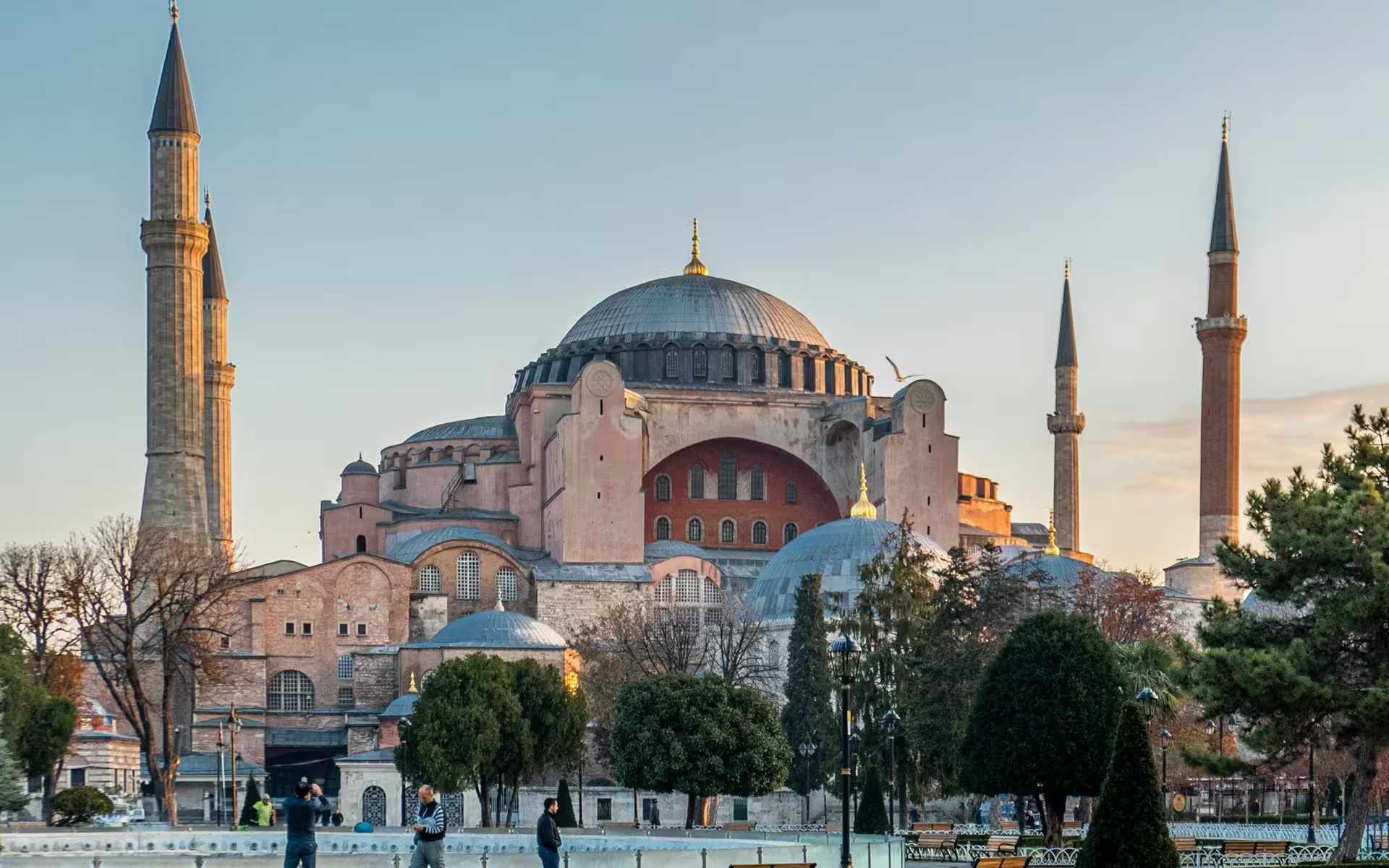
Hagia Sophia, Constantinople (completed 537)
Building types:
churches, monasteries, palaces, cisterns, city walls and fortifications
Where to see it:
Constantinople (Istanbul), Thessaloniki, Mystras, Ravenna, Ohrid, Trebizond
Legacy:
shaped Orthodox church-building across Russia and the Balkans, early Islamic architecture, and the 19th-century Neo-Byzantine revival
Key characteristics of Byzantine architecture
Byzantine builders inherited Roman engineering and reshaped it around a new priority: enclosing a vast, light-filled, symbolic interior beneath a dome. A few features recur across the empire’s thousand-year history.
The dome on pendentives. The defining Byzantine solution was setting a circular dome over a square space using pendentives — curved triangular sections that bridge the corners. In smaller churches the same transition was made with squinches. Hagia Sophia‘s pendentive-borne dome (537) is the supreme example.
The cross-in-square plan. From the Middle Byzantine period the cross-in-square (or Greek-cross) church became standard: a central dome over a square nave, with four barrel-vaulted arms forming a cross.
Brick, marble and light. Exteriors were typically modest brick and mortar — often in decorative recessed-brick patterns — while interiors were transformed with marble revetment, mosaic and frescoes.
Verticality and hierarchy. Space rises toward the central dome, which carried the image of Christ Pantokrator, ordering the interior into a symbolic hierarchy of heaven and earth.
Byzantine religious architecture.
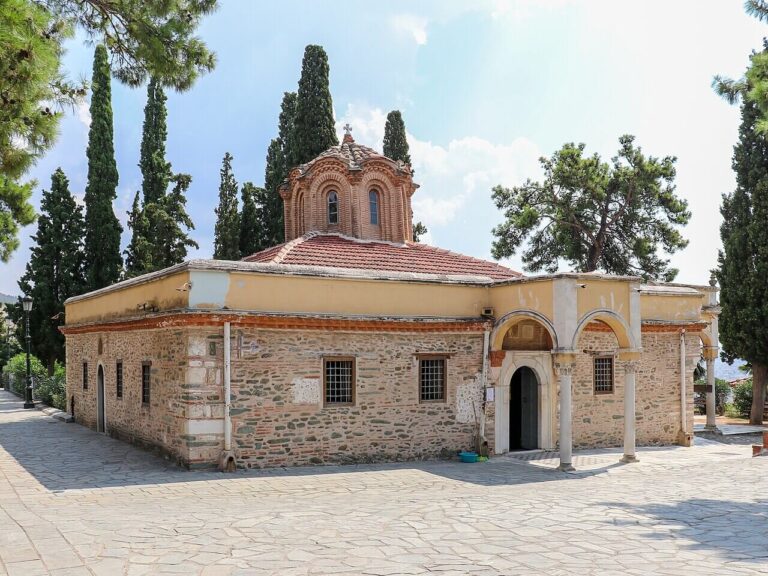
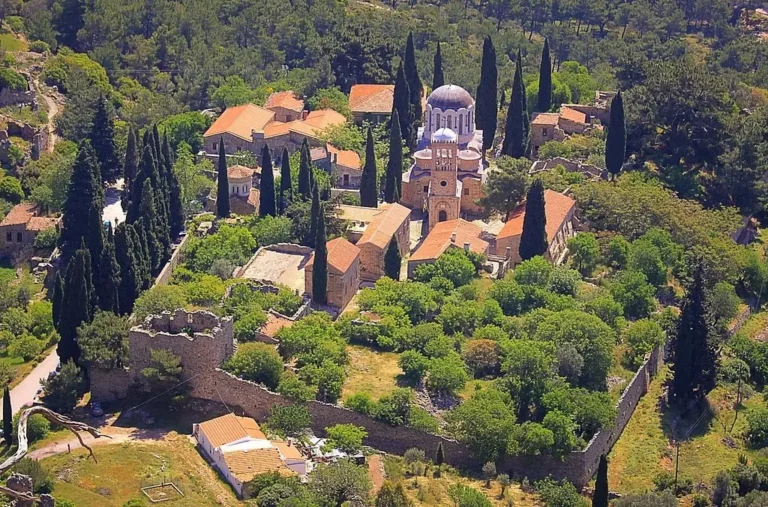
For many, Byzantine architecture is synonymous with church architecture. Religious structures were a central focus of construction during this period, reflecting their importance in Byzantine society. While most have been lost to the region’s turbulent history and the passage of time, some churches and monasteries have endured thanks to their lasting significance. Many still stand today in prominent former Byzantine centers, such as Constantinople, Thessaloniki, Athens, Mystras, Trebizond, Arta, Ohrid or Ephesus. Additionally, numerous monasteries that flourished in the countryside have also withstood the test of time, such as the Nea Moni in Chios. Among these monuments, the Hagia Sophia in Constantinople is widely regarded as the masterpiece of Byzantine architectural achievement. This iconic edifice, with its vast dome, remained the largest church in the world for nearly a thousand years, until the completion of Seville Cathedral around 1520.
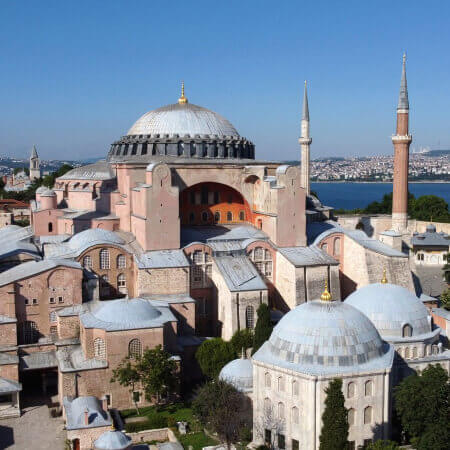
Hagia Sophia in Istanbul, jewel of Byzantine architectur 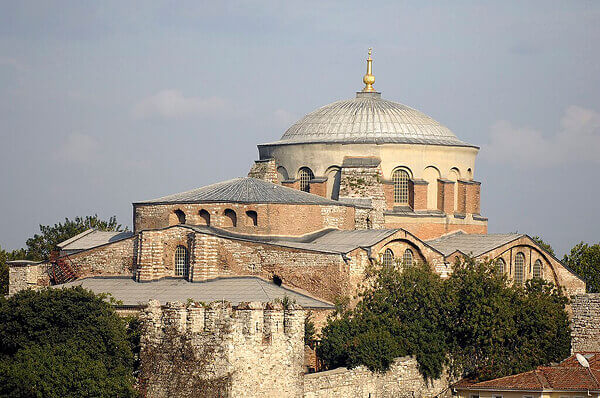
Dome of the church of Hagia Irene in Istanbul 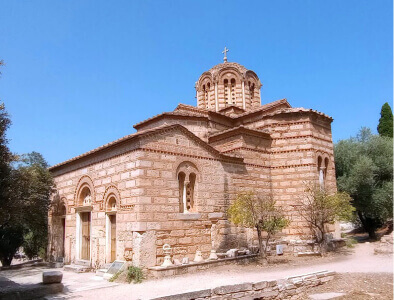
Church of the Holy Apostles in Athens, 10th century 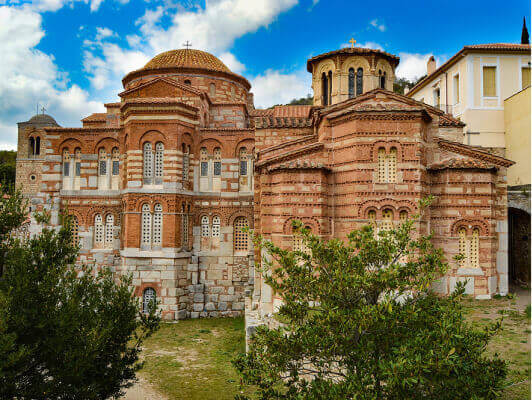
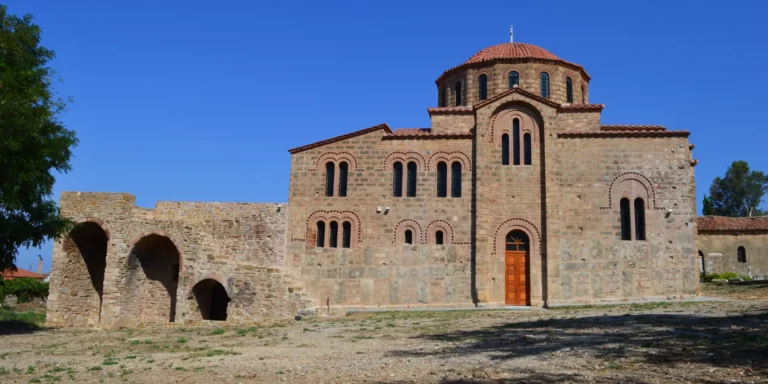
Monastery of Hosios Loukas in Greece, 11th century 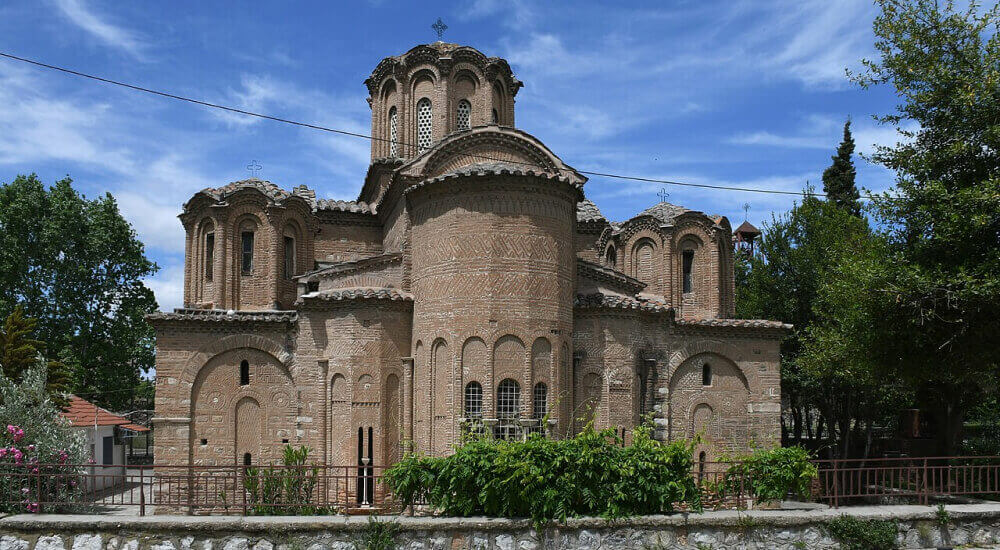
Church of the Holy Apostles, Thessaloniki 
Church of the Panagia Chalkeon, Thessaloniki Metropolite Church and bishop mansion of Christianoupoli, Greece 
Aerial view of the Panagia Paregoritissa, Arta, Greece 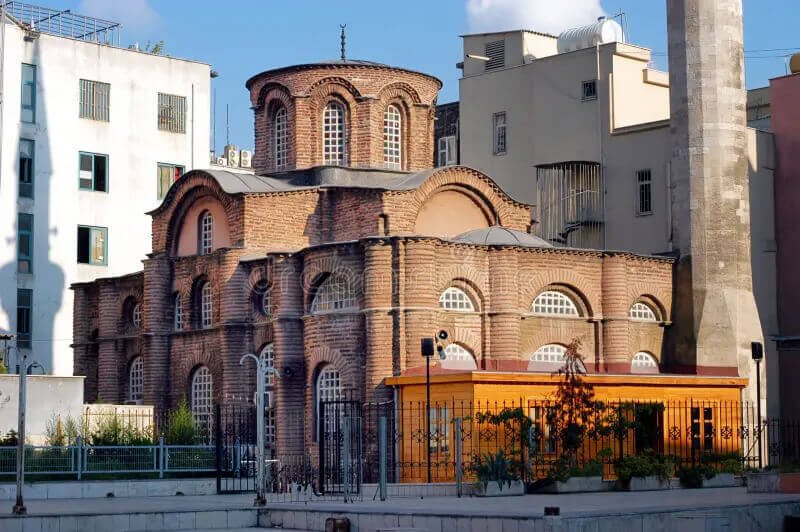
Church of the Myrelaion (Bodrum Camii), Istanbul, 10th century 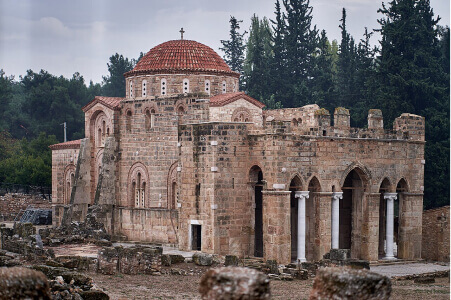
Katholikon of the monastery of Daphni near Athens, 11th century
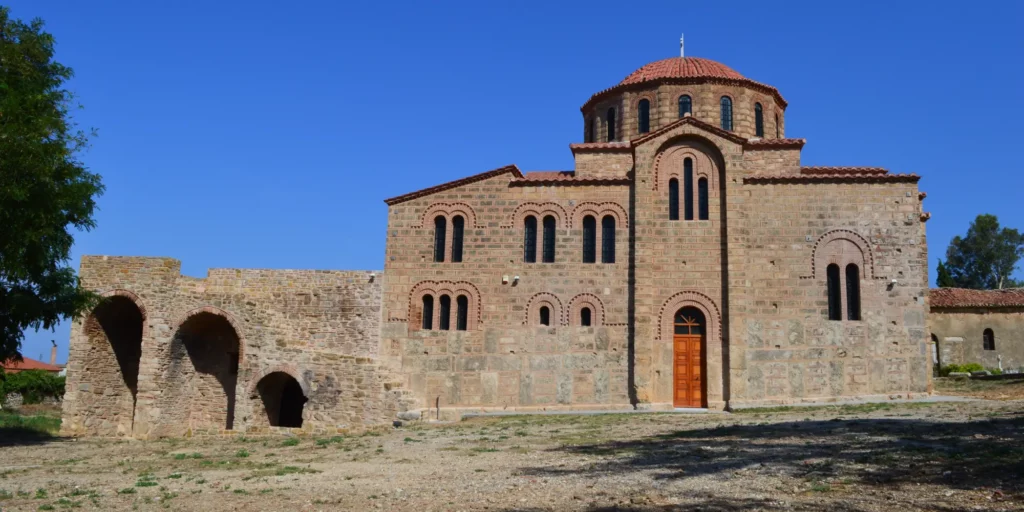
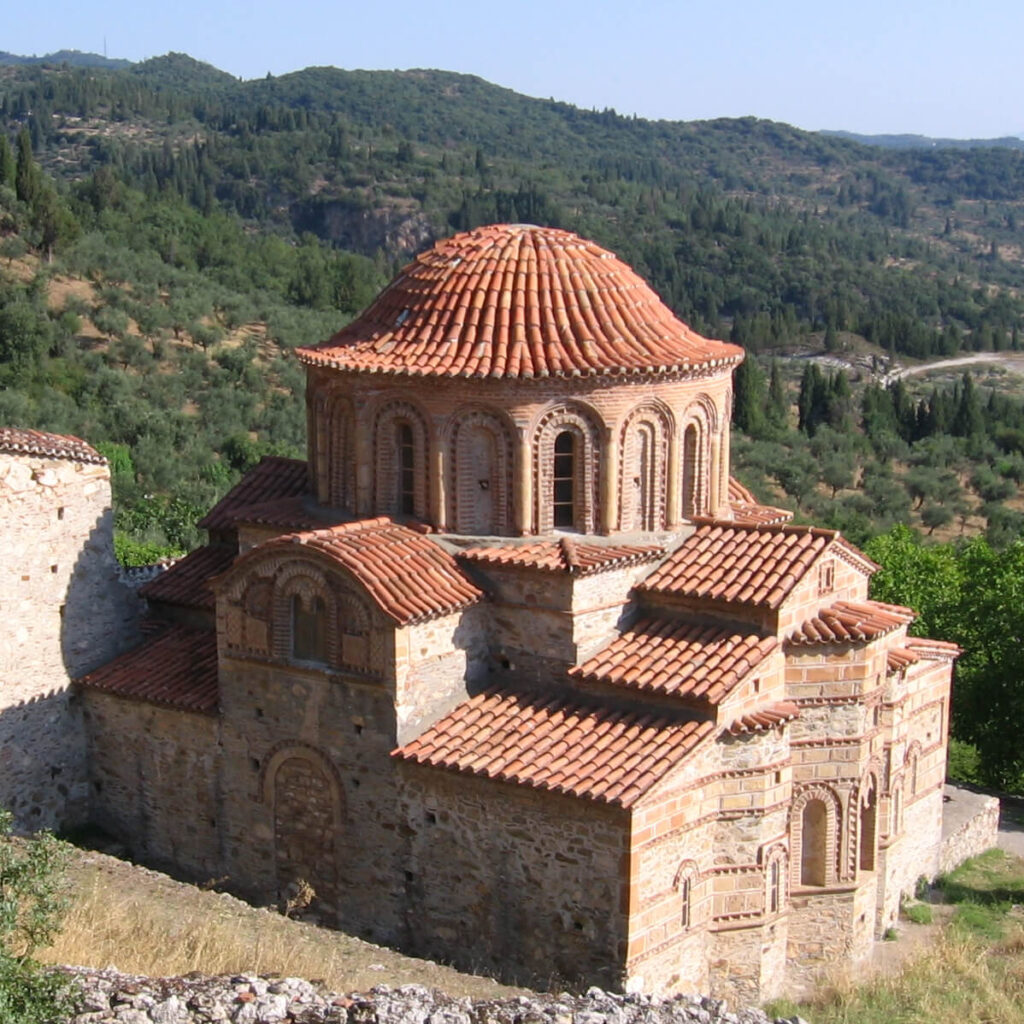
Byzantine spirituality found its most profound expression in the breathtaking architecture of churches, chapels, monasteries and religious monuments.
Outside the church: Civil and military architecture.
In contrast, most of the civil buildings the Byzantines raised in their cities and villages — fortifications, houses, palaces, hospitals, harbours, aqueducts, cisterns and bridges — have not survived. What remains, together with written sources, still attests to their architectural skill, even if it offers a less complete picture than the religious buildings.
Civil architecture ranged from the lavish imperial palaces, including the Great Palace of Constantinople and the provincial palaces of Mystras and Nymphaion to the vast underground cisterns, like the basilica cistern in Constantinople, that kept the capital supplied with water. Markets, baths, hospitals and bridges completed the fabric of Byzantine urban life.
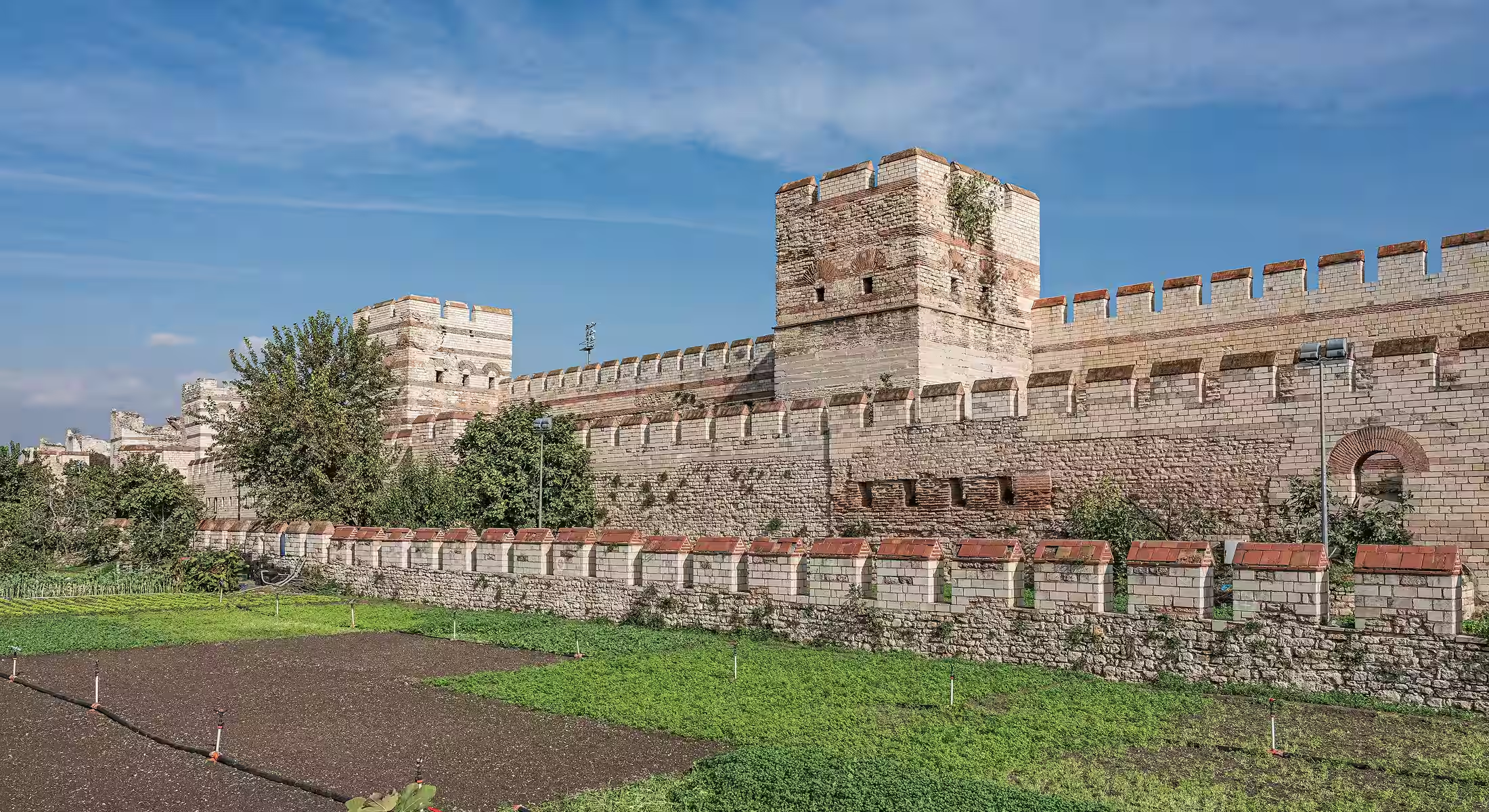
Military architecture was where Byzantine engineering was most visible — and most tested. The great Theodosian Walls of Constantinople held off siege after siege for a thousand years, while a network of castles and fortified towns, from Corfu to Asia Minor, defended the empire’s shifting frontiers.
Let’s explore the different facets of Byzantine civil and military architecture across its millennium of existence.
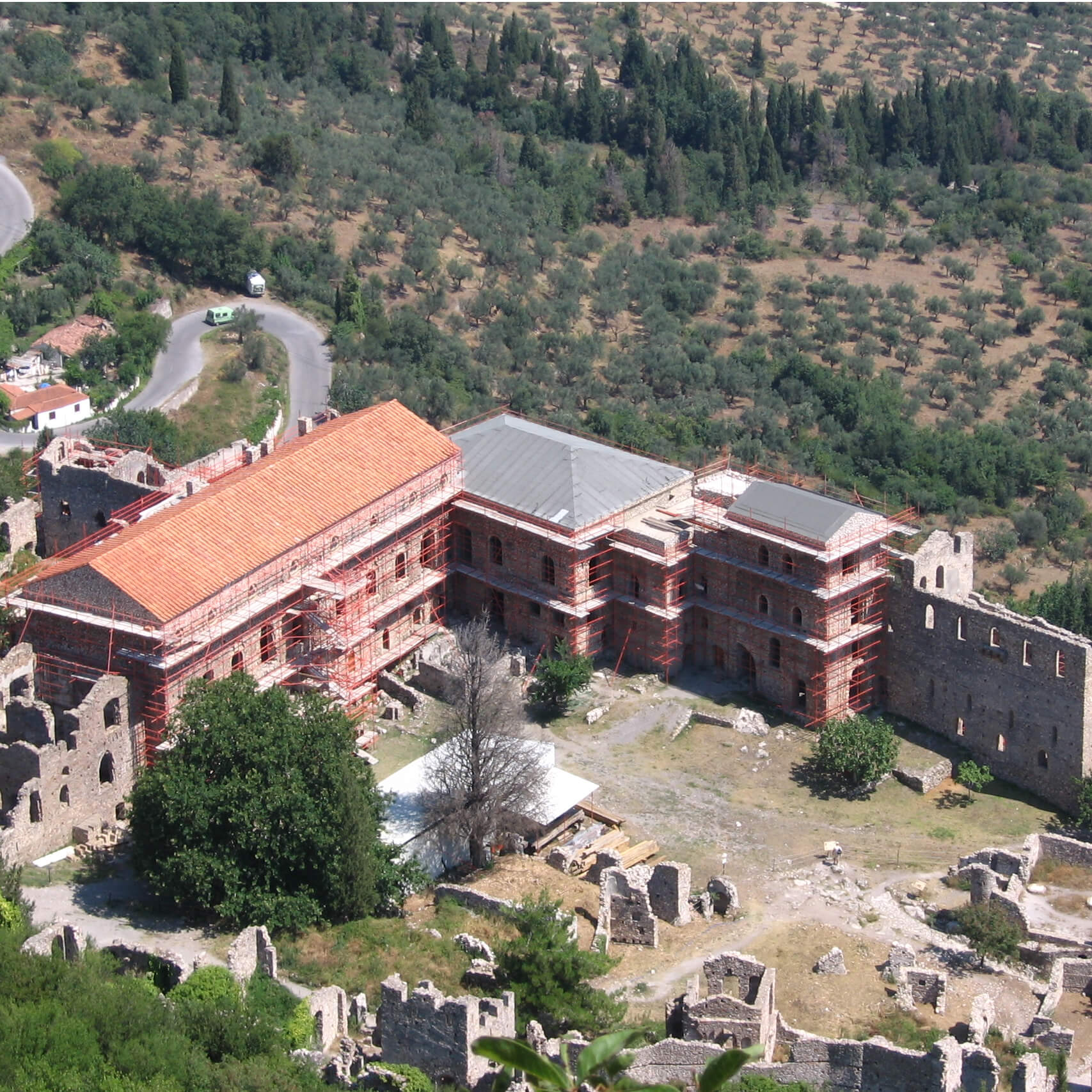
Civil Architecture
Houses, palaces and other civil monuments have scarcely survived, but what remains testifies the craftsmanship of Byzantine architects in these domains.
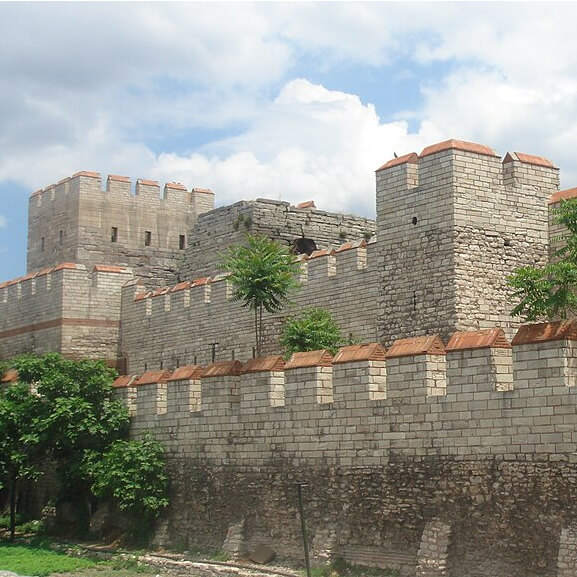
Military Architecture
City walls, castles were necessary for defense, and Byzantines excelled in building fortifications which played a decisive role in the resilience and survival of the empire.
Impact and legacy of Byzantine architecture
Influence beyond the Empire
Byzantine architecture had a profound impact far beyond the borders of the Eastern Roman Empire. Its characteristic domes, intricate mosaics, and centralized church plans influenced Islamic architecture – particularly in the early mosques of the Umayyad Caliphate – as well as Orthodox Christian regions such as Russia, the Balkans, and the Caucasus, where the architectural language of Byzantium was adapted and reinterpreted for local traditions.
Post-Byzantine Architecture
Even after the fall of Constantinople in 1453, Byzantine architectural traditions persisted and evolved in the territories of the former empire. Churches continued to be built in the Byzantine style, particularly in Greece, the Balkans, and among Orthodox communities under Ottoman rule, blending older Byzantine elements with local and Islamic influences.
The Neo-Byzantine Movement
In the 19th and early 20th centuries, the Neo-Byzantine revival emerged as part of a broader historicist trend in European architecture. This movement sought to resurrect the grandeur of Byzantine design, especially in ecclesiastical and state buildings.
Notable examples appeared in Eastern Europe, Russia, and even Western Europe, where architects looked to Byzantine forms as symbols of spiritual authority, national identity, and historical continuity.
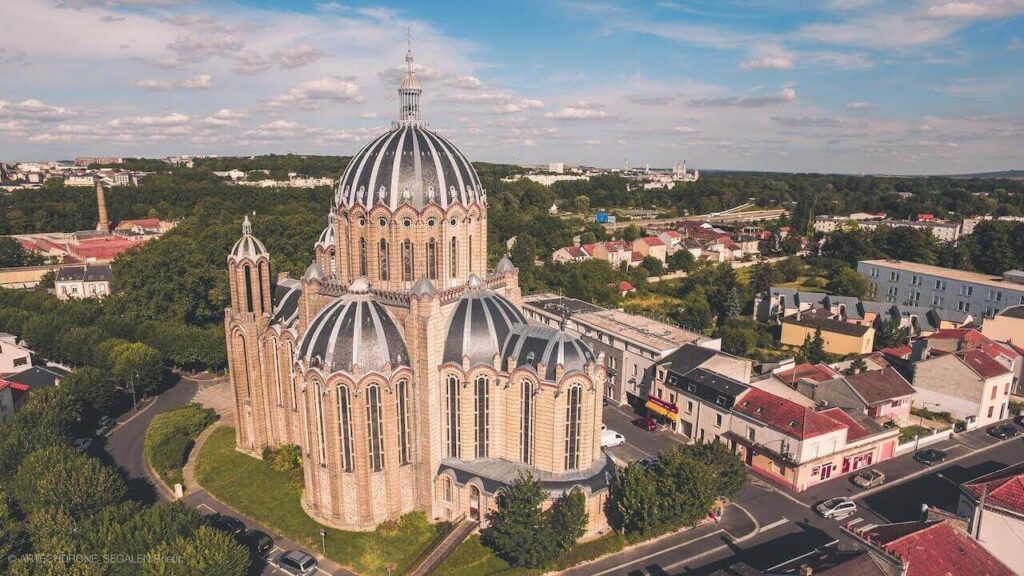
Discover iconic or less well-known examples of Byzantine architecture
From world-famous masterpieces to hidden gems, Byzantine architecture is richly expressed through a wide array of monuments that reflect the empire’s artistic vision, religious devotion, and regional diversity—each telling its own story across time and geography.
-
7th-century Byzantine synagogue unearthed in Side, Turkey
Excavations in Side, Turkey, reveal a 7th-century synagogue and offer a rare look at the Jewish community during the Byzantine era.
-
Church of Panagia Paregoritissa, Byzantine masterpiece in Arta
Discover the Panagia Paregoritissa in Arta, a masterpiece of the Despotate of Epirus, with innovative architecture and striking mosaics.
-
Church of Saint Basil of the Market (Agios Vasileios Agoras) in Arta
Discover the Church of Saint Basil of the Market, one of the Byzantine churches in Arta, remarkable for its exterior decoration.
-
Church of Saint Basil of the Bridge (Agios Vasileios tis Gefyras) in Arta
Discover the oldest church of Arta: Saint Basil of the Bridge (Agios Vasileios tis Gefyras), from the 9th century.
-
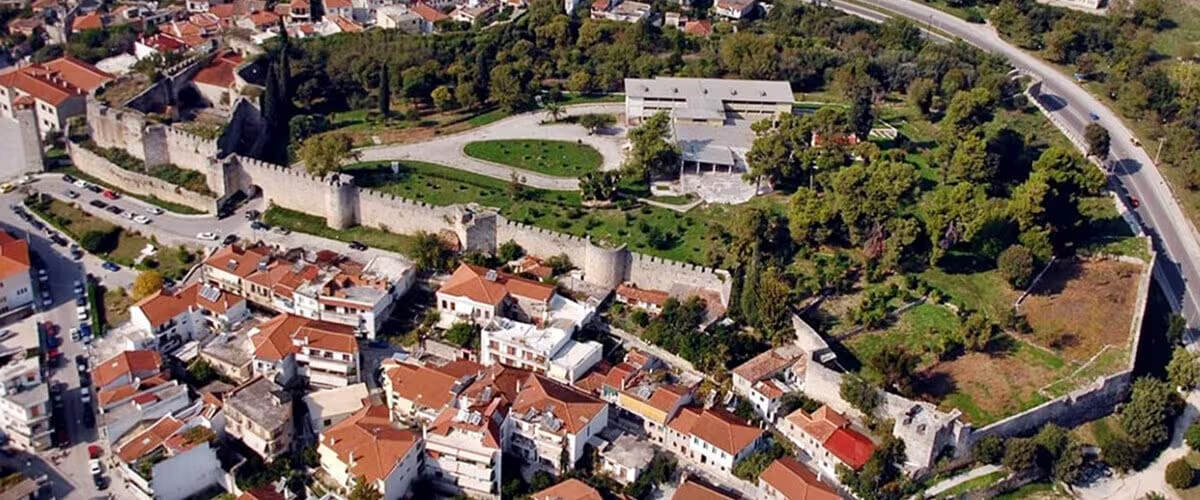
Castle of Arta: Byzantine Fortress of the Despotate of Epirus
Step inside the Castle of Arta, a landmark of Byzantine Epirus, from its origins in ancient times to the Despotate of Epirus and Ottoman rule.
-
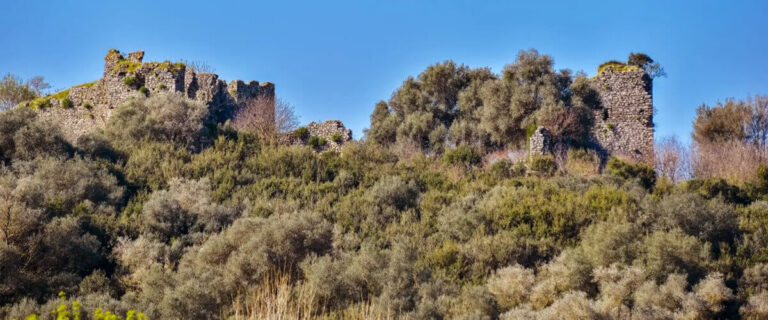
Byzantine Castle of Rogoi, stronghold of the Despotate of Epirus.
Explore the Castle of Rogon, a Byzantine fortress of the Despotate of Epirus strategically located on the Louros river.
-
Monastery of Panagia Vlacherna in Arta, legacy of the Despotate of Epirus
Discover the 13th-century Byzantine Monastery of Panagia Vlacherna in Arta, one of the best-preserved legacies of the Despotate of Epirus.
-
Byzantine Church of Saint Theodora in Arta
The Church of Saint Theodora is located in the center of Arta, which was also the heart of the Byzantine city. Dating back to the late 11th century or mid-12th century, it originally served as the main church of a monastery dedicated to Saint George. The monastery’s significance transformed in the 13th century due to…
-
The Church of Saint Panteleimon, a 14th-Century landmark in Thessaloniki
Explore the former monastic Church of Saint Panteleimon in Thessaloniki, a key example of Palaiologan Renaissance Byzantine architecture.
-
The Byzantine Castle of Nymphaion (Nif): A Laskarid Fortress
Discover the Byzantine fortress of Nymphaion, Laskarid stronghold in Lydia, its walls, palace, and role in Asia Minor’s medieval defenses.
-
Byzantine Palace of Nymphaion, residence of the Laskarid Emperors of Nicaea
The Byzantine palace of Nymphaion (modern Nif) served as the winter residence and political retreat of the Laskarid emperors of Nicaea.
-
Mosaics | Architecture | Art | Church
Byzantine Iconoclast Art and Mosaics at Hagia Irene, Constantinople – Istanbul
Discover the mosaics and decoration of Hagia Irene, one of the oldest Byzantine churches of Constantinople, and a rare witness to early Byzantine art.
-
Saint Nicholas Byzantine church and monastery in Mesopotam, Albania
Discover the Byzantine Church and Monastery of Saint Nicholas in Mesopotam, in Albania – a 13th-century monument with unique architecture, rich reliefs, and newly uncovered frescoes.
-
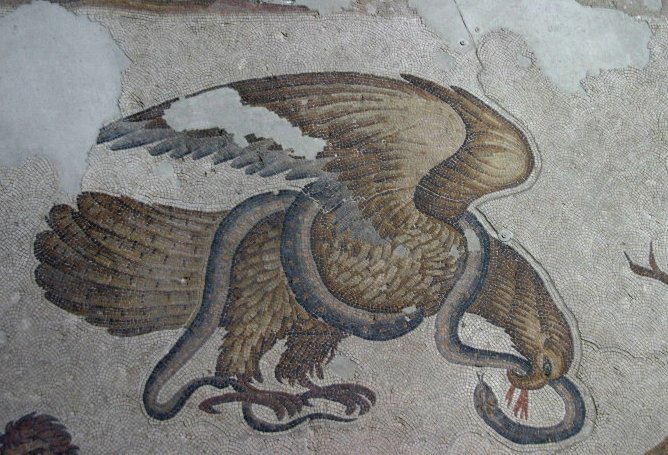
The Great Palace of Constantinople: Splendor and ruin of the heart of the Byzantine Empire
Explore the Great Palace of Constantinople, heart of Byzantine power and ceremony for centuries, and its ruins in modern Istanbul.
-
The Byzantine church of Panagia Chalkeon in Thessaloniki
Explore the history and architecture of the Panagia ton Chalkeon in Thessaloniki, an 11th-century church built as a funerary monument.
-
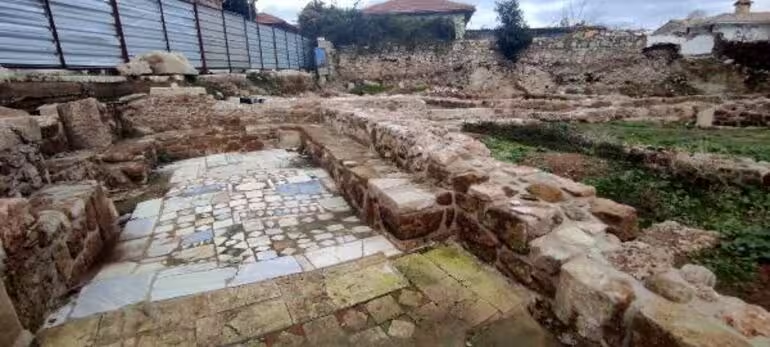
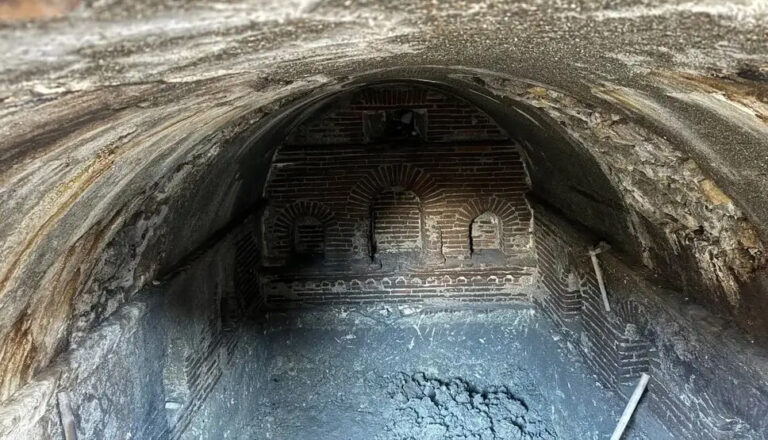
Byzantine structure unearthed from 2023 earthquake rubbles in Antakya
Archaeologists uncover a Byzantine-era vaulted structure in Antakya, a key discovery amid earthquake restoration efforts.
-
The Byzantine monastery of Kaisariani near Athens
Dating back to the late 11th or early 12th century, the Kaisariani Monastery is one of the best-preserved Byzantine monasteries in Attica.
-
The Vlatades Monastery of Thessaloniki
Discover the Vlatades Monastery, a 14th century monastery connected to the Hesychast movement and now listes as a UNESCO site.
-
The byzantine palace of Ephesus, a vast administrative complex?
The Byzantine Palace is a late antique or Byzantine-era building that may have served as an administrative complex for a high officer.
-
Nea Moni of Chios, a Byzantine monastery and its 11th c. mosaics
Discover one of the jewels of the middle Byzantine period: the Nea Moni, monastery on the island of Chios dating back to the 11th century.
-
The Byzantine Church and bishop mansion of Christianoupoli
The village of Christianoupoli preserves a complex from the Middle Byzantine era, composed of a rare octagonal church and the remains of the bishop’s mansion.
-
The Walls of Constantinople: the formidable guardians of the Queen of Cities
The walls enclosing Constantinople are a formidable testament to Byzantine engineering and contributed to the resilience of the empire.
-
The Byzantine castle of Gardiki in Corfu
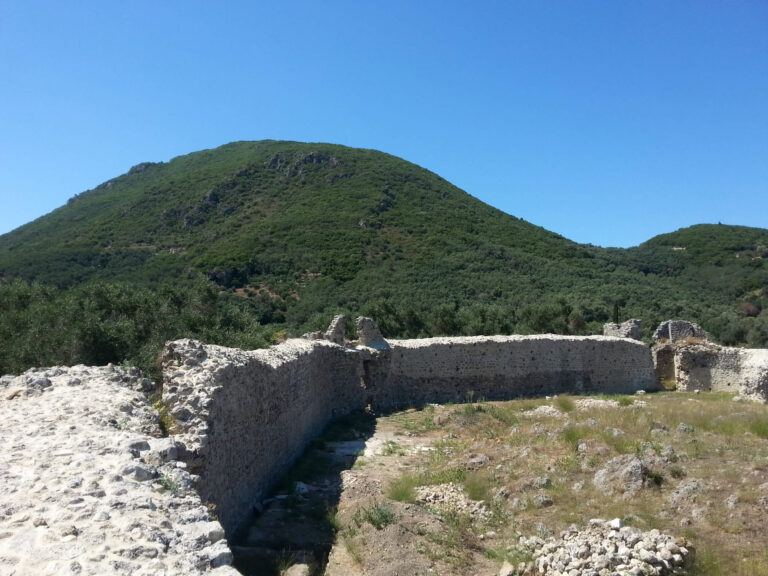
The remnants of the castle of Gardiki stand today near the village of Agios Matthaios. Along with Angelokastro and Kassiopi Castle, it formed a defensive triangle protecting the island during the late Byzantine period. Additionally, Corfu town had its own castle and fortifications. History of Gardiki castle. Gardiki Castle is the most recent of these…
-
The Byzantine perched castle of Angelokastro in Corfu
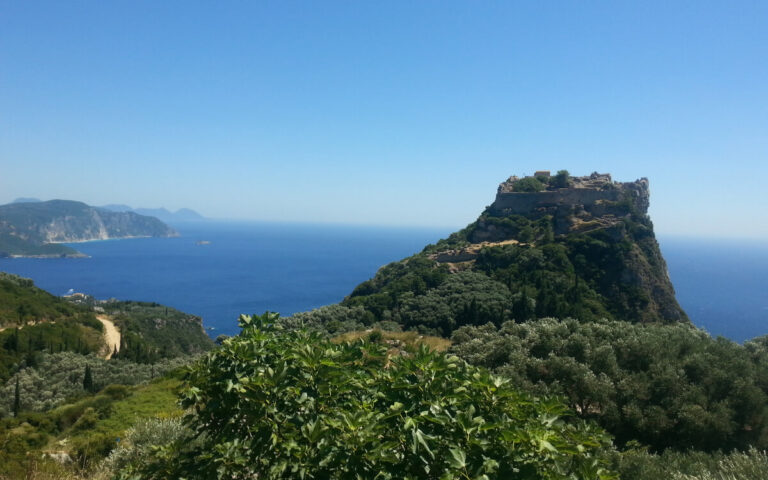
Angelokastro is located at the top of the highest peak of Corfu´s shoreline, in the northwest coast, and built on particularlz precipitous and rocky terrain, which makes it one of the most dramatically situated byzantine castle. It stands on a steep cliff, 1000 feet (305 m) above the sea and surveys a wide area of…
-
The castle of Kassiopi in Corfu during Byzantine times
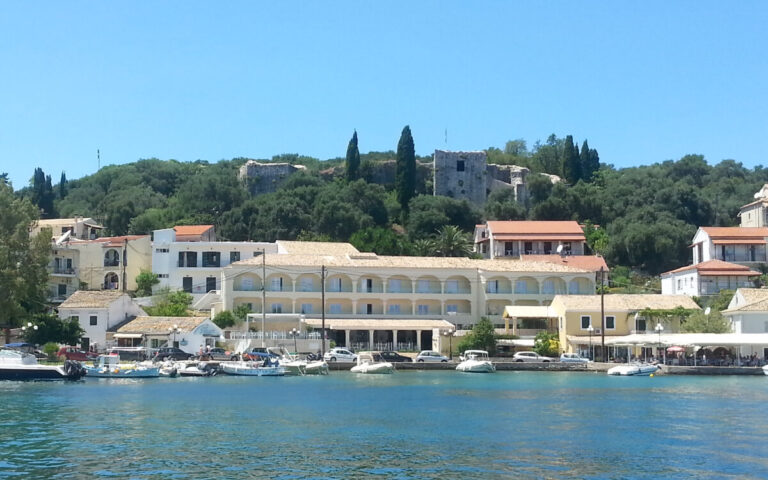
The remains of Kassiopi Castle stand on the northeastern coast of Corfu, overlooking the channel that separates the island from mainland Greece. This location gave the castle a significant strategic advantage. In late Byzantine times, along with Angelokastro on the eastern coast and Gardiki in the south, the castle formed a defensive triangle protecting Corfu….
-
The Basilica of Constantinople and its cistern
Discover the Basilica of Constantinople, a significant cultural and intellectual center from the early Byzantine period, and its historical significance.








FAQ
What are the main characteristics of Byzantine architecture?
Domes raised on pendentives or squinches, the cross-in-square church plan, brick-and-mortar construction, and interiors richly decorated with marble, mosaic and gold. Space rises toward a central dome that crowns the whole interior.
When did Byzantine architecture begin and end?
It grew out of late-Roman architecture from around the 4th century and continued until the fall of Constantinople in 1453, evolving through the Early, Middle and Late Byzantine periods — and surviving afterward in post-Byzantine and Neo-Byzantine forms.
What is the most famous example of Byzantine architecture?
Hagia Sophia in Constantinople (modern Istanbul), completed in 537, whose vast dome on pendentives remained the largest church interior in the world for nearly a thousand years.
What is a pendentive?
A pendentive is a curved triangular section that bridges the corner of a square space to support a circular dome above it — the structural innovation that made the great Byzantine domes possible.
Where can you see Byzantine architecture today?
Above all in Istanbul and Thessaloniki, but also at Ravenna, Mystras, Ohrid, Trebizond and across the former Byzantine world — churches, monasteries, cisterns and city walls all survive.
How did Byzantine architecture influence later building?
It influenced early Islamic architecture such as the Umayyad mosques, shaped Orthodox church-building in Russia, the Balkans and the Middle-East, and inspired the 19th- and early-20th-century Neo-Byzantine revival.
Sources and further reading
- Britannica — Byzantine architecture
- UNESCO World Heritage