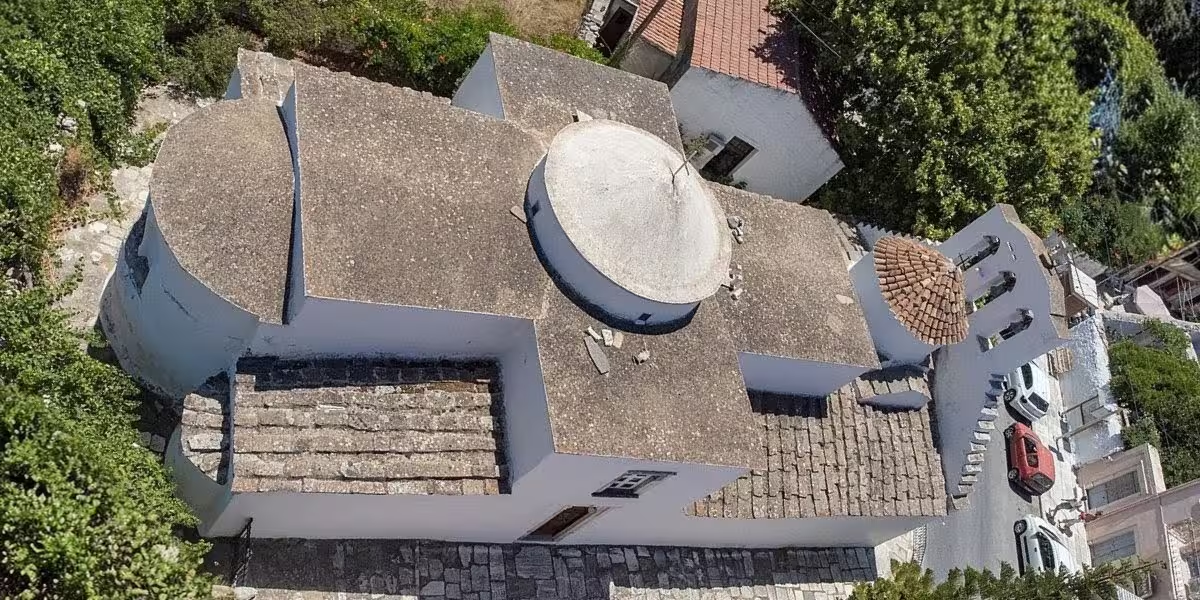
Panagia Protothronos Church in Naxos: History, architecture and frescoes
The village of Chalki, located in the fertile Tragea valley of the island of Naxos, preserves different Byzantine churches like the Church of Agios Georgios Diasoritis, but also one of the most historically significant ecclesiastical monuments in the Aegean Sea. The Church of Panagia Protothronos serves as a continuous record of Christian art, spanning from the Early Christian era to the late medieval period. The building stands out not only for its complex architectural layers but also for a Middle Byzantine epigraphic discovery that connects this provincial sanctuary directly to the military elite of the Byzantine Empire.
Etymology: What does Panagia Protothronos mean?
To understand the regional importance of the monument, one must examine its traditional dedication name. The term Panagia translates from Greek as the “All-Holy,” representing the standard honorific title for the Virgin Mary in Eastern Christianity. The secondary title, Protothronos, literally translates to the “First Throne.” This architectural and ecclesiastic moniker explicitly highlights the church’s historical status as the very first and primary cathedral church of the Naxos diocese. Holding the “first throne” meant that this specific sanctuary served as the central seat of the resident bishop, establishing it as the supreme source of religious authority across the Cyclades during the medieval era.
The birth and purpose of the early episcopal seat
Naxos held a bishopric dating back to the early Christian centuries. The establishment of the Panagia Protothronos Church as a significant episcopal seat occurred between the 5th and 7th centuries, positioning the church safely within the island’s inland Tragea valley. This specific geographic placement was heavily driven by necessity; during the devastating 7th-century Arab raids in the Aegean, the coast became highly vulnerable to maritime incursions, prompting the empire to fortify the highlands, anchoring the island’s defense at the strategic Apalirou Castle. Moving the administrative cathedral to the interior protected the Christian community, allowing it to maintain unbroken continuity in worship, security, and regional governance while shielding the clerical elite from pirates.
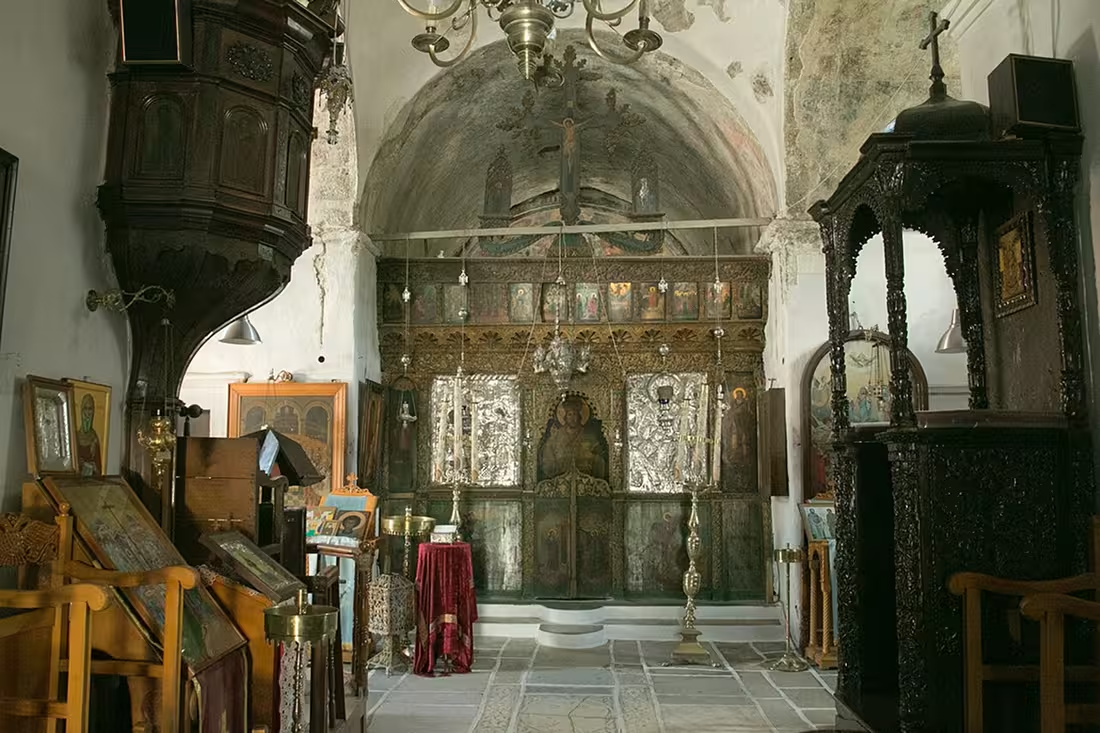
Physical evidence of the church’s resulting episcopal status survives inside the semicircular sanctuary conch, which still features the synthronon—the tiered stone bench for the clergy—and the original episcopal throne.
The architectural evolution of the monument
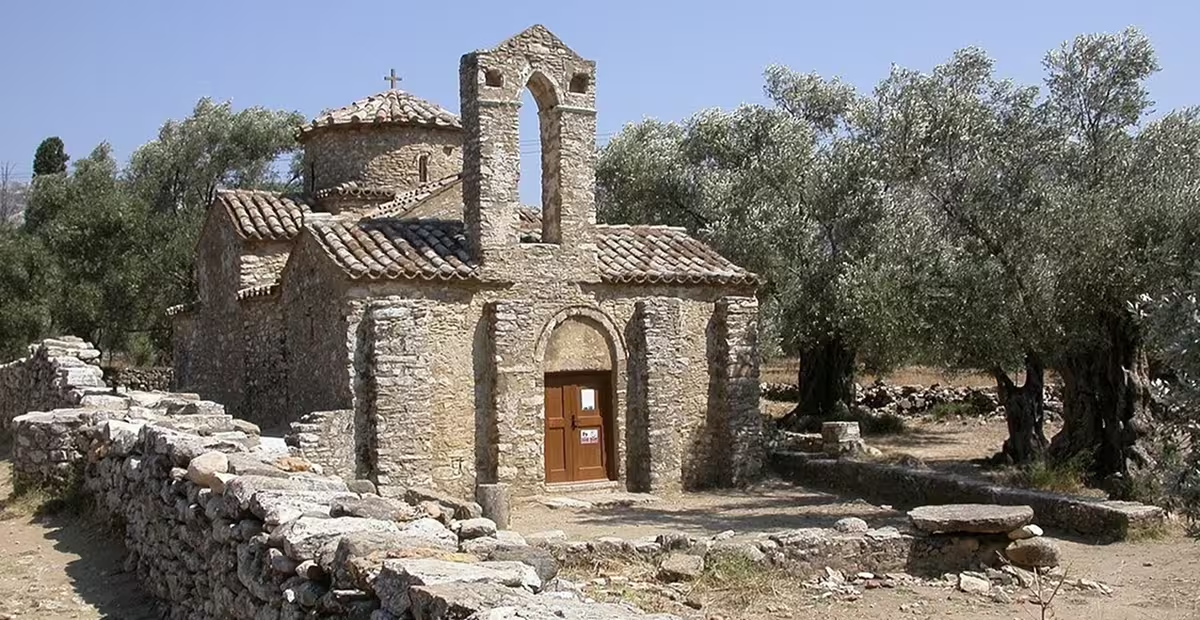
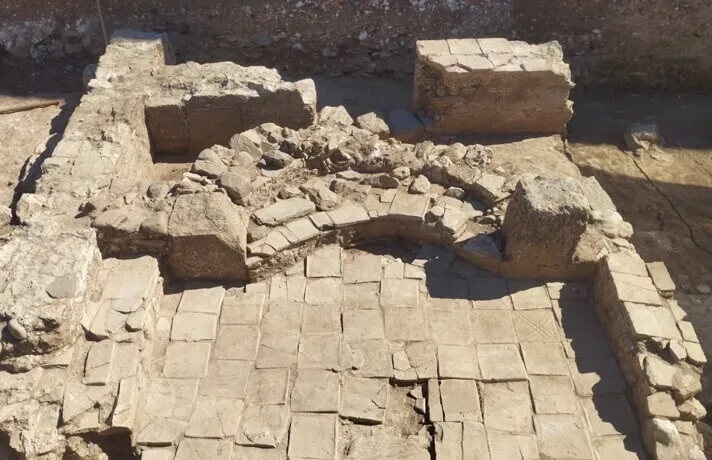
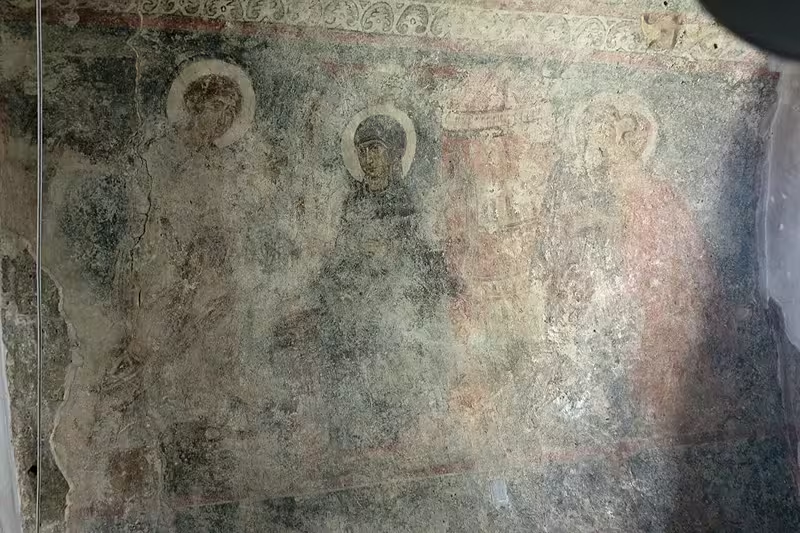
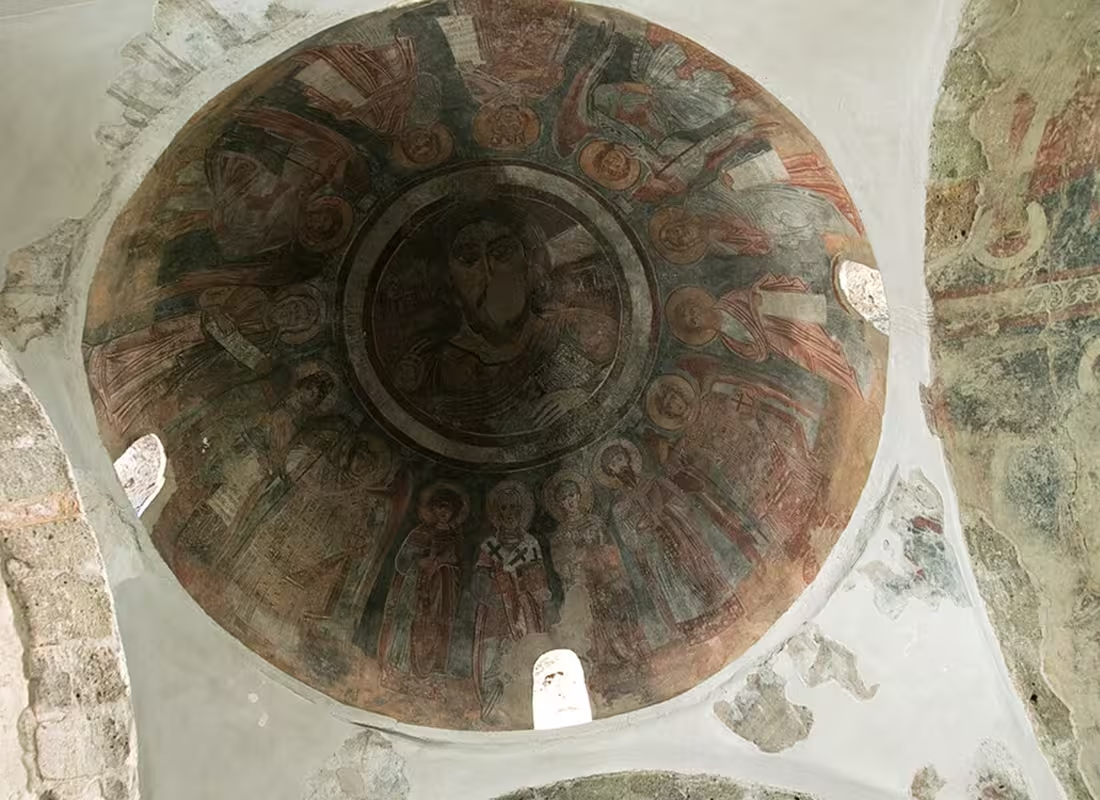
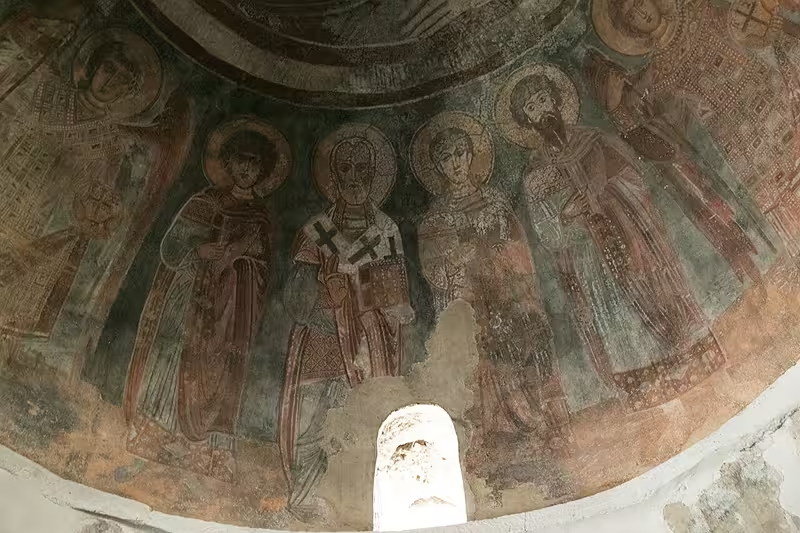
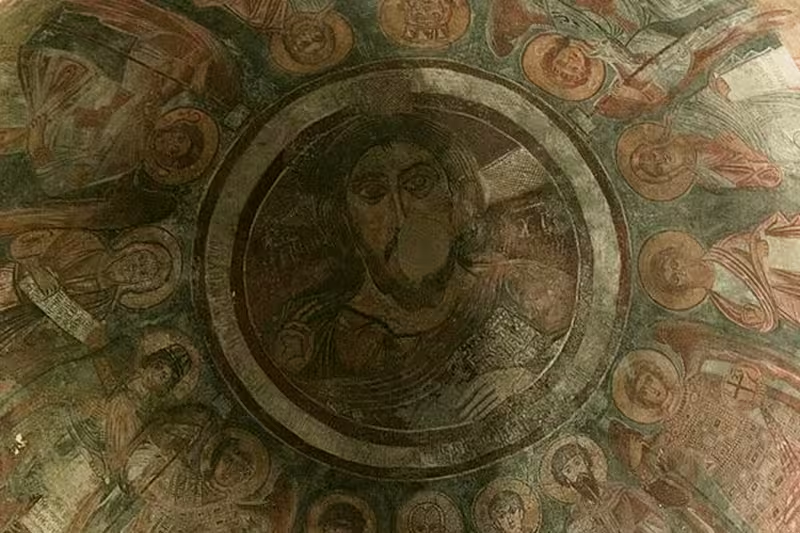
Physical evidence within the church indicates that the monument evolved through multiple building phases over several centuries. The earliest structure began its life as a classic Early Christian three-aisled basilica. During the first half of the 9th century, builders transformed the monument into a transitional cruciform domed structure, making it one of the earliest examples of this architectural plan in the Cyclades. The interior walls function as an artistic timeline, featuring five successive layers of wall paintings that range from non-figural decorative motifs of the 9th-century Iconoclastic era to highly detailed 10th, 11th, and 13th-century figural frescoes. The 11th-century decorative phase directly mirrors the artistic renaissance seen in other contemporary local monuments, most notably the nearby Agios Georgios Diasoritis Church.
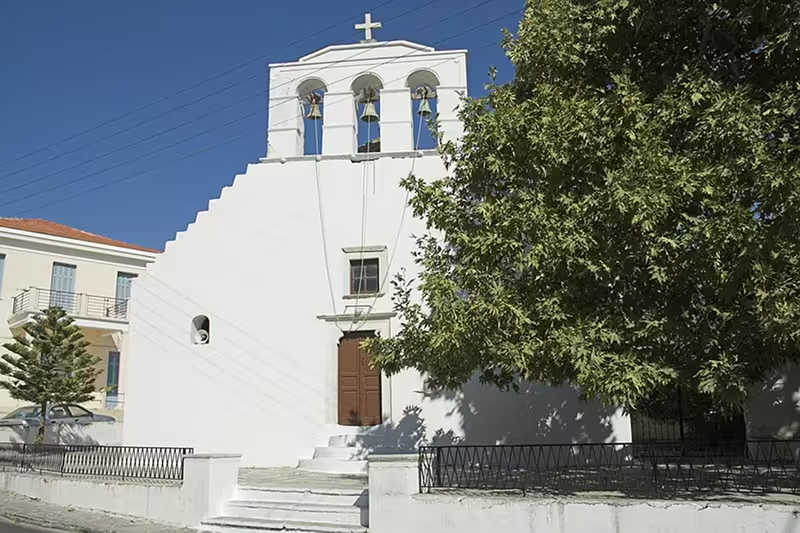
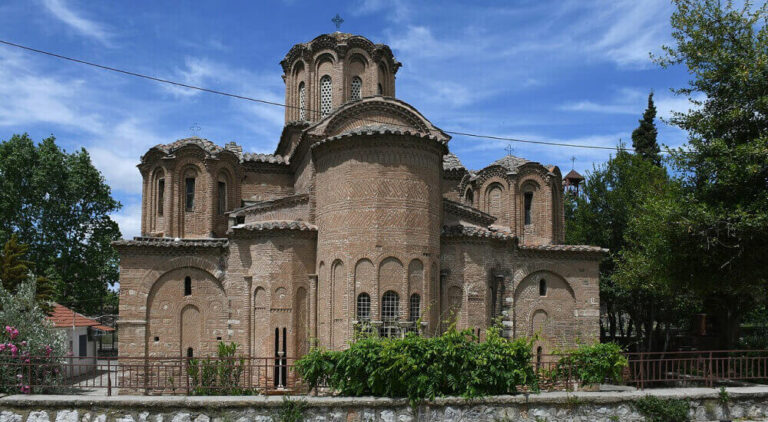
Facade of the church, with the later bell tower. © Zde, CC by-SA 4.0 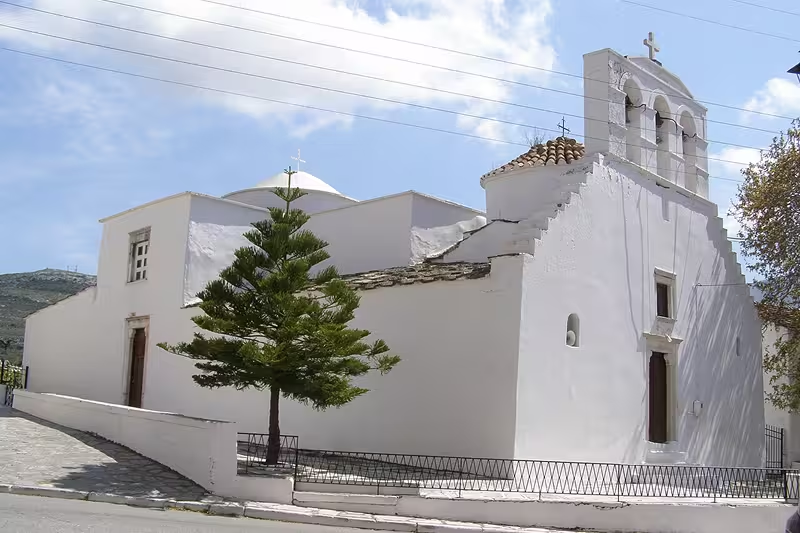
Facade and side view of the church
A timeline of rare Byzantine artwork.
The interior walls of Panagia Protothronos function as an unparalleled artistic timeline, featuring five distinct, superimposed layers of frescoes. These layers include paintings from the early Christian period, followed by non-pictorial geometric designs (such as stylized crosses) executed directly during the 9th-century Iconoclastic era. Successive figural layers from the 10th, 11th, and 13th centuries cover the rest of the walls. Among these surviving masterpieces, the fresco in the alcove of the altar depicting the Virgin Mary holding a spindle stands out as an iconographic rarity, considered entirely unique in the wider Balkans region.
Donors, renovations and insight in the society of Byzantine Naxos.
The historic renovation inscription of 1052
The church preserves one of the most critical Middle Byzantine donor inscriptions discovered in the Cyclades. This collective sponsorship text was originally incised onto the marble cornice of the templon-screen of the bema. At a later date, workers incorporated the inscribed marble piece into the western base of the church belfry, where it remains protected today. The text explicitly records a major renovation of the Protothronos church completed in the year 1052. The collective nature of the inscription highlights a strategic alliance between local ecclesiastical leaders and powerful secular administrators sent from Constantinople.
Bishop Leo and the ecclesiastical expansion
The first individual mentioned in the text is Bishop Leo, who financed the project to continue the long-standing tradition of church leadership acting as architectural patrons. Recent architectural and epigraphic research identifies this historic figure as the exact same thyepolos Leo mentioned in an inscription at the nearby Church of Saint Mamas. Operating in the first half of the 11th century, Bishop Leo launched these ambitious structural updates to elevate the status of the Naxian diocese. His efforts laid the groundwork for a major administrative promotion in 1083, when Naxos broke its dependence on Rhodes to become the Metropolitan See of Paronaxia, earning its leader the prestigious title of “Exarch of the Aegean Sea”.
Military aristocracy and the defensive theme
The secular donors named alongside Bishop Leo reveal the immense military importance of Naxos during the Middle Byzantine period. The inscription honors a high-ranking official named Niketas, who held the titles of protospatharios and tourmarches of Naxia. As a tourmarches, Niketas commanded a tourma—the foundational military subdivision of a Byzantine administrative district (thema). His role in the naval theme of the Aegean Sea made him a critical link to the central imperial government.
A third donor, Stephanos Kamilares, holds the title of komes, a military rank designating a squadron commander within the active Byzantine fleet. The presence of these high-tier naval and army commanders confirms that the 1052 renovation was heavily backed by the military aristocracy protecting the Cyclades against regional maritime incursions.
Sources
- Ephorate of Antiquities of Cyclades – Official Site
- Agios Georgios Diassoritis Heritage Guide
- Zarras, N. (2016)Identity and Patronage in Byzantium: Epigraphic Evidence and Donor Portraits of Naxos. Read Research Paper on Academia.edu
Credit for the cover picture (adapted): C Messier, CC by-SA 4.0