Byzantine Religion: Faith at the heart of an Empire
There was no part of Byzantine life untouched by religion. Law, art, politics, warfare, diplomacy, even the calendar itself were organized around a single conviction: that the empire existed as a Christian order on earth, and that the emperor’s legitimacy rested on his role as its protector. To understand Byzantium at all is to understand how thoroughly its Orthodox Christian faith shaped everything built on top of it — from the mosaics in Hagia Sophia to the rhythm of a farmer’s working year.
This overview maps the major dimensions of that religious life. Several of these topics — doctrine and the ecumenical councils above all — are substantial enough to warrant their own dedicated articles, linked throughout.
Why it mattered
Religion in Byzantium was never separable from statecraft, art, or daily life — it was the framework all three operated inside. An emperor’s legitimacy, a peasant’s calendar, a soldier’s morale before battle, a manuscript’s illumination: all were shaped by the same underlying conviction that the empire was, first and foremost, a Christian order under divine protection. The sections above are starting points; each links to a deeper account of that story, from the doctrinal battles that defined Orthodoxy to the clergy and monks who lived it day to day.
Doctrine, councils, and the making of Orthodoxy
Byzantine religious identity was not fixed at the empire’s founding; it was argued into existence over centuries. From the Council of Nicaea in 325 through the iconoclast controversies of the 8th and 9th centuries and on to the Great Schism of 1054, Byzantine emperors, bishops, and monks fought — sometimes literally — over what correct Christian belief actually was. These disputes were never purely academic: doctrinal controversies over Christ’s nature split the empire’s eastern provinces, iconoclasm tore apart court and church for over a century, and the eventual break with Rome reshaped the religious map of Europe for the next thousand years.
For the full account of this doctrinal history — Arianism, Nestorianism, Monophysitism, iconoclasm, Hesychasm, and the Schism — see Byzantine Christianity: From doctrine to Orthodoxy.
The Church and its clergy
The Byzantine Church was organized as a hierarchy running from the Patriarch of Constantinople — first among equals with the other ancient patriarchates of Alexandria, Antioch, and Jerusalem — down through metropolitans, bishops, and parish priests. Bishops were frequently drawn from the aristocracy or from the monastic ranks, and the office carried genuine political weight: a patriarch could crown or refuse to crown an emperor, and emperors in turn could depose patriarchs who opposed them, as the repeated struggles between the throne and the Patriarchate through the 9th century demonstrate.
Unlike the Latin West, Byzantine parish clergy could marry before ordination, while bishops were drawn exclusively from the celibate, monastic clergy — a structural distinction that still separates Orthodox from Catholic practice today.
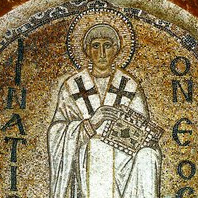
Read more on the structure and daily role of Byzantine clergy in Byzantine Clergy.
Monastic life
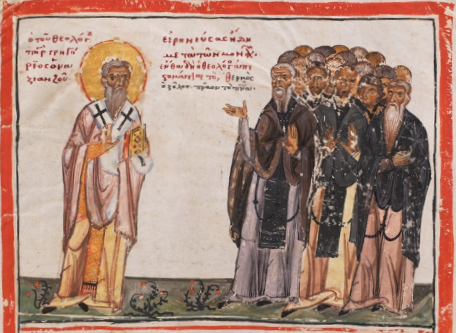
Monasticism was not a peripheral religious choice in Byzantium — it was one of the empire’s central institutions. Monasteries functioned simultaneously as centers of prayer, manuscript production, charitable relief, and, at moments of crisis, open political resistance: it was monks, more than any other group, who sustained opposition to imperial iconoclasm through the 8th and 9th centuries.
Mount Athos, founded from the 9th century onward and formalized with the Great Lavra in 963, became the symbolic heart of Orthodox monastic life, drawing monks from across the Orthodox world and remaining, remarkably, a functioning monastic community to this day. Because Byzantine bishops were drawn from monastic ranks rather than the parish clergy, monasteries also functioned as a direct pipeline into the Church’s senior leadership — giving monastic spirituality outsized influence over Byzantine theology as a whole.
Icons and sacred art
Few aspects of Byzantine religion are as visually recognizable — or were as fiercely contested — as the icon. Images of Christ, the Virgin, and the saints were understood not as mere decoration but as windows onto the sacred, objects of genuine veneration believed capable of channeling divine presence. That belief was precisely what triggered two waves of state-sponsored Iconoclasm between 726 and 843, when emperors ordered the destruction of religious images as idolatrous.
The eventual restoration of icon veneration in 843 — still celebrated annually in Orthodox churches as the “Triumph of Orthodoxy” — cemented the icon’s place at the center of Byzantine devotional life for the remainder of the empire’s history and beyond.
Explore individual icons, their techniques, and their theology in Byzantine Icons.

Worship, feasts, and the liturgical calendar
Byzantine religious life ran on its own rhythm. The liturgical year, organized around Easter (Pascha) and a dense calendar of saints’ feast days, structured ordinary time as much as any civil calendar did — fasting periods, feast celebrations, and processions were public, communal events rather than private devotions. The Divine Liturgy, most often celebrated according to the rite associated with St. John Chrysostom, combined chant, incense, and elaborate ceremonial movement within church architecture specifically designed to stage it — the dome symbolizing heaven, the sanctuary screened from the nave, icons positioned exactly where the liturgy required the eye to rest on them.
Relics played an equally public role. Constantinople itself became one of medieval Christendom’s great destinations for relic veneration, amassing (and, after 1204, losing much of) an enormous collection tied to Christ’s Passion and the early saints — a trade and a devotion that shaped diplomacy, pilgrimage routes, and civic identity throughout the empire’s history.
Religion beyond Orthodox
Byzantium’s religious life was not monolithic, even if Orthodoxy dominated it. Substantial Jewish communities persisted throughout Byzantine history, subject to periodic restriction but never fully suppressed. Zoroastrian and, from the 7th century onward, Islamic populations bordered and at times lived within Byzantine territory, particularly in the empire’s fluctuating eastern frontier provinces. Dissident Christian movements — Paulicians in Armenia and Anatolia, later Bogomils in the Balkans — challenged Orthodox doctrine from within and were treated, often violently, as heretical threats rather than tolerated minorities. Paganism itself persisted far longer than official conversion dates suggest, particularly in rural areas, surviving in folk practice long after Christianity’s formal triumph.