Ravenna Mosaics: The Byzantine Sites & Visitor Guide
To see some of the greatest Byzantine mosaics in the world, you do not go to Istanbul. You go to a quiet provincial town on the Adriatic coast of Italy. Ravenna preserves what Constantinople itself lost: complete mosaic programmes from the age of Justinian and before, glowing on the walls where they were set fifteen centuries ago. Emperor Justinian and Empress Theodora still stare down from the sanctuary of San Vitale — official portraits created while they reigned, of a couple who never set foot in the city. Eight monuments here form a single UNESCO World Heritage Site, inscribed in 1996, and six of them stand within a fifteen-minute walk of each other. This guide covers what to see, how the three empires that ruled Ravenna shaped it, and everything practical — tickets, itinerary, and the mistakes to avoid.
Ravenna at a glance
What it is: the world’s best-preserved ensemble of early Byzantine mosaics — 8 monuments, one UNESCO World Heritage Site (1996)
When they were made: c. 430–549, under Western Roman, Ostrogothic and Byzantine rule
Star attractions: Basilica of San Vitale (the Justinian & Theodora panels) and the Mausoleum of Galla Placidia
Time needed: one full day for the essentials; two to see everything
Tickets: the 5 central monuments share one combined ticket (€14.50, 2026) — timed booking required for Galla Placidia
Getting there: about 1 hour by direct train from Bologna; walkable from the station
From Rome to Byzantium: why Ravenna?
Ravenna’s mosaics exist because, for three and a half centuries, this marshy port city was a capital — three times over, under three different powers.
In 402, with Italy under threat from the Goths, Emperor Honorius moved the court of the Western Roman Empire from Milan to Ravenna, protected by lagoons and supplied by the great naval harbour of Classe. It was here that his formidable half-sister Galla Placidia — daughter of one emperor, mother and regent of another — commissioned the earliest of the city’s surviving mosaic monuments. And it was here, in 476, that the last Western emperor was deposed: the Roman Empire in the West ended not in Rome, but in Ravenna.
The Ostrogothic king Theodoric took the city in 493 and made it the capital of his Italian kingdom. An Arian Christian educated as a hostage at the court of Constantinople, he built like an emperor — a palace church, a baptistery for his own creed, and a mausoleum unlike anything else in Europe.
Then, in 540, Justinian’s general Belisarius entered Ravenna during the Byzantine reconquest of Italy. The city became the seat of Byzantine power in the West — from the 580s as the Exarchate of Ravenna — and its greatest mosaics, San Vitale and Sant’Apollinare in Classe among them, were completed in this first flush of imperial recovery. Byzantine rule lasted until the Lombards took the city in 751. By then, Ravenna had accumulated the densest concentration of Early Byzantine art anywhere — and its slide into political irrelevance is precisely what preserved it. No later empire needed to rebuild Ravenna, so nobody destroyed it.
One caution the travel brochures skip: not everything here is strictly “Byzantine.” The monuments span Western Roman, Ostrogothic and Byzantine patronage. But they belong to one continuous artistic tradition — the tradition that Constantinople led — and together they show its development across two crucial centuries better than any other place on earth, including Istanbul itself.
The Byzantine unmissables
However short your visit, these four are non-negotiable.
Basilica of San Vitale
Consecrated in 547, San Vitale is the supreme surviving church of Justinian’s era — begun while the Goths still ruled, finished under Byzantine power, and paid for by a mysterious local banker, Julianus Argentarius. Its octagonal plan, crowned by a dome on eight slender piers, has more in common with the imperial churches of Constantinople than with any basilica in Italy.
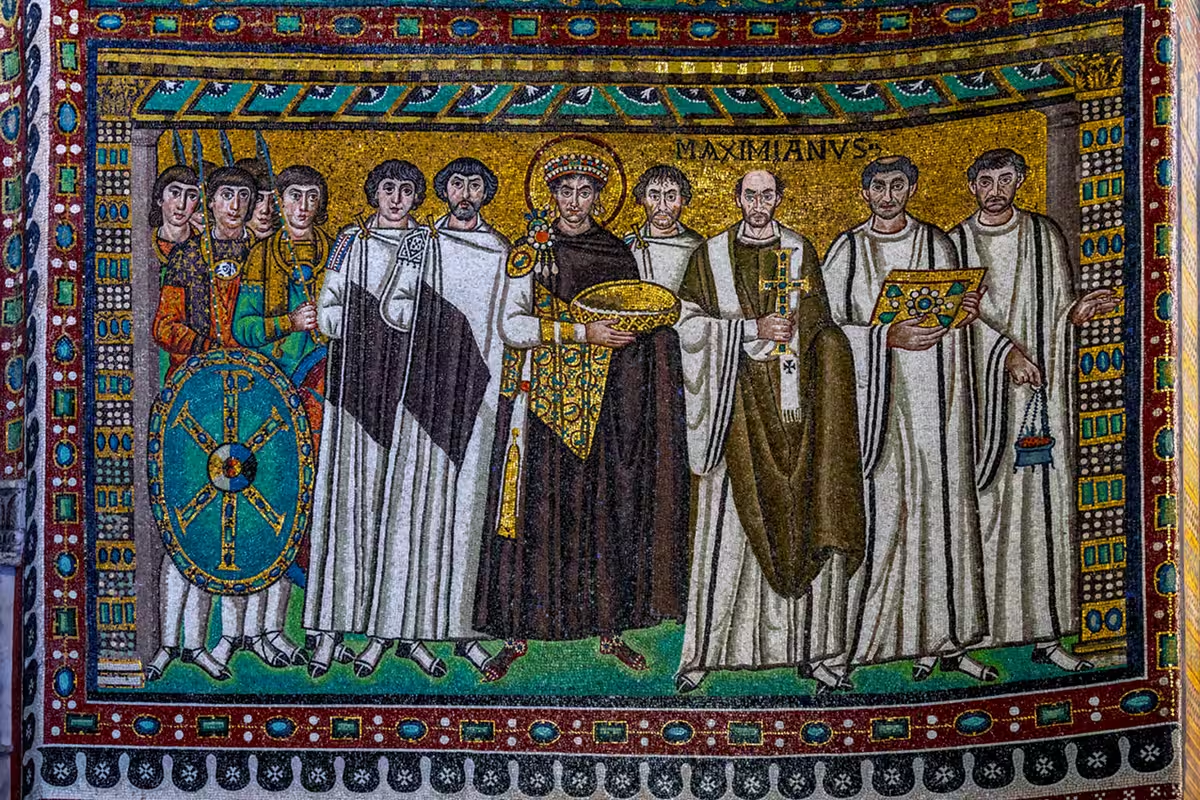
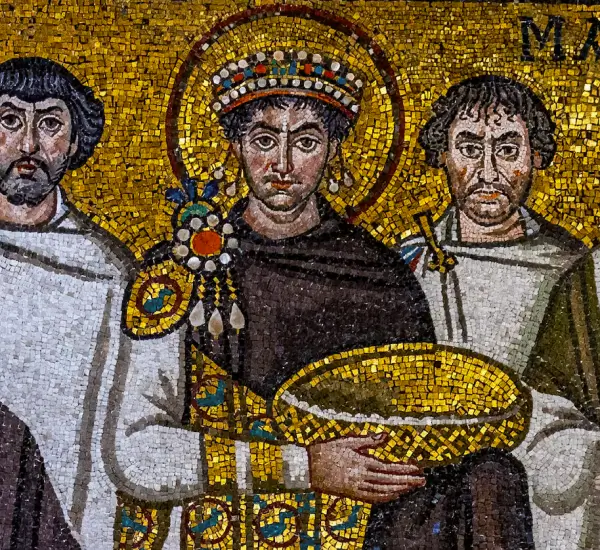
The sanctuary mosaics are the reason the whole world comes to Ravenna. Christ sits enthroned on the globe of the cosmos; prophets, evangelists and angels crowd every surface in gold. And on the side walls face the two most famous panels in Byzantine art: Justinian, flanked by clergy and guards beside Bishop Maximian (the only figure labelled by name), and opposite him Theodora, crowned and jewelled, presenting a chalice. Neither ever visited Ravenna — which is exactly the point. The panels are statements of imperial presence, projecting the sacred authority of a distant emperor, and they remain the defining image of Byzantine imperial power. Two and a half centuries later Charlemagne modelled his palace chapel at Aachen on this building — carrying its columns and marbles north across the Alps.
Detail of the Emperor Justinian mosaic panel. 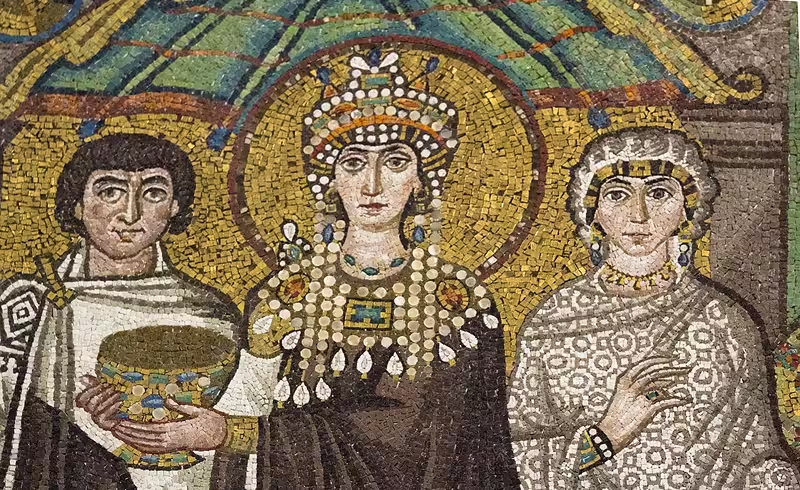
Detail of the Empress Theodora mosaic panel.
Credits Roger Culos, CC-by-SA 3.0
Mausoleum of Galla Placidia
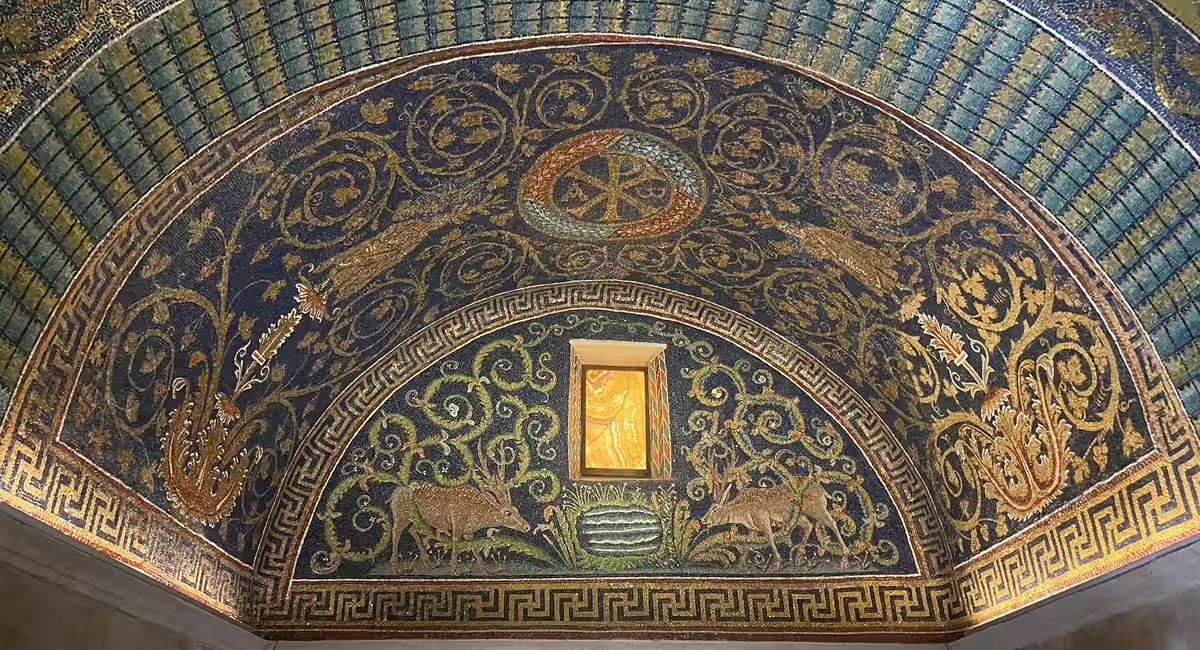
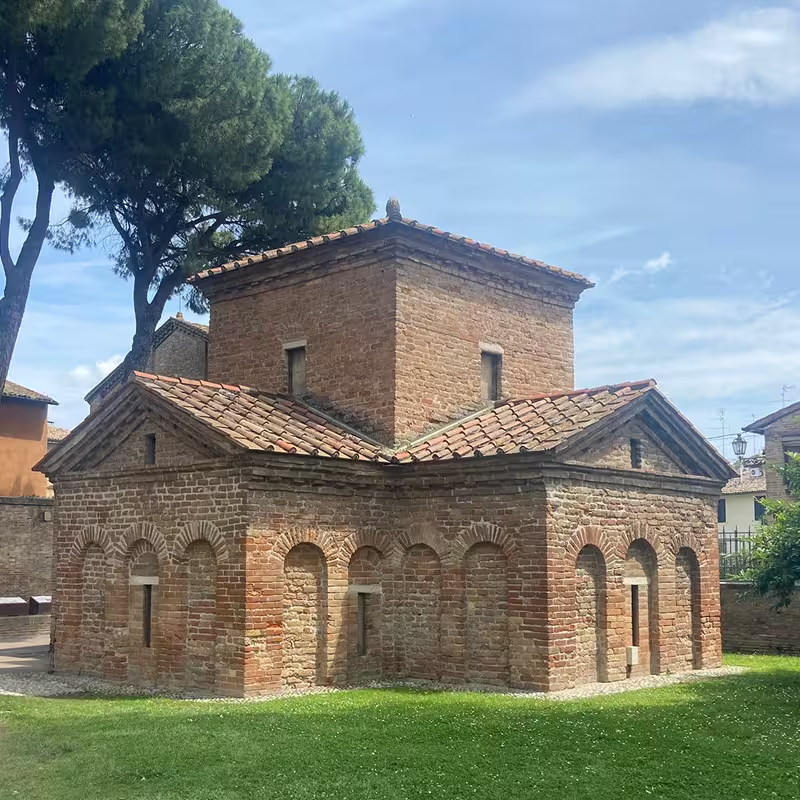
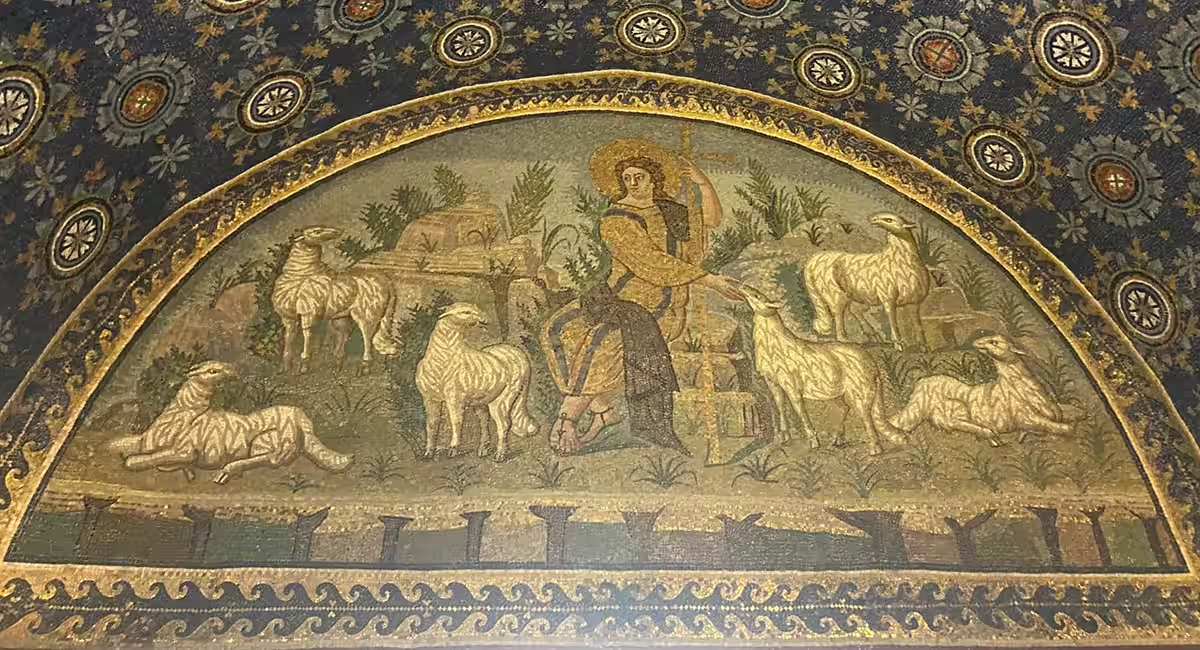
A plain brick cross-shaped chapel in the garden behind San Vitale holds the oldest and, for many visitors, the most moving mosaics in the city. Built around 430 for Galla Placidia — though she almost certainly lies buried in Rome, not here — its interior dissolves into a night sky of gold stars on the deepest blue, circling a golden cross. Below, Christ appears as a young Good Shepherd among his flock, in a style still visibly Roman; the doves, deer and vine scrolls around the windows are among the most tender images in early Christian art.
Entry is limited to five minutes in high season, with a booked time slot — the microclimate cannot handle more. Five minutes under that vault is worth hours almost anywhere else.
Basilica of Sant’Apollinare Nuovo
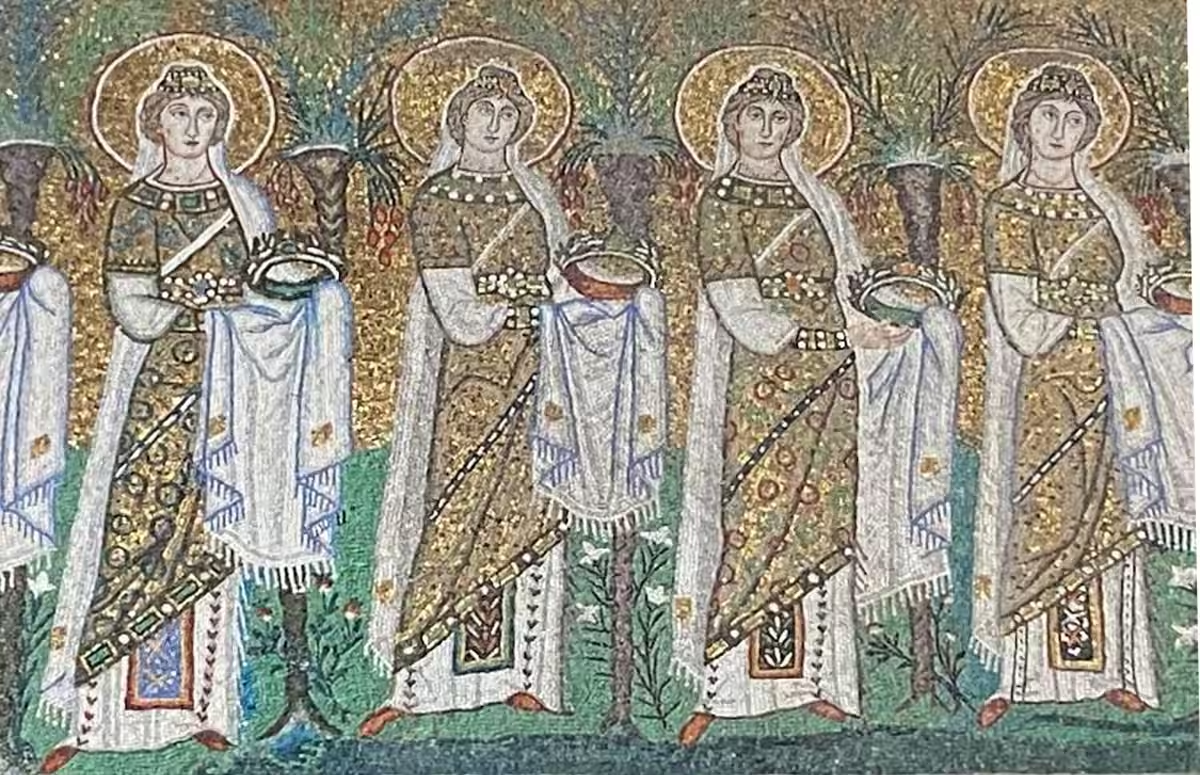
Theodoric built this as his palace church around 505, and it preserves the most dramatic evidence of regime change in the history of art. Along both walls of the nave run great mosaic processions — twenty-six male martyrs on one side, twenty-two virgins led by the Three Magi on the other — moving through gold toward Christ and the Virgin enthroned. Above them, the oldest surviving mosaic cycle of the life of Christ.
But look closely at the mosaic of Theodoric’s palace near the entrance. When the Byzantines took the city, the church passed from Arian to orthodox use, and the figures of Theodoric’s court were deleted from the arcades — replaced by curtains. The erasure was imperfect: disembodied hands still cling to the columns, ghosts of the Gothic courtiers, left behind by the mosaicists sent to unmake them. No textbook explains Byzantine political theology as vividly as those hands.
Basilica of Sant’Apollinare in Classe
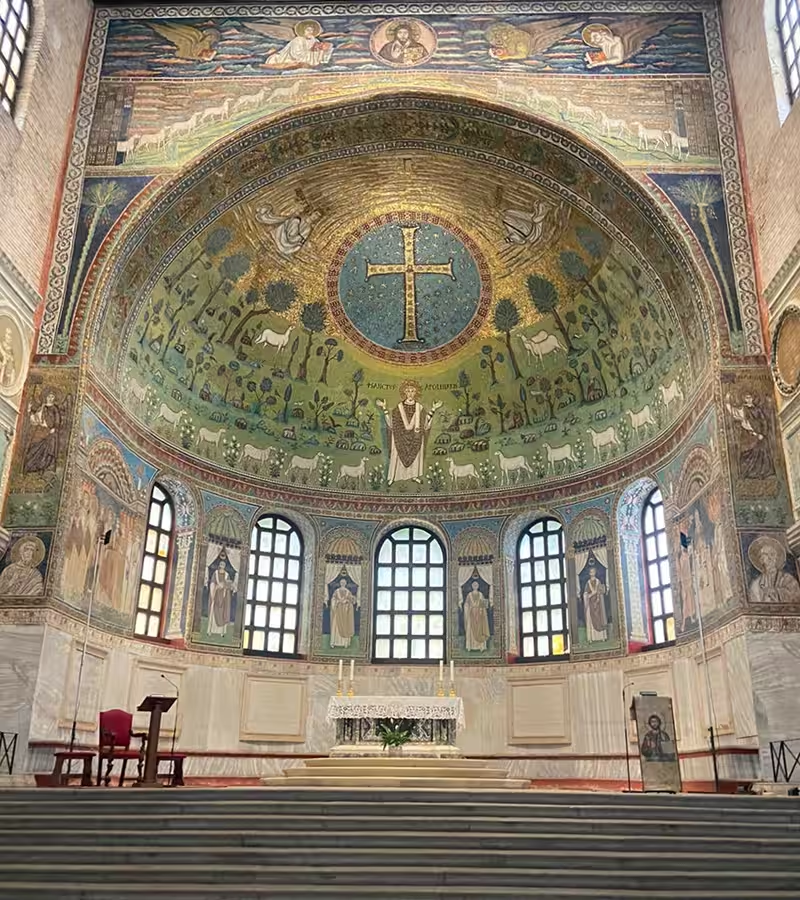
Eight kilometres south of the centre, where Ravenna’s great naval harbour once opened to the sea, stands the largest and most serene of the city’s churches, consecrated in 549. Its apse is unlike anything else in early Christian art: Saint Apollinaris, Ravenna’s first bishop, stands praying in a luminous green paradise of meadows, rocks, birds and sheep, beneath a jewelled cross floating in a starry disc — the Transfiguration rendered almost entirely in symbols.
After the gold of the city churches, the green of Classe feels like stepping outdoors. Reachable by local train (one stop) or bus; it shares a state-circuit ticket with the Mausoleum of Theodoric rather than the main combined ticket — see the practical section below.
The other UNESCO monuments
Four more monuments complete the World Heritage listing — smaller, quicker to visit, and each adding a piece the big four don’t tell.
Neonian Baptistery
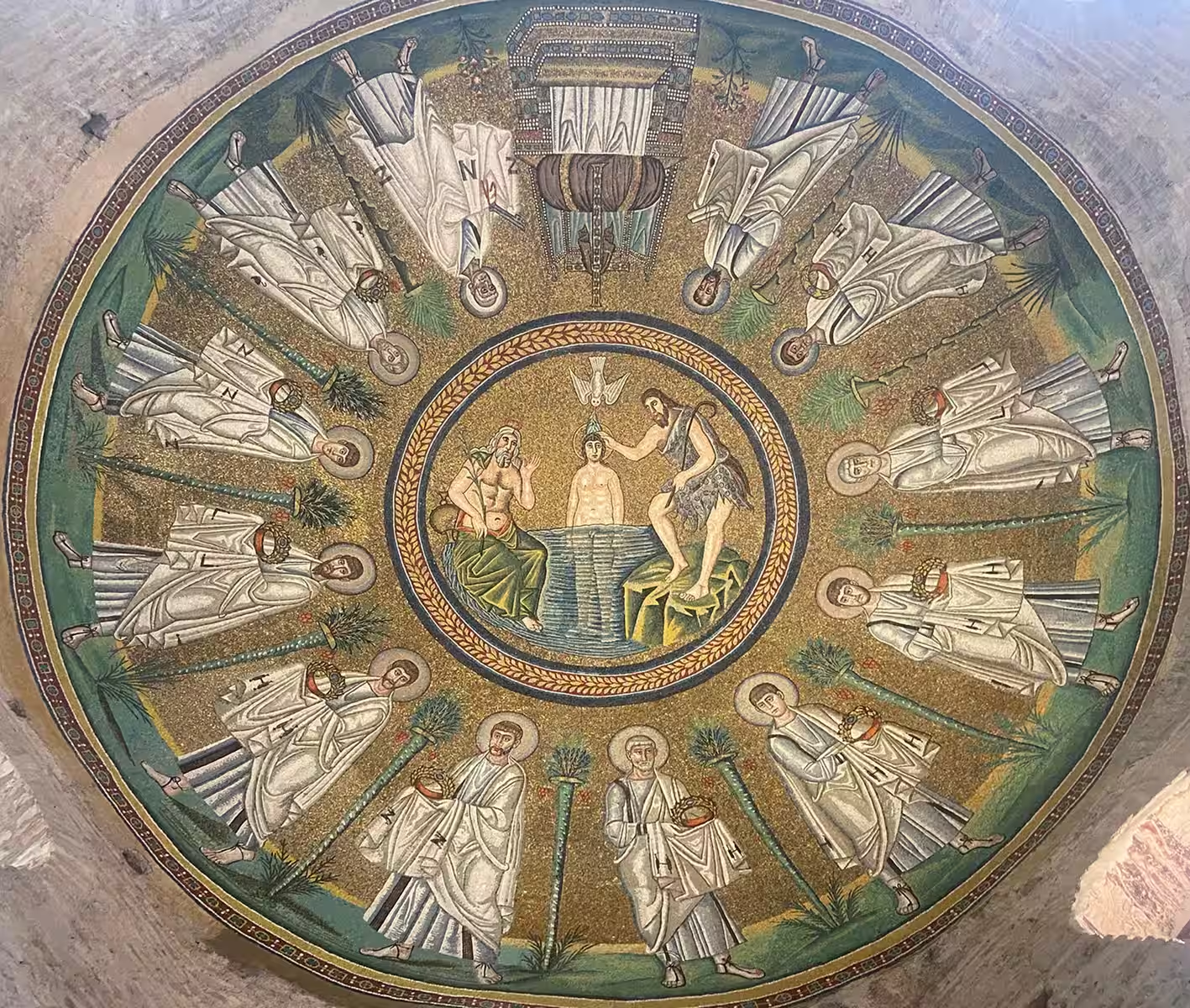
The oldest monument in Ravenna, converted from a Roman bathhouse in the early 5th century and given its dome mosaic under Bishop Neon around 450: the baptism of Christ — complete with a pagan-style personification of the river Jordan — ringed by the twelve apostles striding through gold. Like Galla Placidia, it operates on booked five-minute slots.
Arian Baptistery
Theodoric’s answer to the Neonian, built around 500 for his own Arian church. The dome repeats the same scene — baptism, apostles, Jordan — which is precisely what makes it fascinating: Arians and orthodox, locked in theological conflict over the nature of Christ, worshipped beneath almost identical images. Free or low-cost entry, and usually empty.
Archiepiscopal Chapel and Museum
Inside the Archbishop’s palace hides the only orthodox monument built during Theodoric’s Arian reign: a tiny private chapel where Christ appears as a warrior, in Roman military dress, trampling the lion and the serpent — a defiant image for a church under heterodox rule. The attached museum holds the ivory throne of Maximian, the very bishop who stands beside Justinian in the San Vitale panel — almost certainly carved in Constantinople, and one of the finest ivory works to survive from antiquity.
Mausoleum of Theodoric
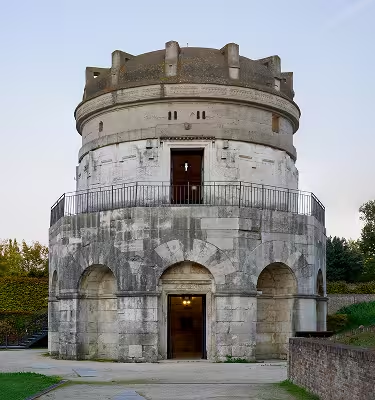
No mosaics at all — and unmissable anyway. Theodoric’s tomb (c. 520) is a two-storey drum of white Istrian stone capped by a single monolithic dome roughly ten metres across and over 230 tonnes: how it was raised remains debated. It is the only monument of its kind in Europe, a Gothic king’s bid for Roman eternity, standing in a quiet park fifteen minutes’ walk from the centre.
Beyond the UNESCO eight
With more time, Ravenna keeps giving: the crypt of San Francesco, permanently flooded, where goldfish swim over a 10th-century mosaic floor; the so-called Palace of Theodoric facade near Sant’Apollinare Nuovo; the Classis Ravenna museum in Classe, which sets the whole story in context; the Domus dei Tappeti di Pietra, a 6th-century floor-mosaic house discovered under a church garden in 1993; and the National Museum of Ravenna beside San Vitale. Ravenna is also still a living mosaic city — workshops around the centre carry the craft on, and TAMO and the studios offer classes if the walls inspire you to try tesserae yourself.
Dante’s Byzantine paradise
Every visitor ends up at the small neoclassical tomb beside San Francesco where Dante Alighieri has lain since 1321. Most treat it as a detour from the mosaics. It isn’t — it may be their most extraordinary legacy.
Dante wrote the Paradiso while living out his exile in Ravenna, and his heaven is not made of clouds and harps: it is made of blinding light, geometric pattern, and souls that flash like jewels set in gold. Scholars have long recognised where that vision came from — the poet composed his paradise in the city where he could stand under the golden vaults of San Vitale and Galla Placidia every day. And Byzantium enters the poem directly: Dante gives Justinian the singular honour of narrating an entire canto of the Paradiso (Canto VI) — the lawgiver-emperor as the ideal of divinely ordered rule. The poet was no uncritical admirer of the West’s dealings with Byzantium either; he raged against the papal politics that had turned crusaders against fellow Christians, of which the sack of Constantinople in 1204 was the catastrophic proof. Standing between Dante’s tomb and Justinian’s portrait, you are standing at the exact point where Byzantium flowed into Western literature.
Suggested itinerary
One day — enough for the essentials, and what most visitors have. Book your Galla Placidia and Neonian time slots online before you arrive. Start at San Vitale at opening (9:00) before the tour groups, then the Mausoleum of Galla Placidia next door. Walk fifteen minutes across the centre to Sant’Apollinare Nuovo, then the Neonian Baptistery and the Archiepiscopal Museum — they stand a minute apart. That is the full five-monument ticket, comfortably done by mid-afternoon with lunch in between. If energy allows, take the train or bus out to Classe for the late-afternoon light in the apse — it faces the setting sun.
Two days — the same core at half the pace, plus the Arian Baptistery, the Mausoleum of Theodoric, the Domus dei Tappeti di Pietra, Dante’s tomb and San Francesco’s flooded crypt on day one; Classe, the Classis museum and the National Museum on day two.
As a day trip: Ravenna is about 1 hour by direct train from Bologna, and workable from Venice or Florence (roughly 2.5–3 hours with a change in Bologna or Ferrara). From the station, the first monuments are a ten-minute walk. It is one of the easiest world-class art destinations in Italy to do without a car.
Practical tips
Practical information verified July 2026 — always check the official sites for current details.
Tickets — read this before anything else. Ravenna’s monuments are split between two separate circuits, and this confuses almost every visitor:
The five main monuments — San Vitale, Galla Placidia, Sant’Apollinare Nuovo, the Neonian Baptistery and the Archiepiscopal Museum & Chapel — are run by the diocese (Opera di Religione) and sold only on combined tickets, valid over consecutive days: 2 monuments €10.50, 4 monuments €12.50, all 5 for €14.50 (2026 prices). There are no single-site tickets. Time-slot booking is mandatory for Galla Placidia, the Neonian Baptistery and the Archiepiscopal Museum, and the first two have a five-minute stay limit in season. Buy online at ravennamosaici.it, or at the ticket offices by Sant’Apollinare Nuovo and the Archiepiscopal Museum. Hours in 2026: 9:00–19:00 from March to early November, 10:00–17:00 in winter; closed Christmas and New Year’s Day.
The state circuit — Sant’Apollinare in Classe, the Mausoleum of Theodoric and the National Museum — is ticketed separately (around €5 per site, with combined options; free on the first Sunday of the month). The Arian Baptistery is also state-run. Note that Classe closes to tourists on Sunday mornings for services.
When to go. April–June and September–October are ideal. July and August add beach crowds from the nearby Adriatic lidos to the heat. Winter is wonderfully quiet, with shorter hours. Whatever the season, the golden rule is literal: mosaics change with the light, so see the city churches in bright morning light and Classe toward evening. Look out for the summer evening openings at San Vitale — mosaics by night are a different art form.
Getting around. The historic centre is flat, compact and largely pedestrianised — Ravenna is an easy city on foot, and a famously good one by bicycle. For Classe: local train (one stop toward Rimini) or city bus, 10–15 minutes.
Bring binoculars — seriously. The finest details — the face of Christ hidden in the starry cross at Classe, the expressions of Theodora’s court — are ten metres up. A small pair of binoculars, or a phone with a good zoom, transforms the visit.
Frequently asked questions
Why are there Byzantine mosaics in Ravenna, Italy?
Ravenna was the capital of the Western Roman Empire from 402, then of Theodoric’s Ostrogothic kingdom, and after 540 the seat of Byzantine rule in Italy — the Exarchate of Ravenna — until 751. Each regime decorated the city in the mosaic tradition led by Constantinople, and Ravenna’s later obscurity preserved what larger cities lost.
Are the Ravenna mosaics worth visiting?
Yes — without qualification. Ravenna holds the best-preserved ensemble of early Byzantine mosaics in the world, superior to anything surviving in Istanbul from the same period, concentrated in a walkable town. UNESCO lists all eight monuments as World Heritage.
Can you see the Ravenna mosaics in one day?
Yes. The five main monuments are within a fifteen-minute walk of each other and take four to five unhurried hours. Adding Sant’Apollinare in Classe makes a full but comfortable day.
Do you need to book Ravenna mosaics tickets in advance?
The five central monuments are sold only as a combined ticket, and timed reservation is mandatory for the Mausoleum of Galla Placidia, the Neonian Baptistery and the Archiepiscopal Museum. Book online at ravennamosaici.it, especially between March and October.
Which mosaic shows Justinian and Theodora?
The imperial panels face each other across the sanctuary of the Basilica of San Vitale, consecrated in 547. They are contemporary official portraits — made during the couple’s reign, though neither ever visited Ravenna.
Is Ravenna a day trip from Bologna or Venice?
From Bologna, easily — about an hour by direct train. From Venice or Florence it is a long but feasible day (roughly 2.5–3 hours each way); an overnight stay is more rewarding and lets you see San Vitale before the crowds.
Further reading and sources
- Judith Herrin, Ravenna: Capital of Empire, Crucible of Europe (Princeton, 2020) — the definitive recent history, and highly readable.
- Deborah Mauskopf Deliyannis, Ravenna in Late Antiquity (Cambridge, 2010) — the scholarly standard on the city and its monuments.
- UNESCO World Heritage Centre — Early Christian Monuments of Ravenna
- Opera di Religione della Diocesi di Ravenna — official tickets, hours and booking
- Ravenna Turismo — official tourism office
Cover picture credits: Steven Zucker, CC-by-SA 2.0
Non credited pictures are property of Byzantine-World.

One Comment