Monastery of Daphni: A Byzantine Masterpiece of Mosaic Art near Athens
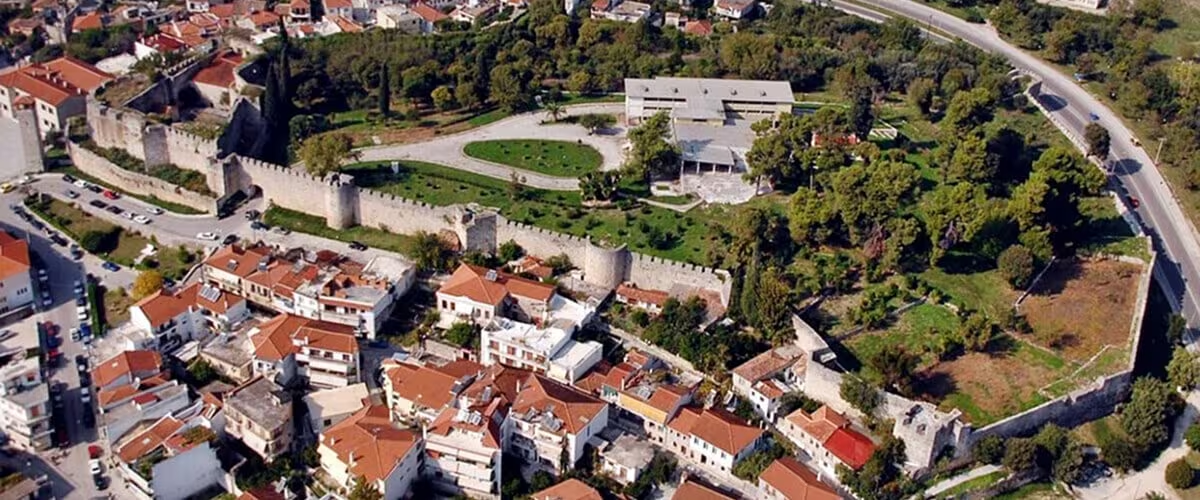
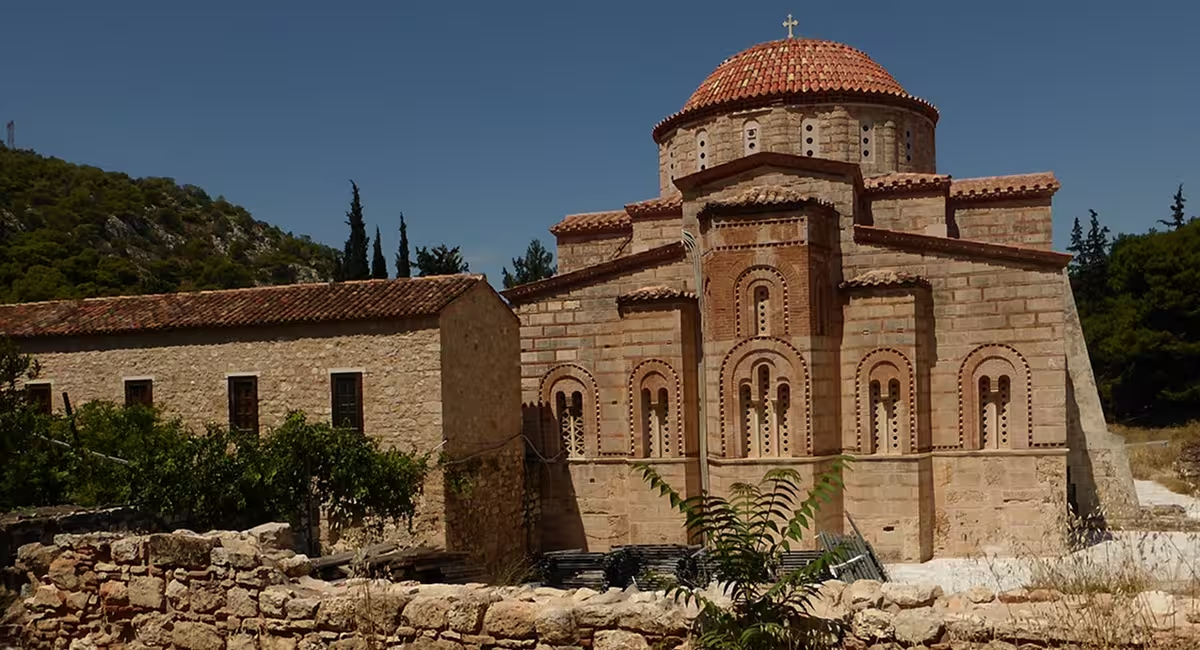
Ten kilometers west of Athens, where the Sacred Way once carried pilgrims and travelers toward Eleusis, a walled monastic complex sits at the foot of Mount Aigaleo. Its name, Daphni, comes from the Greek word for laurel — a memory of the grove that once surrounded it, and of the temple of Apollo Daphnaios it replaced. Today the site is known chiefly for one thing: a cycle of mosaics, executed in the late 11th century, that ranks among the most accomplished works of art the Byzantine world produced. Yet the monastery’s actual standing within Byzantine religious life was never particularly high. Daphni was not an imperial foundation of confirmed status, nor a major center of learning, nor a site that appears often in the historical record. Its story is really two stories: a modest provincial monastery, and an extraordinary artistic achievement that has outlived it.
Quick facts about Daphni
Location: ~10–11 km west of Athens, in modern Chaidari, at the foot of Mount Aigaleo
Dedication: The Dormition of the Virgin (Mother of God)
Current church built: Late 11th century, Komnenian period
Famous for: Its late-11th-century mosaics, among the finest surviving examples of Middle Byzantine art
Byzantine-era status: Modest — a provincial monastery, not a major center; its fame is largely posthumous
UNESCO status: World Heritage Site since 1990, jointly with Hosios Loukas and Nea Moni of Chios
Recent history: Closed after the 1999 earthquake; reopened to the public around 2018–2019, with restoration ongoing
Before the Church we see today
The site’s Christian history is generally traced back to the 6th century, when a monastery dedicated to the Mother of God is thought to have been established on or near the ruins of the temple of Apollo Daphnaios, which had gone out of use — and was likely damaged by Gothic raids — around 395. This early phase is usually reconstructed from architectural and sculptural fragments rather than texts. The French archaeologist Gabriel Millet, whose early-20th-century study remains a foundational reference for the site, proposed that a first church existed here under Justinian, based on masonry style and reused sculptural elements. This attribution has never had direct textual support, however, and it runs against one piece of negative evidence worth taking seriously: Daphni does not appear among the more than one hundred monasteries whose representatives are recorded as attending the Second Council of Nicaea in 787.
If Daphni had held any significant standing at that date, its absence from such a list would be surprising. The likelihood is that an early monastic settlement did exist on the site — the fortified enclosure that still partly stands shows construction techniques consistent with Justinianic work found elsewhere, at Resafa in Syria and in restored sections of the Constantinople land walls — but that it was a modest establishment, later abandoned during the Slavic invasions of the 7th and 8th centuries, as happened to many settlements in the Athens basin during this period.
The surviving walled precinct, a slightly irregular square of just under 100 meters on each side, likely dates in part from this earlier phase. Traces of a portico, the foundations of small rectangular rooms built against the north wall, and remnants of a first church longer than the one standing today all point to an earlier building campaign. Fragments of sculpture recovered on site are generally associated with this first monastery rather than the later one.
The new foundation: 11th and 12th Centuries
Whatever became of the first monastery — abandonment, ruin, gradual decline — Daphni re-enters the historical record with more confidence in the 11th century. A source from 1048 already refers to a monk named Dionysios as “priest of the monastery of Daphni,” attaching his name to the typikon of a confraternity that also served the nearby monastery of Hosios Loukas. This is the earliest solid textual anchor for the site’s existence, and it predates the construction most scholars associate with the church standing today, generally dated to the later part of the same century. Several seals attributed to the 10th through 12th centuries, including one belonging to a hegoumenos named Paul who held the title of proedros, add further, if fragmentary, confirmation that Daphni functioned as an active monastic community through this period.
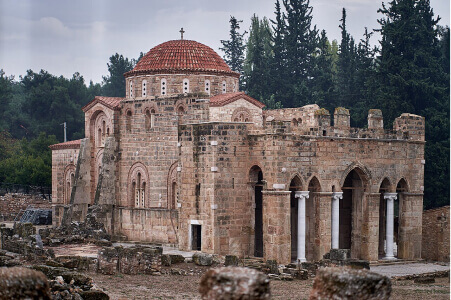
It was in this new building campaign that the katholikon — the main church — was constructed on the Greek cross-octagon plan still visible today, along with a refectory and a funerary chapel outside the main precinct. The refectory was built parallel to the church and in similar masonry, entered from the west through three doors separated by pillars, with interior pilasters supporting the arches of its vaulting. Its placement close to the church reflects standard Byzantine monastic practice: the communal meal was treated as an extension of the liturgy.
Once the mass had ended, monks would process from the narthex to the refectory behind their higoumenos, singing psalms as they went; inside, one monk pronounced the blessing from the refectory’s apse — a feature found in nearly every Byzantine refectory — while the higoumenos ate alone at his own table before the community dispersed back to their cells.
The Refectory, Kitchen, and Bathhouse
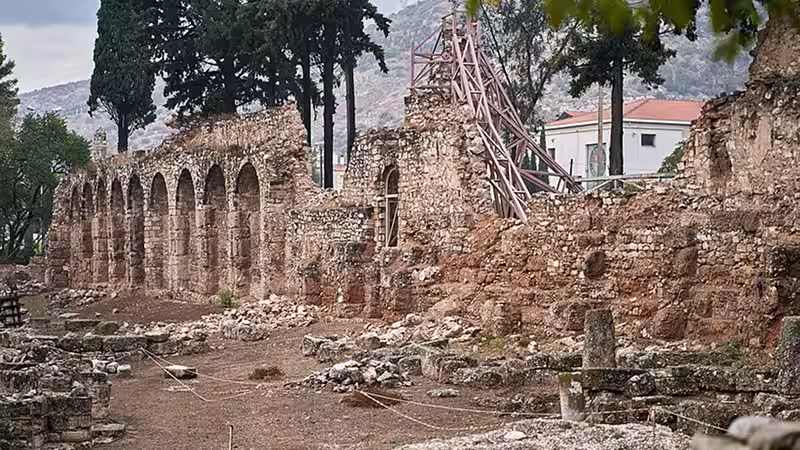
The refectory that housed this ritual still stands, in ruin, north of the church — an oblong, apsed hall roughly 28.7 meters long, its walls surviving to a height of about 1.7 meters. It was entered from the west through three pairs of doors, lit along its long sides by rows of windows, and covered by a barrel vault carried on transverse arches; traces of wall paintings survive on its interior. Much of what visitors see today, however, is not untouched Byzantine fabric: the building underwent a substantial restoration in 1943, after a long period of ruin.
Attached to the refectory’s north side is a small circular annex, generally identified as its kitchen — a low-vaulted space built around a central hearth with a grate, with what appears to have been a smoke-hole or chimney overhead. It is a rare surviving piece of the monastery’s working, rather than liturgical or artistic, infrastructure.
So is a second discovery southwest of the katholikon: the hypocaust remains of a bathhouse. Only the sub-floor survives — the superstructure is gone — but the layout is still legible: an entrance, two sweating rooms, and a pool chamber, all heated by hot air drawn through clay flues from a furnace beneath the floor. A bathhouse is an unusual feature for a monastery of Daphni’s modest means, and it is a useful reminder that even a provincial foundation maintained more than a church and a dormitory.
The funerary chapel
About a hundred meters southeast of the enclosure, a funerary chapel was uncovered in the late 19th century — the chapel of Agios Nikolaos (St. Nicholas), a small vaulted structure built in the same brick-framed masonry as the katholikon. Its crypt held ossuaries built into recesses along the walls, echoing the arcosolia of the Roman catacombs, each ossuary floored with perforated brick and capped by stone slabs resting on a transverse bar. Masonry and facing consistent with the church and refectory indicate the crypt was built at the same time as the rest of the complex, though this sits alongside a separate strand of sources dating the chapel of Agios Nikolaos itself to the 9th century — earlier than the 11th-century rebuilding. The likeliest reconciliation is that an earlier chapel was substantially rebuilt, or its crypt renewed, during the same 11th-century campaign as the church and refectory, but no source states this explicitly, so it is presented here as an open question rather than settled fact. Byzantine monastic burial practice varied: some communities buried monks within the church itself or in adjoining chapels, as at the Ton Elegmon monastery in Constantinople or the Brontocheion at Mystras; others, including the Pantocrator monastery in Constantinople and Daphni itself, preferred an external burial enclosure, complete with its own oratory where a weekly service was held for the repose of the dead. Beneath the northeast vault of the crypt, a fresco of the Virgin flanked by two saints is still visible — one of the few surviving traces of Byzantine-era painted decoration anywhere in the complex (see the new section on frescoes below).
An imperial monastery?
Whether Daphni ever held imperial status remains an open question. Two damaged frescoes of crowned emperors were found in the narthex in 1888, one holding a scroll conferring benefits on the community — a decorative convention paralleled at monasteries on Mount Athos, where founders (real or legendary) were commemorated this way. But these paintings date to the post-Byzantine period and cannot be linked with any confidence to the original construction of the church. What can be said is that the 11th-century rebuilding represented a genuinely significant outlay for a provincial monastery — a scale of investment in construction and mosaic decoration that some historians read as evidence of a wealthy patron, possibly of high rank, even if that patron’s identity is now lost. A related textual glimpse comes from the Vita of Meletios the Younger, written by Theodoros Prodromos in the first half of the 12th century: it describes Meletios, after leaving Thebes, encountering a monk from Daphni — a monastery it characterizes as comparatively wealthy next to Meletios’s own stricter foundation, only three or four hours’ distance away.
Life behind the walls
The physical structure of Daphni — its refectory practices, its distinct burial enclosure, its fortified perimeter — offers an unusually clear window into the rhythms of Byzantine monastic life more broadly, even where the specifics of Daphni’s own community remain thin. The procession from church to refectory after the liturgy, the ritual of the blessing before the shared meal, the higoumenos eating apart from his monks, the recitation of psalmody in the exonarthex before a body was carried to burial — these were not particularities of Daphni, but standard practice across Middle Byzantine coenobitic monasteries. What Daphni preserves, better than many contemporary sites, is the physical infrastructure that made these rituals possible: a refectory built to a specific liturgical logic, and a burial enclosure separate from the church, of the kind also used at the Pantocrator monastery in the capital.
The Mosaics and frescoes of Daphni
The mosaics are, without serious rival, the reason Daphni is remembered today. Their execution is generally dated to the late 11th century, contemporary with or shortly after the church’s construction, though the exact chronology remains debated. The decorative program follows a hierarchy typical of Middle Byzantine church decoration, arranged to lead the eye from the dome downward, with scenes set within finely cut marble cornices and ornamental framing arches — a compositional choice that contributes significantly to the mosaics’ celebrated sense of balance and monumentality.
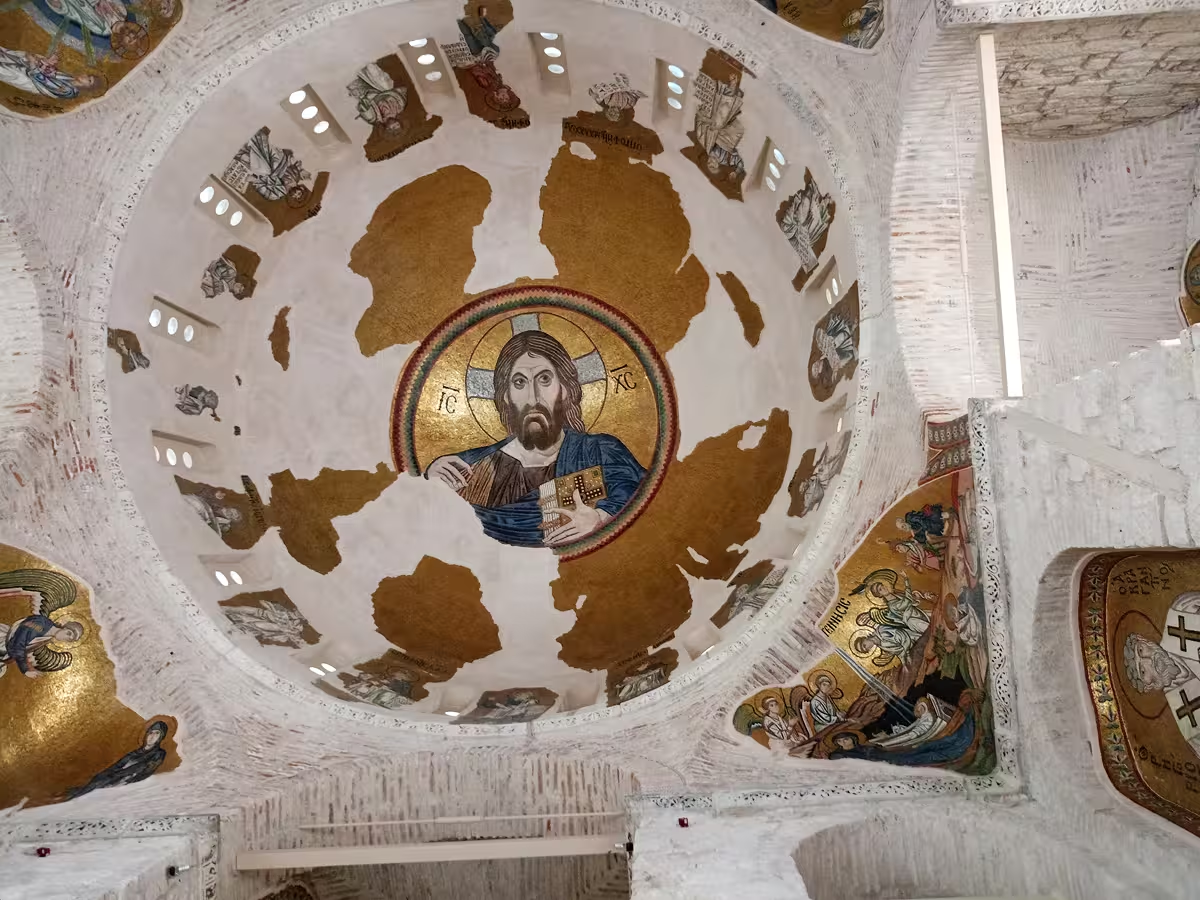
Stylistically, the Daphni mosaics are often singled out for a “classical” or “antique” quality — a naturalism in figure and drapery that art historians have struggled to find paralleled in any Byzantine work later than the Menologion of Basil II, making Daphni something of a stylistic high-water mark rather than the start of a trend.
The Pantocrator and the Prophets
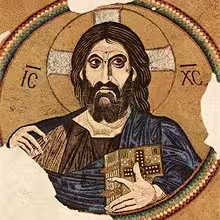
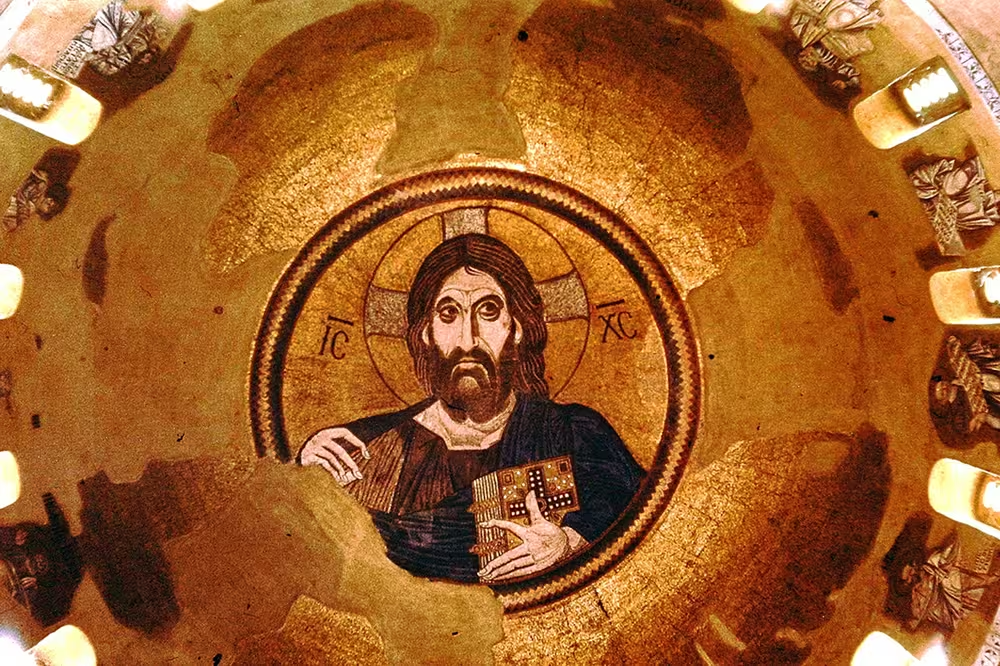
At the summit of the dome, a severe, monumental Christ Pantocrator dominates the space against a gold ground, executed partly in silver tesserae — a detail of genuine luxury. He is shown half-length, right hand raised in blessing, left hand holding a closed book. Around the base of the dome, in the drum, sixteen prophets stand between the windows, dressed in antique garments and holding scrolls inscribed with texts proclaiming Christ’s glory or the Second Coming.
The Squinches: Christ’s Early Life
Daphni’s dome is unusual in resting on squinches rather than pendentives — a structural detail that also shapes the mosaic program, since each of the four squinches carries its own scene.
Here the cycle covers Christ’s early life: the Annunciation, the Nativity, the Baptism, and the Transfiguration.
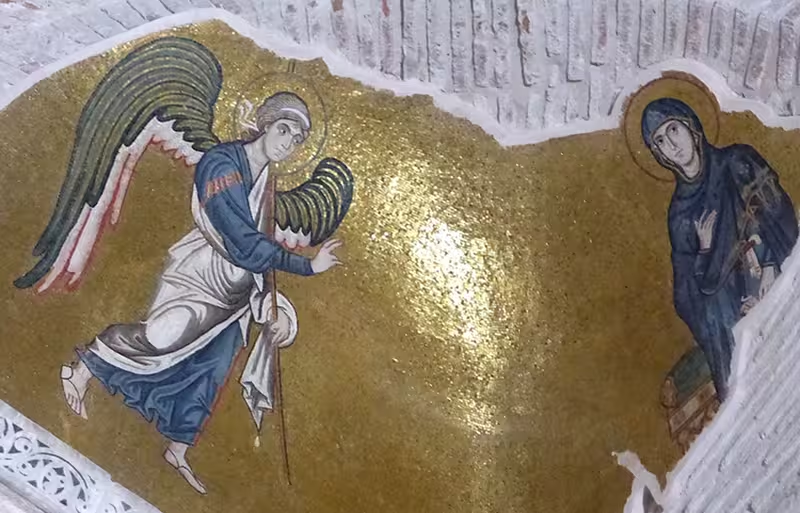
The Annunciation. © ktiv, CC-by-SA 4 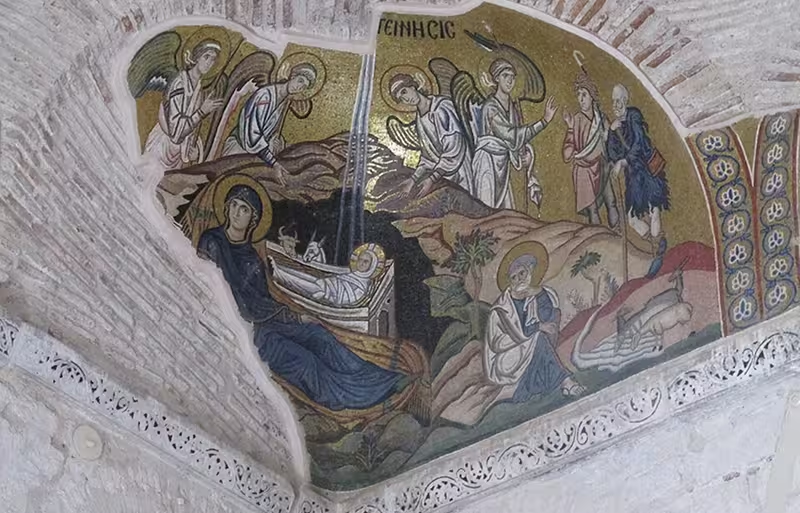
The Navitivy.
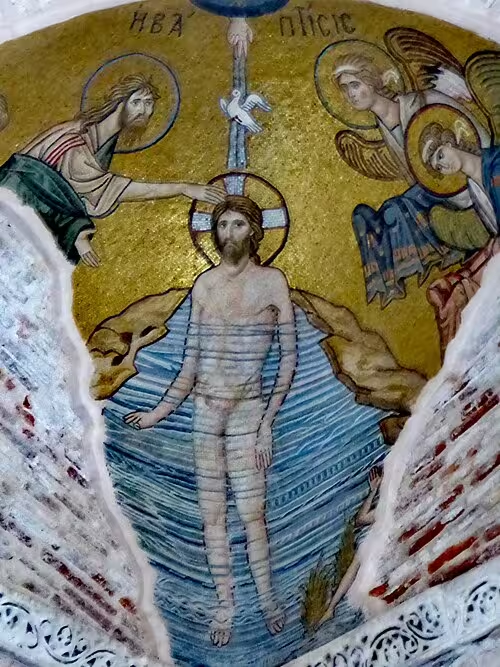
Baptism of Christ. © Ktiv, CC-by-SA 4.0 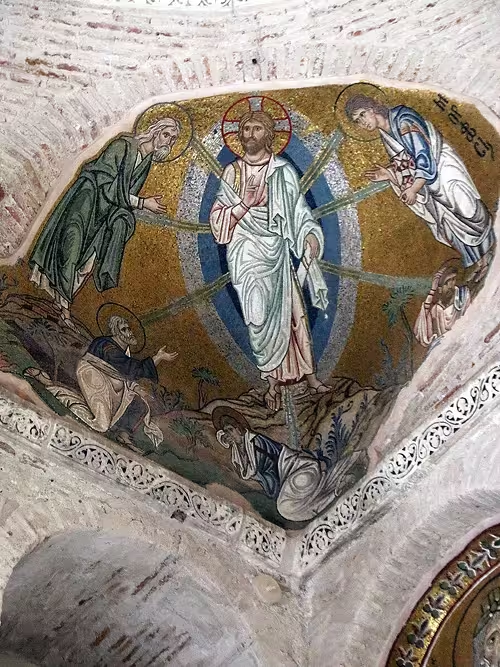
The Transfiguration. © Giovanni dall’Orto, CC-by-SA 2.5
The Cross Arms: A Fuller Narrative
Further down, the barrel-vaulted cross arms carry a broader narrative cycle. The north arm combines the Birth of the Virgin with the Crucifixion, the Entry into Jerusalem, and the Raising of Lazarus. The south arm pairs the Adoration of the Magi and the Anastasis with the Doubting of Thomas and the Presentation in the Temple. Given the church’s dedication to the Mother of God, it is worth noting how restrained the Marian imagery actually is overall: her Dormition, one of only a handful of scenes drawn directly from her life, appears separately above the west door rather than within the cross arms. Portraits of individual saints, by comparison, are notably fewer here than at the comparable site of Hosios Loukas.
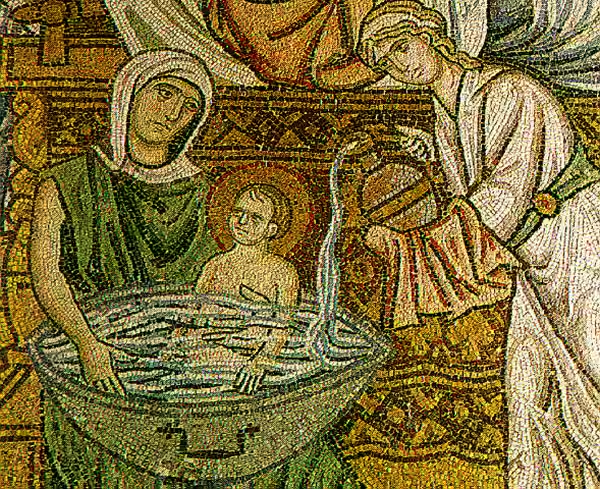
Detail showing midwives bathing the baby Virgin Mary. 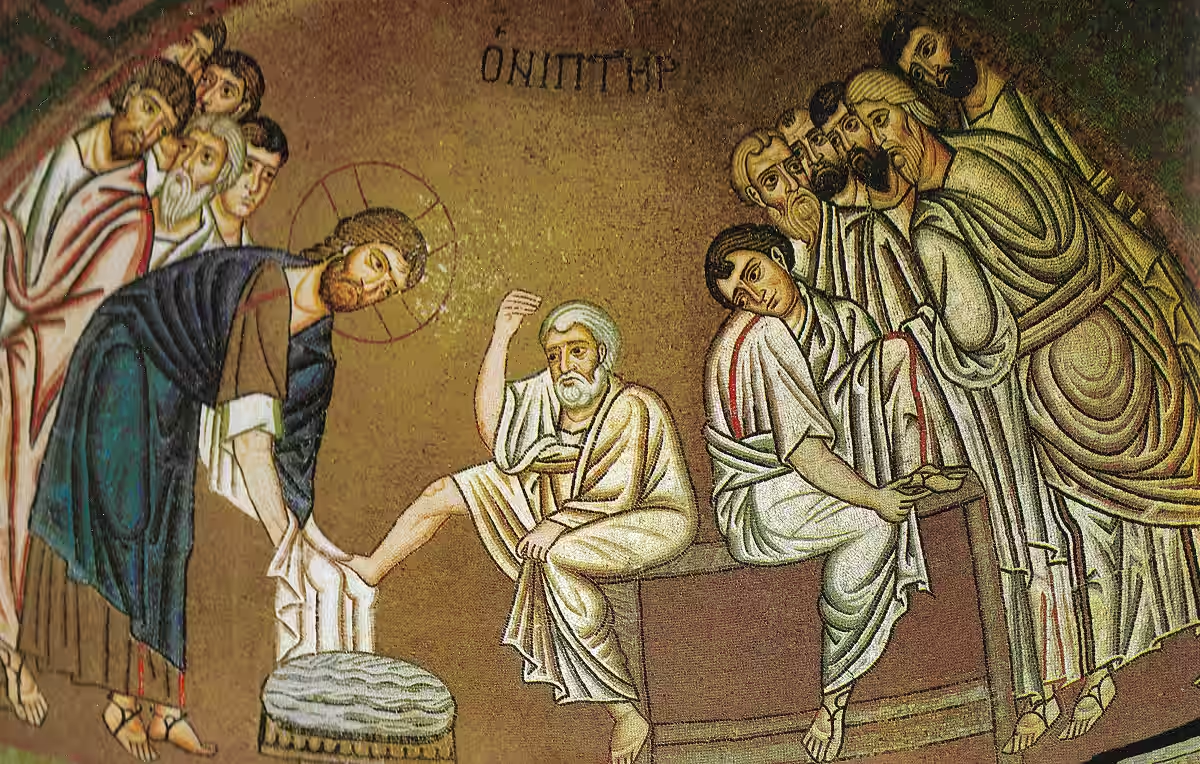
Foot washing.
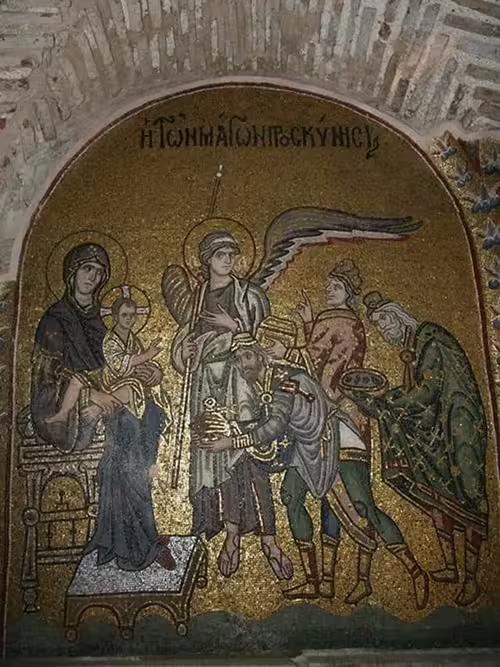
Adoration of the Magi. 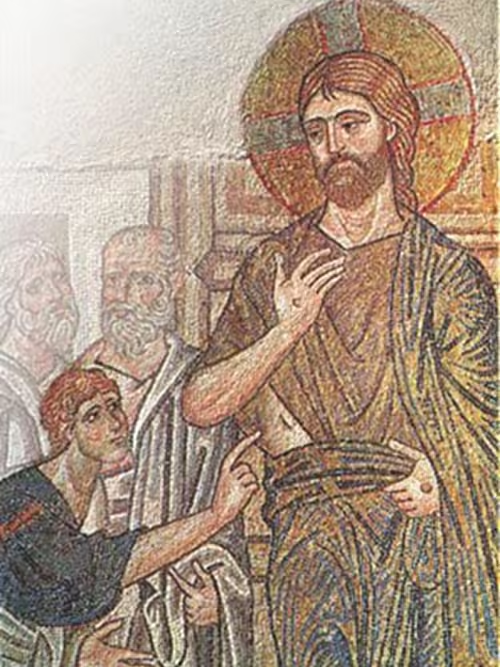
Detail of the Incredulity of Saint Thomas. 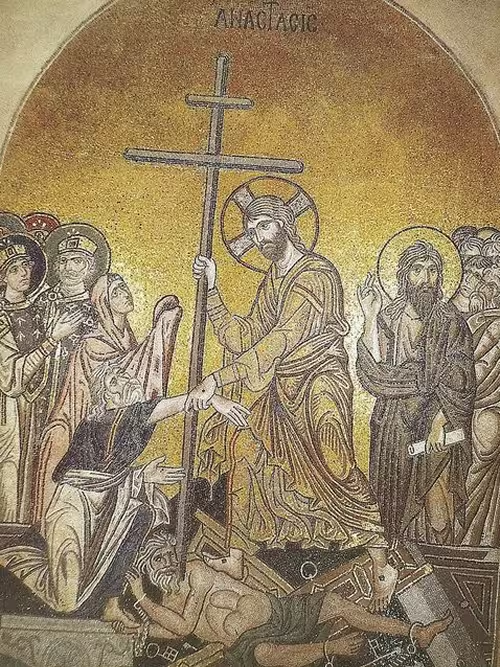
The Resurrection.
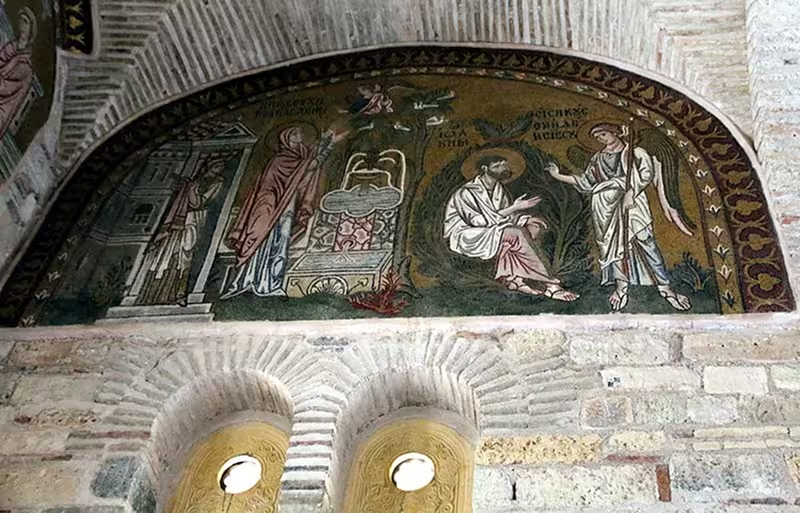
Annunciation of Anna. ©Giovanni dall’Orto, CC-by-SA 4.0 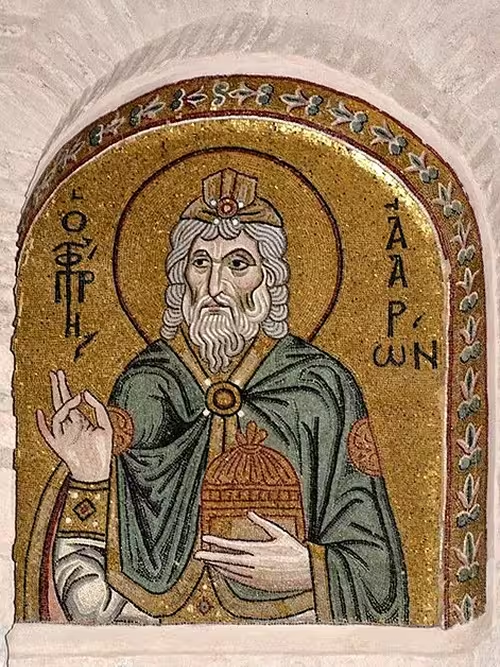
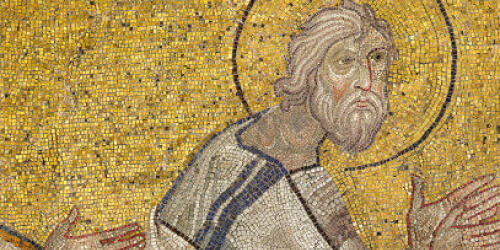
Detail of the mosaic showing the Prophet Aaron.
The Narthex and the 1889–1897 Restoration
The narthex, at the threshold of the church, rounds out the iconographic program with scenes from the Passion — including the Washing of the Feet and the Last Supper — alongside further episodes from the life of the Virgin. The mosaics have not survived unaltered: a major restoration between 1889 and 1897, undertaken after earthquake damage, reworked parts of the decoration, most notably giving the face of the Pantocrator a harsher, more severe expression than art historians believe it originally had. Restoration work has continued intermittently since, including a further campaign following the 1999 earthquake.
Frescoes beyond the mosaics
The mosaics dominate any account of Daphni’s decoration, but they are not the only painted layer the monastery preserves — and it is worth being precise about which frescoes actually date to the Byzantine period, since the site carries several layers from different centuries.
Two genuinely Byzantine (or near-Byzantine) traces survive. Fragments of fresco dated to the 12th or 13th century have been identified in the exonarthex — though since the exonarthex itself is generally attributed to the Cistercians, built around 1207–1211, these paintings sit right at the boundary between the end of Byzantine rule in Athens and the start of Frankish occupation, and are better described as Byzantine in style than firmly Byzantine in political period. More securely within the Byzantine building campaign is the fresco in the crypt beneath the chapel of Agios Nikolaos, showing the Virgin flanked by two saints, which masonry evidence ties to the same 11th-century construction phase as the church and refectory.
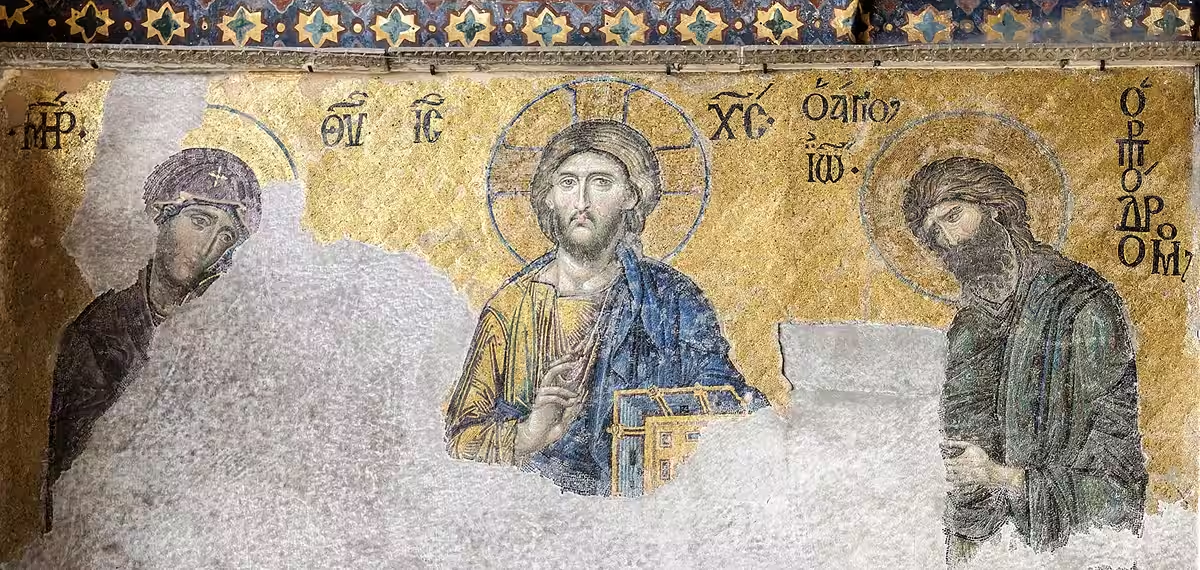
Everything else painted at Daphni belongs to later centuries. The two damaged frescoes of crowned emperors discovered in the narthex in 1888 are dated to the post-Byzantine period, not the original 11th-century decoration — a point worth holding onto, since it undercuts any confident claim that they document Daphni’s founders. And after the church’s original marble revetment on the lower walls was lost, it was replaced, probably in the 17th century, with painted scenes — among them a Deesis and the Sacrifice of Abraham — of which fragments still survive today.
After the Fourth Crusade
The Fourth Crusade’s aftermath reached even this modest provincial monastery. Athens fell under Frankish control in 1205, and Daphni, like other religious establishments in the region, appears to have been ransacked in the disorder that followed — arrowheads found embedded in the dome’s Pantocrator mosaic are usually read as physical evidence of this violence. Othon de la Roche, the new Frankish ruler of Athens, granted Daphni to the Cistercian abbey of Bellevaux in Burgundy around 1207 (some sources give 1211).
The Cistercians, who were significant agents of papal authority in Frankish Greece during the 13th century, added a cloister and an exonarthex to the church, along with the twin pointed Gothic arches still visible on its facade.
Their influence in the region diminished over the century as other religious orders gained ground, and Daphni eventually became the last remaining Cistercian house in Greece — a distinction that reflected decline as much as endurance.
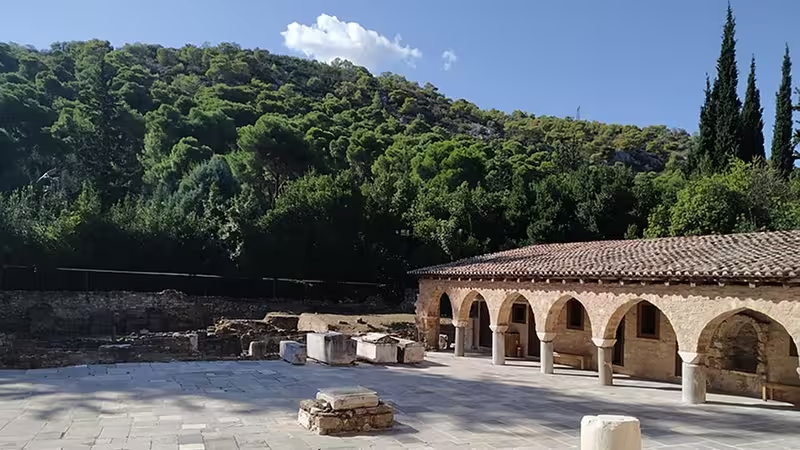
The monastery also became a burial site for the Frankish dukes of Athens. Guy II, who died in 1308, was recorded as buried “in the tomb of his ancestors” at Daphni, and Walter of Brienne is believed to have chosen burial there as well, based on his will. Two sarcophagi visible at the site into the 19th century carry Byzantine-style decoration alongside fleur-de-lys motifs signaling their Latin patrons, though neither can be attributed to a specific named individual with certainty.
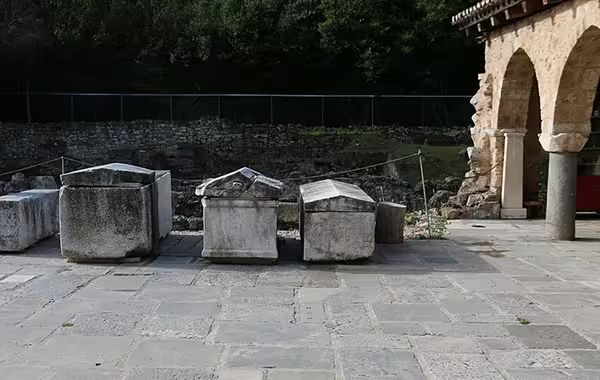
A partial list of Daphni’s Cistercian abbots survives in scattered records — Étienne (1237), Jean (1250, and again 1271), Pierre (1283), Jacques (1308), Jean de Fondremand (14th century), Pierre Strosberch (1412) — suggesting a continuously functioning, if never especially prosperous, community through the 14th century. By the century’s end, prominence had shifted elsewhere: Nerio Acciaiuoli revived the older practice of burial at the Parthenon in 1394, and even one of Daphni’s own abbots, Pierre Strosberch, ended up commemorated on the mortuary registers inscribed on the Parthenon’s columns rather than at Daphni itself.
Ottoman rule and slow decline
The Latin interlude at Daphni ended in 1458, when Mehmed II took Athens — a full five years after the fall of Constantinople itself. The Ottoman conquest returned the monastery to Orthodox hands, as it did elsewhere in the region for communities that had cooperated with the new authorities. Daphni was reoccupied by Orthodox monks by the 16th century, as attested by two funerary inscriptions in the church walls dated 1532 and 1548, though it never regained real prosperity. It still functioned, modestly, toward the end of the 18th century — the cells visible today, which replaced the earlier Cistercian buildings, date from roughly this period, along with a bell tower that had already been demolished by the close of the 19th century.
Its fortified position kept giving it a strategic value out of proportion to its religious significance. Metropolitan Bartholomew of Athens took refuge there in 1770 while fleeing Ottoman pursuit. When the Greek War of Independence broke out, Ottoman forces immediately occupied it, using it as a garrison and gunpowder magazine; a Bavarian military post was recorded there in 1838–39. Not long after, the site was abandoned, and between 1883 and 1885 it served, briefly and grimly, as an asylum.
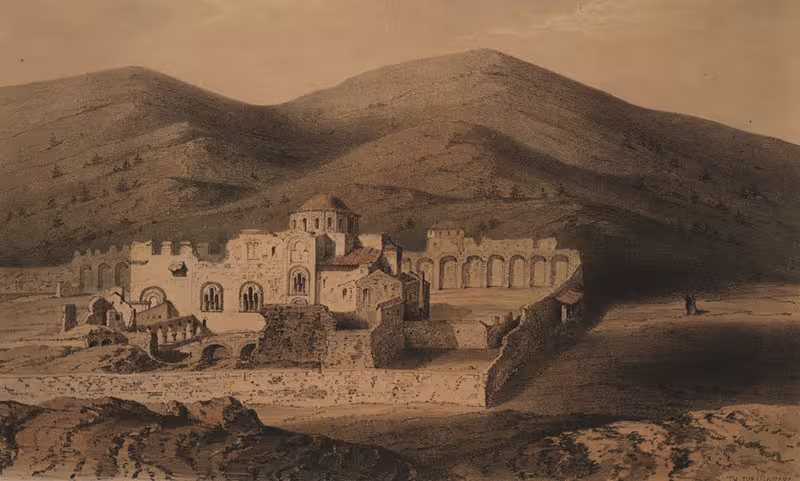
Drawing by Theodore Moncel of the ruins of the monastery in 1843. 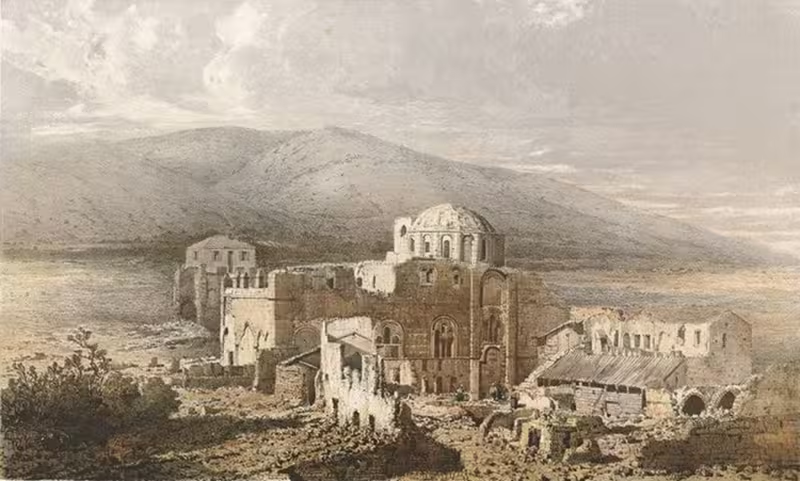
Another drawing shoying the ruins from another angle in 1853.
Restoration and recognition
Serious restoration work began at the end of the 19th century, following the 1889–1897 campaign that reshaped the Pantocrator’s expression, and continued intermittently through the 20th century. In 1990, Daphni was inscribed on the UNESCO World Heritage list together with the monasteries of Hosios Loukas near Delphi and Nea Moni on Chios — three sites grouped for sharing the same architectural typology (the cross-in-square plan with an octagonal dome on squinches) and the same aesthetic moment, the so-called second golden age of Byzantine art. A powerful earthquake in 1999 caused extensive structural damage, closing the site to the public for nearly two decades of stabilization and conservation work before it reopened around 2018–2019.
Daphni’s history is a study in mismatch between historical weight and artistic legacy. As a Byzantine institution, it was a provincial monastery of uncertain patronage, absent from the major councils, mentioned only in passing by contemporary writers, its wealth and status debated by scholars centuries later on the basis of a few seals and a handful of textual fragments. As a work of art, it is something close to unrepeatable: a mosaic cycle whose classical restraint has no clear successor in Byzantine art, wrapped inside walls that carry traces of Justinianic fortification, Komnenian rebuilding, Cistercian Gothic, and Ottoman-era neglect all at once. Few sites this close to Athens compress so many centuries of change into so small a footprint.
Frequently asked questions
Who built the Monastery of Daphni?
The church visible today was built in the late 11th century, likely under a wealthy but unidentified patron, during the Komnenian period. It replaced an earlier monastery on the same site, possibly dating to the 6th century, though that earlier phase is not confirmed by textual sources.
Why is Daphni famous?
Almost entirely for its mosaics, executed in the late 11th century and considered among the finest surviving examples of Middle Byzantine art, notably the Christ Pantocrator in the dome.
Is the Monastery of Daphni still an active monastery?
No. It functioned as a monastic community, with interruptions, from at least 1048 into the 19th century, but it is no longer active. Today it is a UNESCO World Heritage Site managed as a historical monument.
Can visitors go inside today?
The site was closed for extensive restoration after the 1999 earthquake and reopened to the public around 2018–2019.
Why did Cistercian monks occupy an Orthodox monastery?
After the Fourth Crusade, Athens came under Frankish rule. In 1207 (or 1211, sources vary), the new Frankish ruler of Athens granted Daphni to Cistercian monks from the abbey of Bellevaux in Burgundy, who held it until the Ottoman conquest of Athens in 1458.
Sources
Wikipedia, “Daphni Monastery” (for cross-checking dates and modern restoration timeline)
Bouras, Charalambas. The Daphni Monastic Complex Reconsidered, in I. Ševčenko and I. Hutter (eds.), Ἀετός: Studies in Honour of Cyril Mango, Stuttgart, 1998.
Boulos, Charalambas. Byzantine Athens, 10th–12th Centuries, Routledge, 2017.
Millet, Gabriel. Le monastère de Daphni: histoire, architecture, mosaïques, Paris, 1899. (Available via Gallica, BnF)
The Oxford Dictionary of Byzantium, entry “Daphni.”
UNESCO World Heritage Centre, “Monasteries of Daphni, Hosios Loukas and Nea Moni of Chios,” whc.unesco.org/en/list/537
Cover image by ktiv, CC-by-SA 4.0