The Great Schism of 1054: How Rome and Constantinople Took Centuries to Drift Apart
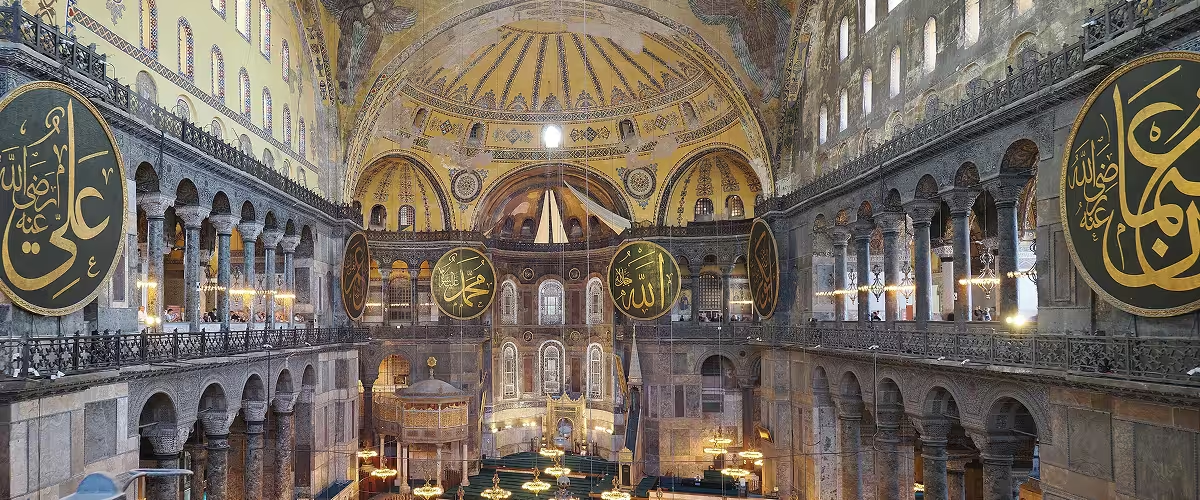
On Saturday 16 July 1054, shortly before the liturgy, three papal legates walked into Hagia Sophia and laid a bull of excommunication on the altar. It condemned the patriarch of Constantinople, Michael Keroularios (Cerularius), and two of his associates. Four days later a synod in Constantinople anathematised the legates in return. This exchange is remembered as the Great Schism, the break between the Catholic and Orthodox Churches. Yet neither side excommunicated the other’s Church, and contemporaries did not think Christendom had split that summer. Most historians now see 1054 as a symbol: one bitter episode in an estrangement that began centuries earlier and became a real division only after the Crusades.
Quick Facts
Date: 16 July 1054 (bull); 20 July (synodal condemnation); 24 July (anathema read in Hagia Sophia)
Place: Hagia Sophia, Constantinople
Papal legates: Cardinal Humbert of Silva Candida (c. 1000–1061), the Curia’s leading Greek scholar; Frederick of Lorraine, chancellor of the Roman Church (later Pope Stephen IX); Peter, archbishop of Amalfi
Patriarch: Michael I Keroularios (Cerularius), patriarch 1043–1058
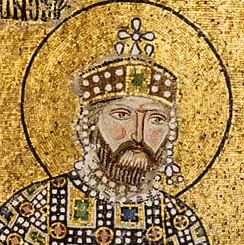
Emperor: Constantine IX Monomachos
Pope: Leo IX — already dead (19 April 1054) when the bull was laid
Who was excommunicated: Keroularios, Leo of Ohrid and the patriarch’s sakellarios Constantine, with their followers — not the Byzantine Church
Main issues: Papal primacy, the filioque, unleavened bread (azymes), clerical marriage, southern Italy
Excommunications lifted: 7 December 1965, by Pope Paul VI and Patriarch Athenagoras
One communion, two worlds (4th–10th centuries)
The word itself frames the problem. In his first canonical letter to Amphilochius of Iconium, Basil of Caesarea separated heresy, a split over doctrine, from schism, a split over church affairs that could still be healed:
σχίσματα δὲ τοὺς δι’ αἰτίας τινὰς ἐκκλησιαστικὰς καὶ ζητήματα ἰάσιμα πρὸς ἀλλήλους διενεχθέντας”…and schisms, [he called] those who had parted from one another for some ecclesiastical reasons and over questions capable of remedy.” (Basil, Letter 188.1, PG 32:665A)
For most of the Middle Ages, both sides treated the division between East and West as a schism in exactly this sense. Polemicists on each side accused the other of heresy, but, as the Oxford Dictionary of Byzantium notes, a broad consensus held until the Council of Ferrara-Florence (1438–39) that the quarrel could still be repaired. That belief is why reunion was attempted again and again.
The deepest fault line was authority. The First Council of Constantinople (381) gave the bishop of the new capital second place after Rome, and gave its reason in canon 3:
Τὸν μέντοι Κωνσταντινουπόλεως ἐπίσκοπον ἔχειν τὰ πρεσβεῖα τῆς τιμῆς μετὰ τὸν τῆς Ῥώμης ἐπίσκοπον, διὰ τὸ εἶναι αὐτὴν νέαν Ῥώμην.”The bishop of Constantinople shall have the privileges of honour after the bishop of Rome, because it is New Rome.”
Canon 28 of Chalcedon (451) went further: the Fathers had honoured old Rome “because it was the imperial city,” so New Rome, seat of the emperor and senate, deserved equal privileges. In this Eastern logic, a see’s rank followed the political map of the empire. Popes from Damasus (366–384) and Leo I (440–461) to Gelasius I and Hormisdas answered that Rome’s authority came from Christ’s words to Peter (Matthew 16:18), not from where the emperor lived. Rome never accepted canon 28. The two views could coexist only as long as neither side pushed its own to the limit.
For several centuries, neither did. The Akakian schism (484–519) cut communion for thirty-five years over the emperor Zeno’s compromise with the Monophysites, then ended with the Formula of Hormisdas. Byzantine churchmen in trouble with their own emperors, such as Maximos the Confessor and Theodore of Stoudios, appealed readily to Rome’s apostolic authority. What changed the balance was the West’s political reorientation. In 754 Pope Stephen II crossed the Alps to seek protection from the Frankish king Pippin rather than from Constantinople. On Christmas Day 800, Leo III crowned Charlemagne emperor, a title the Byzantines regarded as theirs alone.
Charlemagne also gave the quarrel its doctrinal dimension. The filioque (“and from the Son”), stating that the Holy Spirit proceeds from the Father and the Son, had entered the creed in Spain, apparently at the Third Council of Toledo (589). Charlemagne’s theologians defended it, and a council at Aachen in 809 asked the pope to adopt it. Leo III agreed with the theology but refused to change the creed. According to the Liber Pontificalis, he had the creed engraved without the clause, in Greek and Latin, on two silver shields set up in St Peter’s. Rome itself added the clause much later, presumably in 1014, when the creed was sung at the coronation of Henry II.
The first great confrontation came under the patriarch Photios (858–867, 877–886). It began as a dispute over his elevation in place of the deposed Ignatios, whom the empress Theodora had herself appointed without a synod. Pope Nicholas I refused to recognise him, and the two clashed over who would convert the Bulgarians. In 867 Photios denounced the filioque as heresy, and a synod in Constantinople declared the pope deposed. The rupture was patched up at the council of 879–880. Venance Grumel (1933) and Francis Dvornik showed that the Photian schism was short-lived, and Dvornik that the story of a second Photian schism was a later invention. The lesson of the 9th century, as the ODB puts it, is that none of these early confrontations became final, because neither side pushed its position to the point of ultimate rupture.
For the councils, iconoclasm and the wider shaping of Orthodox doctrine, see From Byzantine Christianity to Orthodoxy.
The road to 1054: Normans, a Lombard governor and unleavened bread
By the mid-11th century, both sees had changed. Constantinople’s patriarchate was at the height of its medieval power. Since 1046 the papacy had been held by German popes appointed under the emperor Henry III, men determined to reform the clergy and to assert Rome’s authority over the whole Church. Formal contacts between the two sees had lapsed. When Rome adopted the filioque, Constantinople may have stopped commemorating the pope in the diptychs, the list of bishops in communion read at the liturgy. When that happened, and why, is still debated.
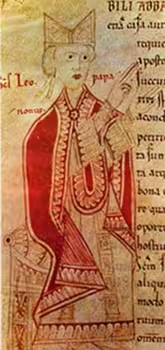
The flashpoint was southern Italy, where Greek and Latin dioceses overlapped and Norman adventurers were carving out lordships at the expense of both. Pope Leo IX (1049–1054) wanted a military alliance with Constantinople against the Normans. So did the Byzantine governor of Italy, Argyros, a Lombard from Bari who had become the emperor’s man and whom Patriarch Keroularios distrusted deeply. The alliance never came together. On 18 June 1053, the Normans crushed the papal army at Civitate in Apulia and took Leo IX prisoner. He was held at Benevento until March 1054.
Meanwhile the dispute had shifted to ritual. In 1053, Archbishop Leo of Ohrid, a close ally of Patriarch Michael Keroularios, wrote to John, bishop of Trani in Apulia, attacking Latin practices. His main target was the use of unleavened bread (azymes) in the Eucharist, which he presented as a Judaising practice. He also attacked fasting on Saturdays and the omission of the Alleluia in Lent. The letter was addressed, through John, to the whole Latin clergy, and it reached Humbert of Silva Candida.
A former monk of Moyenmoutier in Lorraine, where he had learned Greek, Humbert had come to Rome with Leo IX and was the leading Greek scholar of the Curia. He translated Leo of Ohrid’s letter into Latin and wrote the reply. Latin sources add that Keroularios had closed the Latin churches of Constantinople. That claim comes mainly from Humbert and is hard to square with reports of Latin worship continuing in the city.
Constantine IX Monomachos, eager for the alliance, persuaded Keroularios to write a conciliatory letter to the pope and invited a legation. The papacy also tried to win over Peter III, patriarch of Antioch. Peter was more moderate than Keroularios and warned him against treating every Latin custom as heresy, but on the substance he sided with Constantinople.
What happened in July 1054
Leo IX’s legates arrived in Constantinople in late March or early April 1054. Humbert led the mission, with Frederick of Lorraine, the papal chancellor, and Peter, archbishop of Amalfi. The emperor received them warmly. Keroularios did not. According to the Greek account, the legates refused him the customary honours, and he concluded that the papal letters they carried were not genuine, because their seals looked tampered with. He suspected Argyros of having forged them. He then refused to deal with the legates except before a synod. The letters, largely drafted by Humbert, asserted Roman primacy in uncompromising terms and quoted the Donation of Constantine as authentic.
On 19 April, Leo IX died in Rome. Strictly speaking, a legate’s authority ended with the pope who sent him, and no successor was elected until 1055. Humbert carried on regardless. He turned on the Stoudite monk Niketas Stethatos, who had written against the azymes, Saturday fasting and clerical celibacy. With the emperor’s backing, he forced a public retraction. Niketas anathematised his own treatise, which was burned, apparently at the Stoudios monastery in late June. Humbert’s letters to the patriarch, his treatises against Byzantine liturgical practice and his reply to Niketas inflamed the patriarch and his clergy, and Constantine IX tried in vain to calm the controversy.
The patriarch still refused to engage. On the morning of Saturday 16 July, as the clergy prepared the liturgy, the three legates entered Hagia Sophia and laid the bull on the altar (the text is in PL 143:1001–1004). A subdeacon who ran after them begged them to take it back; they refused and left the church, shaking the dust from their feet. Humbert’s own report gives their parting words:
Videat Deus et iudicet.
“Let God see and judge.”(Humbert, Brevis et succincta commemoratio)
The legates left the city two days later, after exchanging the kiss of peace with the emperor. Keroularios then asked for a meeting, and Constantine IX recalled them from Selymbria. Fearing the crowd, he would not let them appear before a synod, and they sailed for Italy. Rioting broke out in the capital. The emperor had to give way: he had the legates’ interpreters flogged and handed over the patriarch’s demands. On 20 July, a synod of about twenty bishops anathematised the “impious document,” its authors and all who had helped prepare it. On Sunday 24 July the condemnation was read publicly in Hagia Sophia.
Who was actually excommunicated?
The bull did not excommunicate the Byzantine Church, the emperor or the Greek people. It named Michael Keroularios, “abusively called patriarch,” Leo of Ohrid and the patriarch’s sakellarios Constantine, together with their followers. It even praised the emperor and the city’s faithful as orthodox. The Constantinople synod, for its part, anathematised the legates and their document, not the pope, and still less the Roman Church. Both sides struck at people, not at institutions. That is why the ODB concludes that relations “remained unclear for years.” It is also why the 1965 “lifting” could be carried out at all: it cancelled sentences against named individuals, not a declared break between two Churches.
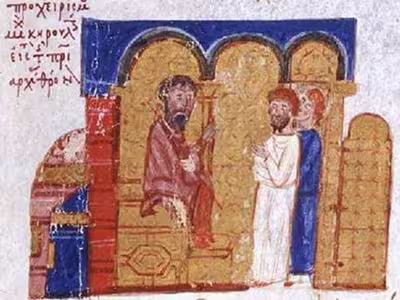
Debate: did the legates have any authority?
Because Leo IX had died three months earlier, many historians, Orthodox and Catholic alike, hold that the legates’ mandate had lapsed and the bull was canonically void. Others reply that the legation had been commissioned for a specific task and could continue until recalled, and that Rome never disowned what Humbert had done. In practice the question mattered less than it seems: neither side treated the 1054 sentences as binding on the whole Church, and both later went on negotiating.
What divided Greeks and Latins
Modern readers expect the schism to turn on the filioque. In 1054 it largely did not. Tia Kolbaba’s study of the Byzantine lists of “Latin errors” shows that 11th-century Greeks were most offended by visible practice: the bread of the Eucharist, fasting, beards, food rules. The Trinitarian argument and the question of the papacy, which later centuries treated as the core of the dispute, came to the front only after the 12th century.
| Issue | Latin practice or position | Greek practice or position | Weight in 1054 |
|---|---|---|---|
| Azymes (Eucharistic bread) | Unleavened bread, as at the Last Supper | Leavened bread; azymes condemned as “Jewish” | Central: the subject of Leo of Ohrid’s letter and Niketas’s treatise, and the bull’s chief liturgical charge |
| Papal primacy | Rome as head and mother of all churches, by Petrine right | Rome first in honour within the pentarchy; no jurisdiction over the East | Central for Humbert and the reform papacy; implicit for Keroularios |
| Filioque | The Spirit proceeds from the Father and the Son; clause in the creed | From the Father; adding to the creed forbidden | Secondary: the bull itself accuses the Greeks of having removed it |
| Clerical marriage | Celibacy being imposed on priests | Married men may be ordained priests | Significant in southern Italy |
| Saturday fasting | Fasting on Saturdays (in Rome) | No fasting on Saturdays except Holy Saturday | Listed by Leo of Ohrid and Niketas |
| Beards, Lenten Alleluia, food rules | Shaven clergy; no Alleluia in Lent; strangled meat permitted | Bearded clergy; different Lenten customs | Minor but polemically powerful |
Debate: whose texts are “Keroularios’s”?
Much of what is quoted as the patriarch’s position may not be his. A. Michel attributed to him a dossier of anti-Latin texts, the so-called Panoplia; F. Tinnefeld has questioned the attribution, and J. Darrouzès showed that the treatise On the Azymes once credited to him belongs to someone else. The ODB names Niketas Stethatos as the patriarch’s mouthpiece. Keroularios’s own voice survives mainly in his letters to Peter of Antioch and in the 1054 synodal decree.
The winner at home: Keroularios after 1054
Seen from Constantinople, 1054 was not a disaster but a victory, and the winner was the patriarch. Constantine IX had wanted the papal alliance and lost the confrontation. Keroularios had the city behind him. After the rupture he began to use the title “ecumenical patriarch” on his seals. When the empress Theodora (1055–1056) tried to remove him, she could not. Under her successor Michael VI he effectively ran the government. In 1057 he helped transfer power from Michael VI to the general Isaac I Komnenos.
The partnership did not last. Isaac had the army; Keroularios had the crowd, and he reportedly threatened to destroy the emperor “like an oven he had made.” In November 1058 Isaac had him arrested and deported. Keroularios refused to abdicate. A trial was prepared in Thrace, away from the patriarch’s supporters, with Michael Psellos as chief accuser, but Keroularios died on the way in January 1059. His full story is told in our article on Michael Keroularios.
When did the schism really happen? The historians’ debate
The historical consensus is that after 1054, the schism was not yet final. The real question is when it became final, and on that historians disagree. Steven Runciman’s The Eastern Schism (1955) put the Crusades at the centre. Yves Congar described the schism as the gradual acceptance of an estrangement, rather than a decision. Henry Chadwick’s East and West (2003) traces a long “making of a rift,” and Axel Bayer has argued that 1054 became “the” schism only in retrospect, in later polemic. Humbert himself started that process: once back in Rome, his self-justifications helped perpetuate the schism. The main candidate dates are these:
| Date | Event | Case for it | Case against |
|---|---|---|---|
| 1054 | Bull and counter-anathema | First open, mutual condemnation; the date fixed by later tradition | Personal sentences only; communion continued in places |
| 1089 | Urban II’s legates in Constantinople | — | A synod, at Alexios I Komnenos’s request, found no record of a formal schism in the patriarchal files; unity could be restored if the pope sent a profession of faith |
| 1098–1100 | Crusaders replace the Greek patriarchs of Antioch and Jerusalem with Latins | Two rival hierarchies in the same sees: a structural break | Local; Constantinople untouched |
| 1182 | Massacre of the Latins in Constantinople | Popular hatred made visible | A political and economic riot, not an ecclesiastical act |
| 1204–1208 | Sack of Constantinople; Latin patriarch Thomas Morosini; Orthodox patriarch Michael IV Autoreianos elected at Nicaea | The ODB’s choice: rival patriarchs of Constantinople, the Orthodox one recognised by the whole Orthodox world | Union talks continued for 250 years |
| 1274 / 1439 | Unions of Lyon and Florence | Their failure showed the division ran deeper than the hierarchies | Unions are evidence that both sides still thought the schism curable |
| 1484 | Orthodox synod repudiates Florence | Formal rejection of the last union | Under Ottoman rule; aimed at one council |
| 1755 | Patriarchal decree requiring Latin converts to be rebaptised | Denial of the validity of Latin sacraments: the sharpest break of all | Not applied by every Orthodox church; later relaxed in practice |
Each date answers a slightly different question: when the leaders condemned each other, when rival hierarchies appeared, when ordinary believers stopped recognising each other’s sacraments. The ODB’s own view is that relations stayed unclear for decades after 1054, that Latins and Greeks still took communion together locally around 1100, and that the institutional and cultural drift became open conflict with the Crusades. That is why so many historians settle on 1204.
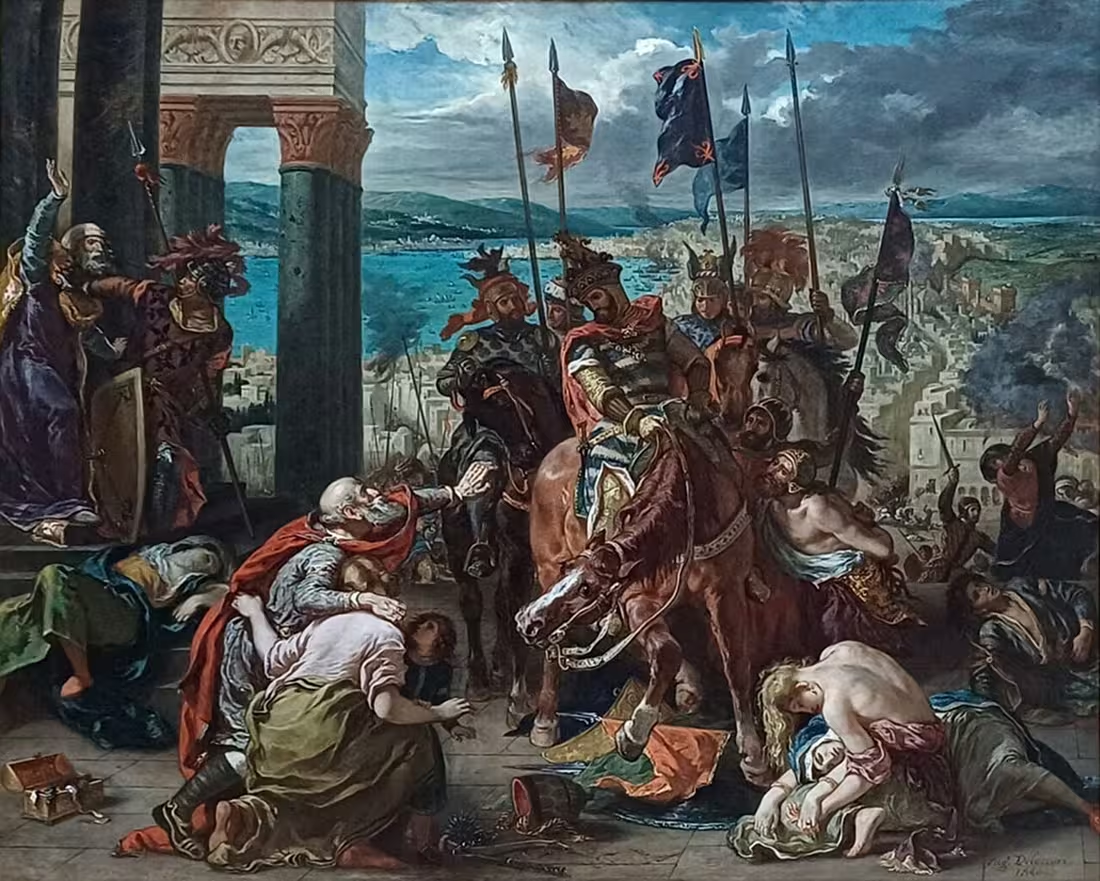
After 1054: crusades, 1204 and the failed unions
Theological contact did not stop. In 1136, Anselm of Havelberg, the envoy of Emperor Lothar III, debated the procession of the Spirit and papal primacy in Constantinople with Niketas, archbishop of Nicomedia, in a tone both sides recorded as courteous. Then the Crusades turned estrangement into enmity. The sack of Constantinople in 1204 and the installation of the Venetian Thomas Morosini as patriarch, with Innocent III’s approval, left two patriarchs of Constantinople, one Latin and one Orthodox in exile at Nicaea.
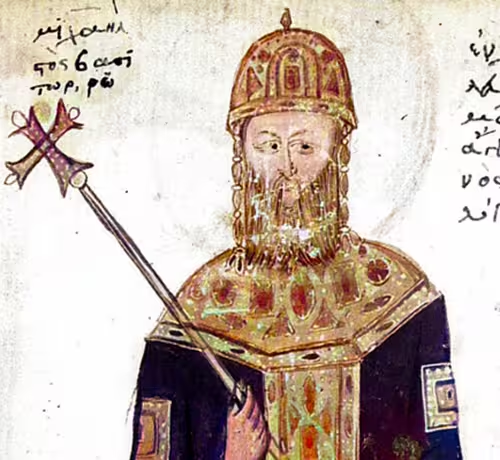
The Palaiologan emperors kept negotiating, driven above all by the Turkish threat. At Lyon in 1274, Michael VIII’s envoys accepted union, which was rejected at home and abandoned after his death. At Ferrara-Florence in 1438–39, John VIII Palaiologos and Patriarch Joseph II signed a union that accepted the filioque and papal primacy. Only a handful of Greeks accepted either.
The union was proclaimed in Hagia Sophia on 12 December 1452, a few months before the fall of the city. The historian Doukas attributes to the megas doux Loukas Notaras the famous remark that he would rather see the Turkish turban in the city than the Latin mitre. It is a literary report, not a recorded speech, but it sums up how many Byzantines felt by then.
1965 and after: lifting the anathemas
The first meeting between a pope and an ecumenical patriarch since Florence took place in Jerusalem in January 1964, between Paul VI and Athenagoras I. On 7 December 1965, on the eve of the close of the Second Vatican Council, a joint declaration was read simultaneously in St Peter’s in Rome and at the Phanar in Istanbul. Both sides regretted the sentences of 1054 and removed them from the memory of the Church. The declaration did not restore communion: the differences in doctrine and authority remain. It removed the founding gesture of the split.
Sixty years later, the two Churches marked the anniversary at the site of the first Christian council. Pope Leo XIV and Ecumenical Patriarch Bartholomew I met on 28 November 2025 by the remains of the Basilica of Saint Neophytos at İznik, ancient Nicaea, for the 1,700th anniversary of the First Council of Nicaea. The next day, at the Phanar, they signed a joint declaration marking the 60th anniversary of the 1965 text. It called for new steps towards unity, including a common date for Easter. Where the 1054 legates laid an anathema on the altar, the 2025 service at the Phanar commemorated the pope by name in the litany, before the patriarch.
Places linked to the Schism
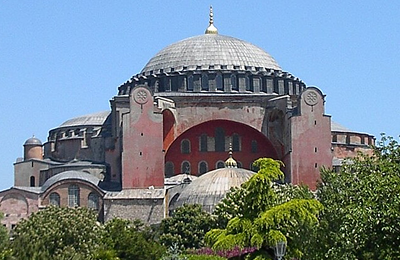
Hagia Sophia, Istanbul
Where the bull was laid on the altar (16 July 1054) and the counter-anathema read (24 July), and where the union of Florence was proclaimed in 1452. The medieval altar and sanctuary furnishings are gone.
Read our article about Hagia Sophia
Stoudios Monastery, Istanbul
Niketas Stethatos’s monastery, where he retracted his treatise in June 1054. Only the shell of the 5th-century basilica survives (İmrahor Mosque).
Civitate, Apulia
Near San Paolo di Civitate. Site of the Norman victory over Leo IX on 18 June 1053, the defeat that made the papal-Byzantine alliance urgent.
Basilica of San Nicola, Bari
Seat of the council of 1098, where Anselm of Canterbury defended the filioque before Greek bishops of southern Italy under Urban II.
St George at the Phanar, Istanbul
Patriarchal church of the Ecumenical Patriarchate, where the 1965 declaration was read and the 2025 joint declaration signed.
İznik (Nicaea)
Seat of the Orthodox patriarchate in exile after 1204, and of the 2025 Catholic-Orthodox commemoration at the lakeside Basilica of Saint Neophytos.
FAQ
What was the Great Schism of 1054?
It was the exchange of excommunications between the papal legate Cardinal Humbert and Patriarch Michael Keroularios of Constantinople in July 1054. It is traditionally taken as the split between the Catholic and Orthodox Churches, although the break became definitive only gradually, most clearly after 1204.
Who excommunicated whom in 1054?
On 16 July 1054, Humbert’s bull excommunicated Patriarch Michael Keroularios (Cerularius), Archbishop Leo of Ohrid and the patriarch’s official Constantine. On 20 July a synod in Constantinople anathematised the legates and their document.
Was the pope excommunicated in 1054?
No. The Constantinople synod condemned the legates, not the pope. Pope Leo IX had in any case died on 19 April 1054, three months before the bull was laid.
What is the filioque?
The Latin phrase “and from the Son,” added in the West to the Nicene-Constantinopolitan Creed to state that the Holy Spirit proceeds from the Father and the Son. The Orthodox reject both the addition and, in its Western form, the doctrine. It was a secondary issue in 1054 and became central later.
Why is 1054 remembered if the split came later?
Because it was the first open, mutual condemnation between Rome’s envoys and Constantinople’s patriarch, and later polemicists on both sides looked back to it as the origin of the break. Historians now treat it as a symbolic milestone in a process that ran from the 4th to the 13th centuries and beyond.
Have the excommunications of 1054 been lifted?
Yes. On 7 December 1965, Pope Paul VI and Ecumenical Patriarch Athenagoras I jointly removed the 1054 sentences from the memory of the Church. Full communion has not been restored.
Sources and further reading
- C. Will (ed.), Acta et scripta quae de controversiis ecclesiae Graecae et Latinae saeculo undecimo composita extant (Leipzig–Marburg 1861) — Humbert’s bull and Commemoratio, the 1054 synodal edict, Leo of Ohrid’s letter.
- A. Kazhdan (ed.), The Oxford Dictionary of Byzantium (1991), “Schism” (J. Meyendorff), “Michael I Keroularios”, “Humbert”, “Photios”.
- S. Runciman, The Eastern Schism (Oxford 1955).
- F. Dvornik, The Photian Schism: History and Legend (Cambridge 1948); The Idea of Apostolicity in Byzantium (1958); Byzantium and the Roman Primacy (1966).
- P. Lemerle, “L’Orthodoxie byzantine et l’œcuménisme médiéval : les origines du ‘schisme’ des Églises,” Bulletin de l’Association Guillaume Budé (1965), 228–246.
- J. Meyendorff, Byzantine Theology (New York 1974), 91–114.
- A. Michel, Humbert und Kerullarios, 2 vols. (Paderborn 1924–1930).
- M.H. Smith, And Taking Bread… Cerularius and the Azyme Controversy of 1054 (Paris 1978).
- F. Tinnefeld, “Michael I. Kerullarios, Patriarch von Konstantinopel (1043–1058),” JÖB 39 (1989), 95–127.
- T.M. Kolbaba, The Byzantine Lists: Errors of the Latins (Urbana 2000).
- A. Bayer, Spaltung der Christenheit: Das sogenannte Morgenländische Schisma von 1054 (Cologne 2002; 2nd ed. 2004).
- H. Chadwick, East and West: The Making of a Rift in the Church (Oxford 2003).
- A.E. Siecienski, The Filioque: History of a Doctrinal Controversy (Oxford 2010); The Papacy and the Orthodox (Oxford 2017).
- Y. Congar, After Nine Hundred Years (New York 1959).
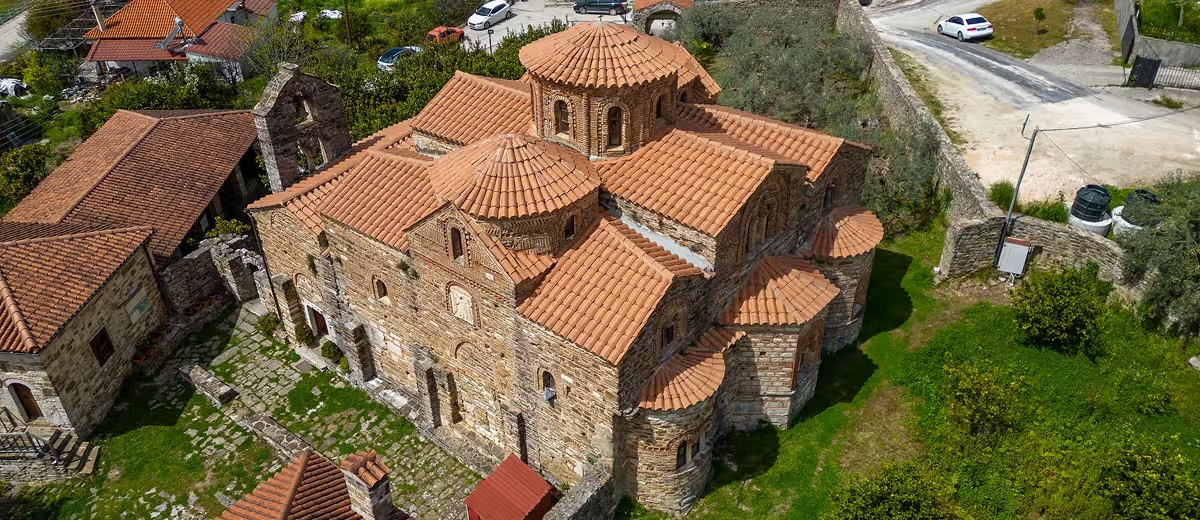
Cover image credits: @ Arnoldius, CC BY-SA 4.0

One Comment