Byzantine Emperors: From Constantine to Constantine XI, eleven centuries of Roman rulers
The Byzantine emperors ruled the eastern Roman Empire from Constantinople for more than eleven centuries, from Constantine I, who dedicated the city in 330, to Constantine XI Palaiologos, who died defending it on 29 May 1453. By our count, 90 rulers held the throne as senior emperor in that time. None of them called himself Byzantine: they were emperors of the Romans, basileis tōn Rhōmaiōn, and saw themselves as the heirs of Augustus in an unbroken line.
This page lists every one of them, with the date of the reign, the dynasty, how each came to the throne, how each reign ended, the chronicler who tells us most about it, and where you can still see the emperor today, in a mosaic, a manuscript, a coin or a building. Below the list, we look at what the whole sequence reveals: how often the throne was seized by force, why so many emperors were blinded or sent to monasteries, and which rulers left the deepest mark. For how the office itself worked, from coronation to the limits of an emperor’s power, see our guide to imperial power in Byzantium.
Byzantine emperors at a glance
First emperor
Constantine I, sole ruler of the empire from 324; dedicated Constantinople in 330
Last emperor
Constantine XI Palaiologos, killed when the Ottomans took Constantinople, 29 May 1453
Number of emperors
90 senior rulers in our count, including two rival emperors and four empresses who reigned in their own name (Irene, Theodora, Eudokia; Zoe and Theodora jointly)
Dynasties
Between 14 and 16, depending on whether short-lived houses such as the Nikephorian and Doukas lines are counted separately
Longest reign
Basil II, 49 years as senior emperor (976–1025); John V nominally reigned 50 years (1341–1391), with long interruptions
Shortest reign
Staurakios, about two months in 811
Capitals
Constantinople; Nicaea during the Latin occupation of 1204–1261
Main title
Augustus in Latin until the 7th century, then basileus, later “basileus and autokrator of the Romans”
Timeline of the dynasties
Eleven centuries of rule fall into some fifteen ruling families, separated by short and usually violent interludes. The chart shows each dynasty to scale. The gaps between the coloured bands are the reigns of emperors who founded no lasting line, and the shaded band marks the 57 years when Constantinople was held by the Latins and the legitimate emperors ruled from Nicaea.
Dynasty labels follow common modern usage; several “dynasties” were joined by marriage or adoption rather than descent, as the table below shows.
The complete list of Byzantine emperors
Who is on this list.
We list the 90 emperors who reigned as sole or senior ruler from Constantinople, or from Nicaea between 1204 and 1261. Junior co-emperors who never ruled alone, Western emperors such as Valentinian I and Gratian, the Latin emperors of 1204–1261 and the rulers of Trebizond and Epirus are left out. Basiliscus and Artabasdos are included and marked as rival emperors: both held Constantinople, were crowned there and struck coins. Usurpers who never ruled from the capital are listed separately below the table. Emperors with two reigns are classified by how they first came to power and how their last reign ended.
Each reign is classified twice: by how the emperor came to power and by how the reign ended. The categories are simple on purpose, so that the whole sequence can be compared; the note in brackets gives the detail. The “main source” is the Byzantine historian or chronicler on whom our knowledge of the reign chiefly rests, which is often a hostile witness. Use the buttons to show one period, type a name to search, or click a column heading to sort.
| # | Emperor | Reign | Dynasty | Came to power | Reign ended | Main source | See today |
|---|---|---|---|---|---|---|---|
| Early period, 324–717 · 31 rulers | |||||||
| 1 | Constantine I | 306–337 (augustus from 25 July 306; sole ruler from 324) | Constantinian | Chosen acclaimed by his father’s army in Britain, 306; sole ruler after defeating Licinius, 324 | Natural death | Eusebius, Life of Constantine | Column of Constantine, Istanbul; Hagia Sophia SW vestibule mosaic (10th-c. image) |
| 2 | Constantius II | 337–361 | Constantinian | Inherited | Natural death | Ammianus Marcellinus (from 353); Julian’s Orations; church historians | Coins |
| 3 | Julian | 361–363 | Constantinian | Usurped acclaimed by his troops in Gaul, 360 | Killed in battle Persian campaign | Ammianus Marcellinus | Coins |
| 4 | Jovian | 363–364 | — | Chosen by the army after Julian’s death | Natural death died suddenly on the road to Constantinople; charcoal fumes or indigestion according to Ammianus | Ammianus Marcellinus | Coins |
| 5 | Valens | 364–378 | Valentinian | Designated by his brother Valentinian I | Killed in battle Adrianople | Ammianus Marcellinus | Aqueduct of Valens, Istanbul |
| 6 | Theodosius I | 379–395 | Theodosian | Designated by Gratian | Natural death | Zosimus; church historians | Obelisk base, Hippodrome; Missorium, Madrid |
| 7 | Arcadius | 395–408 | Theodosian | Inherited | Natural death | Zosimus; Socrates | Base of the Column of Arcadius, Istanbul |
| 8 | Theodosius II | 408–450 | Theodosian | Inherited | Natural death riding accident | Socrates; Priscus | Theodosian Walls, Istanbul · Walls of Constantinople |
| 9 | Marcian | 450–457 | Theodosian (by marriage) | Marriage to Pulcheria | Natural death | Priscus; church historians | Column of Marcian, Istanbul |
| 10 | Leo I | 457–474 | Leonid | Chosen by Aspar and the army | Natural death | Priscus; Malalas | Coins |
| 11 | Leo II | 474 | Leonid | Inherited grandson of Leo I | Natural death | Malalas | Coins |
| 12 | Zeno | 474–475, 476–491 | Leonid (by marriage) | Inherited crowned co-emperor by his son Leo II, then succeeded him; restored 476 | Natural death | Malchus; Malalas | Coins |
| 13 | Basiliscus (rival emperor) | 475–476 | Leonid (by marriage) | Usurped plot with his sister Verina; Zeno fled to Isauria | Deposed, killed starved to death in exile | Malchus; Malalas | Coins |
| 14 | Anastasius I | 491–518 | Leonid (by marriage) | Marriage chosen by the empress Ariadne, who then married him | Natural death | Malalas; John Lydus | Anastasian Wall remains, Thrace |
| 15 | Justin I | 518–527 | Justinian | Chosen commander of the excubitors | Natural death | Malalas; Procopius | — |
| 16 | Justinian I | 527–565 | Justinian | Designated nephew and adopted heir; co-emperor from April 527 | Natural death | Procopius | San Vitale, Ravenna; Hagia Sophia |
| 17 | Justin II | 565–578 | Justinian | Chosen raised by a small group of palace officials; nephew of Justinian | Natural death insane from 574; Tiberius governed as caesar | Corippus; John of Ephesus; Evagrius | Cross of Justin II, Vatican Treasury |
| 18 | Tiberius II Constantine | 578–582 | Justinian (by adoption) | Designated caesar from 574 on Sophia’s advice | Natural death poison rumoured | John of Ephesus; Menander | Coins |
| 19 | Maurice | 582–602 | Justinian (by marriage) | Designated son-in-law of Tiberius II | Deposed, killed executed with his sons by Phokas | Theophylact Simocatta | — |
| 20 | Phokas | 602–610 | — | Usurped army mutiny on the Danube | Deposed, killed | Chronicon Paschale; Theophanes | Column of Phocas, Roman Forum |
| 21 | Heraclius | 610–641 | Heraclian | Usurped revolt from Carthage | Natural death | George of Pisidia; Nikephoros | Coins; drawing in a 5th-c. manuscript, Biblioteca Nazionale Vittorio Emanuele III, Naples (MS I B 1) |
| 22 | Constantine III | 641 | Heraclian | Inherited | Natural death tuberculosis; poisoning by Martina rumoured | Nikephoros | Coins |
| 23 | Heraklonas | 641 | Heraclian | Inherited | Deposed, mutilated nose slit, exiled to Rhodes | Nikephoros; John of Nikiu | — |
| 24 | Constans II | 641–668 | Heraclian | Inherited | Murdered in his bath at Syracuse | Theophanes; Sebeos | Coins |
| 25 | Constantine IV | 668–685 | Heraclian | Inherited | Natural death | Theophanes; Nikephoros | Privileges mosaic, Sant’Apollinare in Classe, Ravenna (heavily restored) |
| 26 | Justinian II | 685–695, 705–711 | Heraclian | Inherited restored 705 | Deposed, killed first deposed and nose slit, 695 | Theophanes; Nikephoros | Gold coins with the first face of Christ |
| 27 | Leontios | 695–698 | — | Usurped | Deposed, mutilated nose slit, confined to a monastery; executed 706 | Theophanes; Nikephoros | — |
| 28 | Tiberios III Apsimar | 698–705 | — | Usurped fleet mutiny | Deposed, killed executed 706 | Theophanes; Nikephoros | — |
| 29 | Philippikos | 711–713 | — | Usurped | Deposed, mutilated blinded | Theophanes; Nikephoros | — |
| 30 | Anastasios II | 713–715 | — | Chosen by officials after Philippikos’s overthrow | Deposed, tonsured monk at Thessalonica; executed 719 after a failed comeback | Theophanes; Nikephoros | — |
| 31 | Theodosios III | 715–717 | — | Usurped reluctant figurehead of the Opsikion army’s revolt | Deposed, tonsured abdicated to Leo III, 25 March 717; he and his son became monks | Theophanes; Nikephoros | — |
| Middle period, 717–1204 · 45 rulers | |||||||
| 32 | Leo III | 717–741 | Isaurian | Usurped strategos of the Anatolikon, revolted with Artabasdos | Natural death | Theophanes; Nikephoros | Coins |
| 33 | Constantine V | 741–775 | Isaurian | Inherited | Natural death on campaign | Theophanes; Nikephoros | Hagia Irene apse cross, Istanbul (church rebuilt under him after 740) · Hagia Irene |
| 34 | Artabasdos (rival emperor) | 741/742–743 | Isaurian (by marriage) | Usurped seized Constantinople while Constantine V was on campaign | Deposed, mutilated blinded with his sons | Theophanes; Nikephoros | Coins |
| 35 | Leo IV | 775–780 | Isaurian | Inherited | Natural death | Theophanes | Coins |
| 36 | Constantine VI | 780–797 | Isaurian | Inherited | Deposed, mutilated blinded on his mother’s orders | Theophanes | Coins |
| 37 | Irene | 797–802 | Isaurian | Usurped deposed her son | Deposed exiled to Prinkipo, then Lesbos | Theophanes | Coins |
| 38 | Nikephoros I | 802–811 | Nikephorian | Usurped palace coup | Killed in battle Pliska | Theophanes | Coins |
| 39 | Staurakios | 811 | Nikephorian | Inherited | Deposed, tonsured forced out in favour of Michael I; died of his battle wound as a monk | Theophanes | — |
| 40 | Michael I Rangabe | 811–813 | Nikephorian (by marriage) | Usurped palace coup against his brother-in-law Staurakios | Deposed, tonsured gave up the throne after Versinikia as Leo V advanced; monk with his sons | Theophanes | — |
| 41 | Leo V | 813–820 | — | Usurped | Murdered in the palace chapel, Christmas 820 | Genesios; Theophanes Continuatus | — |
| 42 | Michael II | 820–829 | Amorian | Usurped freed from prison by Leo V’s assassins | Natural death | Genesios; Theophanes Continuatus | Madrid Skylitzes miniatures |
| 43 | Theophilos | 829–842 | Amorian | Inherited | Natural death | Theophanes Continuatus | Madrid Skylitzes miniatures |
| 44 | Michael III | 842–867 | Amorian | Inherited | Murdered by Basil I | Theophanes Continuatus | — |
| 45 | Basil I | 867–886 | Macedonian | Usurped murder of Michael III, his co-emperor | Natural death after a hunting accident | Vita Basilii (Theoph. Cont. V) | Paris Gregory, BnF gr. 510 |
| 46 | Leo VI | 886–912 | Macedonian | Inherited | Natural death | Theophanes Continuatus; Symeon Logothete | Imperial Door mosaic, Hagia Sophia |
| 47 | Alexander | 912–913 | Macedonian | Inherited | Natural death collapsed after a game of tzykanion, Byzantine polo | Symeon Logothete | North gallery mosaic, Hagia Sophia |
| 48 | Constantine VII | 913–959 | Macedonian | Inherited child; regencies, then Romanos I senior 920–944 | Natural death | Theophanes Continuatus | Ivory, Pushkin Museum, Moscow |
| 49 | Romanos I Lekapenos | 920–944 | Macedonian (by marriage; Lekapenos) | Usurped seized the palace as admiral in 919, married his daughter to Constantine VII, crowned 920 | Deposed, tonsured by his own sons; monk on Prote | Theophanes Continuatus | Myrelaion (Bodrum Mosque), Istanbul |
| 50 | Romanos II | 959–963 | Macedonian | Inherited | Natural death poison rumoured | Theophanes Continuatus; Skylitzes | Romanos ivory, Cabinet des médailles, BnF (attribution to Romanos II now preferred) |
| 51 | Nikephoros II Phokas | 963–969 | Macedonian (by marriage; Phokas) | Usurped acclaimed by the army; entered Constantinople 16 Aug. 963 after breaking Bringas’s resistance; married Theophano | Murdered | Leo the Deacon; Skylitzes | — · Theophano |
| 52 | John I Tzimiskes | 969–976 | Macedonian (by marriage; Tzimiskes) | Usurped murder of Nikephoros II | Natural death poison rumoured | Leo the Deacon; Skylitzes | Madrid Skylitzes triumph miniature |
| 53 | Basil II | 976–1025 | Macedonian | Inherited co-emperor since 960 | Natural death | Psellos; Skylitzes; Yahya of Antioch | Psalter of Basil II, Marciana, Venice |
| 54 | Constantine VIII | 1025–1028 | Macedonian | Inherited co-emperor since 962 | Natural death | Psellos | Bari Exultet Roll (with Basil II) |
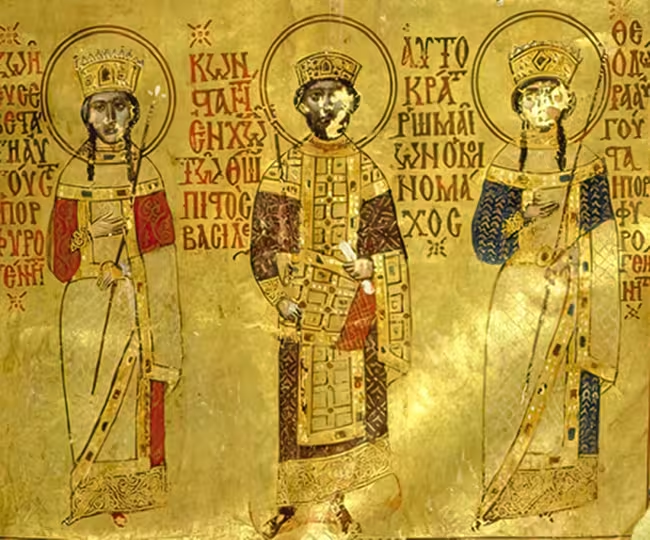
| 55 | Romanos III Argyros | 1028–1034 | Macedonian (by marriage) | Marriage to Zoe, on Constantine VIII’s deathbed | Murdered drowned in his bath, contrived by Zoe according to Psellos | Psellos | Zoe panel, Hagia Sophia (figure altered) |
| 56 | Michael IV | 1034–1041 | Macedonian (by marriage) | Marriage to Zoe | Natural death became a monk on his deathbed | Psellos | — |
| 57 | Michael V | 1041–1042 | Macedonian (by adoption) | Designated adopted by Zoe | Deposed, mutilated blinded after a popular revolt, then a monk | Psellos | Madrid Skylitzes miniatures |
| 58 | Zoe and Theodora (joint) | 1042 (21 April – 11 June) | Macedonian | Restored Zoe restored, Theodora brought out of her convent, by the popular revolt against Michael V | Not counted power passed to Constantine IX on Zoe’s marriage, June 1042; both remained augustae | Psellos | Zoe panel, Hagia Sophia |
| 59 | Constantine IX Monomachos | 1042–1055 | Macedonian (by marriage) | Marriage to Zoe | Natural death | Psellos; Attaleiates | Zoe panel, Hagia Sophia; Monomachos Crown, Budapest (authenticity debated) |
| 60 | Theodora | 1055–1056 | Macedonian | Restored sole ruler after Constantine IX’s death | Natural death | Psellos | — |
| 61 | Michael VI | 1056–1057 | — | Designated by Theodora | Deposed, tonsured army revolt of Isaac Komnenos; monk | Psellos; Attaleiates | — |
| 62 | Isaac I Komnenos | 1057–1059 | Komnenian (first) | Usurped army revolt | Abdicated illness; monk at Stoudios | Psellos; Attaleiates | Coins |
| 63 | Constantine X Doukas | 1059–1067 | Doukas | Designated by Isaac I | Natural death | Psellos; Attaleiates | — |
| 64 | Eudokia Makrembolitissa (disputed: empress regnant or regent) | 1067 (May–Dec.); 1071 (Oct.–Nov.) | Doukas (by marriage) | Designated ruled for her sons under Constantine X’s arrangements; married Romanos IV, who was crowned 1 Jan. 1068 | Deposed, tonsured after Mantzikert, sent to a convent by the Caesar John Doukas, 1071 | Psellos; Attaleiates | — |
| 65 | Romanos IV Diogenes | 1068–1071 | Doukas (by marriage) | Marriage to Eudokia Makrembolitissa | Deposed, mutilated blinded 1072; died of the wounds | Attaleiates; Psellos | — · Mantzikert |
| 66 | Michael VII Doukas | 1071–1078 | Doukas | Inherited | Deposed, tonsured monk at Stoudios, later metropolitan of Ephesus | Attaleiates; Psellos; Bryennios | Enamel, Holy Crown of Hungary |
| 67 | Nikephoros III Botaneiates | 1078–1081 | — | Usurped army revolt | Deposed, tonsured monk at the Peribleptos | Attaleiates; Bryennios; Anna Komnene | Coislin 79 miniature, BnF (reworked from Michael VII) |
| 68 | Alexios I Komnenos | 1081–1118 | Komnenian | Usurped army revolt | Natural death | Anna Komnene, Alexiad | Coins; seals |
| 69 | John II Komnenos | 1118–1143 | Komnenian | Inherited | Natural death hunting accident | Kinnamos; Choniates | Komnenos panel, Hagia Sophia; Pantokrator, Istanbul · Pantokrator |
| 70 | Manuel I Komnenos | 1143–1180 | Komnenian | Inherited chosen over his elder brother Isaac on John II’s deathbed | Natural death | Kinnamos; Choniates | Coins |
| 71 | Alexios II Komnenos | 1180–1183 | Komnenian | Inherited | Deposed, killed strangled on Andronikos I’s orders, Oct. 1183; Andronikos had already been crowned co-emperor in Sept., so Alexios had lost sole power before his death | Choniates; Eustathios | — |
| 72 | Andronikos I Komnenos | 1183–1185 | Komnenian | Usurped | Deposed, killed lynched by the crowd | Choniates | — |
| 73 | Isaac II Angelos | 1185–1195, 1203–1204 | Angelos | Usurped acclaimed by the people of Constantinople, 12 Sept. 1185; restored by the courtiers, 1203 | Natural death first reign ended deposed and blinded, 1195; died Jan. 1204 | Choniates | — |
| 74 | Alexios III Angelos | 1195–1203 | Angelos | Usurped blinded and deposed his brother | Deposed fled the city, July 1203 | Choniates | — |
| 75 | Alexios IV Angelos | 1203–1204 | Angelos | Inherited crowned co-emperor beside his restored father, at the crusaders’ demand | Deposed, killed strangled | Choniates; Villehardouin | — |
| 76 | Alexios V Doukas Mourtzouphlos | 1204 | — | Usurped | Deposed, killed thrown from the Column of Theodosius by the Latins | Choniates; Villehardouin | — · Sack of 1204 |
| Late period, 1204–1453 · 14 rulers | |||||||
| 77 | Theodore I Laskaris | 1205–1221 (proclaimed 1205, crowned 1208) | Laskarid | Chosen proclaimed by an assembly at Nicaea; son-in-law of Alexios III | Natural death | Akropolites; Choniates | Codex Mutinensis portraits (15th-c. manuscript) · Laskarid dynasty |
| 78 | John III Doukas Vatatzes | 1221–1254 | Laskarid (by marriage; Vatatzes) | Marriage to Irene Laskarina | Natural death | Akropolites | Palace of Nymphaion, Kemalpaşa; Codex Mutinensis · Nymphaion palace |
| 79 | Theodore II Laskaris | 1254–1258 | Laskarid | Inherited | Natural death long illness, probably epilepsy | Akropolites; Pachymeres | Codex Mutinensis · Laskarid dynasty |
| 80 | John IV Laskaris | 1258–1261 | Laskarid | Inherited child | Deposed, mutilated blinded by Michael VIII, 1261 | Pachymeres | Codex Mutinensis · Laskarid dynasty |
| 81 | Michael VIII Palaiologos | 1259–1282 | Palaiologan | Usurped regent, then senior co-emperor | Natural death on campaign in Thrace | Pachymeres; Akropolites | Pachymeres manuscript, Bavarian State Library, Munich (Monac. gr. 442) |
| 82 | Andronikos II Palaiologos | 1282–1328 | Palaiologan | Inherited | Deposed, tonsured by his grandson; monk Antonios, 1330 | Pachymeres; Gregoras | — |
| 83 | Andronikos III Palaiologos | 1328–1341 | Palaiologan | Usurped civil war against his grandfather | Natural death | Kantakouzenos; Gregoras | — |
| 84 | John V Palaiologos | 1341–1391 (deposed 1376–1379 and in 1390) | Palaiologan | Inherited restored 1379 and 1390 | Natural death | Kantakouzenos; Gregoras; Doukas | — |
| 85 | John VI Kantakouzenos | 1347–1354 | Kantakouzenos | Usurped civil war of 1341–1347 | Deposed, tonsured forced to abdicate after John V took the capital, Dec. 1354; became the monk Joasaph | His own Histories; Gregoras | Portrait, BnF gr. 1242 |
| 86 | Andronikos IV Palaiologos | 1376–1379 | Palaiologan | Usurped against his father | Deposed fled; died 1385 | Doukas; Chalkokondyles | — |
| 87 | John VII Palaiologos | 1390 | Palaiologan | Usurped against his grandfather | Deposed after five months; regent 1399–1402 | Doukas; Chalkokondyles | — |
| 88 | Manuel II Palaiologos | 1391–1425 | Palaiologan | Inherited | Natural death took the monk’s habit shortly before | Sphrantzes; Doukas; his letters | Family portrait, Louvre manuscript (on our site) |
| 89 | John VIII Palaiologos | 1425–1448 | Palaiologan | Inherited | Natural death | Sphrantzes; Syropoulos | Pisanello medal |
| 90 | Constantine XI Palaiologos | 1449–1453 (crowned at Mystras, 6 Jan. 1449; in Constantinople from 12 Mar. 1449) | Palaiologan | Designated named by his mother Helena, with Sultan Murad II’s assent, after John VIII’s death | Killed in battle fall of Constantinople, 29 May 1453 | Sphrantzes; Doukas; Kritoboulos; Barbaro | Aegilia fresco (identified as Constantine XI); Mystras · Fresco find · Fall of 1453 · Mystras |
Who was the first Byzantine emperor?
There is no single answer, because “Byzantine” is a modern label for a state that never changed its name: its people called it the Roman Empire to the end, and the word was popularised by Western scholars from the 16th century. Most lists, including ours, begin with Constantine I, who made Constantinople the new capital in 330 and gave the empire its Christian character. Others begin with Arcadius in 395, when the empire was divided for good between East and West; with Zeno, emperor when the last Western emperor was deposed in 476; or with Heraclius in the 7th century, under whom the empire became Greek in language and lost its eastern provinces. Each date marks a real change, and historians still argue over which matters most. For the debate in full, see when did the Byzantine Empire begin? and Roman, Greek, or both?
How emperors came to power
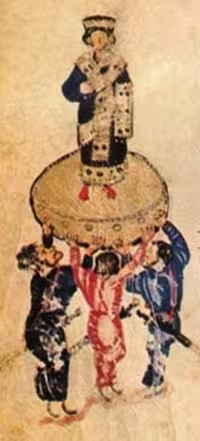
Byzantium never had a law of succession. In theory the emperor was chosen by God, and that choice was made visible through the acclamation of the army, the senate and the people of Constantinople, followed by coronation in Hagia Sophia by the patriarch. In practice, legitimacy went to whoever could secure those acclamations, which is why the reigns in our table divide almost evenly between emperors who inherited the throne and emperors who took it.
The surest route was to be crowned co-emperor while one’s father still reigned. Heraclius made the practice systematic in the 7th century, and from then on most reigning emperors raised their sons to the purple as children, so that the succession was settled before it was needed. Over time, birth itself became a claim: a child born to a reigning emperor in the porphyry chamber of the palace was porphyrogennetos, “born in the purple”, and the people of Constantinople became fiercely loyal to such heirs. When Michael V tried to send the porphyrogennete Zoe to a monastery in 1042, the city rose and overthrew him within days.
Marriage was the other legitimate road. Empresses could transmit the throne: Pulcheria chose Marcian, Ariadne chose Anastasius, Zoe gave the crown to three husbands in succession, and Irene Laskarina brought John III Vatatzes to the throne of Nicaea. At the other extreme, 31 of our 90 emperors seized power by revolt, coup or murder. A successful usurper was not condemned as illegitimate: once crowned, he was treated as God’s choice, and historians who praised him in life could condemn him as a tyrant once he fell.
Our guide to imperial power explains this paradox of an absolute office that could be taken by anyone strong enough.
How Byzantine reigns ended
More than two in five Byzantine emperors lost the throne by force or pressure. One in four was murdered, killed after being deposed, or mutilated.
Just over half of the emperors in our table, 47 of 89, died on the throne of natural causes, and even that figure includes five deaths that contemporaries attributed to poison. Four were killed in battle: Julian in Persia in 363, Valens at Adrianople in 378, Nikephoros I against the Bulgars in 811 and Constantine XI on the walls of Constantinople in 1453. The rest were removed, and the way they were removed is one of the most distinctive features of Byzantine politics.
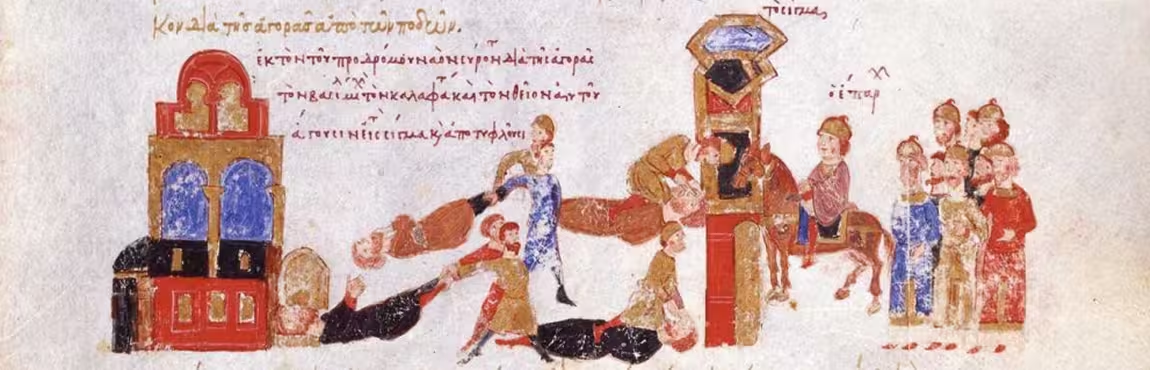
Killing a deposed emperor was common, especially in the turbulent 7th and late 12th centuries. But Byzantium also developed two ways of ending a reign without (too much) bloodshed on the throne. The first was mutilation. An emperor was expected to be physically whole, so blinding a rival or slitting his nose was meant to disqualify him for ever: Heraklonas, Justinian II, Philippikos, Constantine VI, Michael V, Romanos IV and John IV all suffered it. Justinian II proved the rule could be broken, returning in 705 – with a gold prosthetic nose to take a bloody revenge (a somehow satisfying version, even if it might be a later tradition). The second was the monastery. Eleven emperors in our table were deposed and forced to take monastic vows, from Romanos I Lekapenos, sent to an island monastery by his own sons, to Michael VII Doukas, who ended his career as metropolitan of Ephesus. For the role of monasteries as places of retirement and exile, see our article on Byzantine monasteries.
A single abdication was truly voluntary: Isaac I Komnenos, ill and discouraged, gave up the throne in 1059 and retired to the Stoudios monastery. Every other emperor who “abdicated” did so with an army at the gates.
How we counted: 89 reign endings, because the joint reign of Zoe and Theodora in 1042 did not end in a fall: power passed to Constantine IX on Zoe’s marriage, and both women remained empresses. Figures are rounded and are based on the classification in the table above.
Emperors by period
Byzantine history is usually divided into three periods. Each has its own full article on this site; the summaries below show how the emperors of each age fit into the story. For the whole sequence of events, see our complete history of the Byzantine Empire.
Early period, 324–717: 31 emperors
The early emperors still ruled a Mediterranean empire, spoke and legislated in Latin, and governed from a city that was rapidly becoming the greatest in Christendom. The line runs from Constantine’s family through the Theodosian and Leonid houses to Justinian I, whose reconquests in Italy and Africa marked the high point of the age. The 7th century brought near-collapse: Heraclius defeated Persia only to lose Syria, Palestine and Egypt to the Arabs, and the twenty years after the second fall of Justinian II saw six emperors in quick succession. Read more about the Early Byzantine period.
Middle period, 717–1204: 45 emperors
Leo III’s defence of Constantinople against the Arabs in 717–718 opened a new era. The Isaurian emperors fought over icons, the Macedonian dynasty led the empire to its medieval peak under Basil II, and the Komnenoi rebuilt it after the disaster of Mantzikert in 1071. The period also had more violent successions than any other, ending with five emperors in the last nineteen years before the sack of 1204. Read more about the Middle Byzantine period.
Late period, 1204–1453: 14 emperors
After the Fourth Crusade, the legitimate line continued in exile at Nicaea under the Laskarid dynasty, which recovered Constantinople in 1261. The Palaiologoi then ruled for nearly two centuries, the longest dynasty in Byzantine history, over an empire that shrank to the capital, a few islands and the Peloponnese, until Constantine XI died in the fall of Constantinople. Read more about the Late Byzantine period.
Twelve emperors who shaped Byzantium
Which emperors were the greatest is an old argument with no settled answer. Rather than rank them, we have chosen twelve whose reigns changed the empire’s territory, law, faith or institutions for good, spread across the three periods.
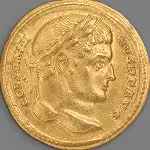
Constantine I
Founded Constantinople, made Christianity the emperor’s religion and convened the Council of Nicaea.
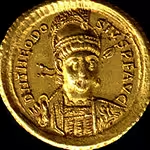
Theodosius II
His reign raised the land walls that protected the capital for a thousand years and produced the Theodosian Code.
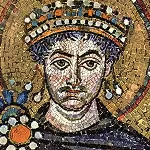
Justinian I
Reconquered Italy and Africa, codified Roman law and built Hagia Sophia.
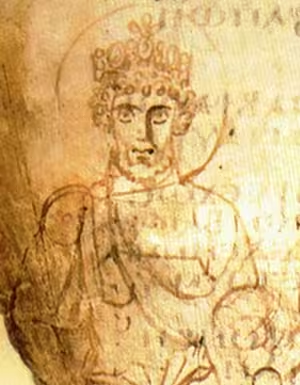
Heraclius
Destroyed the Persian threat, then watched the Arab conquests strip away the East.
Leo III
Saved Constantinople from the Arab siege of 717–718 and stands at the start of Iconoclasm.
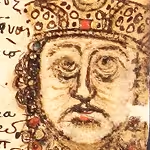
Basil I
A peasant-born usurper who founded the longest-lived dynasty of the middle period and began a revision of the law.
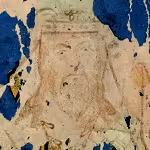
Constantine VII
The scholar-emperor behind the Book of Ceremonies and De administrando imperio, our richest windows on the court.
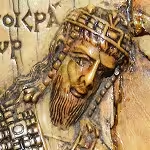
Basil II
Crushed the aristocratic revolts, conquered Bulgaria and left the empire at its medieval peak.
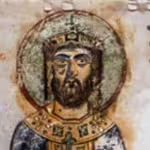
Alexios I Komnenos
Rebuilt the state after Mantzikert and steered it through the First Crusade.
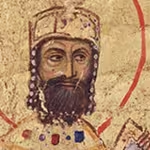
John III Vatatzes
Made the empire in exile at Nicaea prosperous and strong enough to take back Constantinople.
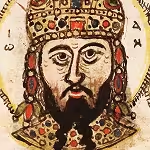
Michael VIII Palaiologos
Recovered Constantinople in 1261 and founded the last dynasty.
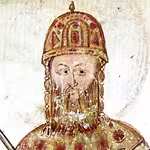
Constantine XI
The last emperor, who refused to surrender the city and died in its defence.
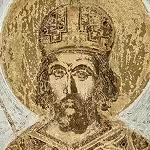
Justinian and Basil II are the usual answers to the question of the greatest emperor; for the case for and against, we’ll rate in a future article the greatest and worst Byzantine emperors.
Empresses who ruled
The imperial office was imagined as male, yet women held it in their own name more than once. Irene of Athens deposed and blinded her son Constantine VI in 797 and ruled alone for five years, sometimes styling herself basileus, the male title. In 1042 the people of Constantinople raised the sisters Zoe and Theodora, last of the Macedonian line, to rule jointly; Theodora returned to reign alone in 1055–1056. Whether Eudokia Makrembolitissa, who governed in 1067 and again in 1071, reigned in her own right or as regent for her sons is still debated, and we list her with that caveat.
Far more empresses exercised power as regents or as partners: Theodora, wife of Justinian, whose resolve saved the throne in 532; the 9th-century Theodora, who restored the icons in 843; and Theophano, who married two emperors and was accused of the murder of a third. Their stories, and the office of the Augusta, will be gathered on our future page on Byzantine empresses and imperial power; meanwhile see women in Byzantium.
Titles, names and nicknames
The early emperors used the Roman titles imperator, caesar and augustus. Greek gradually replaced Latin, and from the reign of Heraclius the official title became basileus, the Greek word for king, which the Byzantines reserved for their own emperor and, grudgingly, for the Persian king ⚠ CHECK: the adoption of basileus is usually dated to 629. Later emperors styled themselves “faithful in Christ, basileus and autokrator of the Romans”. The heir was crowned co-emperor; caesar and, from the 12th century, despotes became the highest titles below the throne. Our glossary of Byzantine terms explains these and other court titles.
Many emperors are better known by nicknames, some given in their lifetime, others invented by hostile chroniclers.
| Emperor | Nickname | Meaning and origin |
|---|---|---|
| Justinian II | Rhinotmetos | “Cut-nose”, after his mutilation in 695 |
| Constantine V | Kopronymos | “Dung-named”, an insult from the iconophile side, claiming he soiled the font at his baptism |
| Leo IV | the Khazar | His mother was a Khazar princess |
| Michael II | the Amorian; the Stammerer | From his home town and a speech defect |
| Michael III | the Drunkard | A label spread by the chroniclers of the dynasty that murdered him |
| Leo VI | the Wise | For his learning and writings |
| Constantine VII | Porphyrogennetos | “Born in the purple” |
| Basil II | Boulgaroktonos | “Bulgar-slayer”, attested only from the 12th century |
| Michael V | Kalaphates | “The caulker”, his father’s trade |
| Alexios V | Mourtzouphlos | Probably “bushy-browed” |
Where to see the emperors today
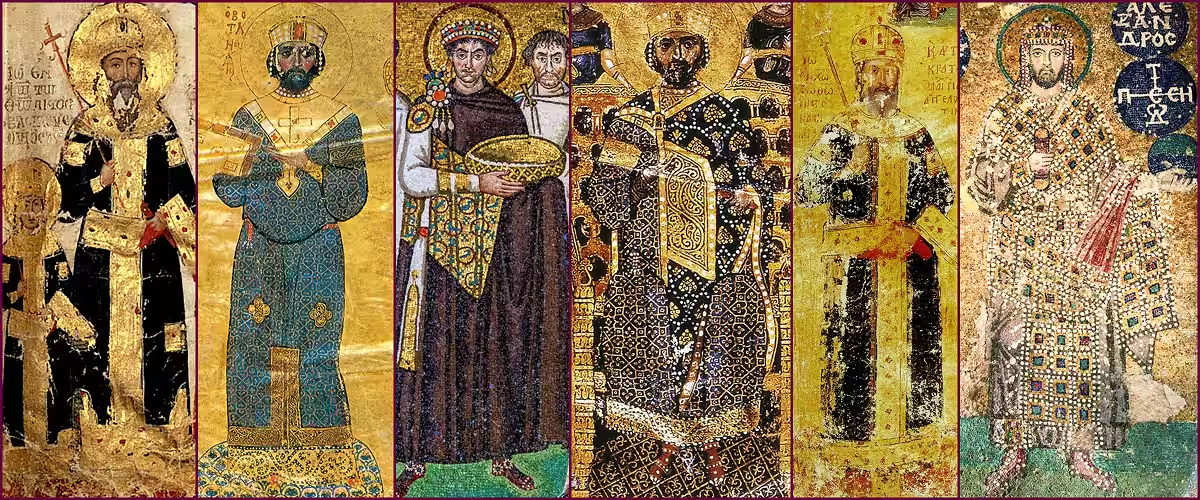
No statue of a Byzantine emperor survives in Constantinople in its original place, but their faces are still easy to find. In Hagia Sophia, the mosaics of the galleries and entrances show Leo VI, Alexander, Constantine IX with Zoe, and John II Komnenos with his family, while the south-west vestibule shows Constantine and Justinian offering the city and the church to the Virgin. In Ravenna, the panels of San Vitale give the only contemporary portraits of Justinian and Theodora, and the Privileges mosaic in Sant’Apollinare in Classe shows Constantine IV.
The emperors’ buildings tell the same story in stone: the walls of Theodosius II, the Hippodrome where they faced the people, the remains of the Great Palace, and family foundations such as the Myrelaion of Romanos I and the Pantokrator of John II, now mosques. The red porphyry sarcophagi outside the Istanbul Archaeology Museum come from the emperors’ burial church of the Holy Apostles. Beyond the capital, the palace of Nymphaion recalls the emperors of Nicaea, and Mystras the last Palaiologoi. Our guide to Byzantine Istanbul lists what can be visited.
Manuscripts and coins complete the gallery. The Madrid Skylitzes, in the Biblioteca Nacional de España, illustrates the reigns of the 9th to 11th centuries in hundreds of miniatures; the Psalter of Basil II in Venice and the Paris Gregory in the Bibliothèque nationale de France carry imperial portraits; and the coins and seals catalogued by Dumbarton Oaks show almost every emperor as he chose to be seen.
Frequently asked questions
Who was the first Byzantine emperor?
Most historians begin with Constantine I (306–337), who founded Constantinople as the empire’s new capital in 330. Others start with Arcadius in 395, when the empire was permanently divided, or with emperors of the 5th to 7th centuries; the Byzantines themselves saw no beginning, only the continuation of Rome.
Who was the last Byzantine emperor?
Constantine XI Palaiologos, who reigned from 1449 and was killed when the Ottomans under Mehmed II captured Constantinople on 29 May 1453.
How many Byzantine emperors were there?
About 90, depending on how co-emperors, usurpers and disputed rulers are counted. Our list counts 90 senior rulers from Constantine I to Constantine XI.
Who was the greatest Byzantine emperor?
There is no agreed answer. Justinian I is the most famous, for his law code, his reconquests and Hagia Sophia; many historians rate Basil II higher for leaving the empire stronger than he found it. Heraclius, Alexios I Komnenos and John III Vatatzes also have strong advocates. Personally, despite Amorion, I think Theophilos would have been one of the greatest, had he ruled longer.
Which Byzantine emperor reigned the longest?
Basil II ruled as senior emperor for 49 years, from 976 to 1025, after being crowned co-emperor as a child in 960. John V Palaiologos held the title for 50 years (1341–1391), but with long interruptions and periods under rival emperors.
Did women rule the Byzantine Empire?
Yes. Irene ruled alone from 797 to 802, Zoe and Theodora reigned jointly in 1042, and Theodora ruled alone in 1055–1056. Many more empresses governed as regents for young sons.
How were Byzantine emperors chosen?
There was no law of succession. An emperor needed the acclamation of the army, the senate and the people, and coronation by the patriarch. Most crowned their sons as co-emperors to secure the succession, but about a third of all emperors came to power by revolt or coup.
Were the Byzantine emperors Greek or Roman?
They were Roman emperors in title and self-understanding throughout, ruling the continuation of the Roman Empire. From the 7th century they governed in Greek, and most later emperors were Greek-speaking, though dynasties of Armenian, Isaurian and other origins also held the throne.
Further reading and sources
Sources and reference works used for the article
- A. Kazhdan (ed.), The Oxford Dictionary of Byzantium, 3 vols. (Oxford, 1991), entries on each emperor.
- A.H.M. Jones, J.R. Martindale and J. Morris, The Prosopography of the Later Roman Empire (Cambridge, 1971–1992).
- Prosopographie der mittelbyzantinischen Zeit (Berlin, 1998–2013).
- P. Grierson, Catalogue of the Byzantine Coins in the Dumbarton Oaks Collection (Washington, 1966–1999).
- Dumbarton Oaks, “God’s Regents on Earth: imperial dynasties”, online exhibition of imperial seals.
Image rights
When not indicated below the picture.
Portrait of Constantine VII, ivory from the Pushkin Museum: Wooofer, CC BY-SA 4.0